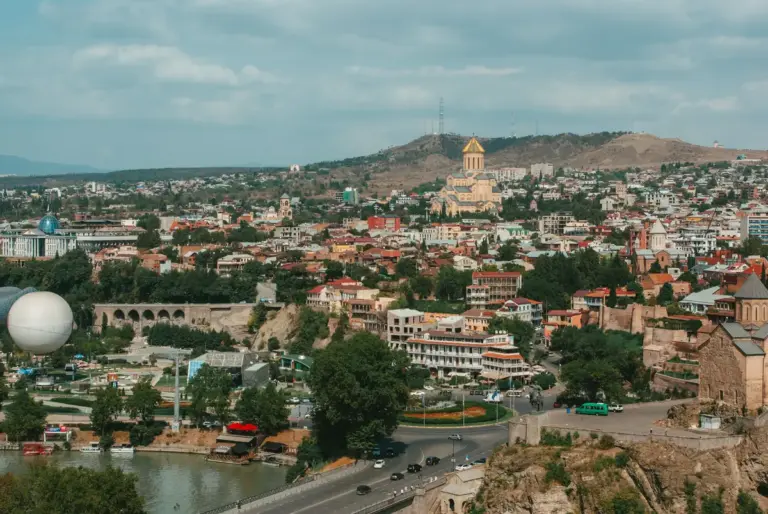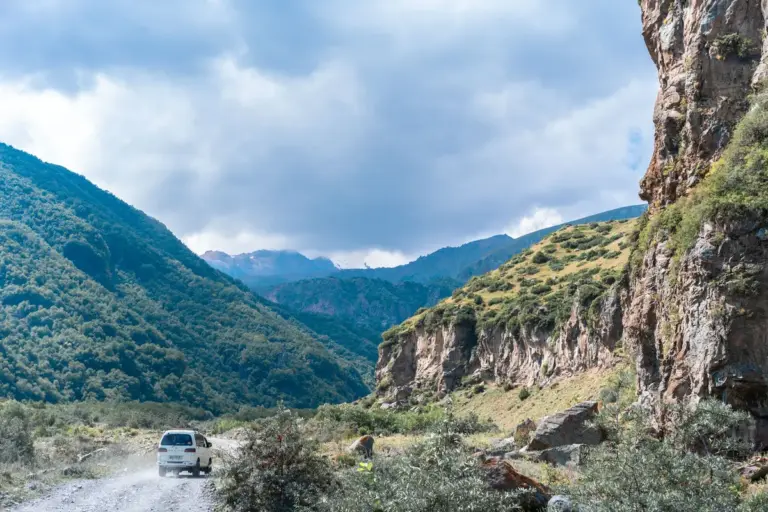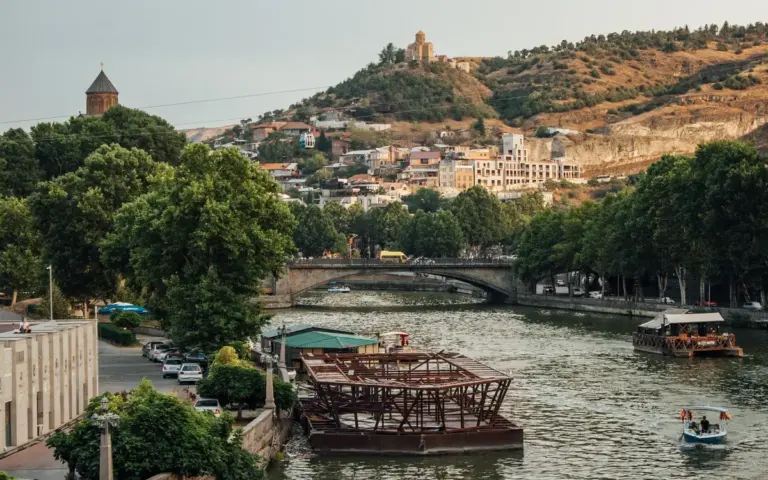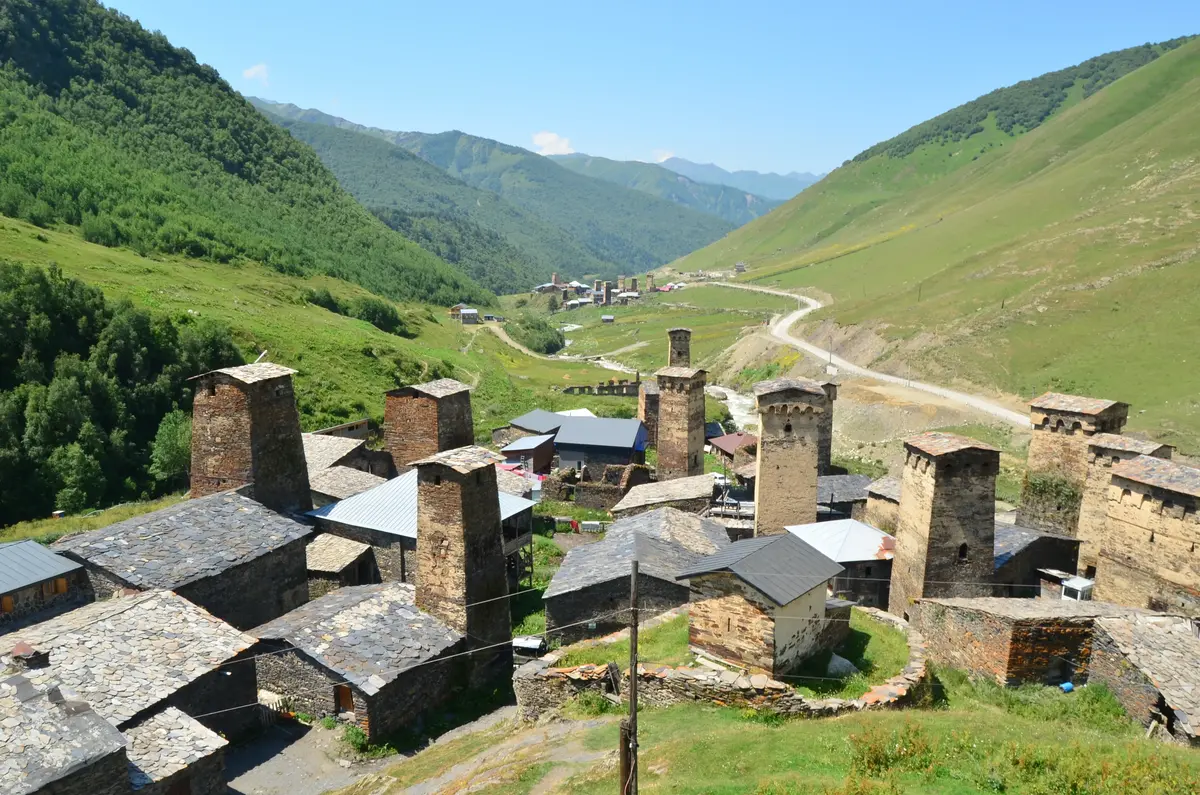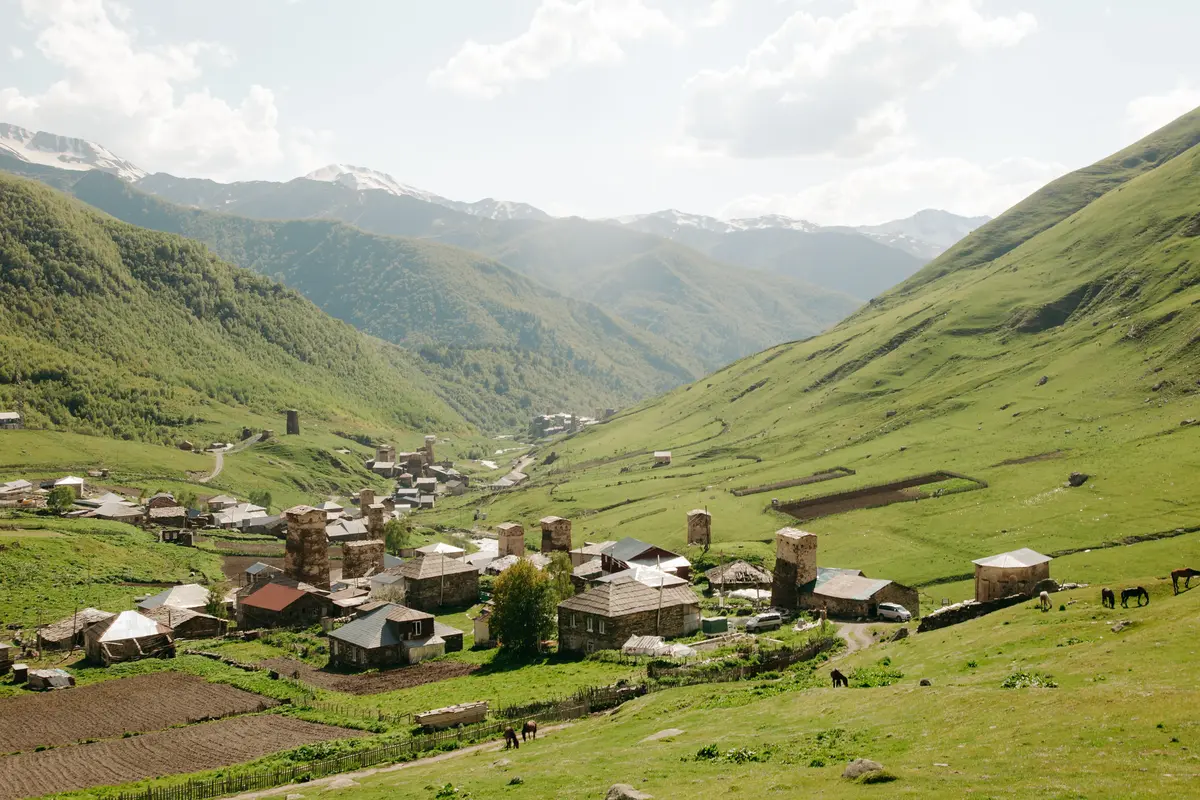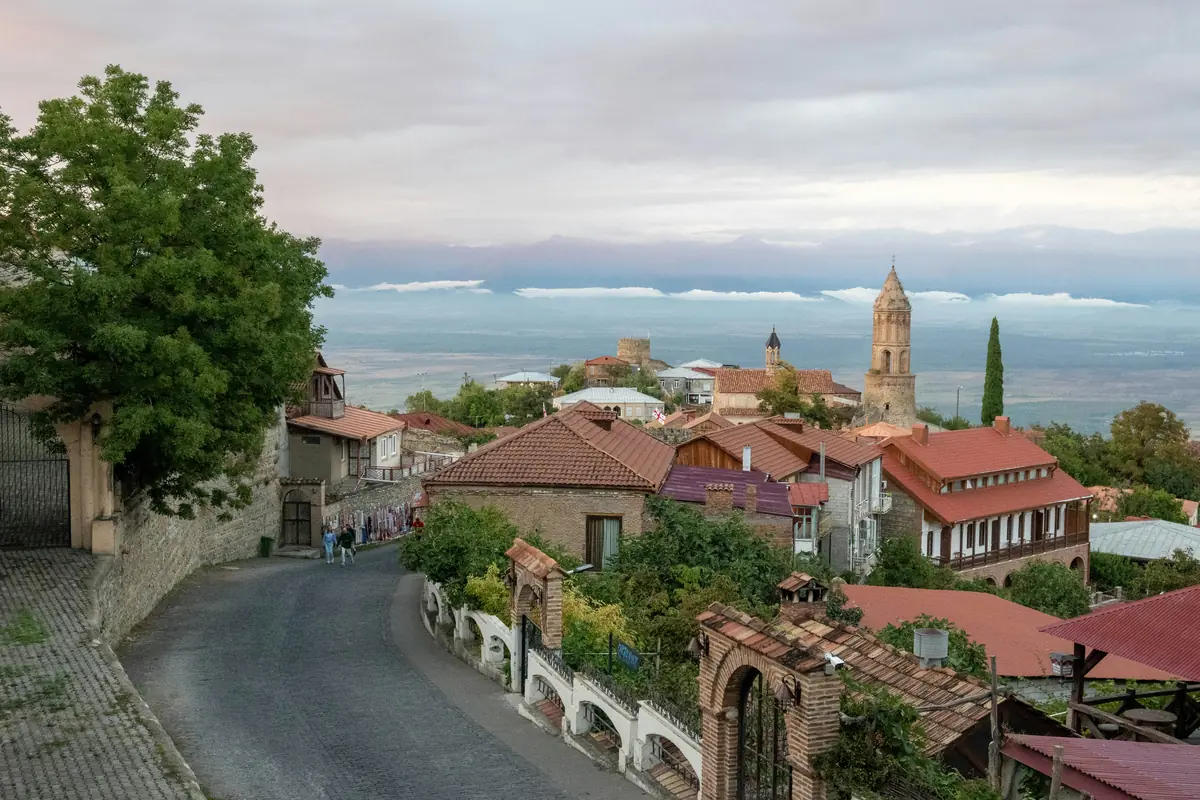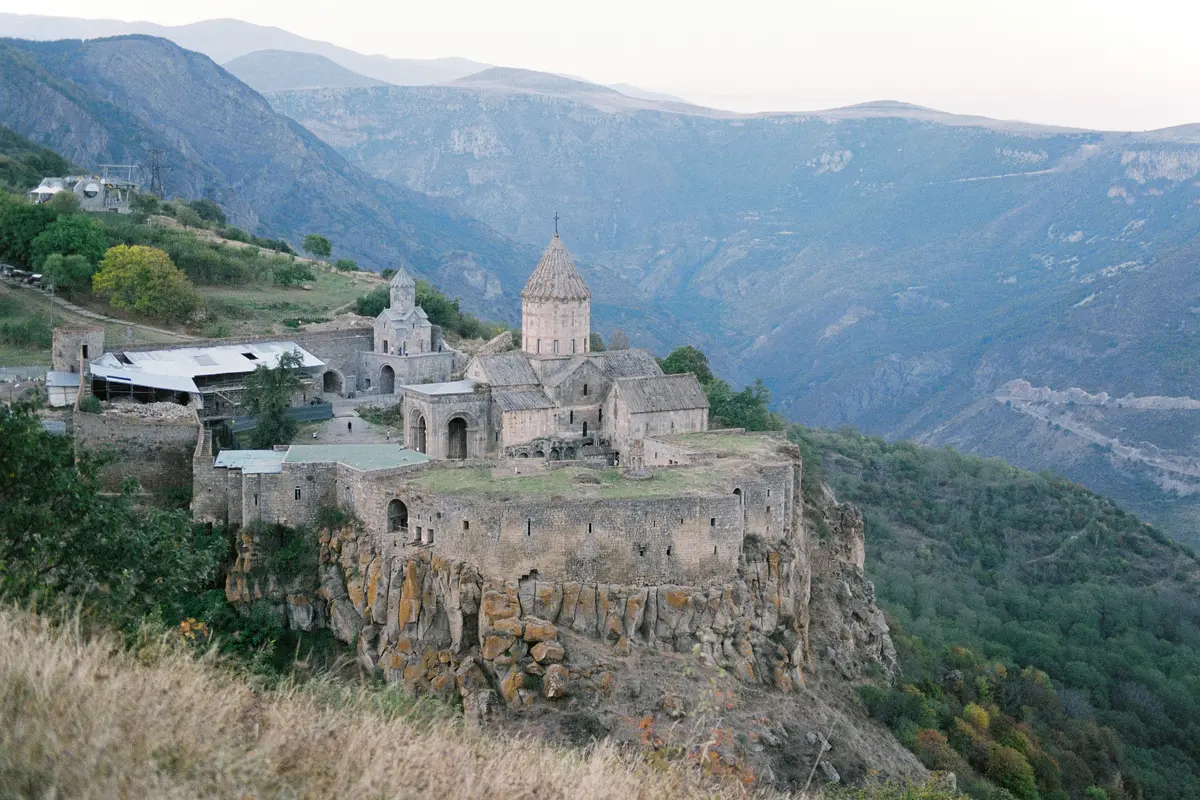
Two weeks is the sweet spot for a Georgia and Armenia itinerary. Eight days in Georgia, six in Armenia, one land border crossing in the middle, and an open-jaw plane ticket so you never retrace a single mile. That is the route I’ve run twice now, and it is the one I recommend to almost everyone who asks.
The two countries sit side by side in the South Caucasus, share a 24-hour land border, and let American passport holders in without a visa. But they don’t feel like variations on a theme. Georgia is green gorges, cliff-hugging monasteries, and a drinking culture built around a toastmaster who runs the table like a conductor. Armenia is high volcanic plateau, apricot-colored stone, and churches carved into rock faces that were already ancient when Europe was building its first cathedrals. Crossing between them in an afternoon is one of the more underrated travel experiences on the planet.
What follows is everything I wish someone had put in one place before my first trip: how many days you actually need, exactly how the Tbilisi to Yerevan border works, whether your rental car can cross it, what the whole thing costs in dollars, and the current safety picture broken down stop by stop.
Georgia and Armenia Itinerary at a Glance
If you only read one section, read this one.
| Trip length | Route | Best for |
|---|---|---|
| 7 days | Tbilisi (3) → Kazbegi day trip → border → Yerevan (3) with Garni and Geghard | Travelers with limited PTO who want both capitals |
| 10 days | Adds Kakheti wine country and Lake Sevan plus Dilijan | A comfortable first visit without rushing |
| 14 days | Adds the southern Armenia loop: Areni, Noravank, Tatev | The sweet spot, and the version I’d choose again |
| 21 days | Adds Svaneti or Kutaisi in Georgia, Gyumri and Jermuk in Armenia | Slow travelers, repeat visitors, hikers |
Quick facts before you plan anything else:
- Best months: May through June, or September through October
- Direction: fly into Tbilisi, out of Yerevan (or reverse) on one open-jaw ticket
- Border: Sadakhlo (Georgia) to Bagratashen (Armenia), open 24 hours, about 1,600 feet of no-man’s-land
- Visas: none for US citizens. Georgia allows 365 days per entry, Armenia 180 days per year
- Insurance: Georgia now legally requires visitors to carry health and accident coverage
- Currencies: Georgian lari (GEL) and Armenian dram (AMD)
- Realistic mid-range budget: $115 to $160 per day, per person, excluding international airfare
Is It Worth Combining Georgia and Armenia?
Yes, and the case is stronger than most travelers realize before they go.
The practical argument is simple: the countries share an open land border that takes under an hour to cross, the drive between capitals is roughly 170 miles, and both are visa-free for Americans. You are not paying for a second long-haul flight or a second visa application. Adding Armenia to a Georgia trip costs you a bus ticket and a morning.
The better argument is that they complement rather than duplicate each other. Georgia’s landscape is wet and vertical, all Caucasus peaks and river canyons and vineyards in the eastern lowlands. Armenia’s is dry and elevated, a high plateau under the double cone of Mount Ararat, with monasteries perched over gorges that feel scooped out of the earth. Both countries adopted Christianity around the turn of the fourth century, which makes them among the oldest Christian nations on the planet, but the architecture went in different directions: Georgia’s churches lean tall and conical, Armenia’s squat and fortress-like, often in that distinctive pink-orange tuff stone.
The food diverges too, and pleasantly. Georgia is cheese bread, soup dumplings, and walnut sauces. Armenia is grilled meat, herbs, and lavash bread pulled from a clay pit oven. Both make wine, and both have a legitimate claim to having invented it.
The one honest caveat: if you have only five or six days total, pick one country. Splitting a short trip means you spend a meaningful fraction of it on the highway between Tbilisi and Yerevan and skim both places.
How Many Days Do You Need for Georgia and Armenia?
Ten to fourteen days. Two weeks is ideal, and anything under seven means picking one country.
The most common planning mistake I see on travel forums is trying to compress Georgia’s high mountain regions into a two-country trip. Svaneti and Tusheti are spectacular, and they are also all-day drives on rough roads in each direction. If Ushguli is on your list, you need three weeks or you need to drop Armenia.
7 Days: The Capitals Route
Three nights Tbilisi with a long day trip to Kazbegi, cross the border on the morning of day four, three nights Yerevan with day trips to Garni, Geghard, and Khor Virap. Tight but genuinely doable, and you’ll see the two best cities in the region plus their signature day trips. You will skip wine country and southern Armenia entirely.
10 Days: The Comfortable First Visit
Add two nights in Kakheti, Georgia’s wine region, and one night in Dilijan on the Armenian side near Lake Sevan. This is the version I’d recommend to anyone who wants to feel like they traveled rather than commuted. Ten days lets you have one unplanned day, which in this part of the world is where the good stories come from.
14 Days: The Sweet Spot
The full route below. You add southern Armenia, which is where the country gets genuinely dramatic: Noravank’s red canyon, the Areni wine valley, and the Wings of Tatev cable car strung 3.6 miles across the Vorotan Gorge. Fourteen days also builds in slack for a weather day or a late marshrutka, which you will eventually need.
21 Days: The Deep Version
Three weeks lets you add Svaneti or the Kutaisi region in Georgia (Gelati Monastery, Prometheus Cave, the Okatse canyon walkway) and Gyumri, Jermuk, or the far south around Kapan in Armenia. It’s also the only length where a self-drive trip stops feeling rushed.
Best Time to Visit Georgia and Armenia
Late May through June, or September through mid-October. Both windows give you warm days, cool evenings, open mountain roads, and prices below the July peak.
Autumn has a slight edge if you care about food and wine. Rtveli, the Georgian grape harvest, runs through late September and early October, and guesthouses in Kakheti will hand you a bucket and put you to work. Tbilisoba, the capital’s city festival, lands in October. On the Armenian side, Yerevan Wine Days and the Areni Wine Festival fall in the same stretch.
| Season | Weather | What it’s good for | Watch out for |
|---|---|---|---|
| March to April | 50s to 60s°F, unsettled | Orthodox Easter, wildflowers, low prices | Mountain passes still closed, rain |
| May to June | 65 to 80°F | Green landscapes, long days, everything open by mid-June | Late-May rain in the mountains |
| July to August | 90 to 108°F in Tbilisi and Yerevan | High-altitude trekking, Black Sea coast | Brutal city heat, peak crowds and prices |
| September to October | 65 to 80°F | Harvest festivals, clear Ararat views, ideal hiking | Passes begin closing late September |
| November to February | 20s to 40s°F | Skiing at Gudauri, empty sites, cheapest flights | Many rural roads and guesthouses closed |
The Mountain Pass Calendar Nobody Mentions
This is the detail that ruins itineraries. Georgia’s two most spectacular high regions are seasonally gated by single mountain passes, and those passes are not open when most people assume.
- Abano Pass to Tusheti, at roughly 9,350 feet: typically open mid-June through late September, and it can close as early as the first serious snow. It is a one-lane dirt track with no guardrail, and only 4x4s with experienced drivers should attempt it.
- Zagari Pass into upper Svaneti and Ushguli: roughly mid-June to mid-October, though the main paved road to Mestia stays open year-round.
- The Georgian Military Highway to Kazbegi stays open all year but closes for hours or days after heavy snow at the Jvari Pass. Avalanche closures in January and February are routine.
If your trip falls in May or October and Tusheti or Ushguli is the reason you’re going, build in a backup plan before you book.
Getting There: Flights From the US
There are no direct flights from the United States to either Tbilisi or Yerevan. You will connect once, and the connection point matters less than the ticket structure.
The best hubs, roughly in order of usefulness:
- Istanbul (Turkish Airlines): the most frequent service to both cities, often the cheapest, with the most same-day connection options
- Doha (Qatar Airways): excellent product, good for West Coast departures
- Vienna (Austrian), Warsaw (LOT), Munich or Frankfurt (Lufthansa), Paris (Air France): reliable one-stop options from the East Coast
- Dubai or Abu Dhabi: workable, usually longer
Book an open-jaw ticket. Flying into Tbilisi and out of Yerevan (or the reverse) costs roughly the same as a round trip and saves you an entire travel day plus the cost of getting back to your arrival city. Almost every airline booking engine supports this under “multi-city.” This one decision improves the itinerary more than any other.
On seasonality: round-trip fares from the US to Tbilisi tend to bottom out in February and peak in June and July, when they can run close to double the winter average. Shoulder-season flights in May and September usually sit in between, which is another argument for those months.
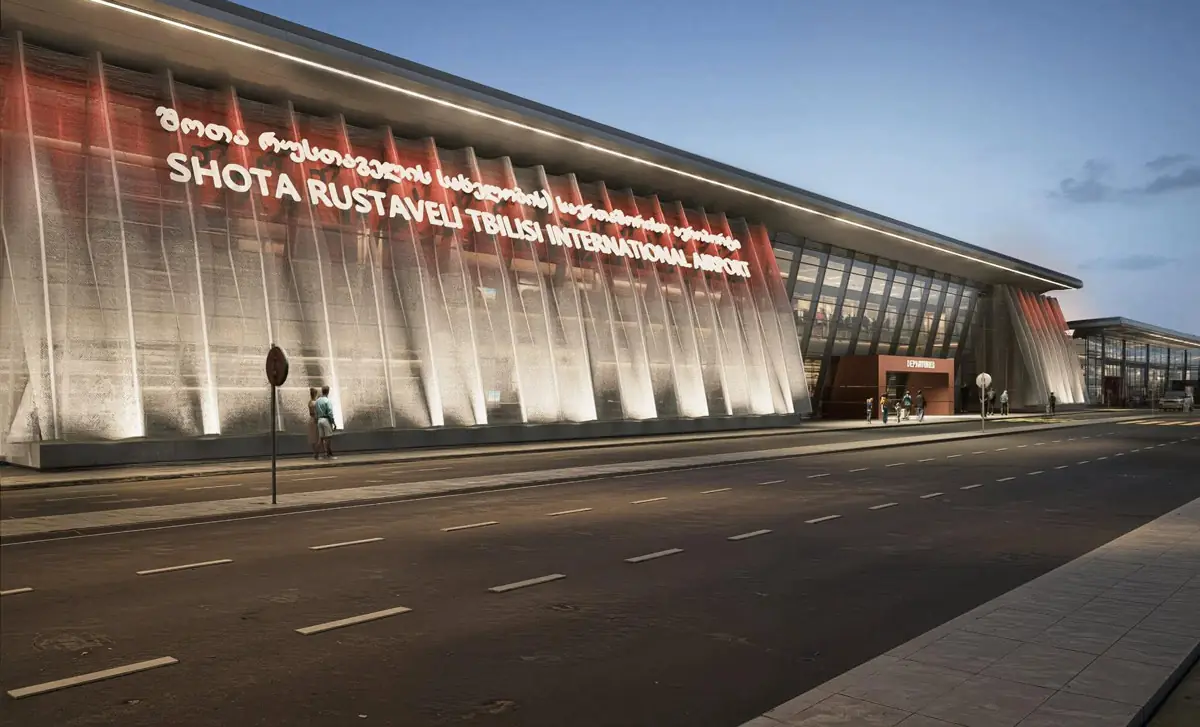
Both airports are easy. Tbilisi International is about 11 miles from the center, roughly a 20-minute Bolt ride. Zvartnots in Yerevan is about 8 miles out, with a fixed-price taxi stand and ride-hailing pickup.
Visas and Entry Rules for US Travelers
Neither country requires a visa for American tourists, and both are among the most generous entry regimes in the region.
| Georgia | Armenia | |
|---|---|---|
| Visa required for US citizens | No | No |
| Visa-free stay | Up to 365 days per entry | Up to 180 days within a year |
| Passport validity | Valid for duration of stay | Valid for duration of stay |
| Onward ticket | Rarely checked | Rarely checked |
| Mandatory insurance | Yes | No |
The insurance requirement is new and catches people out. Under Georgia’s tourism law, every visitor must hold valid health and accident insurance covering the entire stay, from a Georgian or foreign insurer, with minimum coverage of 30,000 GEL (roughly $11,000). The policy must be in Georgian or English and you must be able to present it at any entry point. Most standard US travel medical policies clear that bar easily, but you need the document, not just the intention. Save a PDF to your phone and print a copy for the border.
Because that rule is relatively recent and enforcement has been inconsistent, verify the current requirement with the US Embassy in Georgia before you fly. The same goes for any entry rule in this article. Regulations in the region change faster than most guidebooks update.
The Georgia to Armenia Border Crossing: Everything You Need to Know
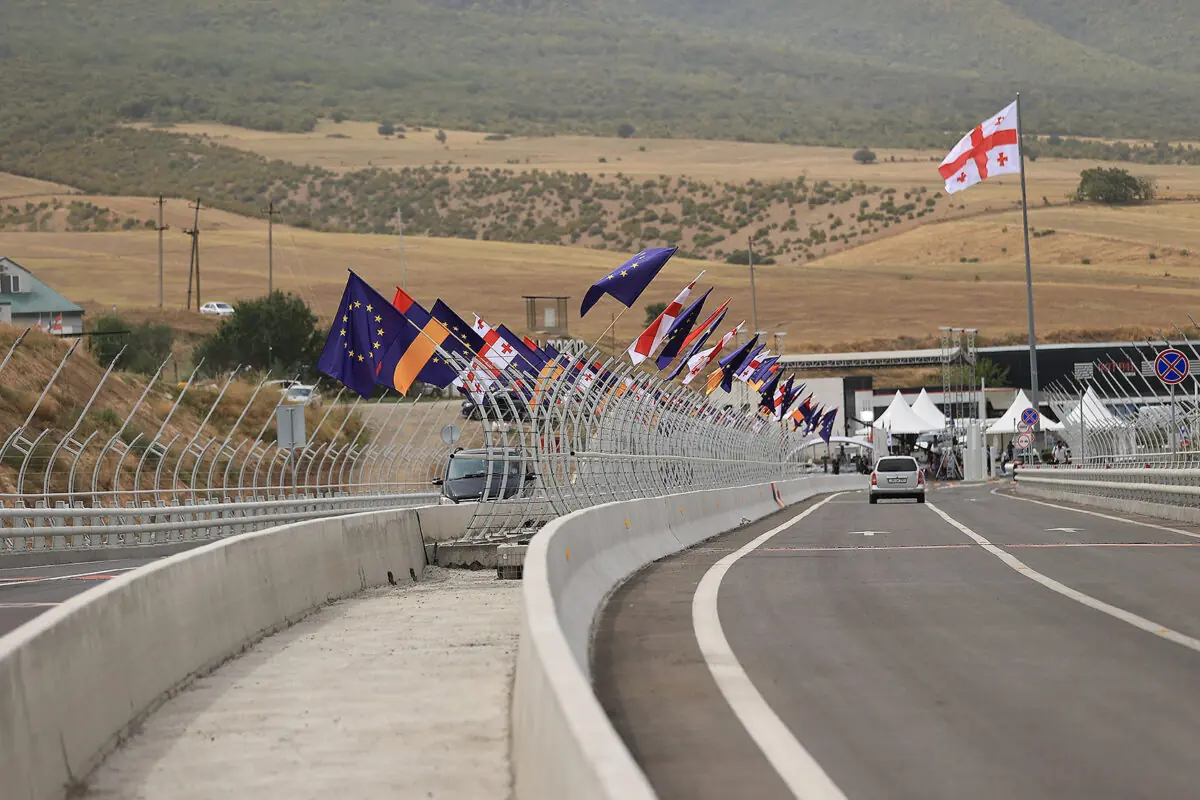
The main crossing is Sadakhlo on the Georgian side and Bagratashen on the Armenian side, on the M6/M1 highway that links Tbilisi and Yerevan. It is open 24 hours a day, it handles the overwhelming majority of traffic between the two countries, and for a US passport holder it is genuinely straightforward.
Here’s the shape of it: you exit Georgia at one building, walk or drive roughly 1,600 feet across a bridge over the Debed River, and enter Armenia at a second building. Two separate stops, two separate stamps, no visa fee, no forms to fill out in advance.
Which Crossing to Use
| Crossing | Route | Notes |
|---|---|---|
| Sadakhlo to Bagratashen | Main Tbilisi to Yerevan highway | Open 24/7, all public transport uses it, fastest, best facilities |
| Bavra to Ninotsminda | Southwestern route via Akhalkalaki and Gyumri | Useful if you’re coming from Vardzia or heading to Gyumri, far less transport |
| Gogavan to Guguti | Secondary route | Small, partly unpaved approach, minimal transport, avoid without your own vehicle |
Unless you have a specific reason to be in the southwest, use Sadakhlo.
How Long It Takes
On my crossings, Georgian exit formalities took about 10 minutes and Armenian entry about 20. Reports from other travelers land in the same range in normal conditions. Summer weekends and holiday periods can stretch that considerably, especially if you arrive behind a tour bus. Cars sometimes move slower than foot passengers, so if you’re on a marshrutka the driver may drop everyone to walk through while he handles the vehicle.
One change worth knowing: Armenian border guards took over staffing of the Armenian side from Russian forces at the start of 2025. In practice this has made nothing harder for tourists, but you may see older blog posts referencing Russian personnel.
Tbilisi to Yerevan: Every Transport Option Compared
| Option | Cost | Duration | Where it leaves from | Verdict |
|---|---|---|---|---|
| Marshrutka (minibus) | ~50 GEL, about $18 to $25 | 5 to 6 hours | Ortachala or Avlabari in Tbilisi, arrives Kilikia in Yerevan | Cheapest, cramped, departs when full |
| Shared taxi | $13 to $20 per seat | 5 to 6 hours | Same stations, negotiated on the spot | Faster than the marshrutka, similar price |
| Private transfer | $120 to $150 per car, door to door | 5 to 6 hours | Hotel pickup | Best for groups and families, can add stops |
| Overnight train #371/372 | $13 to $35 third class, $28 to $45 second, $65 to $90 first | About 10 hours | Tbilisi Central to Yerevan | Every second night off-season, sleeper cabins, saves a hotel night |
| Flight | $58 to $90 one way | 40 to 50 minutes | TBS to EVN | Fastest, but airport time erases most of the advantage |
The overnight train is the sentimental favorite and the one most people ask about. It departs Tbilisi around 20:20 and arrives in Yerevan around 06:55, with border formalities handled onboard in the middle of the night. Cabins are Soviet-era and basic. Buy tickets in person at the station when you can; they go on sale roughly 40 days ahead and sell out in summer. It runs every other night outside of peak season, so it is a scheduling constraint as much as a transport option.
If you want the best combination of speed, comfort, and cost, and you have two or more people, book a private transfer and ask the driver to stop at Haghpat and Sanahin monasteries in the Debed Canyon on the Armenian side. That converts a transit day into one of the better days of the trip, and it is exactly what the day-by-day route below does.
Can You Cross the Border in a Rental Car?
Yes, but only with paperwork arranged in advance, and this is where self-drivers get stung.
Three things have to be true before you reach Sadakhlo:
- Cross-border authorization. Your rental company must issue a power of attorney or cross-border permit naming Armenia. This is arranged when you book, not at the counter and definitely not at the border. Expect a fee, commonly around 100 euros, and expect it to take a few business days to process.
- Vehicle class restrictions. Most agencies permit only certain categories to leave Georgia. Newer or premium vehicles are frequently excluded. Confirm the specific car, not just the policy.
- Armenian third-party liability insurance. Your Georgian insurance stops working the moment you cross. Armenia requires mandatory TPL coverage, sold at kiosks roughly 300 feet past the Armenian checkpoint. It is inexpensive and takes a few minutes. Driving on without it risks a police fine, and it will void you in any incident.
Major agencies including Enterprise, Avis, Alamo, and local operators like StarCar allow cross-border travel with the correct permit. Alamo has offered one-way Tbilisi to Yerevan rentals, which is the ideal setup for an open-jaw trip if the pricing works out. Ask about one-way availability early, because it’s limited.
A practical alternative many travelers land on: rent within Georgia, return the car in Tbilisi, cross by transfer or train, and rent again in Armenia. It usually costs less than the permit plus one-way fees, and it removes the paperwork risk entirely.
The Azerbaijan and Nagorno-Karabakh Stamp Question
For a Georgia and Armenia trip, this is a non-issue. It matters only if you plan to add Azerbaijan, now or later.
The facts, plainly: the Armenia to Azerbaijan land border is closed, so any three-country trip must transit through Georgia. A standard Republic of Armenia entry stamp does not legally bar you from Azerbaijan, though it can prompt extra questioning at Azerbaijani immigration. What does cause a problem is any evidence of having entered Nagorno-Karabakh, which Azerbaijan treats as illegal entry into its territory. That means denial of entry and, in practice, a long-term or permanent ban.
If Azerbaijan is anywhere in your future travel plans, do not visit Nagorno-Karabakh, and don’t carry souvenirs, receipts, or geotagged photos from it. If you’re only doing Georgia and Armenia, stamp order and stamp content are irrelevant.
Is It Safe to Travel to Georgia and Armenia?
Both countries are safe for tourists on the standard routes, with specific and clearly defined exceptions that no normal itinerary goes anywhere near.
Because advisories change, check travel.state.gov for both countries before you book and again before you fly. Here is the picture as I understand it, with the caveat that it’s a moving target.
Georgia
The State Department rates Georgia Level 1, Exercise Normal Precautions, which is the same rating given to most of Western Europe. Two exceptions carry a Level 4 Do Not Travel designation: the Russian-occupied regions of Abkhazia and South Ossetia. Both are physically inaccessible from the rest of Georgia anyway, and no tourist route approaches them.
The relevant on-the-ground issue in Tbilisi is protest activity. Since the parliamentary elections in late 2024, demonstrations have taken place on and around Rustaveli Avenue near the Parliament building, at times nightly. They have been overwhelmingly peaceful, but police have used water cannon and tear gas on some occasions. The practical advice is what it would be in any capital: don’t walk into a demonstration to look at it, don’t photograph police lines, and route around Rustaveli in the evening if crowds have gathered. The Old Town, the sulfur bath district, Vera, and Sololaki have been unaffected.
Petty crime is low by European standards. Violent crime against tourists is rare. The genuine hazards in Georgia are traffic and mountain roads, not people.
Armenia
Armenia sits at Level 2, Exercise Increased Caution, with a Level 4 Do Not Travel designation for the immediate border region with Azerbaijan. The US Embassy also restricts its own personnel from parts of Gegharkunik east of Vardenis and Syunik east of Goris or south of Kapan.
This is the important part: not one site on a standard Armenia itinerary falls inside those zones. Yerevan, Echmiadzin, Garni, Geghard, Khor Virap, Lake Sevan’s western and northern shores, Dilijan, Areni, Noravank, and Tatev are all well clear. The restricted areas are remote stretches of the eastern and southern frontier that you would have to deliberately drive toward.
On the geopolitics: in August 2025, the prime minister of Armenia and the president of Azerbaijan initialed an agreement on the establishment of peace and inter-state relations and signed a joint declaration at the White House. Border delimitation work has continued since, but the treaty itself remains unsigned, with Baku reportedly waiting on Armenia’s constitutional reform process. The trend has been toward de-escalation. Verify the current status before you travel, because this section will date faster than any other.
Solo Female Travelers, LGBTQ+ Travelers, and Accessibility
Solo women travel both countries routinely and report feeling comfortable, particularly in Yerevan, which has an unusually safe late-night street culture. Expect curiosity and questions about why you’re traveling alone rather than hostility. In rural guesthouses, the family will often fold you into dinner. Standard precautions apply on night marshrutkas and with unlicensed taxis; use Bolt or Yandex Go instead.
For LGBTQ+ travelers, both countries are socially conservative and public displays of affection between same-sex couples will draw attention and can draw hostility, despite homosexuality being legal in both. Tbilisi has a small, discreet queer nightlife scene. Same-sex couples booking a double room in a rural guesthouse rarely encounter difficulty in practice, but discretion is the widely shared advice.
On accessibility, be realistic. Both countries are difficult for wheelchair users. Old Tbilisi is cobblestone and stairs, most monasteries involve unpaved paths or steps, and the metro systems are largely inaccessible. Yerevan’s central grid is flatter and easier than Tbilisi’s hills. A private driver rather than public transport transforms what’s possible, and several Yerevan-based operators now specialize in accessible day trips.
The 2-Week Georgia and Armenia Itinerary, Day by Day
This is the route: Tbilisi, the Georgian Military Highway to Kazbegi, Kakheti wine country, a slow border crossing through the Debed Canyon, Yerevan and its day trips, Sevan and Dilijan, then the southern loop to Tatev before flying home from Yerevan.
Days 1 to 3: Tbilisi
Land in Tbilisi and give the city three nights. It rewards the time.
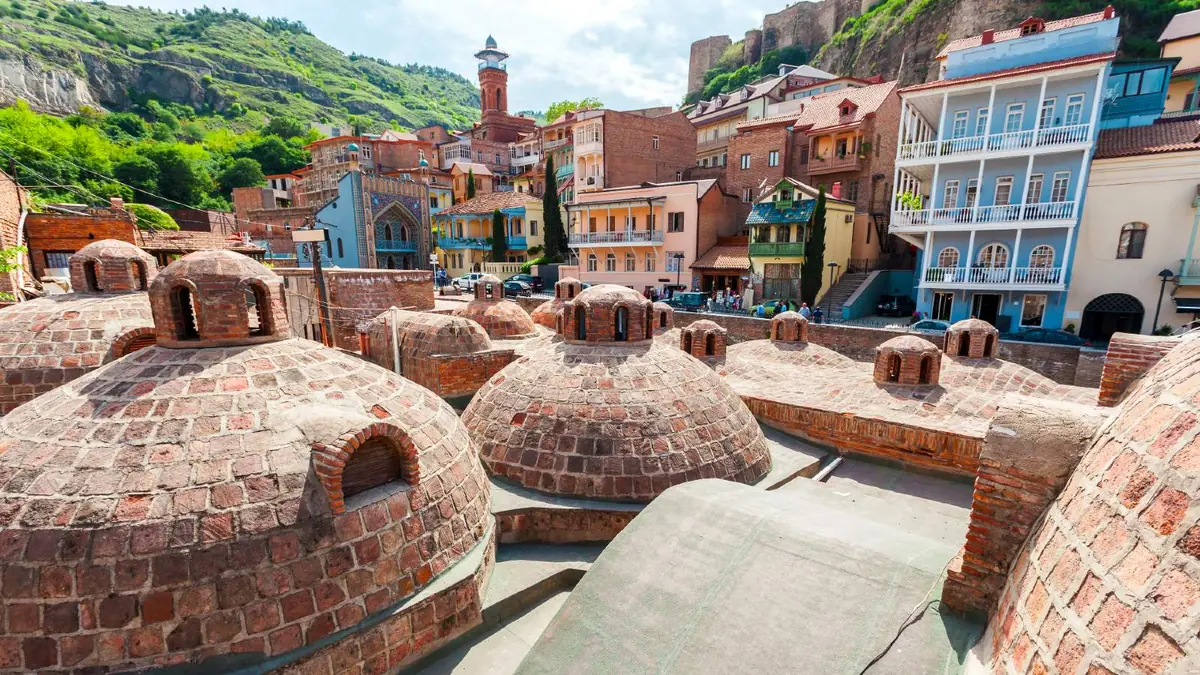
Day one is for the Old Town on foot. Start at Meidan Bazaar, walk up through the sulfur bath district at Abanotubani where the brick domes sit half-buried in the ground, and take the cable car from Rike Park up to Narikala Fortress for the view back over the rooftops. Come down through the Betlemi steps. In the evening, book a private room at one of the sulfur baths, which run around 60 to 100 GEL per hour for a small room and are worth every lari after a long-haul flight.
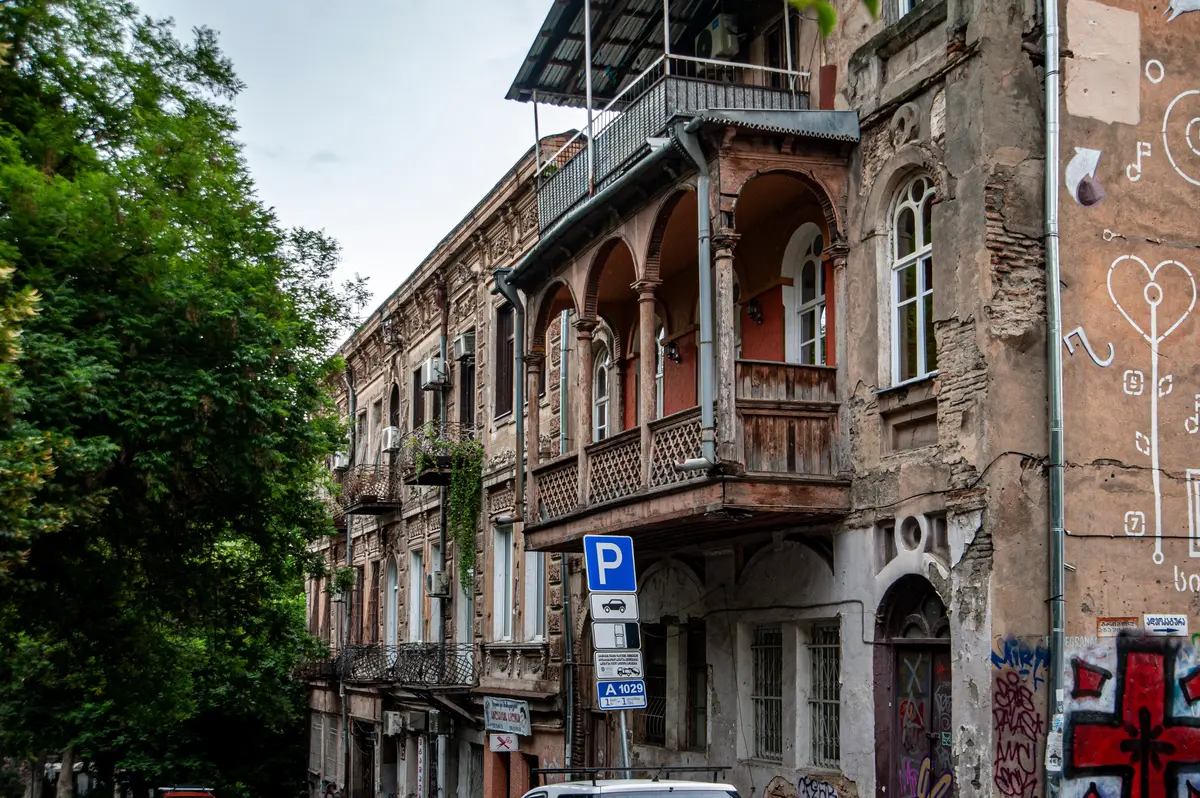
Day two, go modern and residential. The Chronicle of Georgia, a set of enormous bronze pillars on a hill outside the center, is genuinely startling and almost always empty. Then walk Vera and Sololaki, where the crumbling art nouveau stairwells and stained glass are the real attraction, and finish at the Dry Bridge flea market if it’s a weekend.
Day three, take the half-day trip to Mtskheta, the old capital 15 miles north. Svetitskhoveli Cathedral and Jvari Monastery are both UNESCO-listed and both live up to it. A Bolt out and back runs about $20 total, or a marshrutka from Didube station costs under $1.
Where I stayed: Fabrika, the converted Soviet sewing factory in Marjanishvili, for the courtyard scene, and later a guesthouse in Sololaki for the balconies. Eat at Barbarestan, which reconstructs 19th-century Georgian recipes from a single found cookbook, and at Shavi Lomi for the modern version.
Day 4: Kazbegi and the Georgian Military Highway
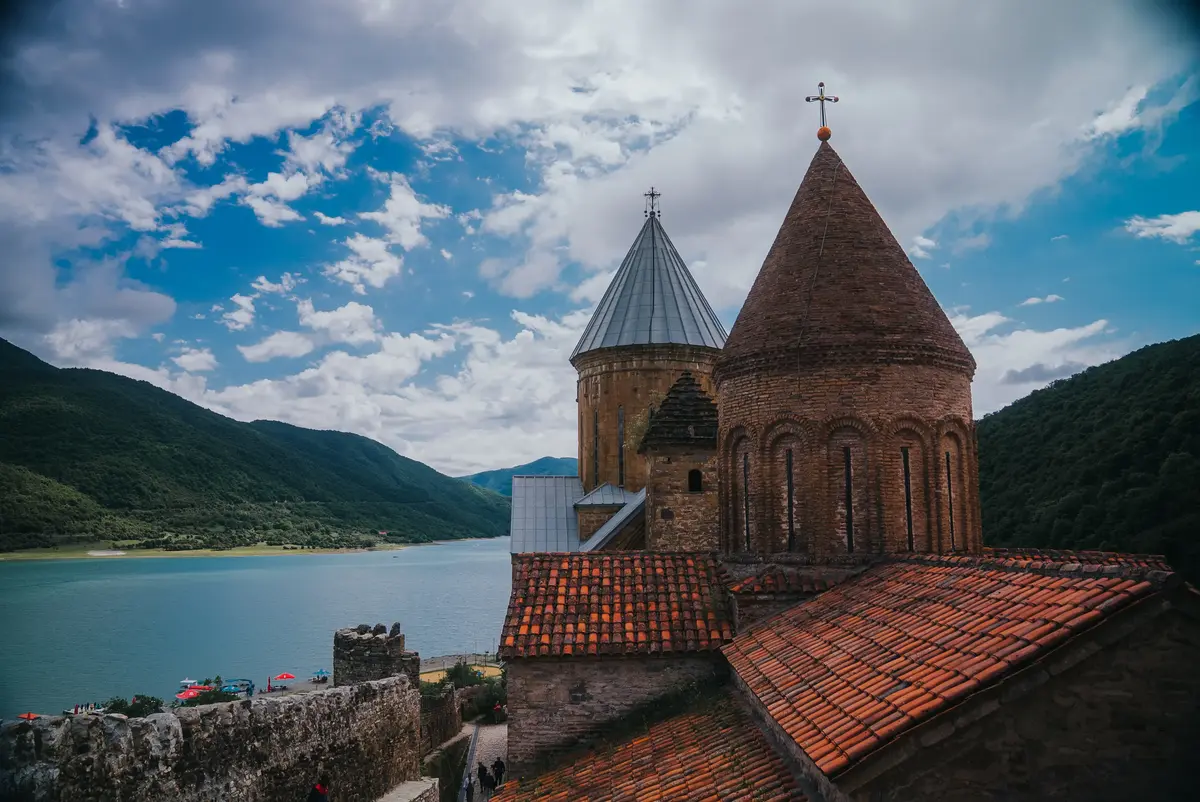
The drive north to Stepantsminda, which everyone still calls Kazbegi, is one of the great road trips. It follows the Georgian Military Highway through the Jvari Pass, past the Ananuri fortress complex on the Zhinvali reservoir and the mosaic-covered Russia-Georgia Friendship Monument.
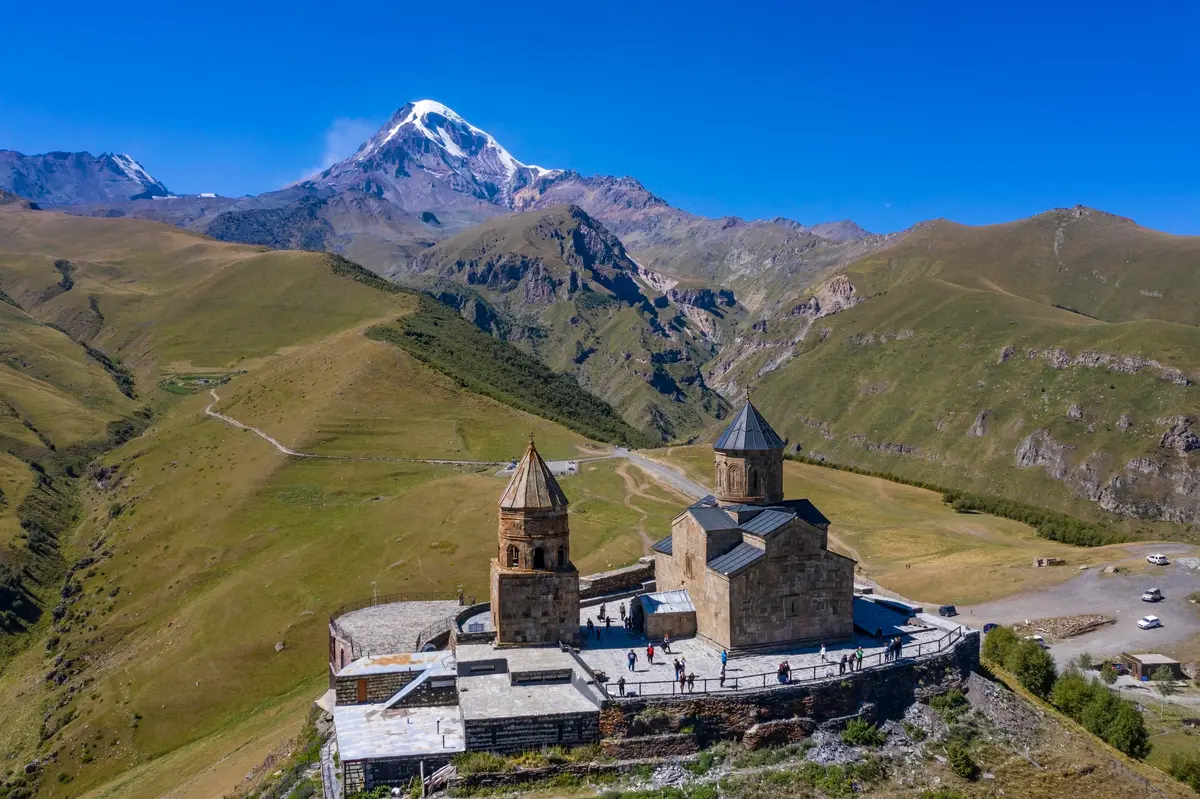
At the end sits Gergeti Trinity Church, at about 7,120 feet with Mount Kazbek behind it. You can hike up in roughly 90 minutes each way, or take a 4×4 for about 25 GEL per person round trip. Hike up, ride down.
You can do this as a long day trip from Tbilisi, and many do, but it’s a nine or ten hour day with four hours in the car. If your schedule allows, sleep in Stepantsminda instead. Rooms Hotel Kazbegi has the famous floor-to-ceiling window view and prices to match, and there are a dozen family guesthouses in town at a quarter of the cost with the same mountain out front.
Days 5 and 6: Kakheti Wine Country
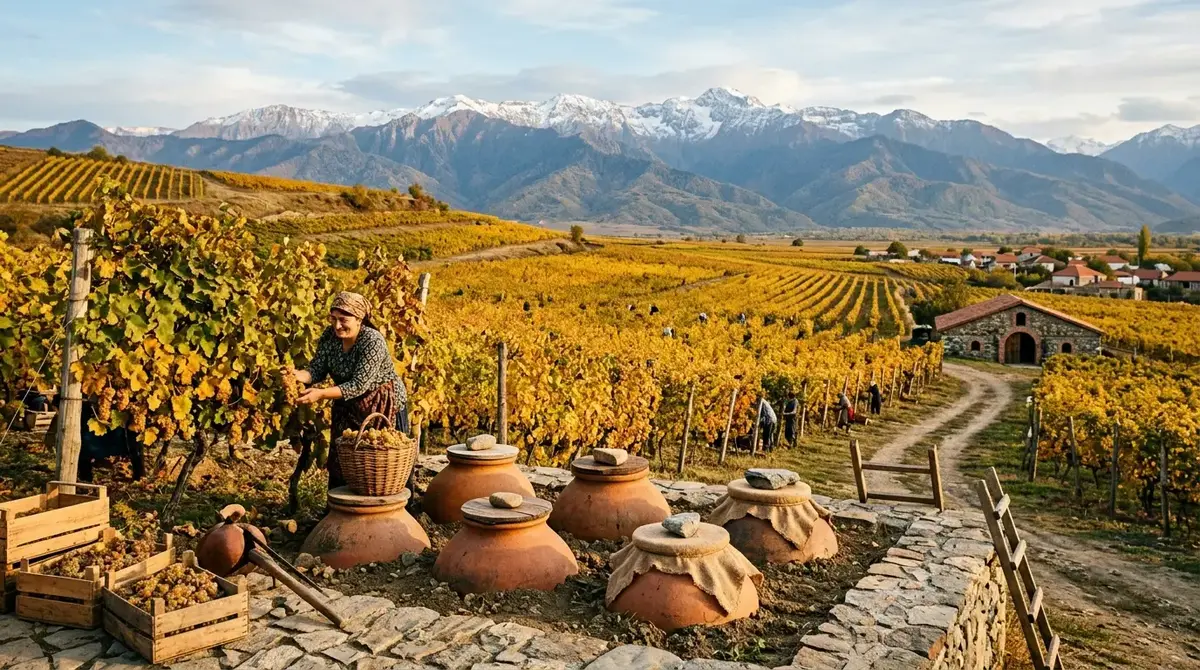
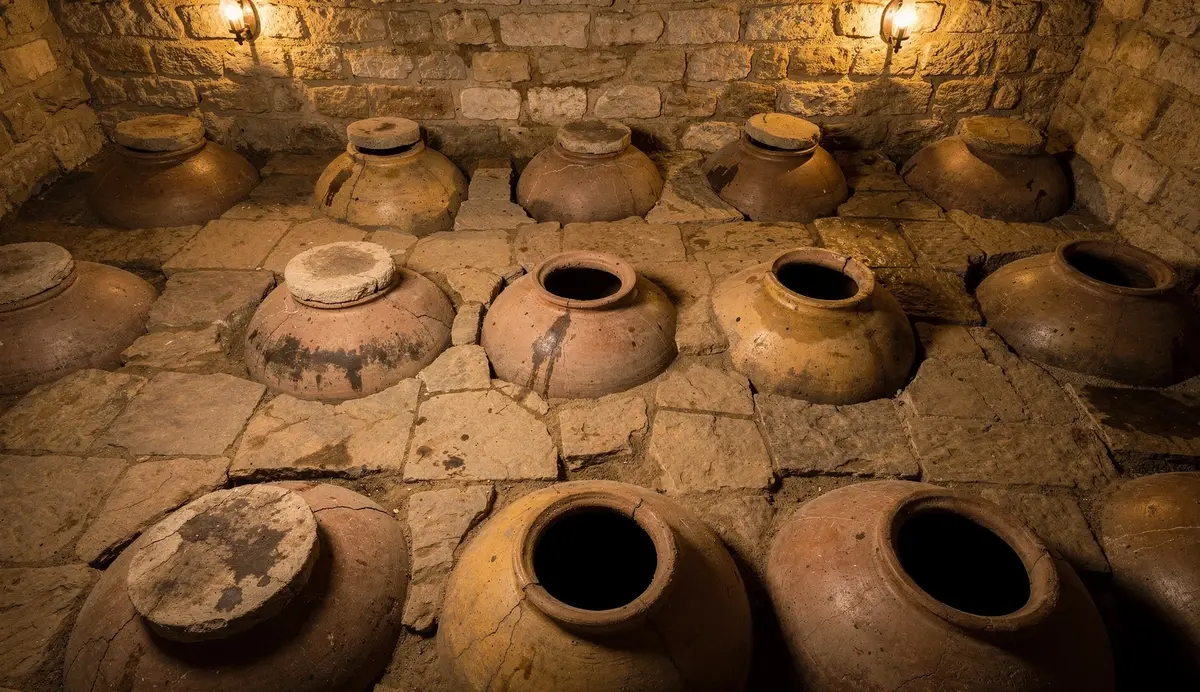
Head east into Kakheti, Georgia’s wine heartland and the birthplace of the 8,000-year-old qvevri method, which UNESCO added to its intangible cultural heritage list in 2013. Qvevri are enormous clay vessels buried up to their necks in the ground, and wine fermented in them with skins and stems produces the amber wines this region is now known for worldwide.
Base yourself in Sighnaghi, a walled hilltown above the Alazani Valley with the Caucasus range on the horizon. It’s small, extremely pretty, and slightly touristy in a way that’s easy to forgive. Nato & Lado is the guesthouse that turns up on every recommendation list, and deservedly.
Spend the days visiting family wineries rather than big producers. Pheasant’s Tears in Sighnaghi, Schuchmann near Telavi, and any number of small cellars where the host will bring out a jug from the qvevri in the corner. A full-day guided wine tour from Tbilisi or Sighnaghi runs around $40 per person. Bodbe Monastery, a 15-minute walk from town, is worth an hour.
If you’re here in late September or early October during rtveli, ask your guesthouse if they need harvest help. You’ll get a day in the vineyard and a supra afterward.
Day 7: Cross the Border Through the Debed Canyon
Leave Sighnaghi or Tbilisi in the morning and cross at Sadakhlo. This is the day to spend money on a private transfer rather than take the marshrutka, because the Armenian side of this route contains two of the country’s best monasteries and public transport blows straight past both.
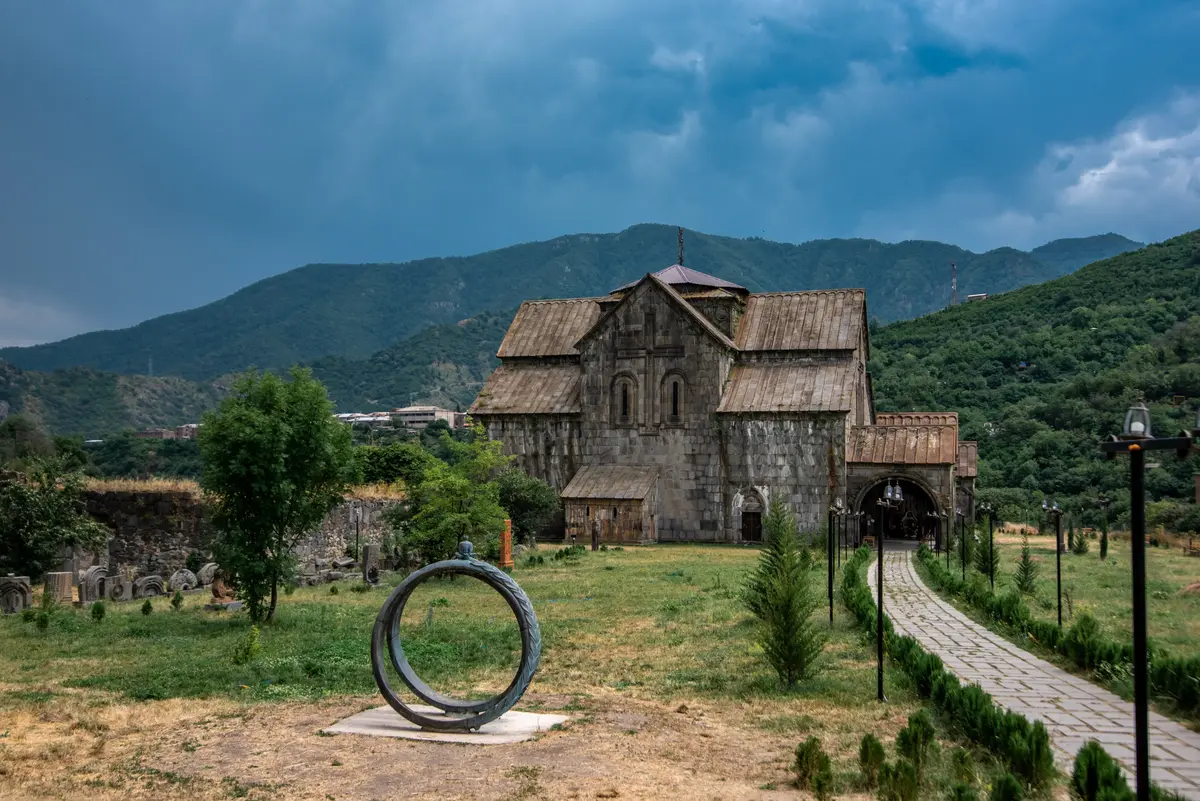
Haghpat and Sanahin sit ten minutes apart in the Debed Canyon, roughly 25 miles past the border. Both are UNESCO World Heritage sites, both date to the 10th century, and both are the kind of dark, moss-edged, mountain-shouldered complexes that make you understand why medieval Armenians built where they did. Add Akhtala if you have the appetite, for its Byzantine-style frescoes.
Continue to Yerevan, arriving in the evening. Total day: about eight hours with stops. A transfer with monastery stops typically runs $150 to $200 for the car.
Days 8 to 10: Yerevan and Its Day Trips
Yerevan is a pink city, built largely from local volcanic tuff, laid out on a Soviet radial plan around Republic Square. It has the best café culture in the Caucasus and a nightlife that runs genuinely late.
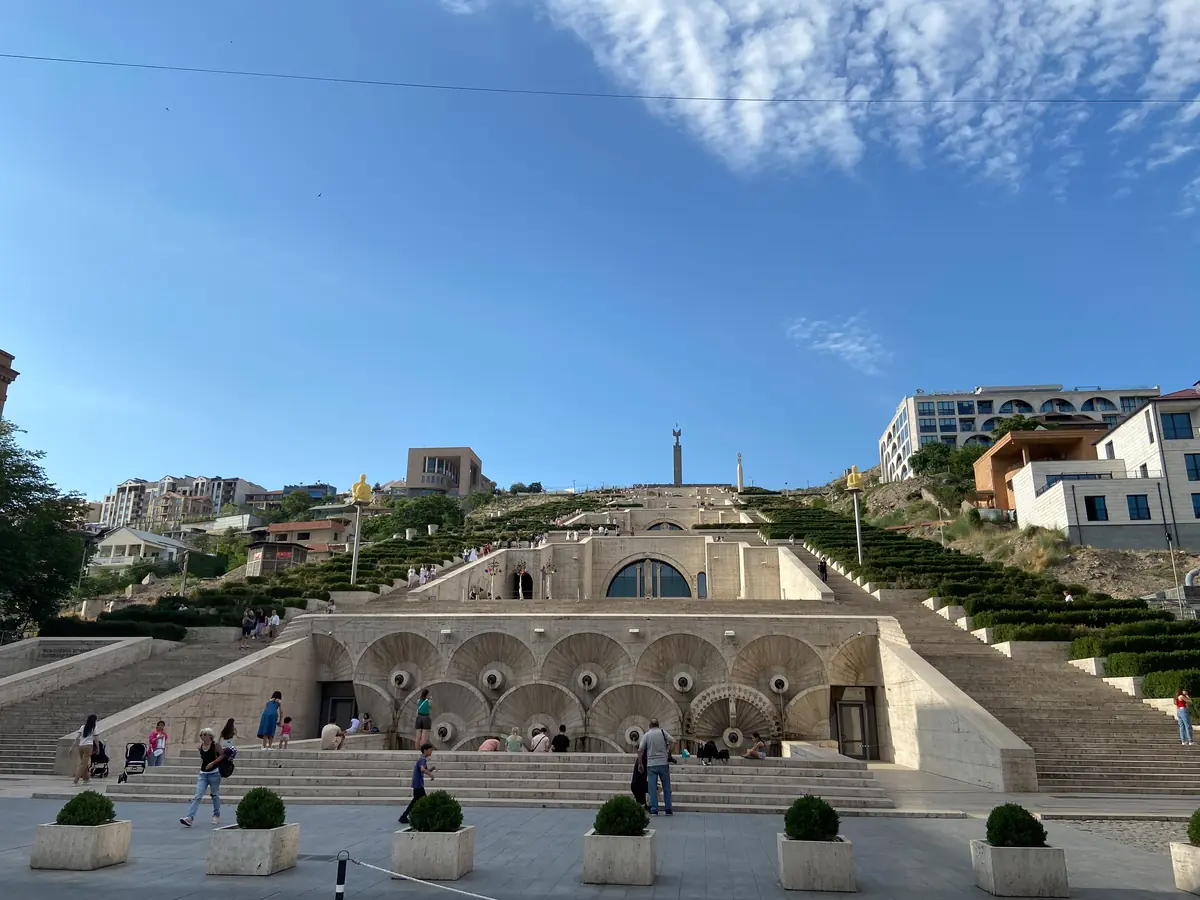
Day eight is the city itself. Climb the Cascade, a giant stone stairway of terraces filled with contemporary sculpture from the Cafesjian collection, for the view toward Ararat on a clear morning. Walk down to Republic Square for the singing fountains in the evening. Spend a couple of hours at the Armenian Genocide Memorial and Museum at Tsitsernakaberd, which is sober, well-curated, and essential context for everything else you’ll see. Browse the Vernissage open-air market on a weekend.
Day nine is the classic eastern trip: Garni, a first-century Hellenic colonnaded temple standing alone above a gorge, and Geghard, a UNESCO-listed monastery partly hewn directly into the rock face where singers demonstrate the acoustics in the carved chambers. Below Garni, the Symphony of Stones basalt columns are worth the short detour. A driver for the day is about $50 to $70, or a group tour around $10 to $15 per person.
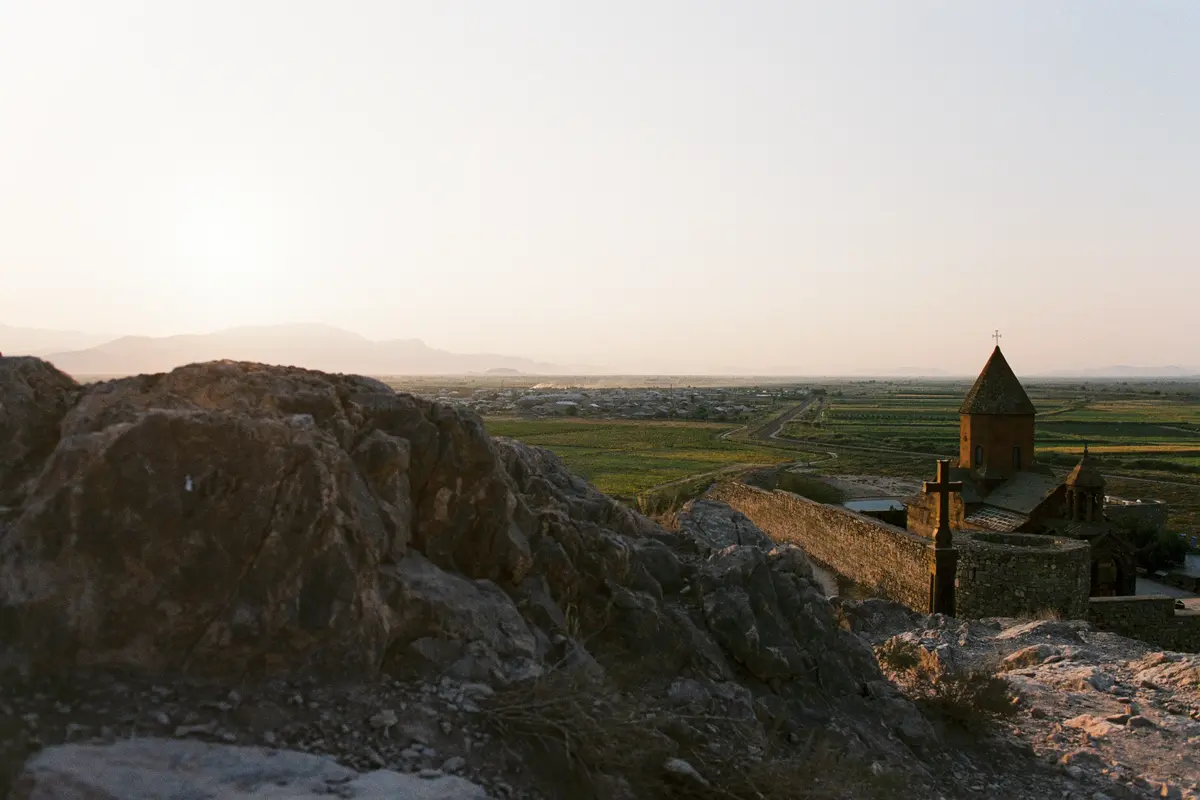
Day ten goes west and south: Echmiadzin Cathedral, the mother church of the Armenian Apostolic Church and one of the oldest cathedrals anywhere, plus the ruins at Zvartnots, then Khor Virap. Khor Virap is the shot you’ve seen: a small monastery on a hillock with Mount Ararat filling the entire sky behind it, close enough that it seems impossible the mountain is across a closed border in Turkey. Go in the morning, when the haze is thinnest.
Where I stayed: an apartment in Kentron, the central district, which is where you want to be. Envoy Hostel is the reliable budget pick and runs its own tours. Eat at Lavash for the modern take and Tavern Yerevan for the traditional one.
Day 11: Lake Sevan and Dilijan
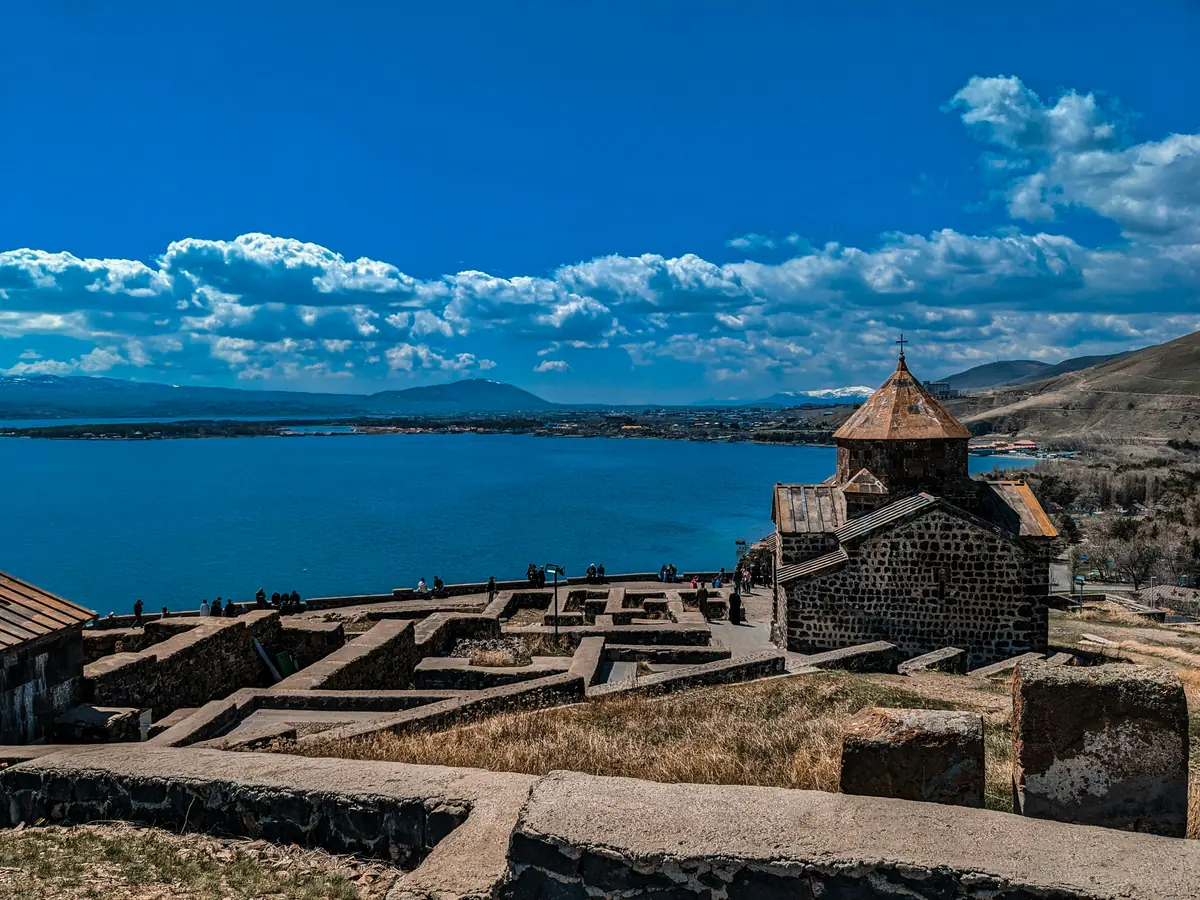
Drive northeast to Lake Sevan, one of the largest high-altitude lakes in the world, and stop at Sevanavank on its peninsula. The lake is a startling blue and the churches are modest, but the setting does the work. Have the lake trout, ishkhan, at a lakeside spot.
Then continue over the pass into Dilijan, known as Armenia’s Switzerland, a forested resort town in Tavush province. The old town on Sharambeyan Street is small and restored. The real draw is nearby Haghartsin Monastery, tucked into deep forest, and the walking trails around Parz Lake. Dilijan is also the eastern trailhead region for the Transcaucasian Trail if you want a half-day hike.
Sleep in Dilijan. Toon Armeni and a handful of family guesthouses cover the mid-range, and the air after Yerevan in summer is a relief.
Days 12 and 13: The Southern Loop to Tatev
This is the stretch most short itineraries drop, and it’s the reason to take fourteen days.
Head south through the Areni valley, Armenia’s wine country, where the Areni-1 cave holds the oldest known winery on earth, radiocarbon-dated to roughly 4100 to 4000 BC and at least a thousand years older than anything found before it. Stop at a family winery in Areni village for a tasting that costs less than a glass of wine at home.
Ten minutes further, Noravank sits at the head of a narrow red-rock canyon. The 13th-century church has an external stone staircase up the facade with no railing, which you may or may not want to climb.
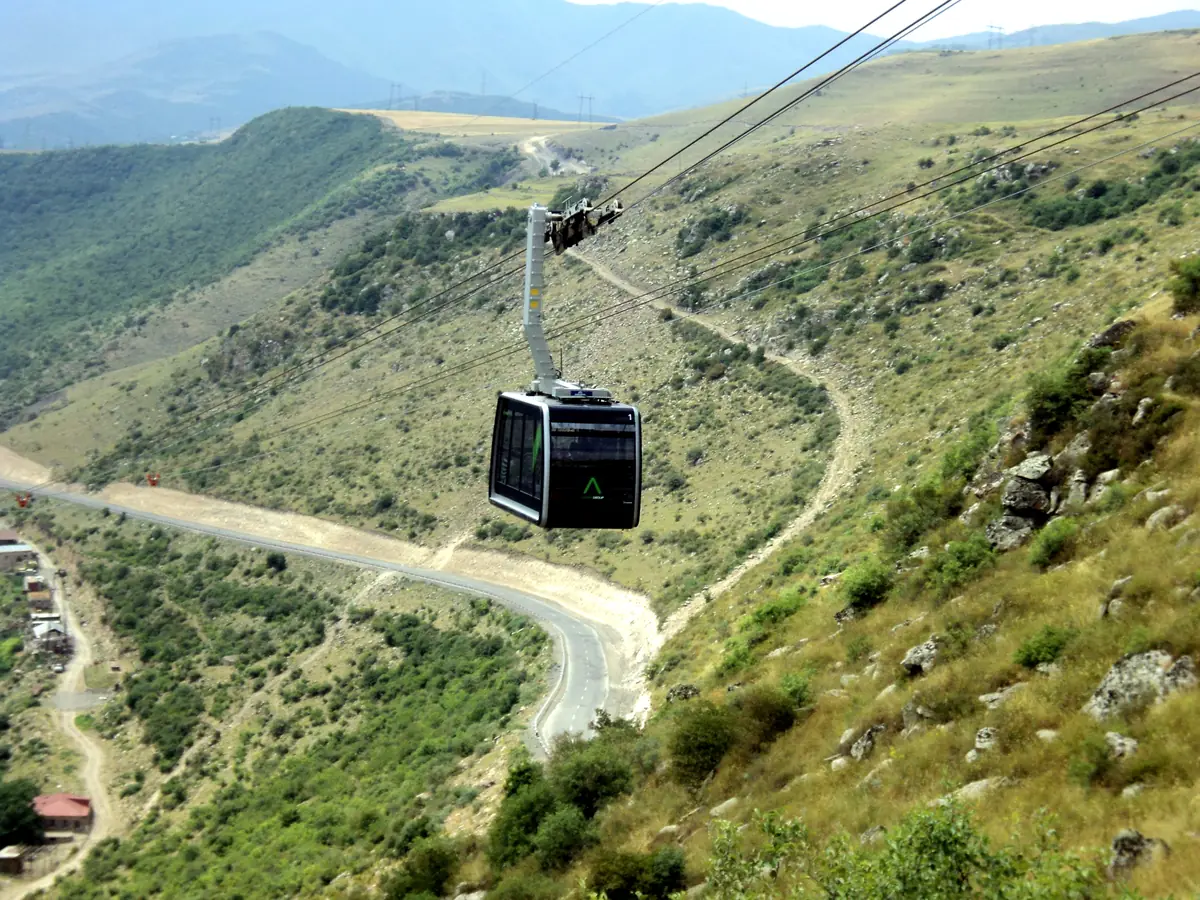
Continue south to Halidzor for the Wings of Tatev, the longest reversible non-stop double-track aerial tramway in the world at 3.6 miles, running up to about 1,050 feet above the Vorotan Gorge. The ride takes 12 minutes each way and costs around 9,000 AMD, roughly $23, round trip. At the far end, Tatev Monastery sits on a promontory above the gorge, a ninth-century complex that was once a university and remains the most dramatically sited building in either country.
Sleep in Goris or at a guesthouse near Tatev, then return to Yerevan on day thirteen with a stop at the Old Khndzoresk swinging bridge or the Karahunj standing stones, sometimes called the Armenian Stonehenge.
Day 14: Yerevan and Departure
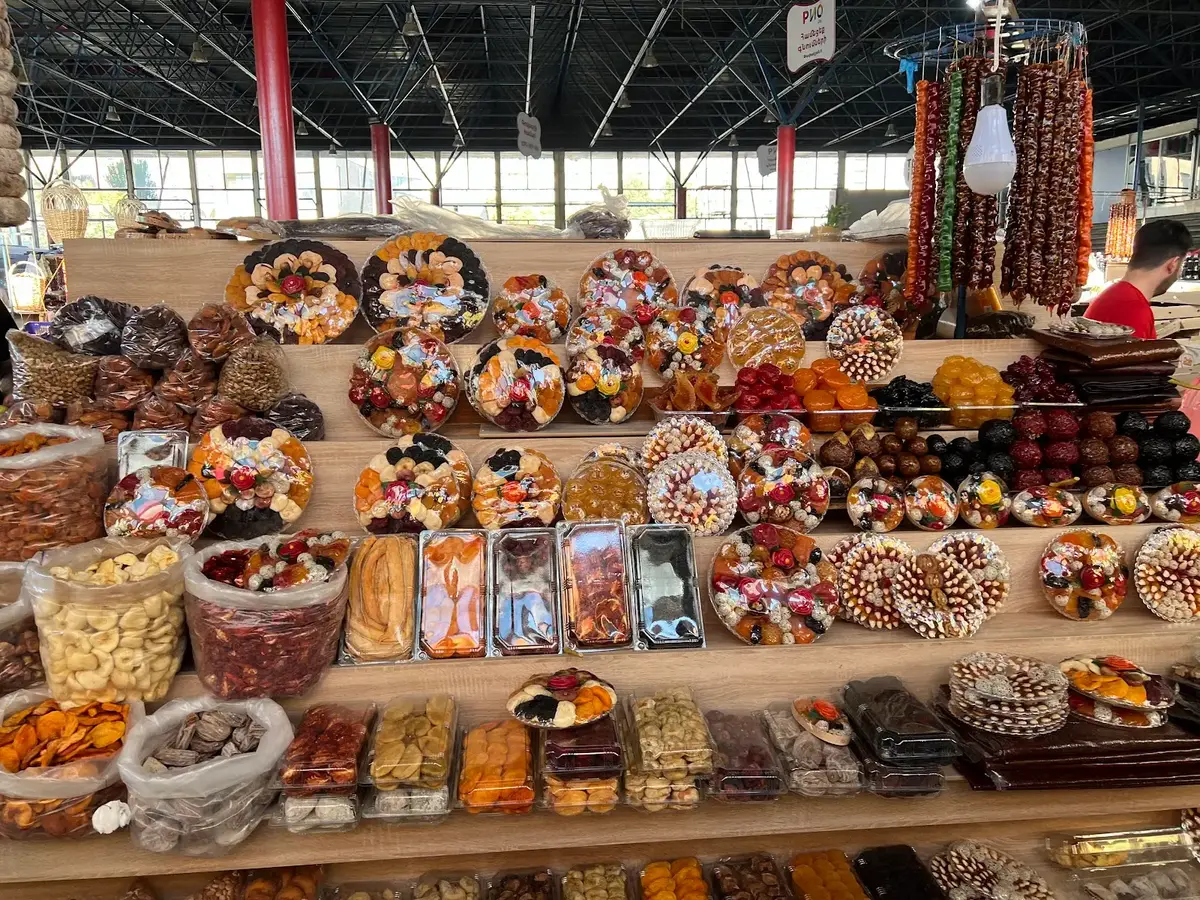
Keep the last day loose. Buy dried fruit and lavash at the GUM covered market, pick up pottery or a khachkar rubbing at Vernissage, have one more coffee on the Cascade steps, and fly out of Zvartnots. If your flight is late, the Matenadaran manuscript museum is a superb 90 minutes and sits close to the center.
Shorter and Longer Versions of This Route
The 7-Day Version
Days 1 to 3 Tbilisi with a long Kazbegi day trip on day two. Day 4 cross to Yerevan by marshrutka or transfer. Days 5 to 7 Yerevan with the Garni and Geghard day trip and a Khor Virap morning. Fly home from Yerevan.
Cut Kakheti and the southern loop. If you’d rather see wine country than mountains, swap the Kazbegi day for a Kakheti day instead.
The 10-Day Version
Days 1 to 3 Tbilisi. Day 4 Kazbegi overnight. Days 5 and 6 Sighnaghi and Kakheti. Day 7 cross via the Debed Canyon. Days 8 to 10 Yerevan with day trips. Fly home from Yerevan.
This drops southern Armenia. If Tatev is a must-see, cut Kakheti instead and run Tbilisi, Kazbegi, border, Yerevan, Tatev.
The 21-Day Version
Add to the two-week route in this order of priority:
- Three nights in Svaneti (Mestia and Ushguli), which requires either a long drive from Zugdidi or a short flight from Tbilisi to Mestia, plus one buffer day for weather
- Two nights in Kutaisi for Gelati Monastery, Prometheus Cave, and the Okatse or Martvili canyons
- Two nights in Gyumri, Armenia’s second city, with its rebuilt black tuff old quarter and strong museum scene
- One night in Jermuk or the Vayots Dzor highlands
- One or two nights in Batumi if you want the Black Sea
Three weeks is also the point at which self-driving becomes clearly worth the hassle.
Should You Add Azerbaijan?
Only if you have at least 18 days, and only with the routing understood in advance.
The Armenia to Azerbaijan land border is closed, so a three-country trip must be shaped Azerbaijan, Georgia, Armenia or Armenia, Georgia, Azerbaijan, with Tbilisi as the hinge. The Tbilisi to Baku overnight train is the classic link and takes roughly 13 to 14 hours. Azerbaijan requires an e-visa for US citizens, which is applied for online and typically approved within a few business days.
Baku is genuinely worth it: a walled medieval old city sitting inside a Gulf-money skyline, the Zaha Hadid-designed Heydar Aliyev Center, and mud volcanoes and petroglyphs on the Absheron Peninsula. But it adds a visa, a long overland leg, and the stamp sensitivities discussed above. For a first trip to the region, two countries done properly beats three done at speed.
Where to Stay
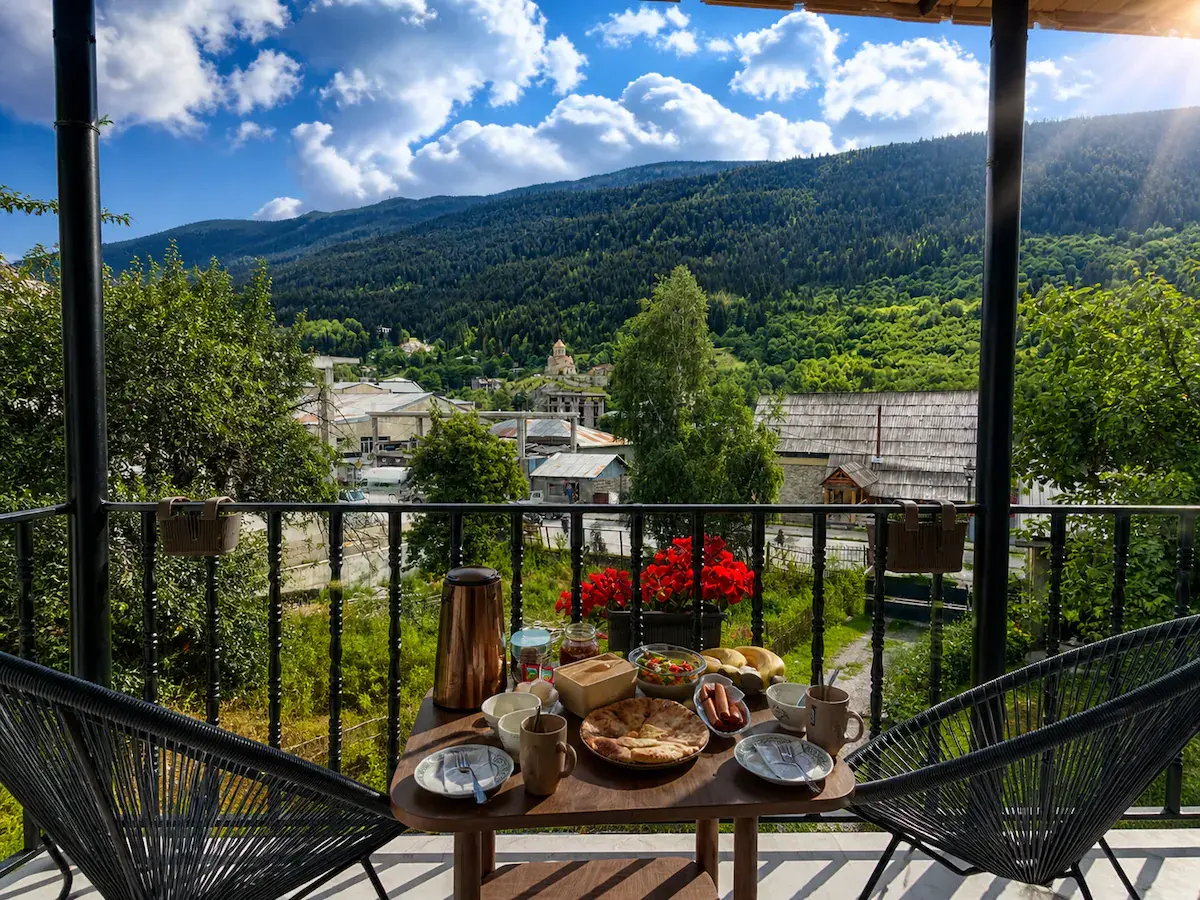
Guesthouses are the defining accommodation style in both countries and the best value on earth. A family room with breakfast, and often dinner, runs $25 to $50 outside the capitals. Book direct where you can; many rural properties charge less by phone or WhatsApp than through booking platforms.
- Tbilisi: stay in Sololaki or Vera for atmospheric old apartments and walkability, the Old Town for proximity at the cost of noise, or Marjanishvili and Chugureti for a younger, cheaper scene. Expect roughly $50 for a solid three-star and $95 and up for four-star.
- Kazbegi and Stepantsminda: family guesthouses at $30 to $50 with the same mountain view as the $250 hotel.
- Sighnaghi: small guesthouses with valley-facing terraces, $35 to $60.
- Yerevan: stay in Kentron, the central district, within walking distance of Republic Square and the Cascade. Apartments are excellent value here. Average hotel rates run about $62 to $74.
- Dilijan: forest guesthouses and a few design-forward small hotels, $40 to $80.
- Goris or Tatev: simple guesthouses, $30 to $50, often with home-cooked dinner included.
Summer peak, roughly mid-June through August, pushes accommodation up 15 to 25 percent in both capitals.
Getting Around Georgia and Armenia
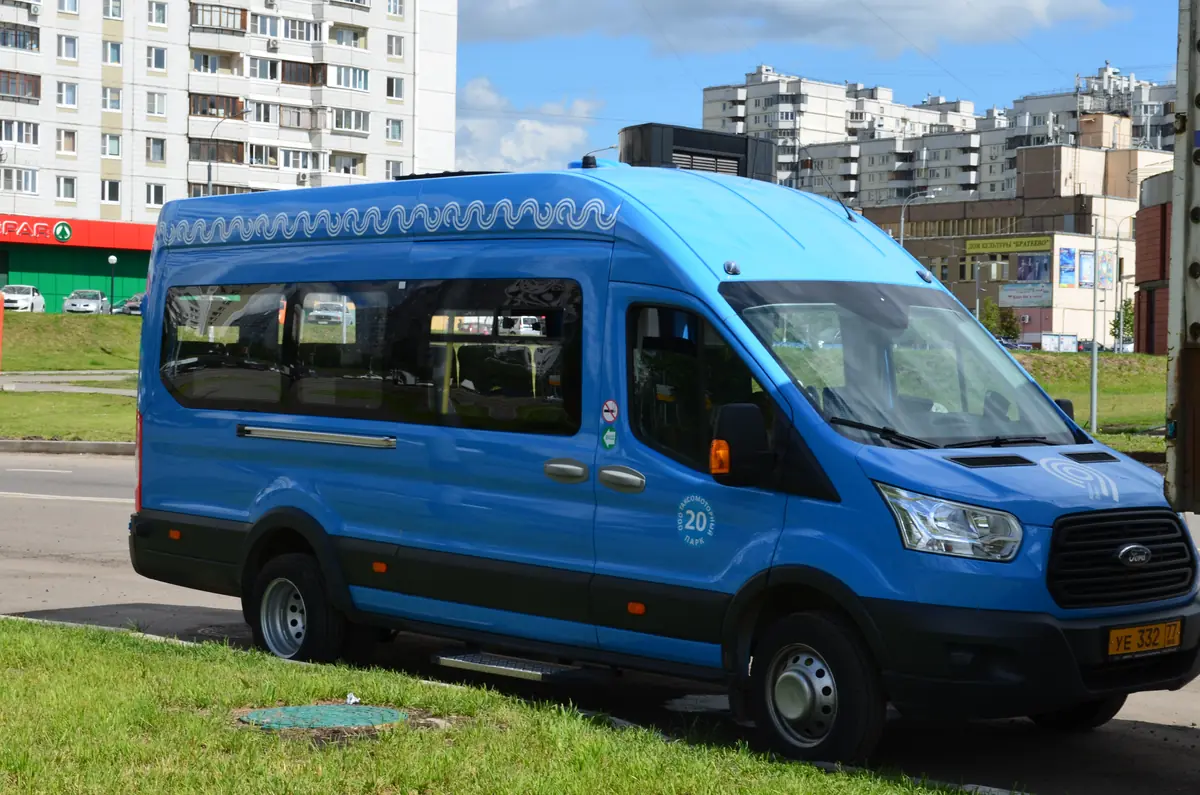
Marshrutkas are shared minibuses, the backbone of transport in both countries. They cost a few dollars, leave from designated stations when full rather than on a timetable, and go almost everywhere. They are also cramped, hot in summer, and driven with commitment. Use them for short hops and when you’re not in a hurry.
Ride-hailing is excellent and cheap. Bolt works in both Tbilisi and Yerevan, Yandex Go in Tbilisi. A cross-city ride typically runs $3 to $9. Always use the app rather than flagging a taxi, both for price and for the record of the trip.
Hired drivers are the best value proposition in the region and the thing I’d spend money on first. A driver for a full day of sightseeing costs $50 to $80, which for two or more people beats a group tour on flexibility and often on price. Guesthouses will arrange one within an hour.
Self-driving is very doable on main roads, which are mostly good, and demanding elsewhere. Expect livestock on rural highways, aggressive overtaking, unlit road works, and mountain tracks that require a real 4×4 rather than a soft crossover. An International Driving Permit is recommended for both countries. Fuel is cheap by US standards.
Domestic flights barely exist. The exception is the small plane from Tbilisi to Mestia in Svaneti, which is inexpensive, weather-dependent, and spectacular.
The Tbilisi to Yerevan overnight train is covered above. Within Georgia, comfortable modern trains run Tbilisi to Batumi and Tbilisi to Kutaisi and are a good alternative to marshrutkas on those routes.
Food and Wine: Georgia vs. Armenia
Both countries take food seriously, and both will feed you past the point of reason.
Georgia’s table centers on the supra, a feast run by a tamada, the elected toastmaster whose job is to propose a structured sequence of toasts through the meal. You will not be allowed to sip through a toast; the wine goes down in one. The core dishes are khachapuri, cheese-filled bread that comes in regional forms including the Adjarian boat topped with a raw egg and butter, and khinkali, twisted soup dumplings that you grab by the knot, bite, slurp, and eat while leaving the doughy top behind on the plate. Beyond that: pkhali, vegetable and walnut pâtés; badrijani nigvzit, eggplant rolls with walnut paste; and lobio, a bean stew served in a clay pot.
Armenia’s table leans toward the grill. Khorovats is barbecued meat, usually pork or lamb, cooked over vine cuttings and served with grilled vegetables. Lavash, the thin flatbread slapped onto the wall of a clay tonir oven, has its own UNESCO listing. Add dolma, harissa, ghapama, the pumpkin dish, and an obsessive national relationship with apricots and pomegranates.
| Georgia | Armenia | |
|---|---|---|
| Signature dish | Khachapuri and khinkali | Khorovats with lavash |
| Meal culture | The supra, led by a tamada | Long family table, less formalized |
| Wine claim | 8,000 years of qvevri winemaking, UNESCO-listed | Areni-1, the oldest known winery, about 6,100 years old |
| Wine style | Amber skin-contact whites, Saperavi reds | Areni Noir reds, increasingly polished |
| Spirit | Chacha, grape brandy | Armenian brandy, the famous export |
| Vegetarian friendly | Excellent, thanks to Orthodox fasting traditions | Very good, especially the meze spreads |
Both cuisines are unusually strong for vegetarians. Georgian Orthodox fasting periods produced an entire parallel menu of vegan dishes, and no one will look at you strangely for ordering it.

Money, SIM Cards, and Staying Connected
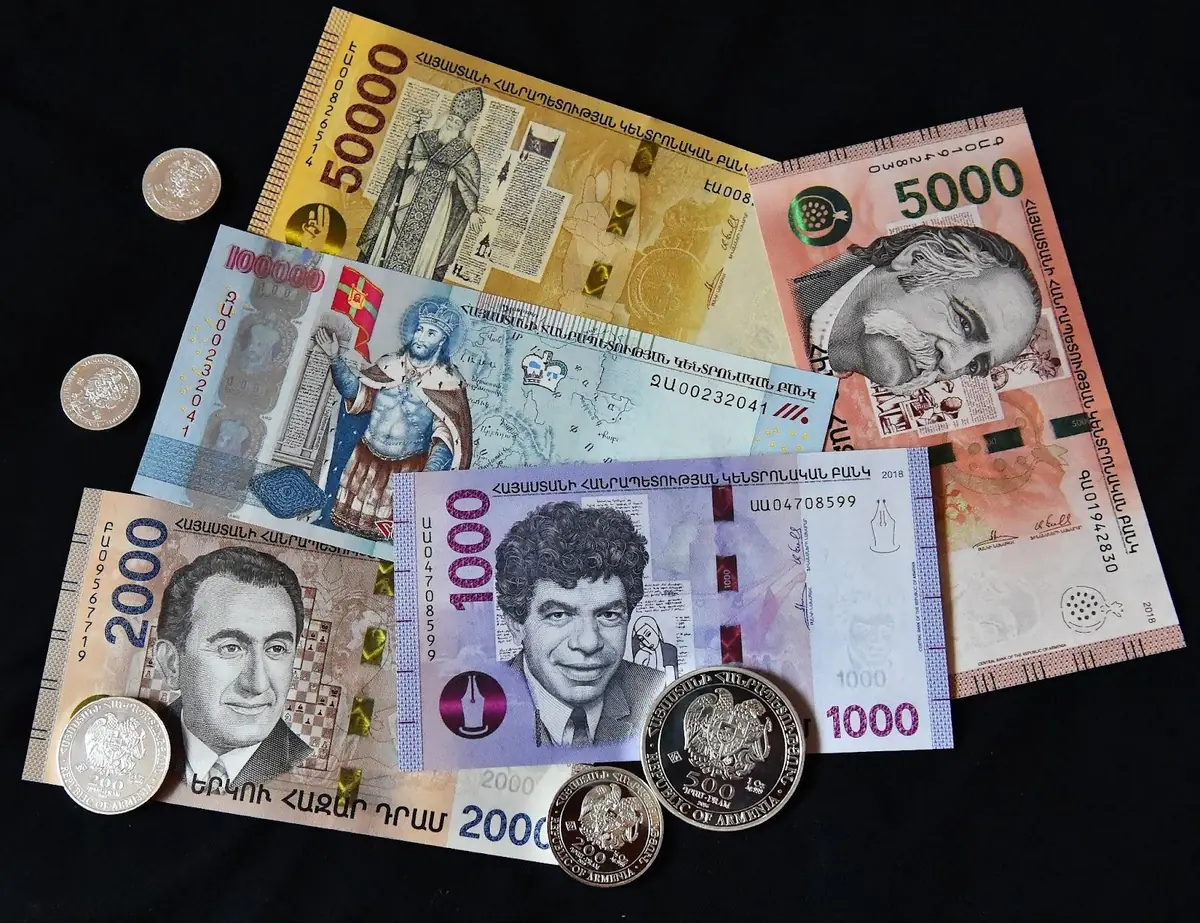
Georgia uses the lari (GEL), Armenia the dram (AMD). They are not interchangeable, and you should spend down your lari before crossing.
Cards work almost everywhere in Tbilisi and Yerevan, including in taxis and small cafés. Cash is essential for marshrutkas, rural guesthouses, village wineries, monastery donations, and market stalls. ATMs are plentiful in both countries and in both capitals’ airports. Skip the airport exchange desks and the dynamic currency conversion prompt at the ATM, which always loses you money.
Tipping runs around 10 percent in restaurants, and is not expected in taxis. Some restaurants add a service charge, so check.
For connectivity, a local SIM beats a regional eSIM for any stay over a few days. In Georgia, Magti has the best rural and mountain coverage, with Silknet and Cellfie as alternatives. A tourist SIM costs around 10 GEL with data packages at 15 to 30 GEL, and Magti’s unlimited monthly plan lands near $10 to $12. In Armenia, Ucom and Viva-MTS are the two to consider, at similar prices. Both airports sell SIMs on arrival and you’ll need your passport to register.
Regional multi-country eSIMs covering the whole Caucasus are convenient and cost more per gigabyte. They make sense for a one-week trip or if you cross back and forth. For two weeks with a single crossing, buy a Magti SIM at Tbilisi airport and a Ucom SIM in Yerevan.
What a Two-Week Trip Actually Costs
Here is what a mid-range solo traveler should budget, excluding international airfare.
| Category | 14-day estimate | Notes |
|---|---|---|
| Accommodation, 13 nights | $750 to $950 | Three-star and good guesthouses, solo occupancy |
| Food and drink | $420 to $560 | About $30 to $40 a day. Dinner $15 to $25, lunch $6 to $8, wine $2.50 to $3.50 a glass |
| Intercity transport | $60 to $120 | One border leg plus internal moves |
| Local transport | $70 to $110 | Bolt rides, metro, marshrutkas, roughly $5 to $8 a day |
| Activities and day trips | $200 to $350 | Kakheti wine tour ~$40, Wings of Tatev ~$23, Garni and Geghard ~$10, site entries |
| SIM, tips, souvenirs | $100 to $150 | |
| Total | $1,600 to $2,240 | Roughly $115 to $160 per day |
Adjustments worth knowing:
- A couple sharing rooms drops the per-person total to about $1,300 to $1,700 each
- Backpacking on marshrutkas and hostels brings it to $40 to $60 a day
- Private drivers throughout and four-star hotels push it past $250 a day
- July and August raise accommodation 15 to 25 percent
- International flights from the US typically add $700 to $1,300 round trip depending on season
The headline here: this is one of the cheapest genuinely world-class destinations left. A two-week trip costs less than a long weekend in most of Western Europe.

Culture, Language, and What to Pack
Georgian and Armenian each use their own unique alphabet, unrelated to each other or to anything else. You will not be able to sound out street signs. Major signage in the capitals and on highways is transliterated, and Google Translate’s camera function handles menus. English is widely spoken by anyone under 35 in cities and throughout the tourism industry. Russian remains the common second language across the region, particularly with older people and in rural areas. Learning gamarjoba (hello, Georgian), madloba (thank you, Georgian), barev (hello, Armenian), and shnorhakalutyun (thank you, Armenian) will earn you outsized goodwill.
Church etiquette matters and is enforced. Women should cover their heads and shoulders and wear a skirt or dress below the knee; many monasteries provide wraps and scarves at the door. Men should wear long pants and remove hats. Don’t turn your back to the altar when leaving, and ask before photographing services or clergy. Photograph people only with permission, which is almost always granted cheerfully.
Hospitality in both countries is close to absolute. If you’re invited to a table, accepting is the polite move, and refusing a toast is genuinely awkward. Pace yourself early; chacha and Armenian brandy are stronger than they taste.
Pack for range. A two-week trip in shoulder season will take you from 80°F in Yerevan to 45°F at Gergeti in the same week.
- Layers, including one warm mid-layer and a light rain shell
- Broken-in shoes with grip, for cobblestones and monastery paths
- A scarf or shawl for church visits
- Modest clothing options for rural areas and religious sites
- Printed and digital proof of travel insurance for Georgia
- A universal adapter for Type C and F plugs, 220V
- Sunscreen and a hat, particularly at altitude
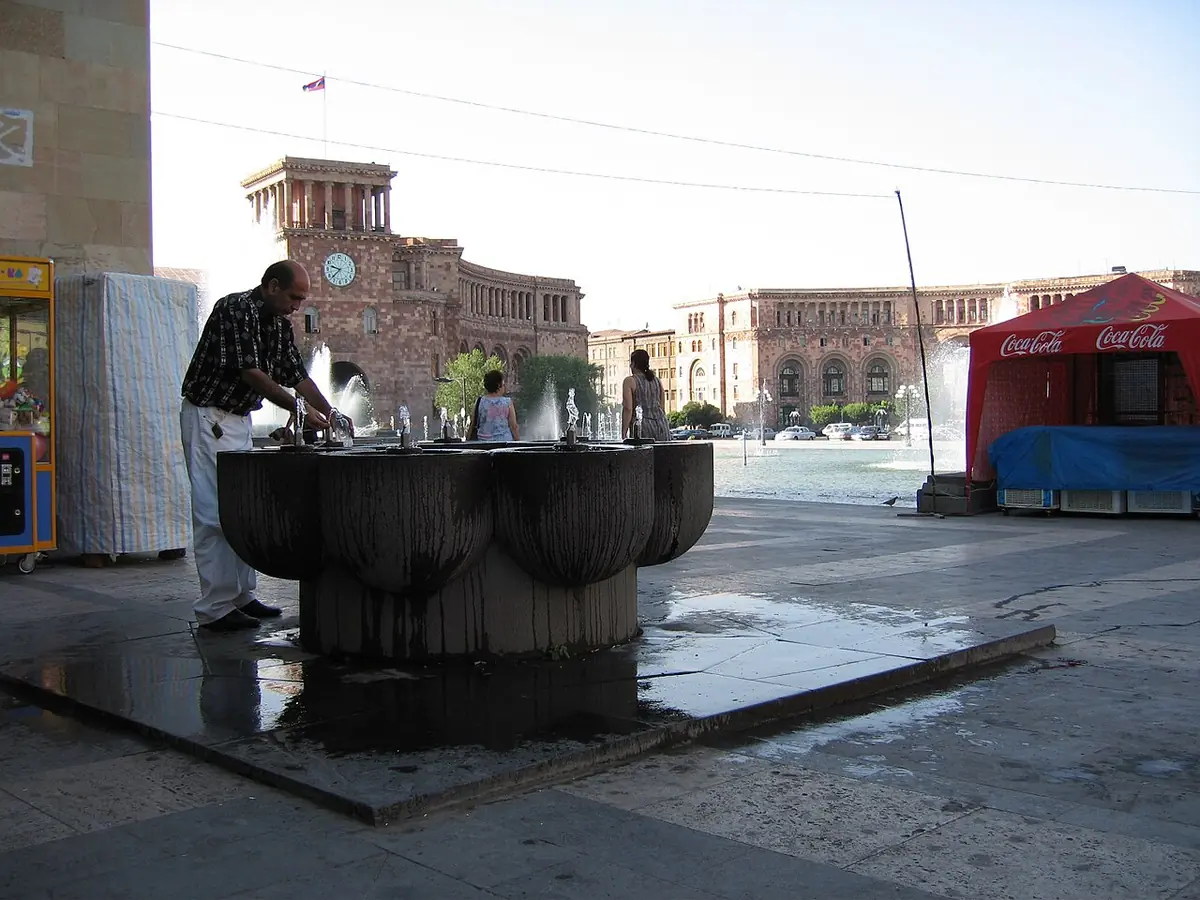
- A day pack and a reusable water bottle. Tap water is safe and excellent in both countries, and Armenia’s public drinking fountains, the pulpulaks, are everywhere
Mistakes I Made and What I’d Do Differently
Book the open-jaw ticket first. I did a round trip into Tbilisi on my first visit and burned a full day and about $80 getting back from Yerevan. There is no scenario where that was the right call.
Don’t stack monasteries. Georgia and Armenia have hundreds of extraordinary churches, and after the fourth one in a day they stop registering. Three sites a day maximum, with a long lunch in between. Better to remember two monasteries than blur through six.
Double every drive time you’re quoted. The distances look trivial on a map, but mountain roads, road works, livestock, and the fact that you will want to stop mean a “two-hour” drive is usually three and a half. This is the single most common planning error on a Georgia and Armenia itinerary.
Skip July and August if you have a choice. Tbilisi and Yerevan regularly hit 100 to 108°F in midsummer, and both cities become genuinely unpleasant in the afternoon. Everything below about 5,000 feet is better in May, June, September, or October.
Don’t try to add Svaneti to two weeks. I tried and had to cut it three days out. It needs three nights minimum plus a weather buffer, and it belongs to a three-week trip or a Georgia-only trip.
Spend the money on a driver for the border day. Taking the marshrutka saved me about $120 and cost me Haghpat and Sanahin, which I still regret.
Traveling Responsibly in the Caucasus
A few things are worth carrying with you beyond the packing list.
Nagorno-Karabakh is a live wound, not a conversation topic. Both countries have deeply held and incompatible narratives about it, and people you meet may have lost family or homes. Listen if it comes up. Don’t offer opinions, don’t play devil’s advocate, and don’t compare what one person tells you to what someone else told you across the border.
Be aware of Russia-related sensitivities in Georgia, where roughly 20 percent of the territory is occupied and where the arrival of large numbers of Russian nationals since 2022 has reshaped rents and politics in Tbilisi. Assumptions that Georgia is culturally Russian land badly.
Overtourism is starting to show in Kazbegi and Svaneti, where guesthouse construction has outpaced infrastructure. Stay with family-run properties rather than new-build hotels, book direct so more of the money stays local, and pack out your trash on trails, which are less maintained than what you’ll be used to at home.
Buy from the source. Village wineries, the Vernissage market, women’s craft cooperatives in Dilijan and Gyumri, and family guesthouses put your money into the local economy far more directly than a duty-free bottle at the airport. In a region where a two-week trip costs less than a week almost anywhere else in Europe, spending a little more locally is the easiest good decision on the whole itinerary.