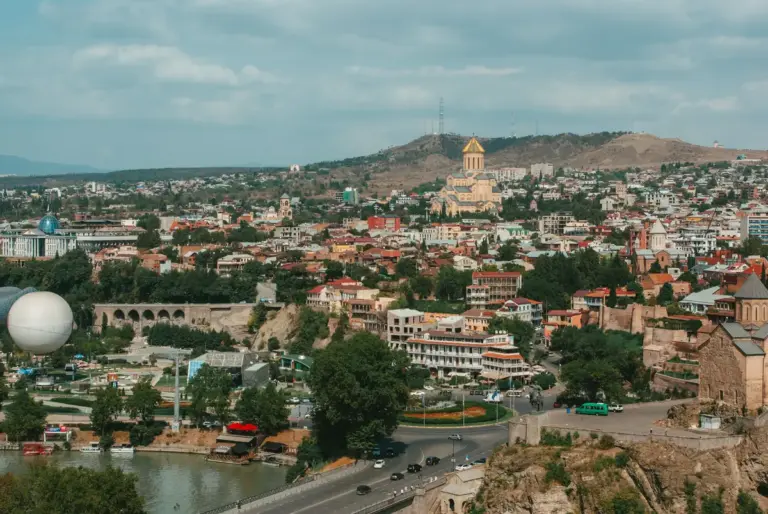
Yes, 3 days in Tbilisi is enough. Three days covers the Old Town, a soak in the sulfur baths, the museums and cafes along Rustaveli Avenue, a sunset from Mtatsminda, and one full day trip into the mountains or the wine country. It is not enough to see Georgia, but it is exactly enough to fall for its capital.
This is the plan I actually use when friends land at Tbilisi International and text me from the arrivals hall at some ridiculous hour. It is routed neighborhood by neighborhood so you are not zigzagging across the Mtkvari River four times a day, and every price below is what I paid or checked on my most recent trip, listed in Georgian lari with a dollar equivalent.
Here is the short version if you only read one paragraph: Day 1 is the Old Town, Narikala Fortress, and the Abanotubani sulfur baths, ending in a Sololaki wine bar. Day 2 crosses the river for Rustaveli Avenue, the Fabrika creative hub, the Dry Bridge flea market, and sunset from the Mtatsminda funicular. Day 3 is a day trip, and for most first-timers that means Kazbegi. Budget roughly $60 to $120 per person per day including a mid-range hotel, and expect to walk a lot of hills.
Is 3 Days Enough for Tbilisi?
Three days is enough for a first visit. It gives you two full days in the city plus one day trip, which is the ratio most travelers end up wishing they had planned.
What fits comfortably in 3 days:
- The Old Town, Sioni Cathedral, and Anchiskhati Basilica
- Narikala Fortress and the Mother Georgia statue
- A sulfur bath session in Abanotubani
- Rustaveli Avenue and the Georgian National Museum
- Fabrika, Marjanishvili, and the Dry Bridge market
- Sunset from Mtatsminda
- One day trip: Kazbegi, Mtskheta, or Kakheti
- Enough khinkali, khachapuri, and qvevri wine to recalibrate your standards
What you will miss:
- A second day trip (you have to pick one)
- The Chronicle of Georgia, Turtle Lake, and the Ethnographic Museum
- A slow, unhurried pace in the Old Town’s backstreets
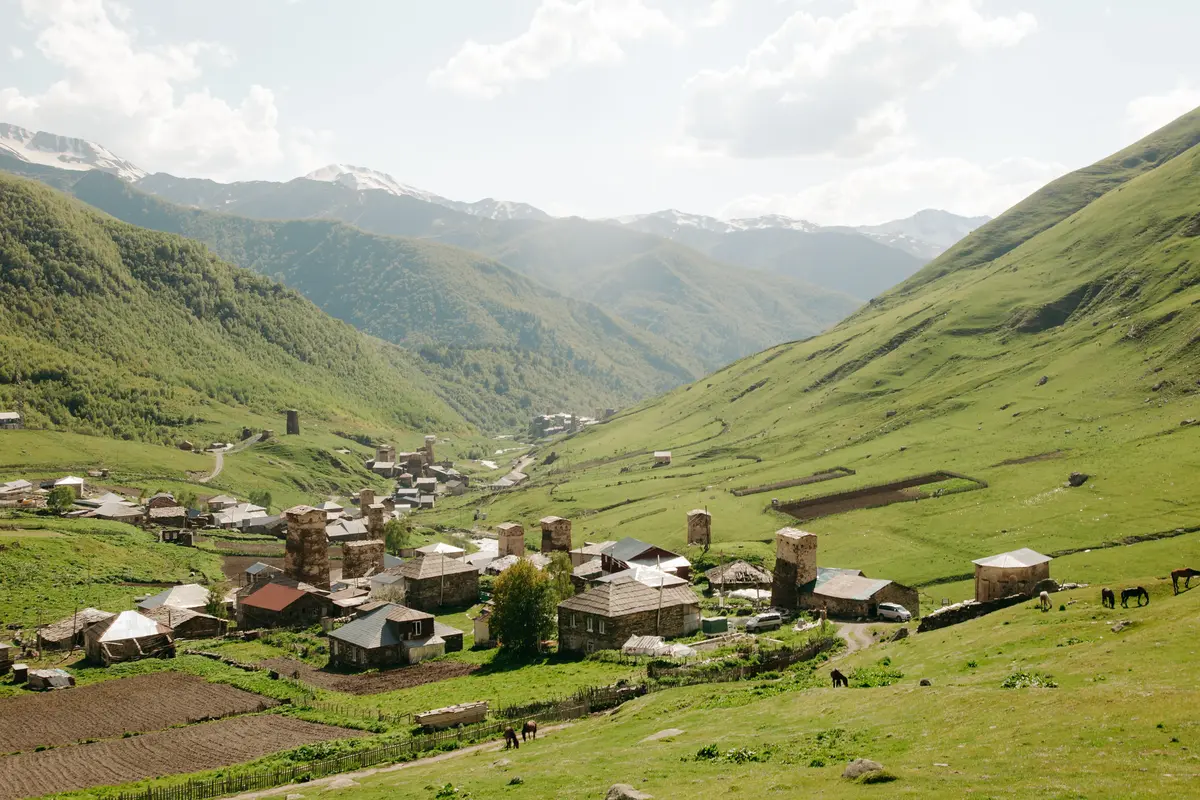
- Anything outside the Tbilisi orbit: Svaneti, Batumi, Vardzia, the Black Sea
If you can stretch to four or five days, do it. The extra time lets you split Kazbegi and Kakheti into two separate days instead of choosing.
Your 3 Days in Tbilisi at a Glance
| Day | Neighborhoods | Key stops | Estimated cost per person |
|---|---|---|---|
| Day 1 | Old Town, Abanotubani, Sololaki | Free walking tour, Narikala cable car, Mother Georgia, sulfur baths, wine bar, khinkali dinner | 90–200 GEL ($35–77) |
| Day 2 | Rustaveli, Chugureti and Marjanishvili, Mtatsminda | Georgian National Museum, Fabrika, Dry Bridge market, Mtatsminda funicular at sunset | 60–130 GEL ($23–50) |
| Day 3 | Day trip | Kazbegi, or Mtskheta and Jvari, or Kakheti wine country | $15–60 depending on the trip |
The dollar figures assume roughly 2.6 lari to the dollar. Check the live rate before you go, since the lari moves.
Before You Go: Essential Tbilisi Facts for US Travelers
Do Americans Need a Visa for Georgia?
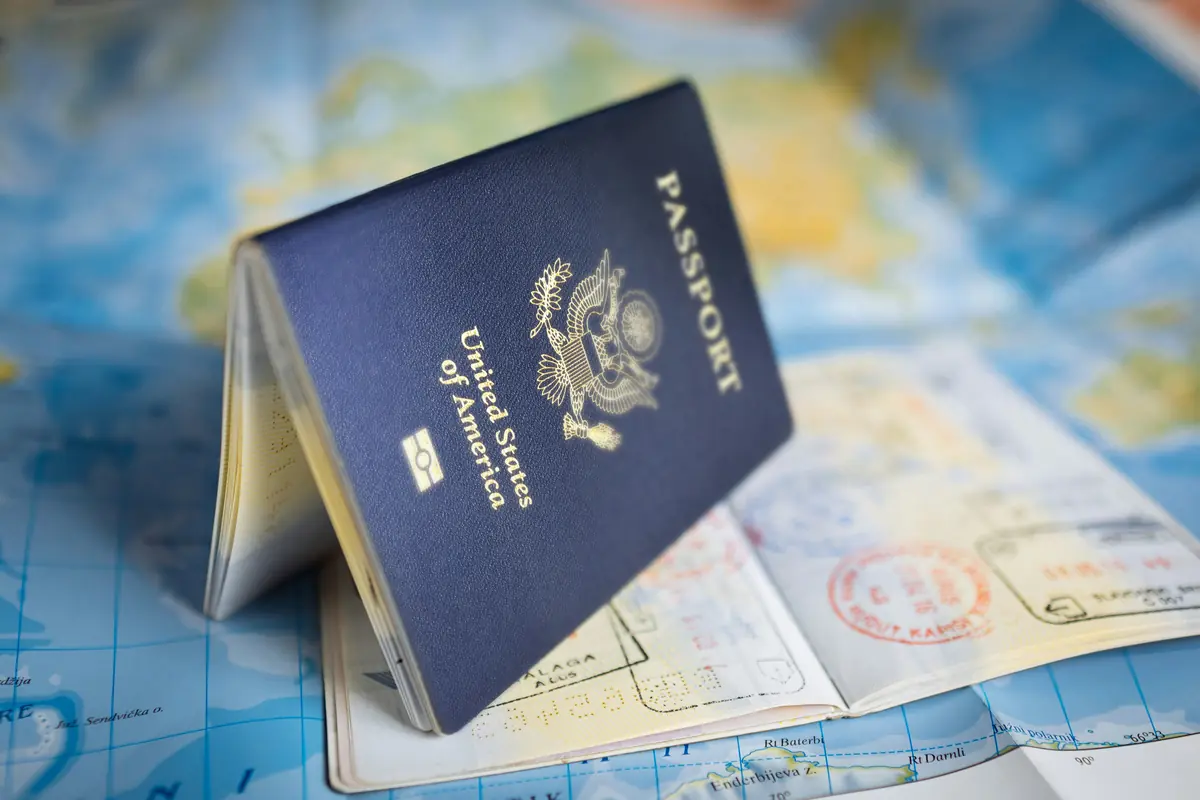
No. US citizens do not need a visa for Georgia. The US State Department’s Georgia travel information page confirms that American citizens can enter, live, work, or study in Georgia visa-free for up to 365 days, a policy that has been in place since 2012 and was reconfirmed by Georgia’s Ministry of Foreign Affairs. You show up with a passport valid for the length of your stay and get stamped in.
There is one newer requirement worth knowing about. Under Georgian government regulation, all tourists are now expected to carry proof of valid health and accident insurance covering the entire period of their stay, with coverage of at least 30,000 GEL (roughly $11,000). The US Embassy in Tbilisi has flagged this, citing Georgia’s Ministry of Foreign Affairs. Buy a travel medical policy before you fly and save the certificate as a PDF on your phone.
Do not overstay. Fines start around 360 lari (about $130) and an overstay can complicate future entries. Verify the current entry rules on the State Department’s Georgia page shortly before departure, since requirements do change.
Is Tbilisi Safe? Protests, Russia, and What to Actually Watch
Tbilisi is safe for tourists, with two specific caveats: political demonstrations downtown and two Russian-occupied regions you must not visit.
The US Department of State’s Georgia Travel Advisory, reissued in March 2025, rates the country Level 1: Exercise Normal Precautions. That is the same rating given to most of Western Europe. Within that advisory, the State Department separately designates South Ossetia and Abkhazia, the Russian-occupied Georgian regions, as Do Not Travel because of crime, civil unrest, and landmines. Those regions sit far from Tbilisi and no standard itinerary goes near them, but do not let a cheap tour operator improvise.
Street crime against visitors is uncommon. Police figures cited in recent travel-safety analyses put reported incidents involving visitors at fewer than 12 per 100,000, which places Georgia among the safer countries in the region. Petty theft in crowded markets and the usual taxi overcharging are the realistic risks, not violence.
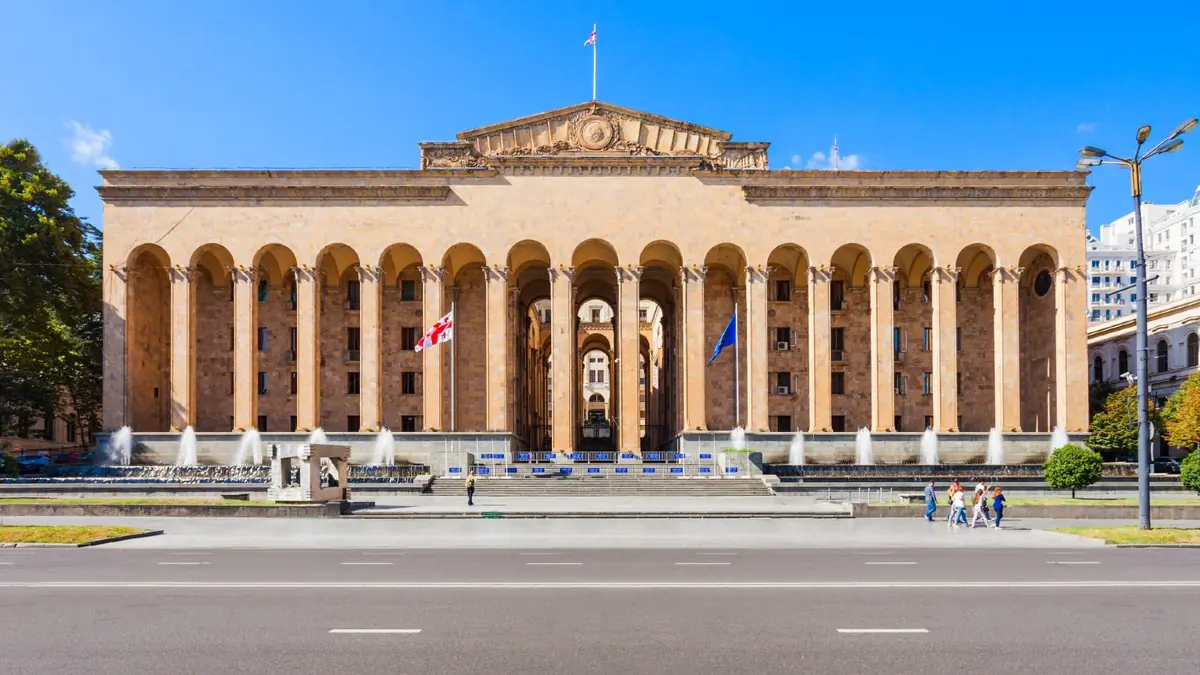
The honest part that most itineraries skip: political protests have been a regular feature of Rustaveli Avenue outside Parliament since the October 2024 elections and the government’s suspension of EU accession talks. Demonstrations are usually in the evening and usually peaceful, but they have been dispersed forcefully at times. The practical advice is simple. Do not join or photograph from inside a crowd, keep distance from police lines, check local news or a Tbilisi expat channel on the morning of your Rustaveli walk, and route around Parliament if something is happening. If you are staying near Freedom Square, you may hear car horns and chanting at night.
US travelers should enroll in STEP, the State Department’s Smart Traveler Enrollment Program, before the trip. It takes five minutes and gets you alerts from the embassy.
Money: Lari, Cards, and What Things Cost
Georgia uses the lari (GEL), which has recently traded at roughly 2.6 to the US dollar. Cards work almost everywhere, including Apple Pay and Google Pay in restaurants, cafes, supermarkets, and most bars. ATMs are on every other corner and Bank of Georgia and TBC machines are reliable.
Carry some cash anyway. You will want it for the Dry Bridge market, the 4WD drivers at Gergeti, bakery windows, church donation boxes, tips, and small family guesthouses. A hundred lari (about $38) in small bills covers a day comfortably.
Tbilisi is one of the best-value capitals anywhere. To calibrate against US prices: a plate of five khinkali runs 8 to 15 GEL ($3 to $6), a glass of good Saperavi starts around 6 GEL ($2.30), a metro ride is 1 GEL (38 cents), and a cross-town Bolt is 5 to 7 GEL ($2 to $3). A mid-range boutique hotel in Sololaki costs less than a chain motel off an American interstate.
Tipping, Language, and Tap Water
Tipping in Georgia is around 10 percent. Many restaurants add a service charge directly to the bill, so read the receipt before you tip twice. When service is not included, leaving cash on the table is the norm and always appreciated. You do not tip in bakeries or at bakery windows, and taxi fares through apps are set in advance.
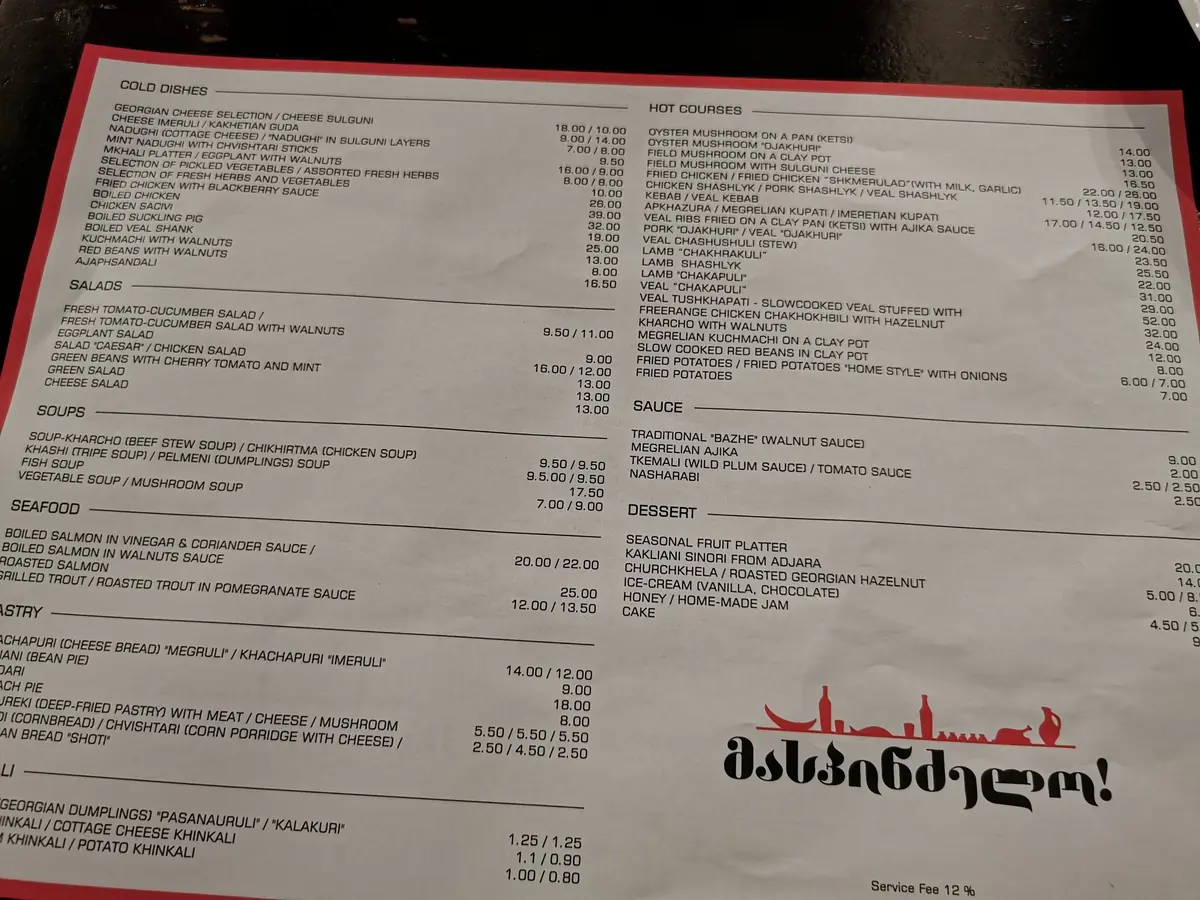
Georgian, or Kartuli, is one of the world’s oldest living languages and uses an alphabet unrelated to any other script, which is why menus can look like beautiful abstract art. Younger Georgians and anyone working in hospitality generally speak solid English, and Russian is widely understood by older generations though not always warmly received. Learn “gamarjoba” (hello) and “gmadlobt” (thank you) and watch faces change.
Tap water in Tbilisi is safe to drink. It comes from Caucasus mountain springs, meets World Health Organization guidelines, and tastes better than most bottled water you will be sold. Bring a reusable bottle and refill it.
SIM Cards and eSIMs
Buy a local SIM at the airport arrivals hall. Magti and Geocell both sell tourist packages, and unlimited data starts at roughly 10 GEL per week (under $4). Coverage across the country, including the mountain roads to Kazbegi, is better on a local network than on most international eSIMs.
An eSIM like Airalo is fine if you are only in Georgia for a few days and staying in the city, and it saves you the counter queue at 4 a.m. Signal on the Georgian Military Highway and in the Kazbegi valleys can be patchy on a roaming eSIM, which matters if you plan to call a driver from a mountain trailhead.
Getting from Tbilisi Airport to the City (Plus the 4 a.m. Arrival Problem)
Tbilisi International Airport (TBS) sits about 11 miles southeast of the center. The transfer is short, cheap, and easy in daylight. It is the arrival hour, not the distance, that catches people out.
Your Four Options
| Option | Cost | Time | Notes |
|---|---|---|---|
| Bus 337 | 1 GEL with a Metromoney card, 1.5 GEL tapping a foreign card | 50–70 min | Runs roughly 7 a.m. to 11 p.m.; stops at Rustaveli Avenue and Freedom Square, ends at the central railway station |
| Bolt (ride app) | 25–35 GEL ($10–13) | 20–30 min | Georgia’s dominant ride app, works like Uber, available 24/7 |
| Official taxi | 40–60 GEL ($15–23) | 20–30 min | Higher at night; agree on the price before you get in |
| Pre-booked transfer | Fixed price, varies | 20–30 min | Driver tracks your flight; worth it for late arrivals and groups |
One warning that is worth more than the rest of this section: ignore the men who approach you inside the terminal offering a ride. Unmarked taxis from airport touts are the single most common first-timer mistake in Tbilisi, and the quoted fare typically triples somewhere around the on-ramp. Walk out to the curb and open Bolt.
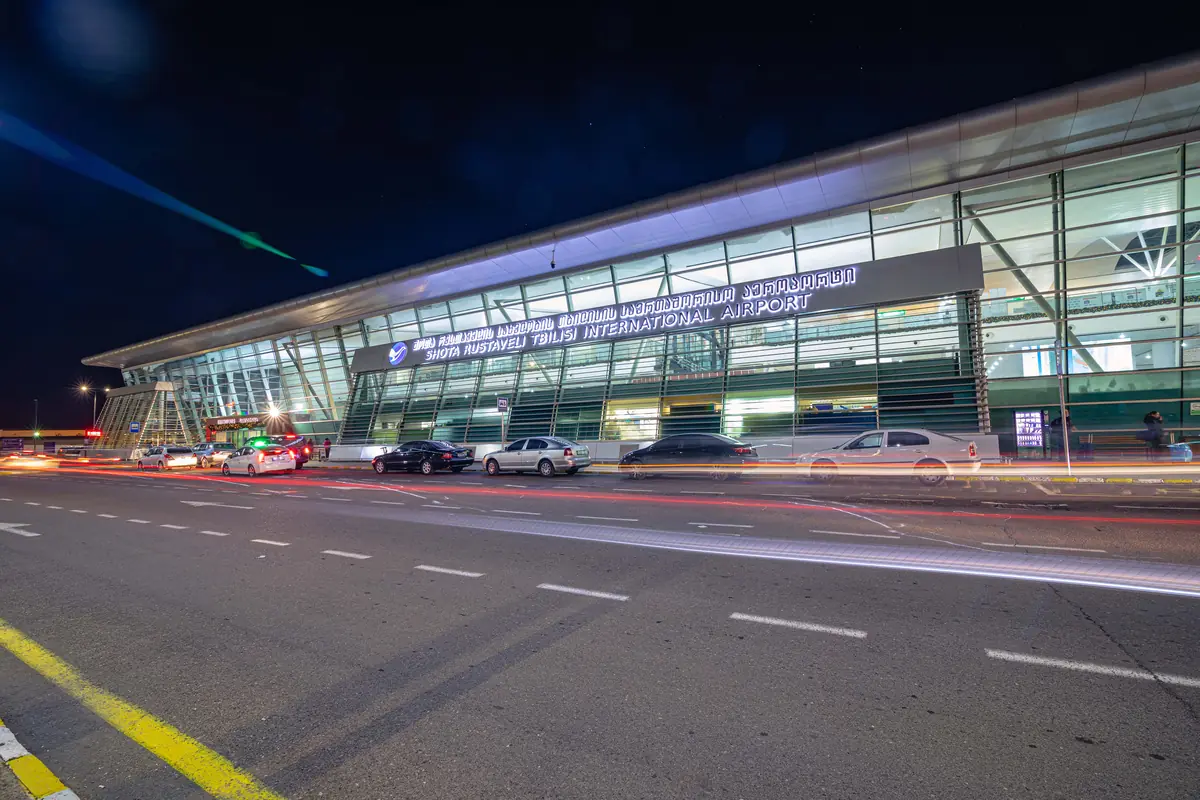
Landing Between 3 and 5 a.m.? Here’s the Fix
Most flights from the US connect through Istanbul, Munich, Warsaw, or Doha, and the Tbilisi leg is almost always scheduled overnight. Arrivals between midnight and 5 a.m. are the norm rather than the exception. Airport bus 337 is not running at that hour, the city does not really open until 9 a.m., and hotel reception may not have a soul behind the desk.
The fix that every Tbilisi regular will tell you: book and pay for the night before you arrive. If you land at 4 a.m. on a Tuesday, reserve Monday night. You are paying for one extra night of hotel in a city where hotels are inexpensive, and in exchange you go straight from passport control to a bed instead of nursing a coffee for five hours. Message the property in advance and confirm someone will be there to let you in.
If you would rather not pay for the extra night, you have two workable alternatives. The ibis Tbilisi Airport hotel is about a ten-minute walk from the terminal and is designed for exactly this, so you can sleep a few hours and head into town after breakfast. Or take a Bolt into the center and wait it out at a 24-hour cafe, with Santino near Freedom Square and Lui Coffee in Vake being the reliable ones. Either way, use the app rather than a curbside negotiation at that hour.
Day 1: Old Town, Abanotubani, and Sololaki
Day one stays entirely on the right bank and covers about three miles of walking, most of it uphill at some point. Wear real shoes. Tbilisi’s Old Town is cobblestone, and the streets that look like shortcuts on a map are frequently staircases.
Morning: Free Walking Tour and the Old Town Core
Start with a tips-based free walking tour departing from near Freedom Square. Two or three hours with a local guide gives you the thread that connects everything else: Persian invasions, Russian annexation, the 1990s civil war, and why half the balconies are held up with what appears to be optimism. Tour groups meet in the morning, so check the schedule the night before and book a spot.
Eat first. Brotmeister opens at 8 a.m. and is one of the few reliably good early options in the Old Town, which matters if you are running on airplane sleep.
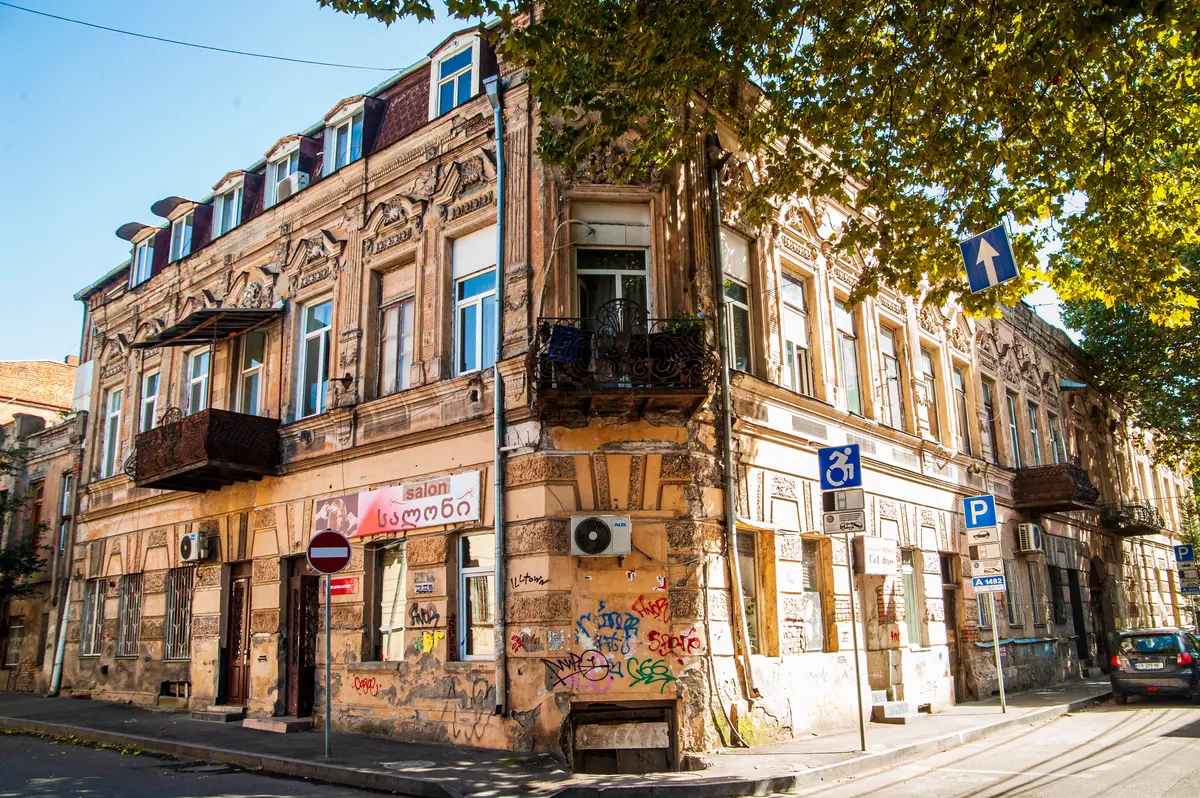
After the tour, wander on your own through Shardeni and Erekle II streets, then find the two churches worth your time. Sioni Cathedral sits right by the river and held the seat of the Georgian Orthodox Church for centuries. A few minutes away, Anchiskhati Basilica dates to the 6th century and is the oldest surviving church in the city, a small stone room that feels considerably older than everything around it. Both are active places of worship. Women should cover their heads and shoulders, and there are usually scarves at the door.
Midday: Narikala Fortress and Mother Georgia by Cable Car
Cross to Rike Park and take the cable car up to Narikala Fortress. The ride costs 2.5 GEL (about a dollar) one way and is paid with a Metromoney card, which you buy for 2 GEL at any metro station or kiosk. You cannot pay the driver in cash, and this trips up a lot of visitors.
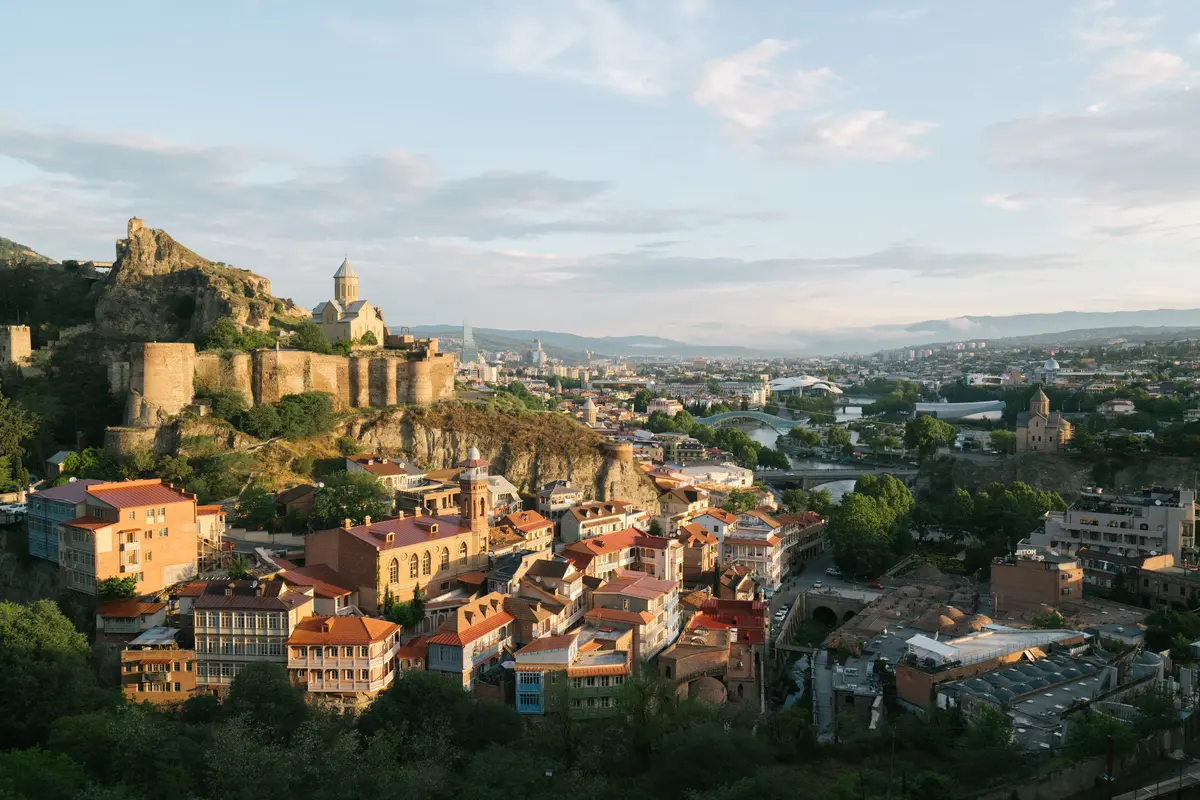
The car climbs over the Old Town rooftops in about ninety seconds and the view alone justifies the fare. Narikala itself has stood in some form since the 4th century, and there is no entrance fee, so climb the walls and take your time.
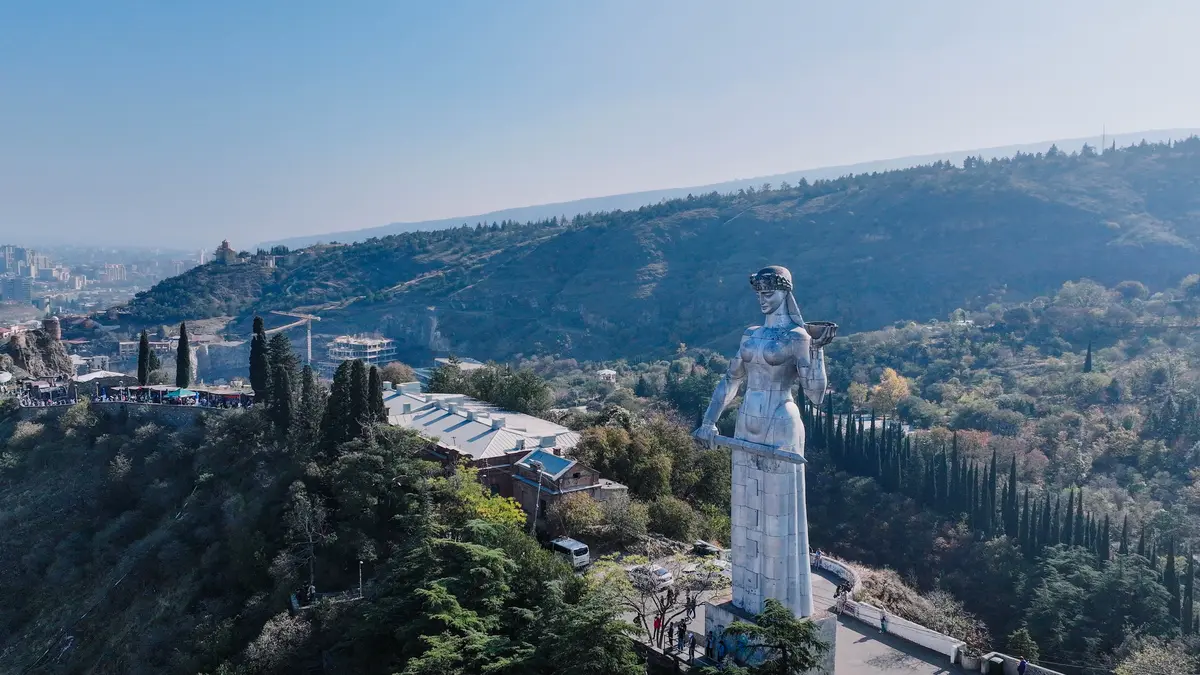
From the fortress, walk the ridge path to Kartlis Deda, the aluminum Mother Georgia statue that has watched over the city since 1958. She holds a bowl of wine in one hand for those who come as friends and a sword in the other for those who come as enemies, which is a fairly complete summary of Georgian national character. The walk takes about fifteen minutes along a path with continuous views. Go early morning or in the hour before sunset for the light.
Afternoon: The Abanotubani Sulfur Baths
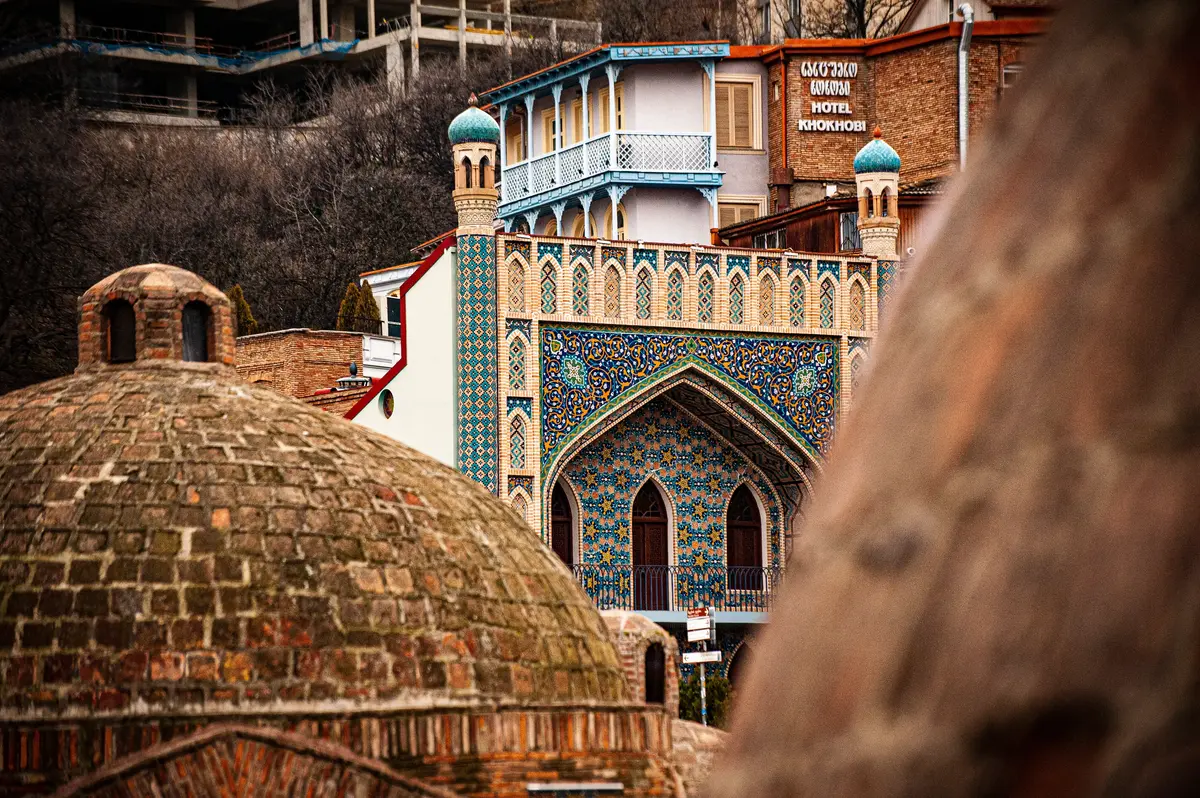
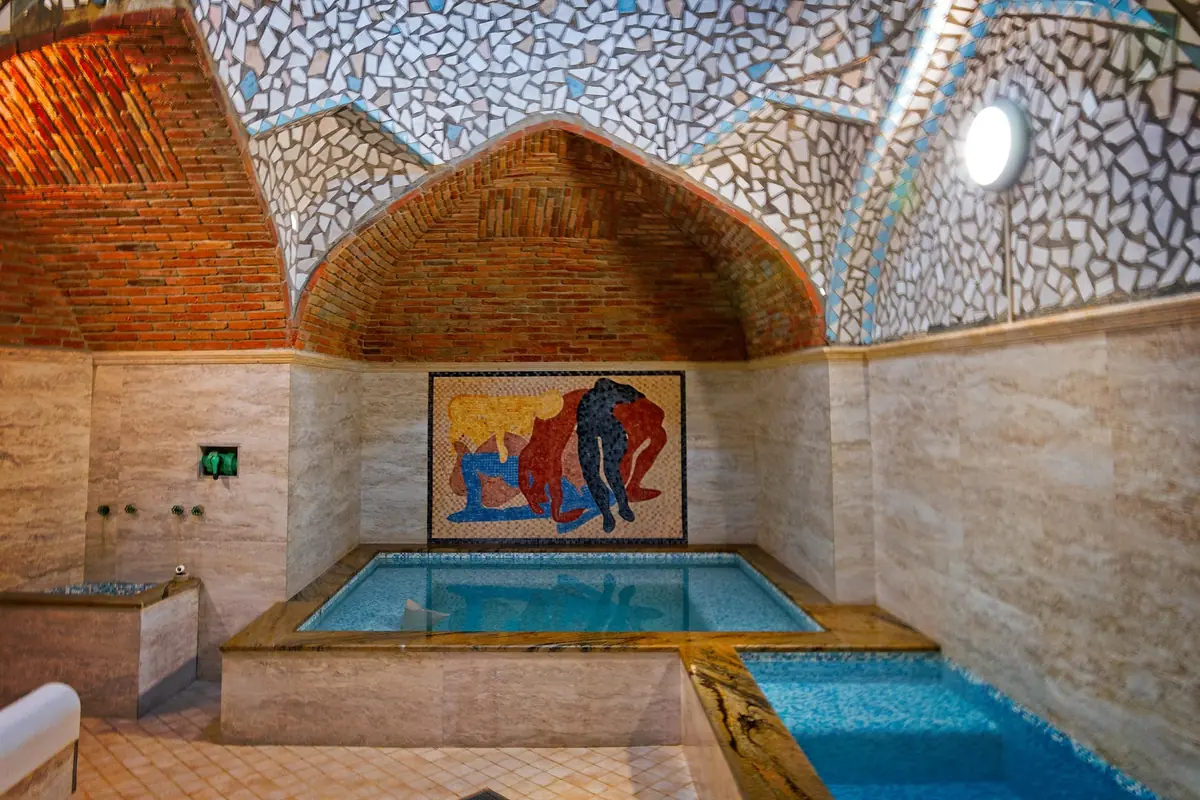
This is the reason the city exists. According to legend, King Vakhtang Gorgasali’s falcon fell into a hot spring here, and he founded a city on the spot, naming it from the Georgian word “tbili,” meaning warm. The domed brick bathhouses of Abanotubani still sit over those same sulfur springs.
Walk down from Mother Georgia into the Abanotubani quarter, past the small waterfall in the Legvtakhevi gorge, and pick a bathhouse. Prices vary widely, so here is a realistic picture.
| Option | Typical price | Notes |
|---|---|---|
| Public communal hall | 3–10 GEL ($1–4) per person, per hour | Gender-separated, no swimsuit, local experience, minimal frills |
| Private room | 50–150 GEL ($19–58) per hour, per room | Split among two to four people; includes a hot pool, cold plunge, and often a small sauna |
| Royal Bath House private room | Around 140 GEL ($54) | Larger, more polished rooms |
| Chreli-Abano | Mid-to-upper range | The blue-mosaic facade you have seen in photos, and the one with a working online booking system |
| Kisa scrub add-on | 5–15 GEL ($2–6) | An attendant scrubs a startling amount of you away with a coarse mitt |
A few things I wish someone had told me the first time. Go between 7 and 9 a.m. if you can, before the tour groups; the baths open early and the morning session is the calm one. Bring a swimsuit for private rooms if you want one, plus flip-flops, a towel, and a waterproof bag, though most private rooms supply towels and slippers. The sulfur smell is real and clings to hair for a few hours. Do not soak on an empty stomach or after a big lunch, and drink water afterward. Book a private room in advance on weekends.
Evening: Wine Bars and Your First Khinkali
Georgia has been making wine for 8,000 years in clay qvevri buried underground, and the method earned UNESCO Intangible Cultural Heritage status. Amber wine, made by fermenting white grapes on their skins, is not a trend here; it is the old way.
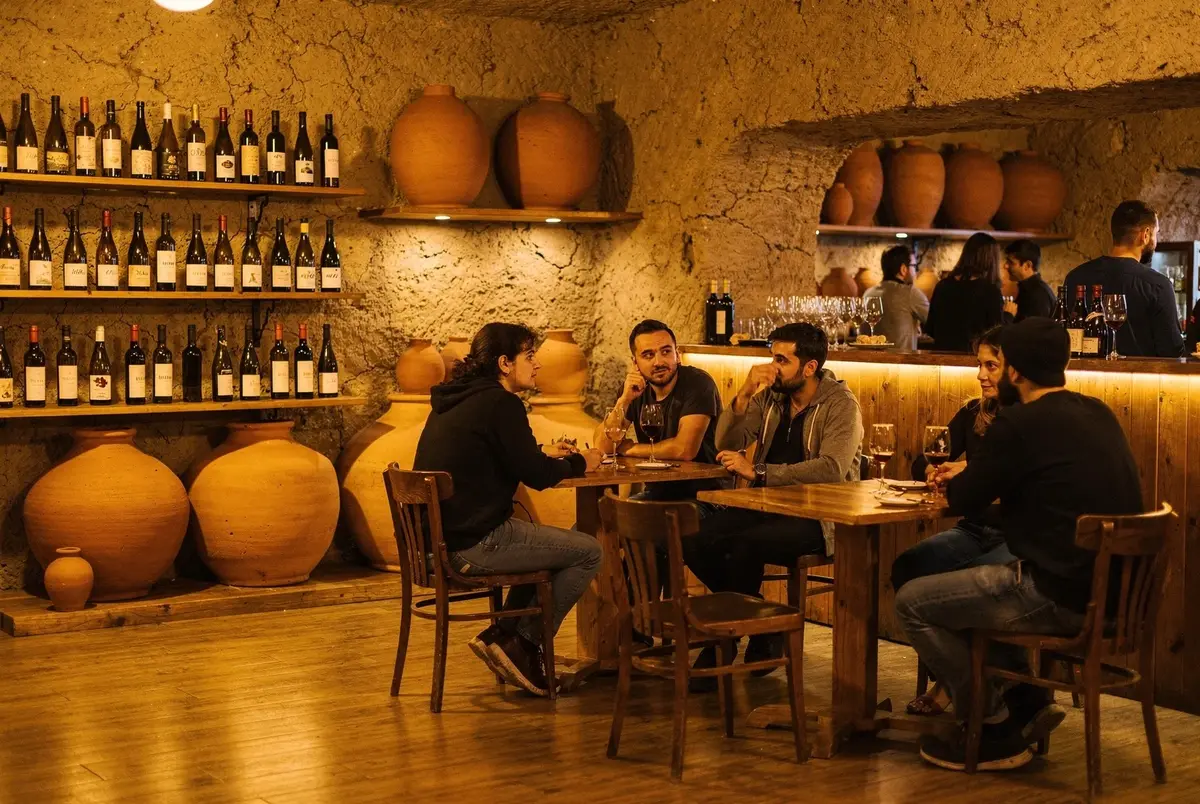
Start at 8000 Vintages, which stocks more than a thousand Georgian labels and runs a proper sit-down tasting from around 45 GEL per person (about $17) for four wines with a small cheese board. Glasses start around 6 GEL. Reserve on weekend nights.
Alternatives worth your evening: Vino Underground, a natural and qvevri specialist co-founded by John Wurdeman of Pheasant’s Tears, is the serious option; g.Vino has a good list and a rooftop; and DADI runs a five-label tasting with pâté and bread for roughly 20 GEL ($8), which is the best value in the Old Town.
Ask for Saperavi if you want a dark, structured red, Rkatsiteli for a dry white or amber, and Kisi if you want the amber that converts skeptics. Skip the semi-sweet supermarket Kindzmarauli unless you like it, which is a legitimate position that Georgians will defend at length.
For dinner, Cafe Daphna is the khinkali spot people keep coming back to, partly because you can mix fillings in a single order. Salobie Bia is the other move, especially for lobio in a clay pot and a Megrelian khachapuri with cheese both inside and on top.
Day 2: Rustaveli, Fabrika, and Sunset on Mtatsminda
Day two is flatter and covers more ground, crossing the river into the Soviet-era neighborhoods where the city’s current creative energy actually lives.
Morning: Rustaveli Avenue and the Georgian National Museum
Rustaveli Avenue is Tbilisi’s main artery, a wide boulevard of plane trees running from Freedom Square past Parliament, the Opera and Ballet Theatre, and a run of grand 19th-century facades. Walk it north.
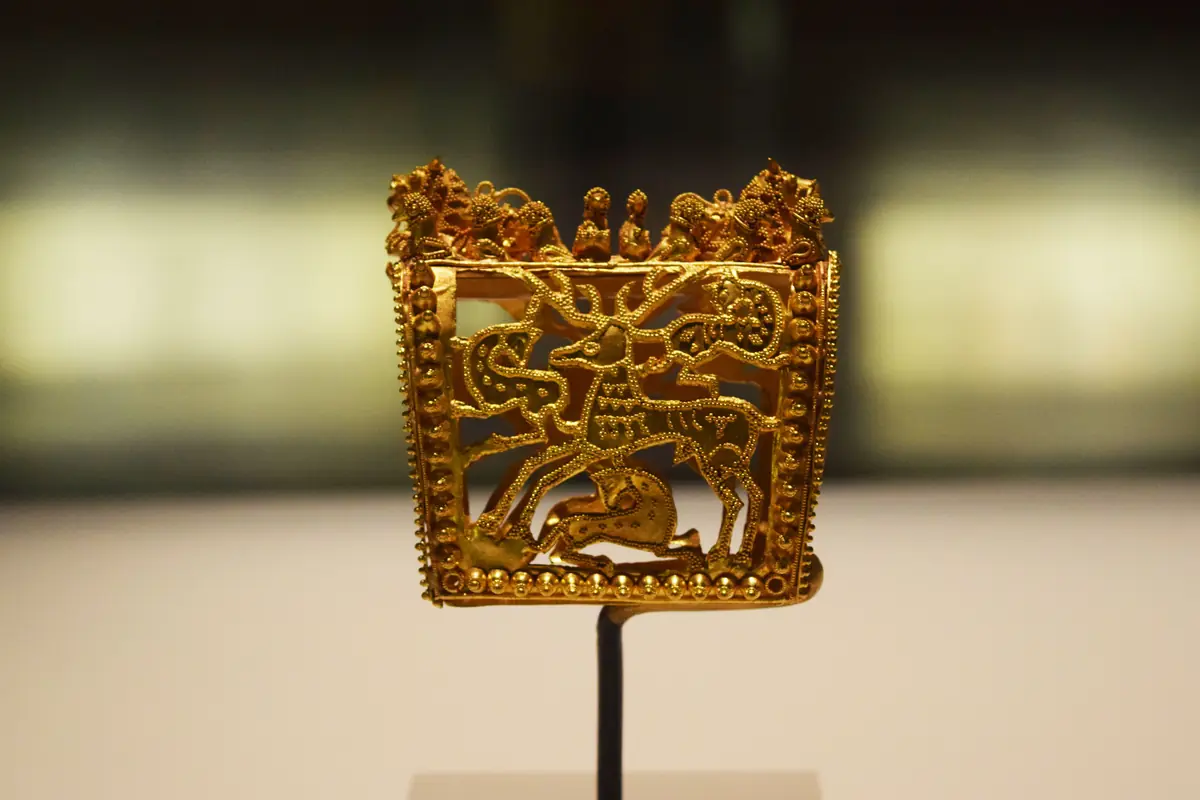
The Georgian National Museum holds more than 200,000 items, but go for one thing: the Treasury of Colchis, a collection of pre-Christian gold jewelry from the 3rd millennium BC that is world class and takes maybe forty minutes to appreciate. The archaeological floors upstairs are worth the extra half hour. There is also a Soviet Occupation exhibit that gives useful context for everything you will overhear in wine bars later.
Check local news that morning before you plan your route past Parliament, since demonstrations concentrate on this stretch.
Midday: Cross the River to Fabrika
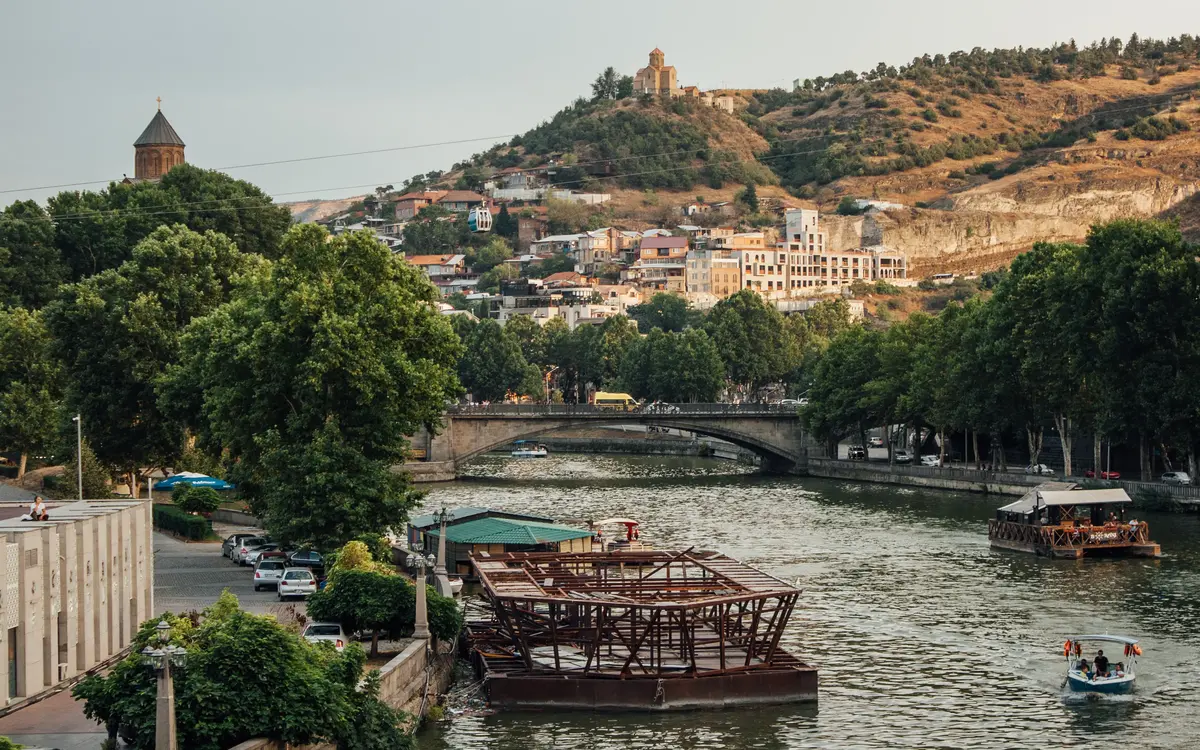
Cross the Mtkvari on the Bridge of Peace, the glass-and-steel arc locals nicknamed the Always Ultra, and head into Chugureti and Marjanishvili. Twenty minutes on foot brings you to Fabrika.
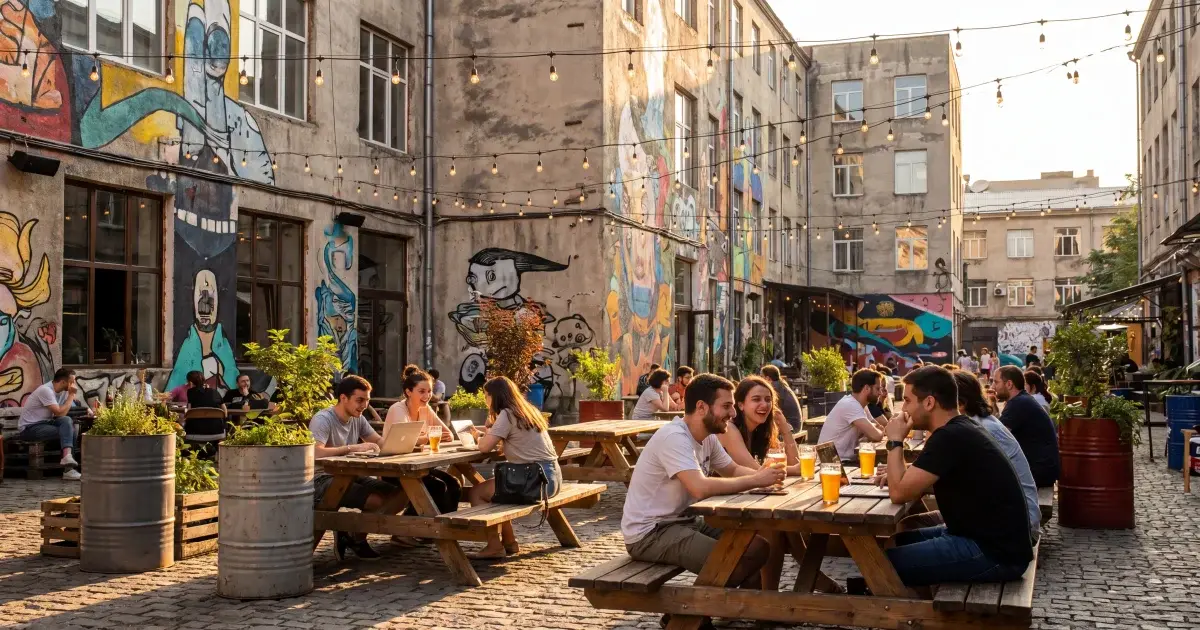
Fabrika is a Soviet sewing factory converted into a hostel and creative complex, and its courtyard is the single best place in the city to understand what young Tbilisi looks like. There are bars, a coffee roaster, a bookshop, design studios, and tables full of people working on laptops next to people three drinks into an afternoon. Eat lunch here; the courtyard kitchens cover Georgian, Asian, and burger territory well enough.
Then walk the surrounding streets. Marjanishvili and Chugureti are full of crumbling Art Nouveau facades, brick synagogues, German-founded churches, and enormous murals. This is where the city looks least curated. Ezo, a restaurant in a converted courtyard house nearby, is a strong dinner option if you skip Mtatsminda.
Afternoon: Dry Bridge Market
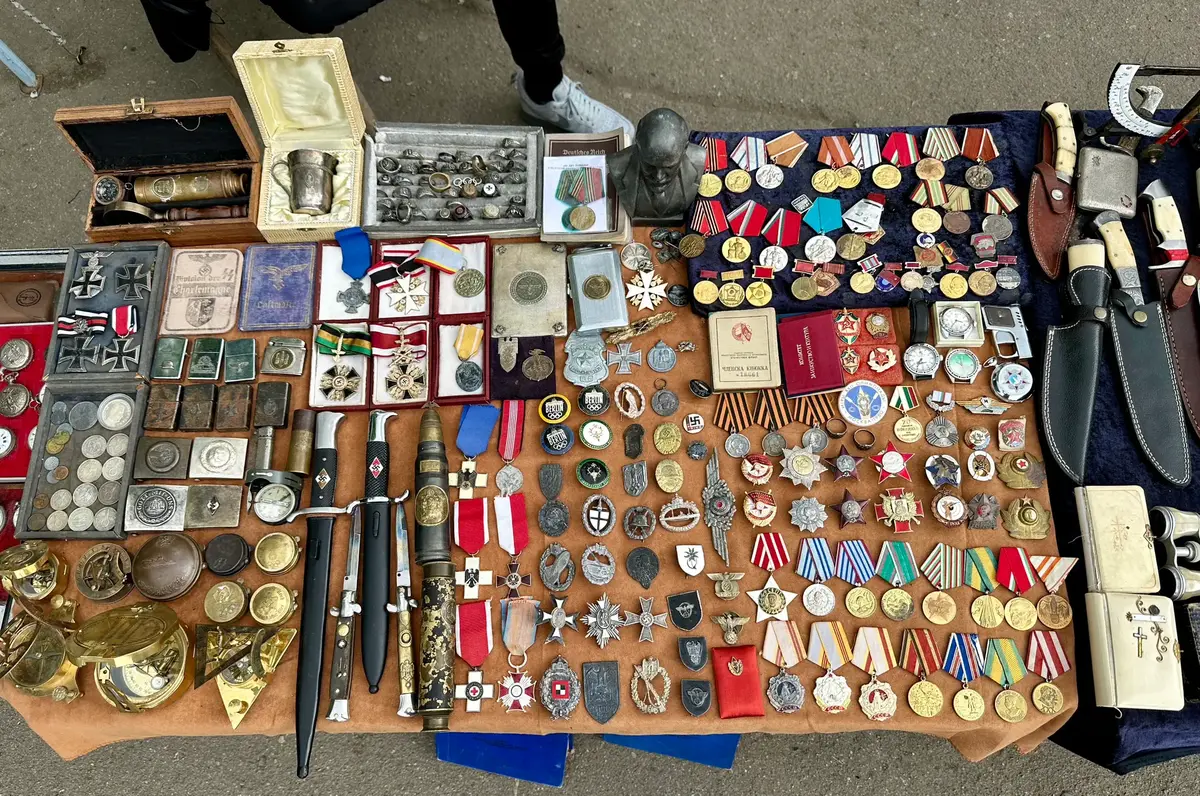
The Dry Bridge market is an open-air flea market in a small park where Georgians have been selling the contents of their attics since the economic collapse of the early 1990s. Soviet cameras, Red Army medals, Bakelite telephones, hand-painted icons, chandelier crystals, and stacks of Georgian enamel jewelry.
It is at its fullest on weekends and in the afternoon. Haggling is expected and good-natured, and prices for tourists start high. Cash only. Even if you buy nothing, it is the best hour of street photography in the city, though ask before pointing a camera at a vendor’s face.
Evening: The Funicular Up Mtatsminda
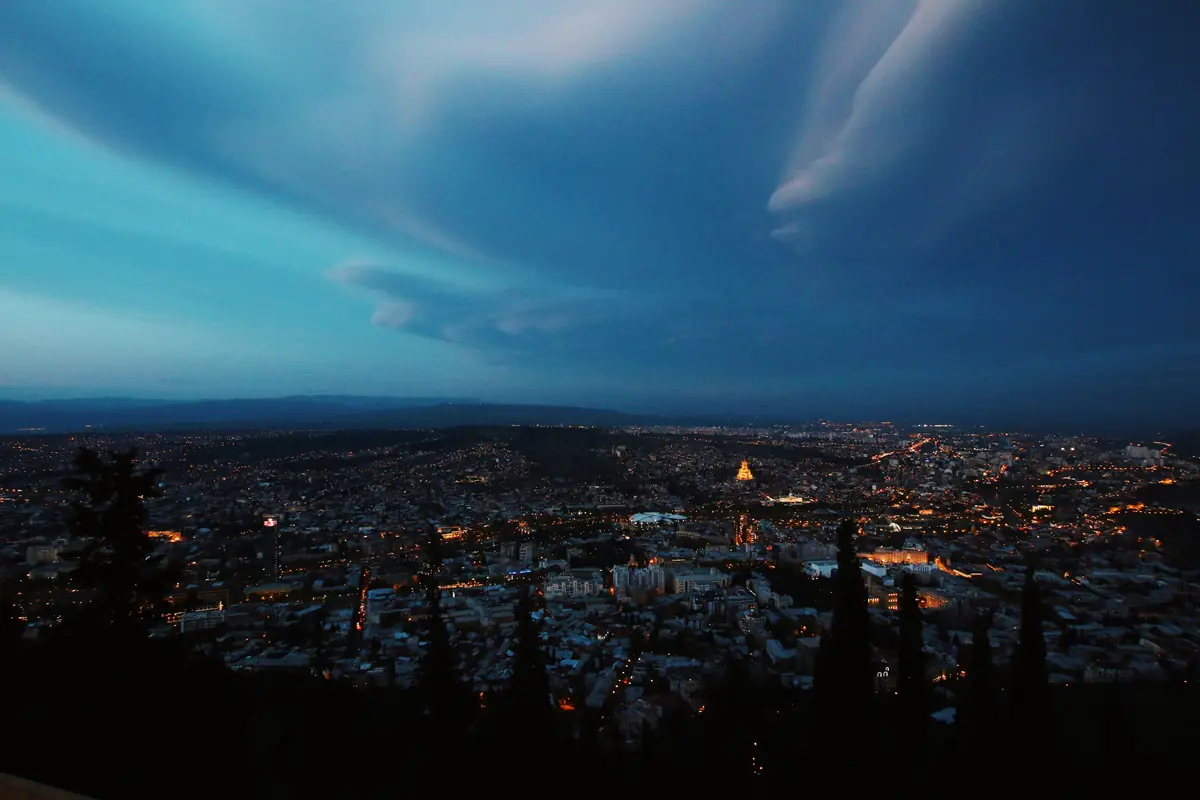
Finish the day on the mountain. The Mtatsminda funicular climbs from a station just off Rustaveli to an upper terminal at about 2,385 feet, and the ride is the whole point: a near-vertical crawl up the hillside with the city unfolding behind you.
The funicular uses its own card, not Metromoney. The card costs 2 GEL and a one-way ride is 12 GEL (roughly $4.60). Arrive about an hour before sunset so you have time at the top while the light is good.
At the summit there is an amusement park with a Ferris wheel, a large park to walk in, and the Funicular Complex restaurant, a 1938 building with a terrace over the city. Order ponchiki, the cream-filled Georgian doughnuts, and let the view do its work. It is noticeably cooler and windier at the top than in the center, so bring a layer even in July. Halfway down, Mtatsminda Pantheon holds the graves of Georgia’s major writers, including Griboyedov and his teenage widow Nino, which is a short and worthwhile stop if you take the walking path instead of riding down.
Day 3: Pick Your Day Trip
You have one day and three good options. Choose based on how much time you want to spend in a van versus how much you want to see mountains.
| Trip | Distance from Tbilisi | Time needed | Group tour cost | Best for |
|---|---|---|---|---|
| Kazbegi and the Georgian Military Highway | About 100 miles north | 10–11 hours | $29–39 | First-timers who want the Caucasus |
| Mtskheta and Jvari | About 12 miles northwest | 4–5 hours | $15–25, or go independently | Tight schedules and history |
| Kakheti wine country | About 70 miles east | 9–10 hours | $14–20 plus tastings | Wine, harvest season, slower pace |
Option A: Kazbegi and the Georgian Military Highway
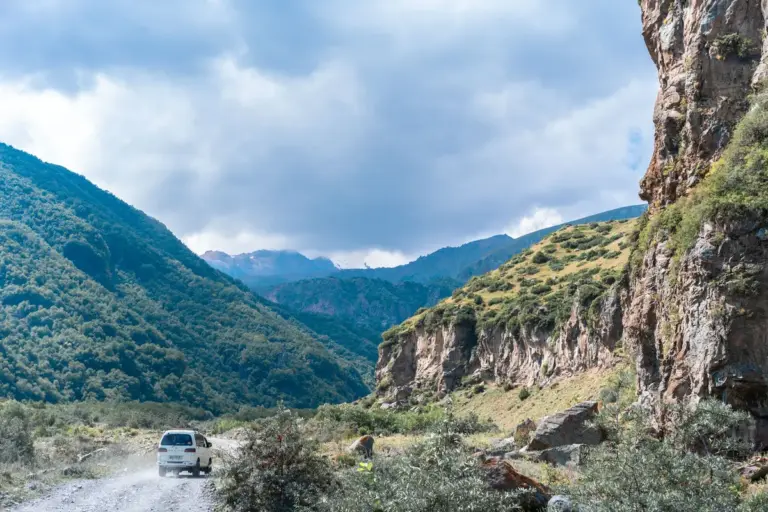
This is the one most people should pick. A full-day group tour runs about $29 to $39 and takes 10 to 11 hours door to door, following the Georgian Military Highway north through the Greater Caucasus toward the Russian border.
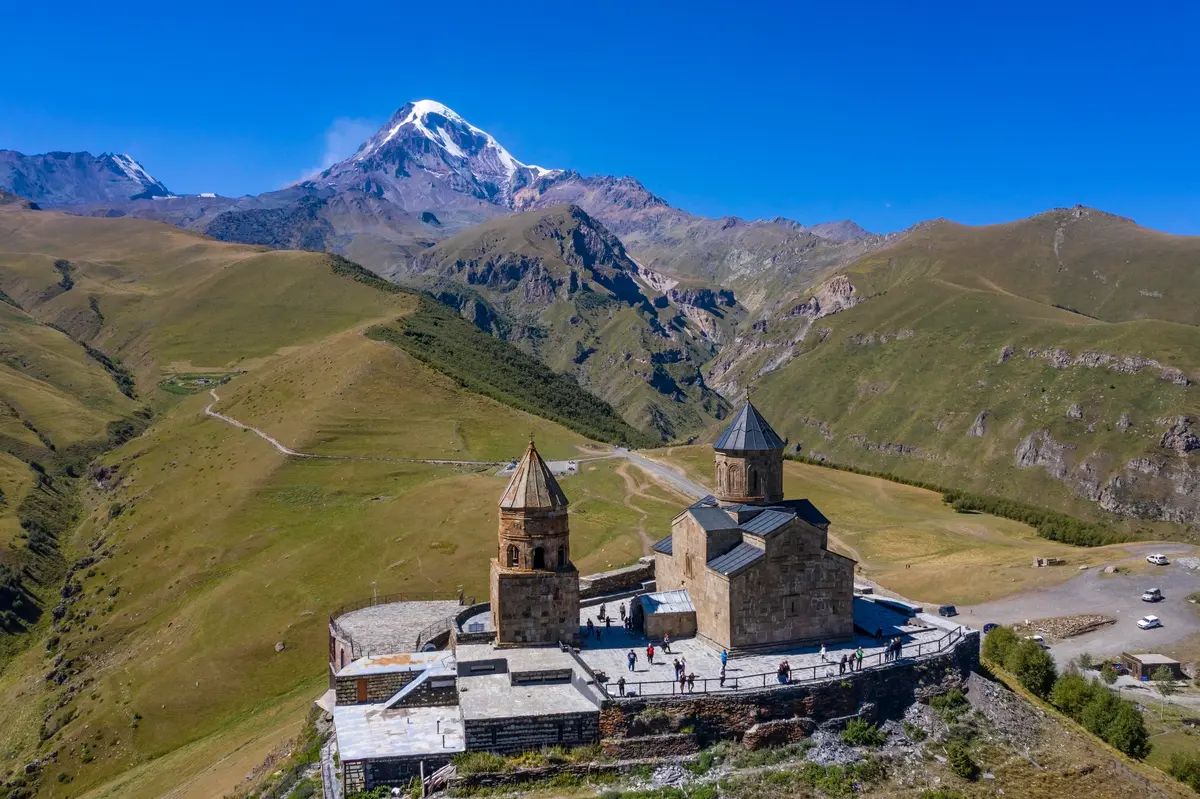
The standard stops: the improbably turquoise Zhinvali Reservoir, the medieval Ananuri fortress on its shore, a viewpoint at the Gudauri ski area, and the Russia-Georgia Friendship Monument with its Soviet mosaic curving over a thousand-foot drop. The destination is Stepantsminda, the village beneath Mount Kazbek, where Gergeti Trinity Church sits alone on a ridge at 7,120 feet with a 16,500-foot glaciated peak behind it. It is one of the great views in the Caucasus.
Getting up to Gergeti requires a 4WD transfer from the village, about 20 GEL ($7) per person, cash only, arranged on the spot. You can hike it in roughly ninety minutes each way if you would rather earn it, but most day tours do not allow the time.
Two practical notes. Temporary road closures on the Cross Pass are common between late November and mid-April when snow and avalanche risk shut the highway, sometimes with little warning, so ask your operator about their policy if you travel in winter. And pack a warm layer in any season; the pass sits above 7,800 feet and can be forty degrees colder than Tbilisi with wind.
Option B: Mtskheta and Jvari
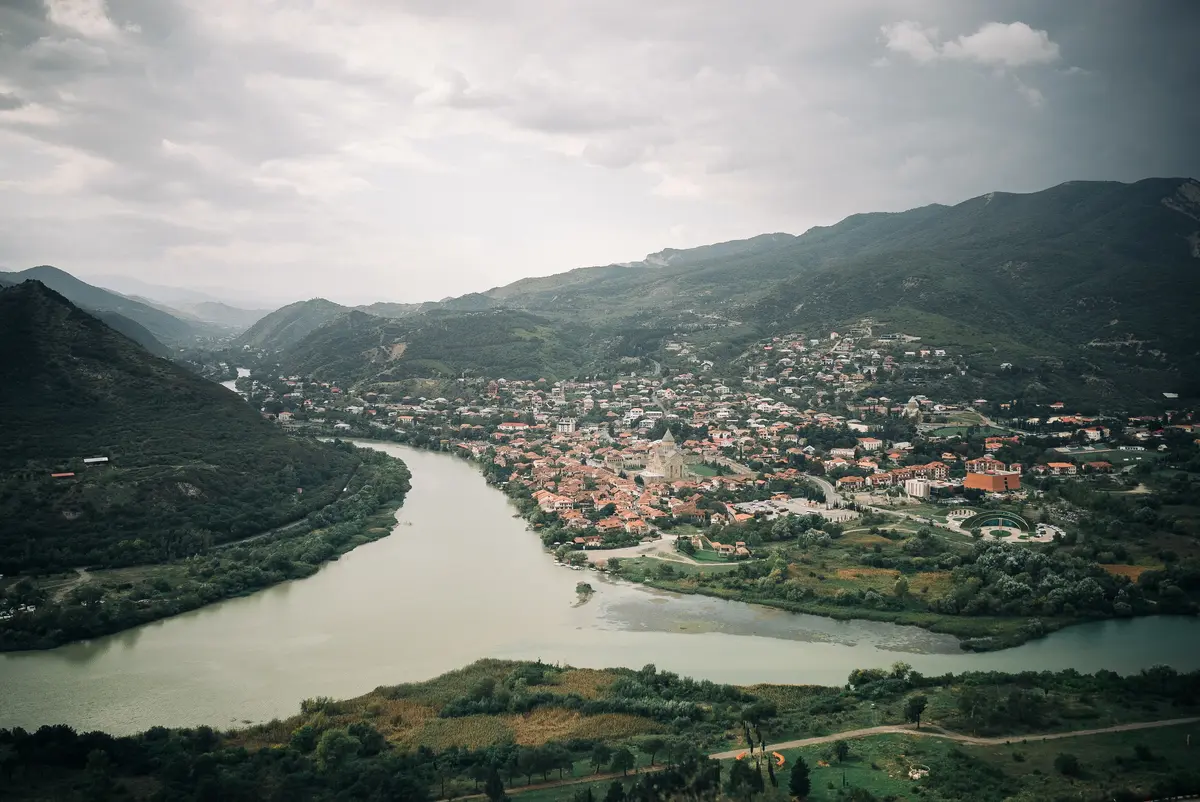
If you would rather not lose a full day to a van, go to Mtskheta. Georgia’s ancient capital sits 20 to 30 minutes from Tbilisi at the confluence of the Mtkvari and Aragvi rivers, and the whole historic center is a UNESCO World Heritage site.
Svetitskhoveli Cathedral, an 11th-century structure the size of a small castle, is said to hold Christ’s robe beneath its foundations and is the spiritual heart of Georgian Orthodoxy. Above the town, Jvari Monastery from the 6th century sits on a bluff with a view down onto the two rivers meeting, one of them visibly muddier than the other.
Budget four to five hours including transport. You can join a cheap group tour, take a Bolt for around 40 to 50 GEL each way, or ride a marshrutka from Didube station for a few lari. This is the right pick if your third day is also your departure day.
Option C: Kakheti Wine Country
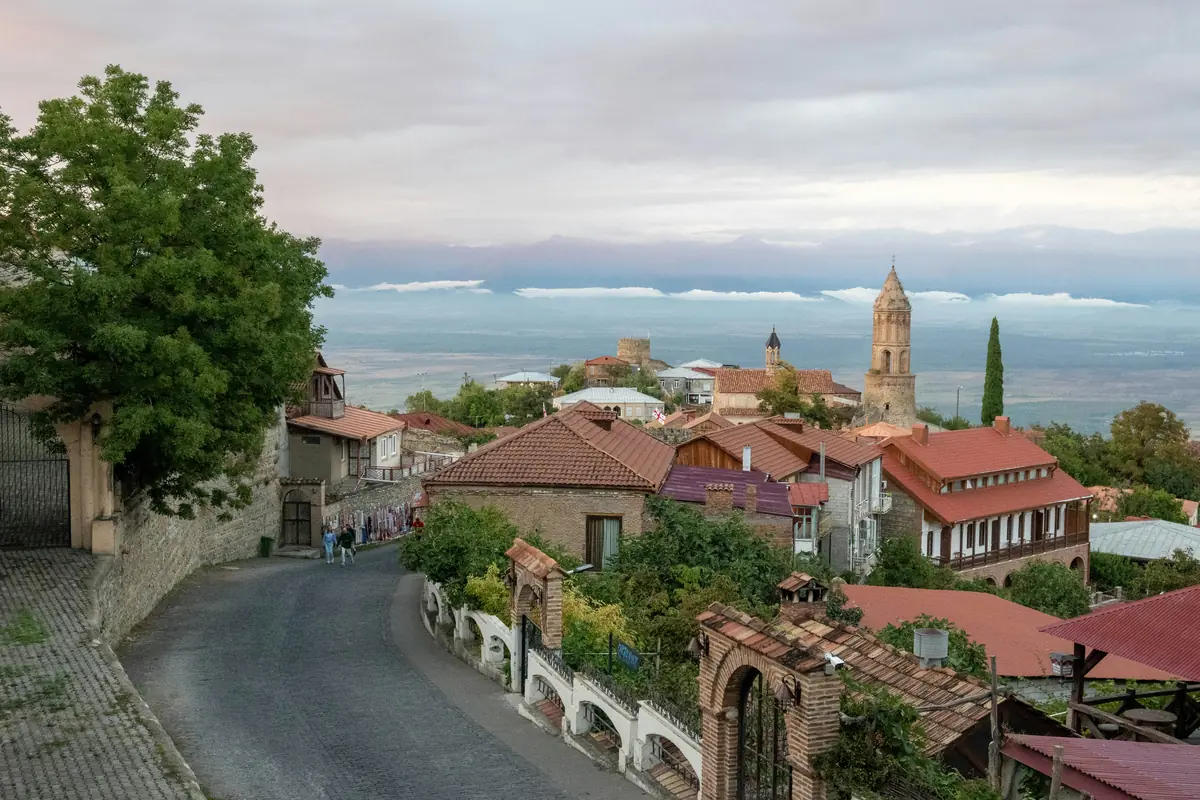
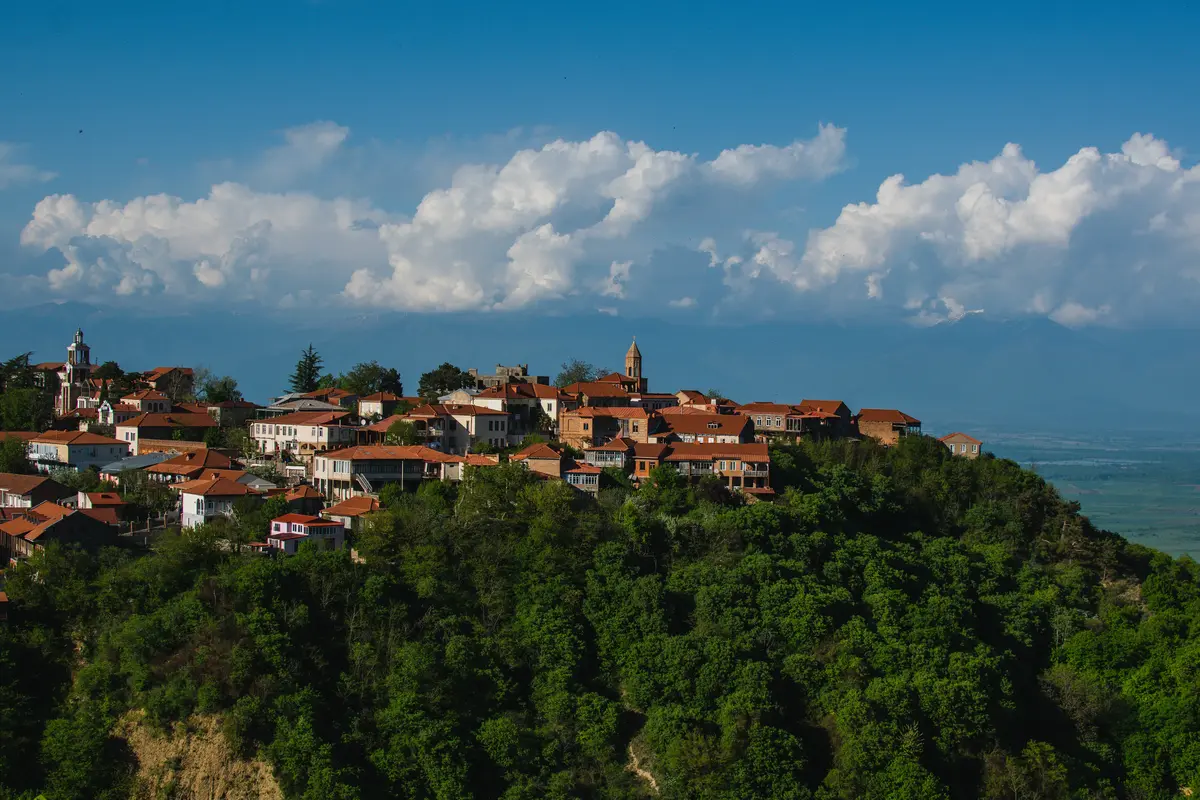
Kakheti is where the wine you have been drinking comes from. Full-day tours with tastings start around $14 to $20 plus what you spend at the wineries, and the day usually combines Sighnaghi, the hilltop town on the wall known as the city of love, with two or three wineries and the Bodbe Monastery.
September and October are the best window, when Rtveli, the grape harvest, turns the whole region into a working festival and small wineries will hand you a bucket if you look willing.
Going independently is possible but limited: a marshrutka from Samgori station to Telavi or Sighnaghi costs 10 to 15 GEL ($4 to $6), but the wineries are scattered across the valley and you will only manage one or two without a car. Since you will be tasting, a group tour or a hired driver is the better plan.
Or Skip the Day Trip and Stay in Tbilisi
If mountains are not your thing, a third day in the city fills easily. The Chronicle of Georgia is a set of 100-foot carved black pillars on a hill above the Tbilisi Sea, part memorial and part Georgian Stonehenge, and almost nobody goes. Turtle Lake has its own cable car for 1 GEL and a walkable loop. The open-air Ethnographic Museum reassembles traditional houses from every Georgian region across a wooded hillside. The Botanical Garden hides in the gorge below Narikala and takes a lazy afternoon.
What to Eat in Tbilisi
Georgian food is the reason a lot of people come back. Here is what to order.
Khachapuri: cheese bread, and a national obsession. The Adjaruli version is boat-shaped, filled with molten sulguni, and topped with a raw egg yolk and a slab of butter that you stir in yourself. The Imeretian version is a flat round loaf with the cheese sealed inside. Historians count 47 regional variations. Gunda is the place to go if you want the rare ones made with endemic flours and regional cheeses.
Khinkali: soup dumplings, twisted into a topknot. The technique matters. Hold it by the knot, bite a small hole in the side, sip the broth out first, then eat the body. Leave the knot on your plate; that is how Georgians count how many you have had. Order at least five, since kitchens usually will not make fewer, and expect 1.30 to 4 GEL per dumpling depending on the filling.
Lobio: a slow-cooked kidney bean stew served in a clay pot with cornbread and pickles. The best cheap meal in the country.
Mtsvadi: pork or lamb grilled over grapevine coals, served with raw onion and pomegranate.
Pkhali: vegetable and walnut pâtés, usually spinach, beet, or eggplant, topped with pomegranate seeds. Order a plate of three.
Churchkhela: strings of walnuts dipped repeatedly in thickened grape must until they look like candles. They hang in every market. Buy the fresh soft ones, not the year-old souvenir ones.
Named spots worth planning around: Cafe Daphna for khinkali, Salobie Bia for lobio and Megrelian khachapuri, Sakhachapure No.1 for the Adjaruli, Puri Guliani for bakery-forward Georgian, and Shavi Lomi for a modern take.
If you want to take something home that is not a bottle, a hands-on cooking class runs from about $29 and typically covers khinkali folding and an Imeretian khachapuri with a glass of wine. Folding khinkali properly is much harder than it looks and makes for a good story.

Getting Around Tbilisi
The metro and city buses cost 1 GEL per tap, with free transfers within a 90-minute window. You need a Metromoney card, which costs 2 GEL at any metro station kiosk and can be topped up there or at machines around the city. The transit system is entirely cashless, and the same card works on the Rike-Narikala cable car and the Turtle Lake cable car. It does not work on the Mtatsminda funicular, which has its own separate card.
The metro has two lines and is fast, deep, and Soviet in the best way. Station names are signed in Georgian and Latin script. Buses cover everything the metro does not and the Bolt or Google Maps apps both handle routing reliably.
For taxis, use Bolt. It is the dominant app in Georgia and works exactly like Uber, with fares set in advance. Short trips in the center run 5 to 7 GEL ($2 to $3). Street taxis are legal but negotiate before you get in, and never take a ride from someone approaching you at the airport or a train station.
Walking is the real answer for the Old Town, Sololaki, and Rustaveli. Just understand that Tbilisi is built into hills and the elevation gain on a normal day surprises people.
The Best Time to Visit Tbilisi
The two best windows are late April through June and September through October.
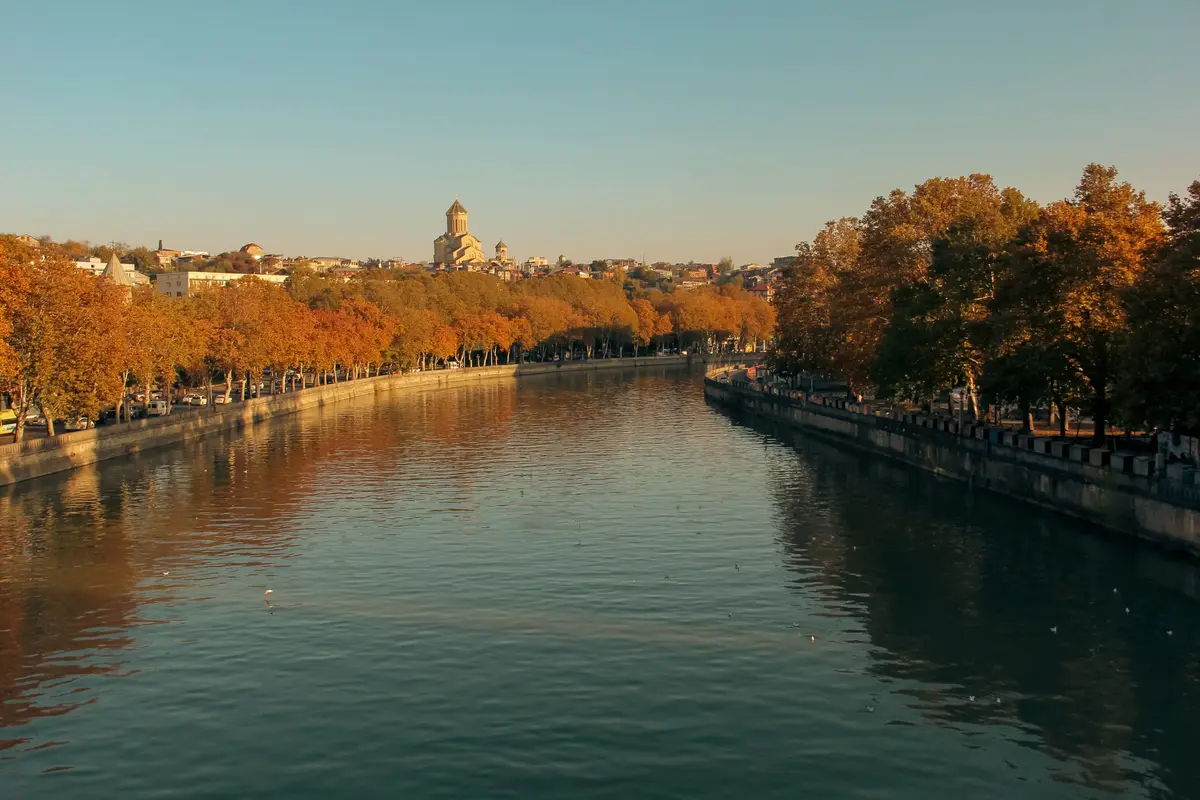
Spring brings mild weather, green hills, and the New Wine Festival at Mtatsminda in May, where dozens of small producers pour in the park for the price of a glass. Autumn brings the Rtveli grape harvest across Kakheti in September and Tbilisoba, the city’s own festival, in early October, which fills the Old Town with food stalls, wine, and street music.
Avoid July and August if you have the choice. Tbilisi regularly climbs past 104°F, the city sits in a valley that traps heat and air pollution, and locals leave for the mountains or the coast. If you must come in summer, do the city early and late and spend the middle of the day somewhere with air conditioning or altitude.
Winter is cold, cheap, and quiet, with January and February the coldest months. The Old Town in snow is beautiful and hotel prices drop sharply, but mountain roads including the route to Kazbegi can close on short notice.
What to Pack for Tbilisi
Comfortable walking shoes with grip come first, in every season. The Old Town is cobblestone, the sidewalks are uneven, and you will climb more than you expect.
Spring and fall: layers, a light rain jacket, and a warm sweater for evenings, since temperatures swing 25 degrees between afternoon and night.
Summer: light clothing, a hat, sunscreen, and a refillable water bottle. Sandals will punish you on the cobbles, so bring real shoes too.
Winter: a warm coat, gloves, and waterproof shoes for slush.
For churches, women should carry a scarf for hair and shoulders and wear a skirt or wrap over pants; most major churches provide wraps at the door but not always. Men should avoid shorts.
For the sulfur baths: swimsuit, flip-flops, and a plastic bag for wet things, plus a hair tie if the sulfur smell bothers you.
For any mountain day trip: a warm layer and a windbreaker regardless of the season, since Gudauri and the Cross Pass sit high enough to be a different climate entirely.
How Many Days Do You Really Need in Tbilisi?
Three days is the sweet spot for a first visit. It covers the Old Town, the baths, the museums, the food, and one day trip, which is enough to leave with a real sense of the place rather than a checklist.
Two days works if you cut the day trip and stay entirely within the city, but you will feel rushed and you will not see the Caucasus.
Four or five days is the ideal. That extra time lets you do Kazbegi and Kakheti as separate days instead of choosing, or add an overnight in Stepantsminda so you can hike to Gergeti in the morning light instead of racing a van schedule.
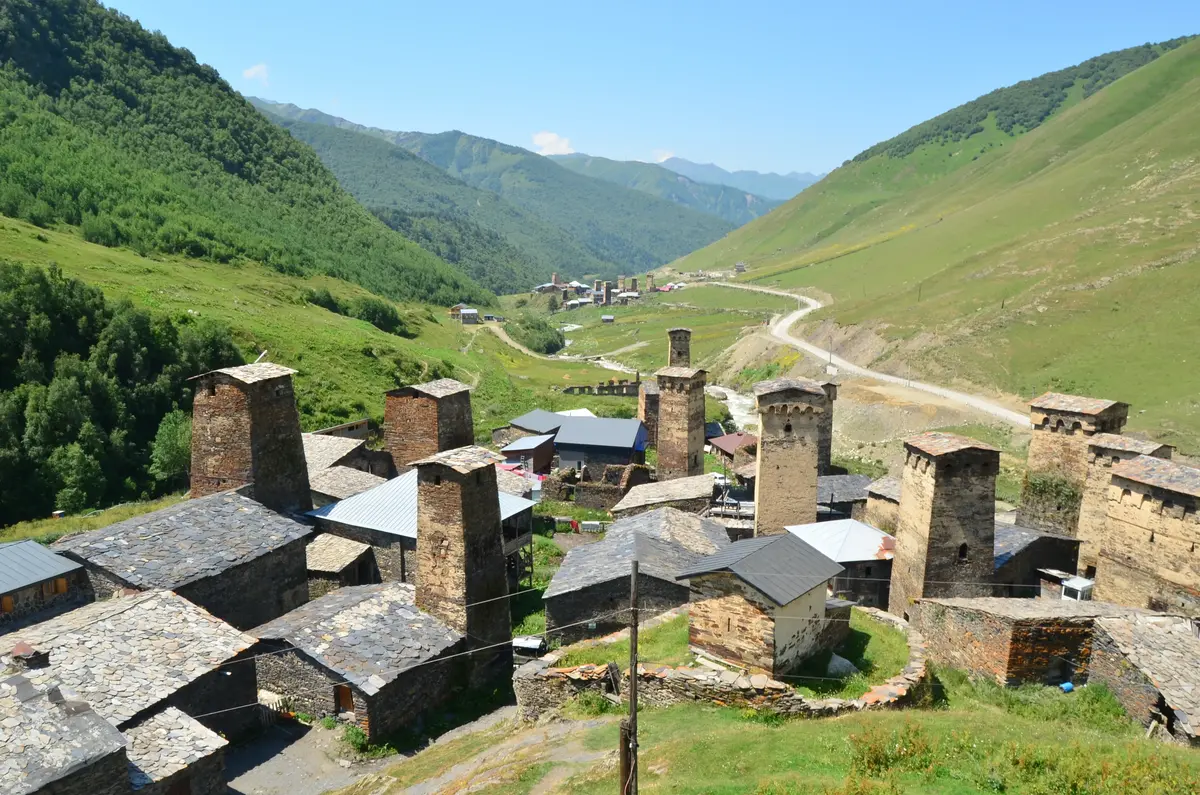
A week or more opens the rest of the country: Svaneti’s medieval tower villages, the Black Sea and the wild subtropical coast at Batumi, the cave city of Vardzia, and serious hiking in the high Caucasus. Most people who plan three days in Tbilisi end up wishing they had planned ten in Georgia. Book the flexible ticket.