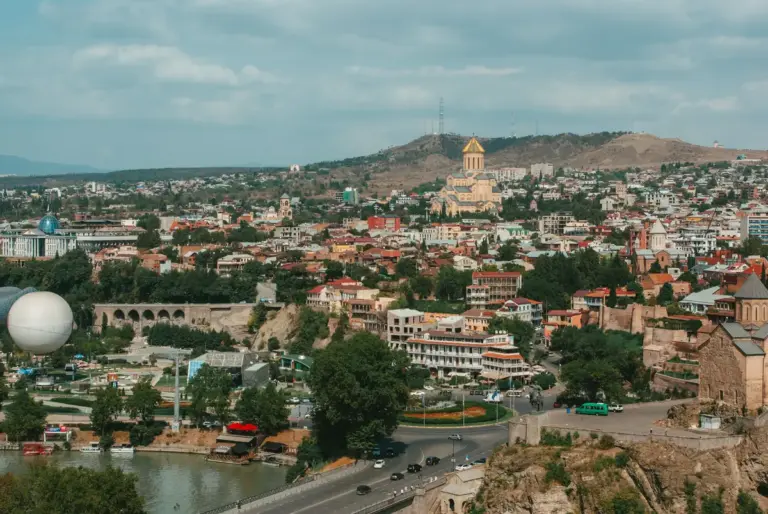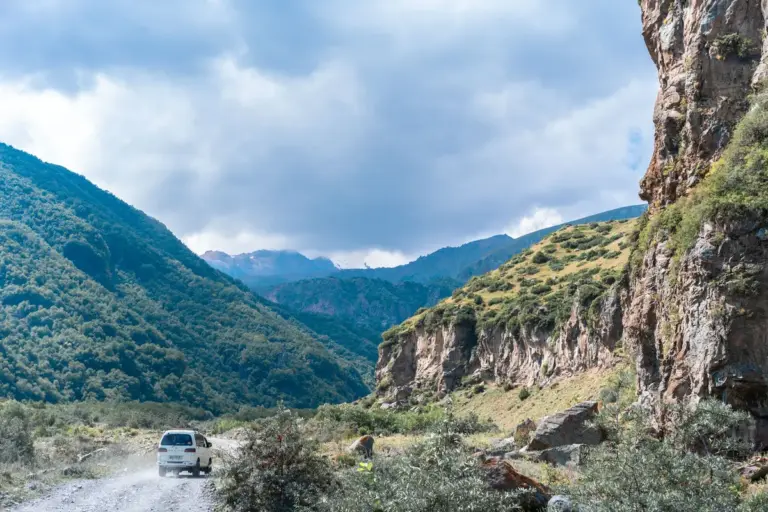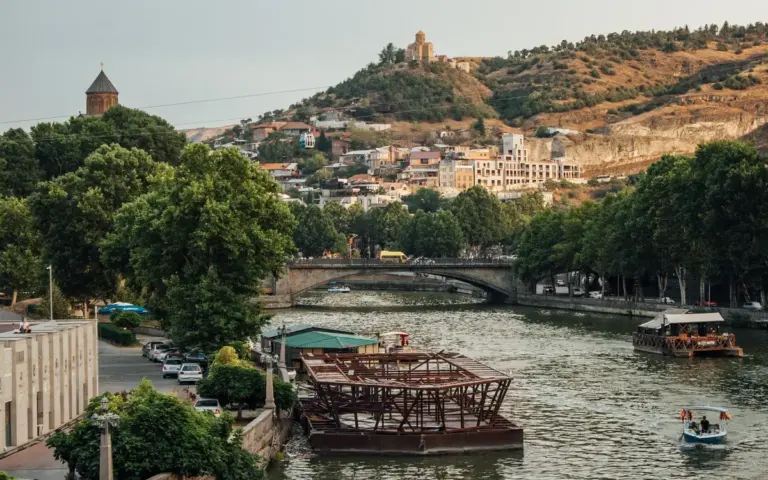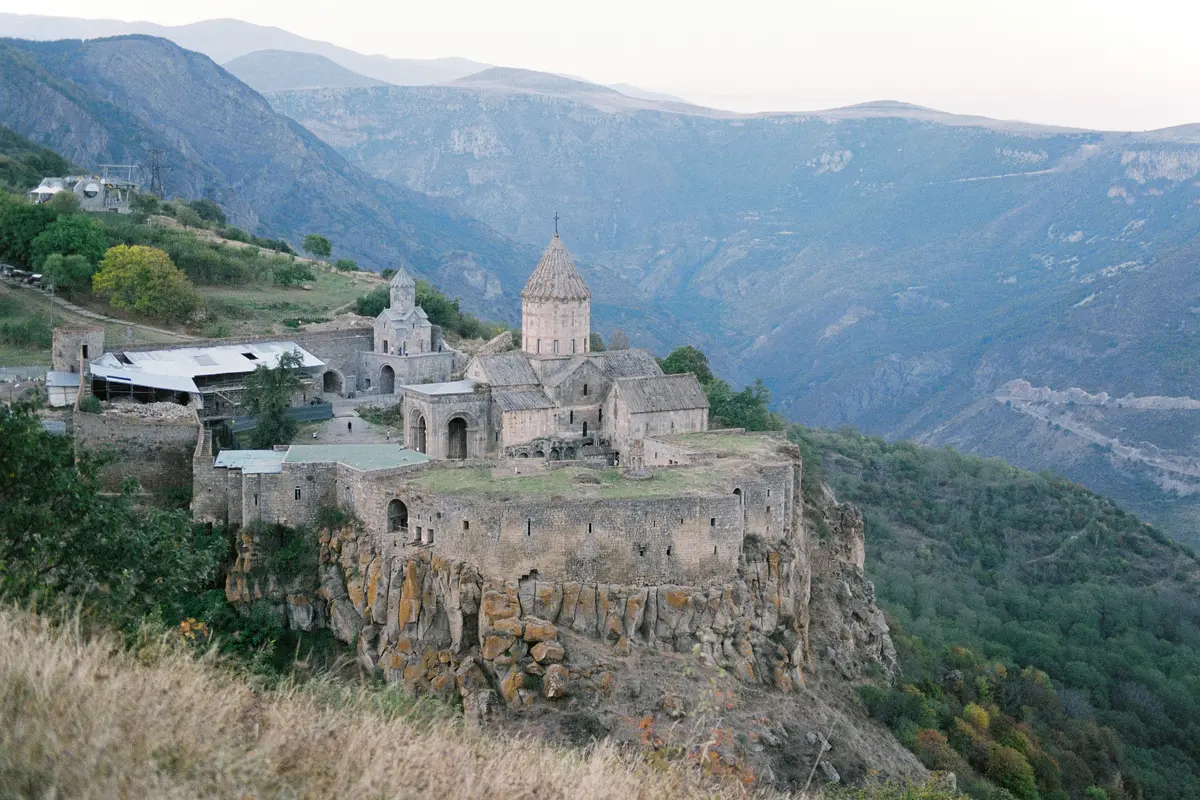
This guide covers the country of Georgia in the South Caucasus, the one wedged between Russia, Turkey, Armenia, and Azerbaijan on the eastern shore of the Black Sea. Not the state with Atlanta in it. Everything below comes out of repeat trips through Tbilisi, up the Georgian Military Highway, and into the Kakheti wine country, plus the mistakes I made the first time and now tell everyone to skip. Prices are in dollars, distances in miles, logistics written for travelers flying from North America.
Is 5 days enough for Georgia? Yes. Five days is enough to see Tbilisi properly, drive the Georgian Military Highway to Kazbegi for Gergeti Trinity Church, and spend a full day tasting in the Kakheti wine region. It is not enough to add Svaneti or Vardzia, which each need two or more extra days.
Quick Answer: Your 5-Day Georgia Itinerary at a Glance
| Day | Base | Key sights | Transport | Est. cost (USD) |
|---|---|---|---|---|
| 1 | Tbilisi | Old Town, Narikala Fortress, sulfur baths | Airport transfer, walking, cable car | $60–90 |
| 2 | Tbilisi | Rustaveli, Sameba Cathedral, Mtskheta | Bolt app, half-day driver | $50–85 |
| 3 | Stepantsminda | Ananuri, Gudauri, Jvari Pass, Gergeti Trinity | Private driver | $95–150 |
| 4 | Tbilisi | Gveleti Waterfalls or Truso Valley, return drive | Private driver | $70–115 |
| 5 | Tbilisi | Sighnaghi, Bodbe Monastery, qvevri tasting | Group tour or private driver | $60–125 |
Costs are per person at a mid-range comfort level and include lodging, food, transport, and entry fees. They exclude international flights.
The order matters more than the stops. Day 1 is deliberately gentle because you’ll land jet-lagged and probably at 2 a.m. The mountains sit in the middle, when you’re acclimated but still have a buffer day if weather closes the pass. The wine day goes last: shortest drive back to the airport, and the easiest to compress if your flight is early.
Is the Country of Georgia Worth Visiting?
Yes, and it’s one of the best value-per-dollar trips left on Europe’s outer edge. Georgia gives you 8,000 years of winemaking, a capital that layers Persian bathhouses under Soviet concrete under art nouveau balconies, and mountain scenery that holds up against the Alps, at a third to half of Western European prices.
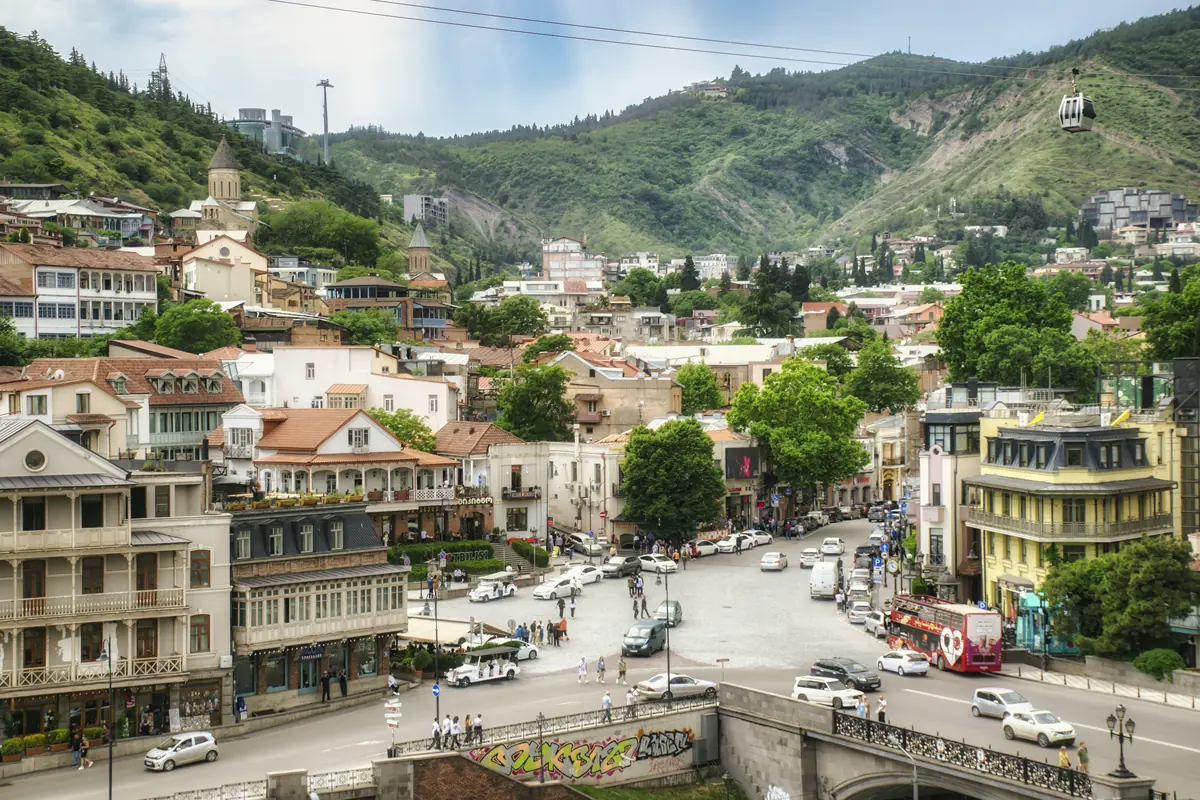
A few things set it apart from anywhere else you’ve probably been:
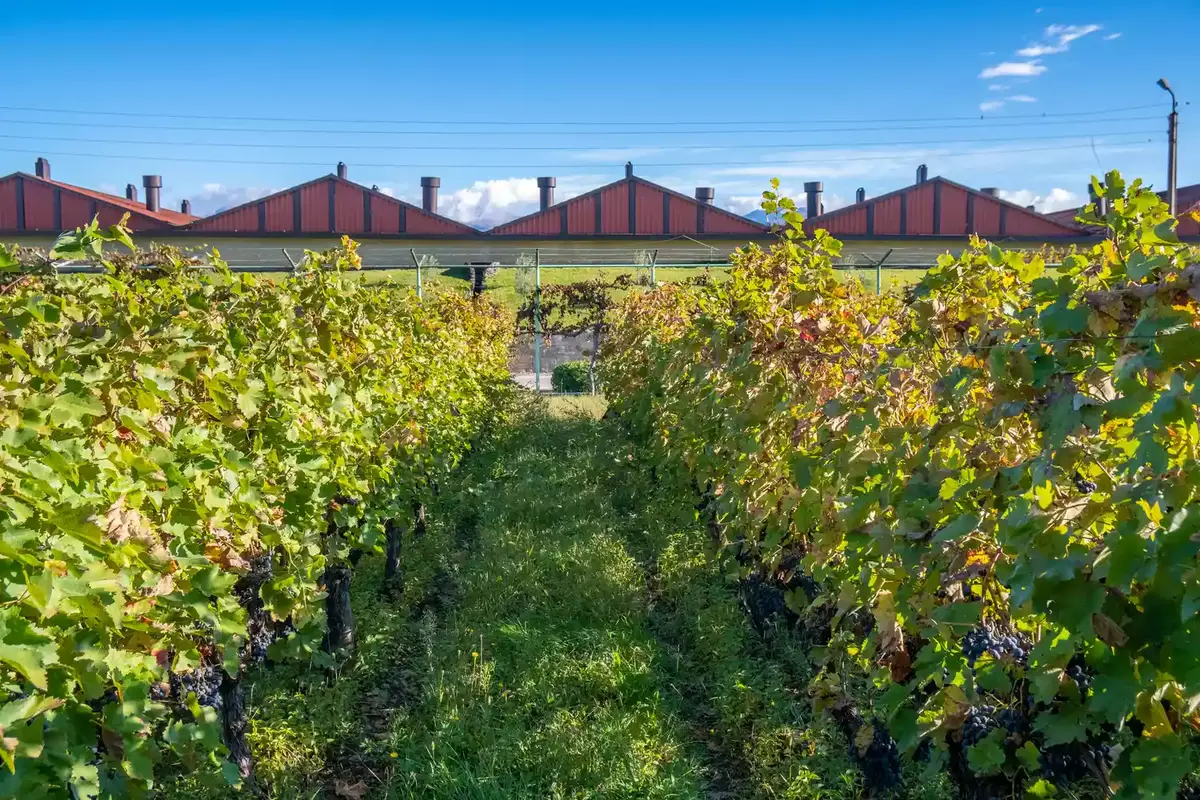
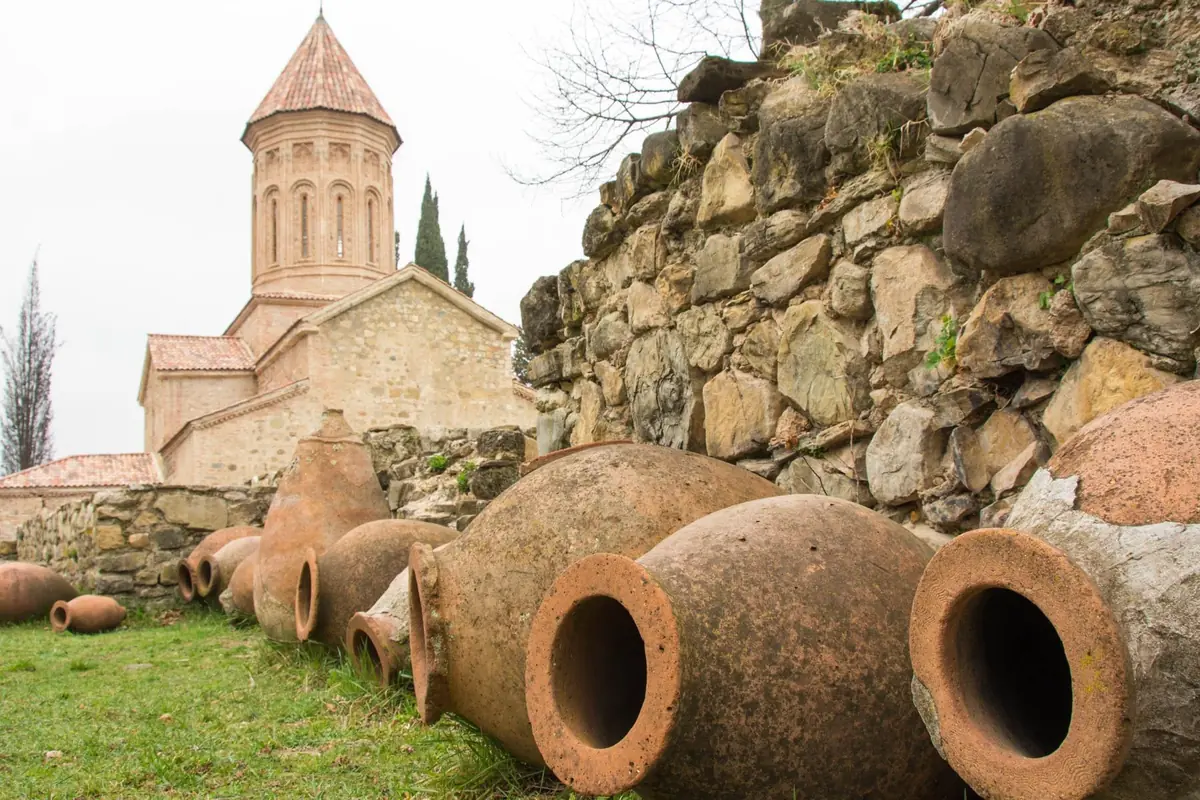
Wine made in clay. Georgians ferment in qvevri, egg-shaped clay vessels buried in the earth, a method UNESCO recognizes as intangible cultural heritage. The amber wines it produces taste like nothing on a US supermarket shelf, and the technique predates French winemaking by thousands of years.
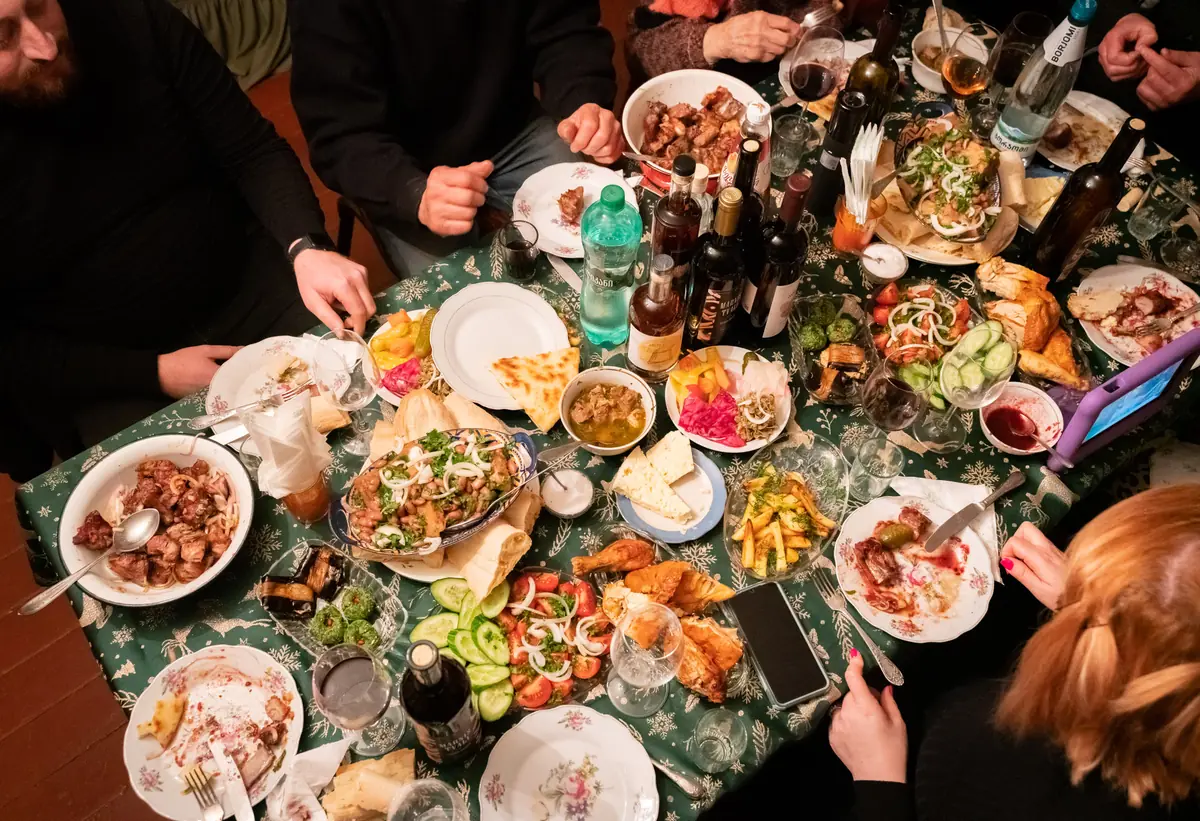
Hospitality as a formal system. The supra, the Georgian feast, runs on toasts led by a tamada, a designated toastmaster. It’s not casual drinking, it’s closer to a structured performance, and an invitation to one is what you’ll still be talking about a year later.
Real mountains, one drive from the capital. Three hours north of Tbilisi you’re at 7,000 feet with the Greater Caucasus in front of you. The UNESCO-listed monuments of Mtskheta sit just 30 minutes out and slot neatly into Day 2.
The tradeoff is honest: Georgia isn’t polished. Sidewalks are uneven, drivers are aggressive, and service can read as brusque until you realize it isn’t rudeness. If you want a frictionless resort week, look elsewhere. If you want somewhere that still belongs to the people who live there, book the flight.
Before You Go: Essential Info for US Travelers
How to Get to Georgia from the USA
There are no nonstop flights from the United States to Tbilisi. Every routing involves at least one connection, and total travel time typically runs 14 to 20 hours door to gate.
Your realistic options:
- Istanbul (Turkish Airlines) is the workhorse and usually the cheapest, with the shortest second leg at about two and a half hours.
- Doha (Qatar Airways) and Dubai (Emirates connecting to flydubai) are the comfortable choices, though the Gulf routing adds hours.
- Munich, Frankfurt, or Warsaw (Lufthansa, LOT) work well from the East Coast and keep you in one alliance for baggage.
Expect round-trip fares of roughly $700 to $1,500, with $800 to $1,200 realistic via Istanbul. Booking six to eight weeks out and flying midweek shaves a couple hundred dollars off. Kutaisi (KUT) is the budget back door via Wizz Air, but it’s a three-and-a-half-hour drive from Tbilisi.
The detail nobody warns you about: most flights from the US land between midnight and 4 a.m. Arrange your transfer before you fly. Negotiating with a taxi driver at 3 a.m. is the worst possible start, and the official airport desk charges roughly triple a pre-booked car.
Visa Requirements for US Passport Holders
US citizens do not need a visa for Georgia. Americans can enter, live, work, or study in the country visa-free for up to 365 days. There’s no application, no fee, and no arrival form. You need a passport valid for the length of your stay and that’s it.
Two things worth knowing. Georgia is not in the Schengen Area, so your time here doesn’t count against the Schengen 90-in-180 rule, which makes it a popular reset stop on longer European trips. And overstaying carries a fine of 360 lari, roughly $135, for delays up to 90 days, and 720 lari beyond that. Confirm current rules at geoconsul.gov.ge. Passport control at Tbilisi International takes 10 to 15 minutes.
Travel Insurance Is Now a Legal Entry Requirement
This is the newest change and the one most older guides miss. Georgia now requires all foreign visitors to carry valid health and accident insurance covering the full duration of their stay, and this applies to visa-free nationalities including Americans.
The specifics that matter:
- Minimum coverage of 30,000 lari, roughly $11,500, for medical and accident expenses.
- The policy must be valid for every day you’re in the country.
- Documentation must be in English or Georgian, and can be shown digitally or on paper.
- Border officers can ask for it at any entry point, and airlines have been instructed to check before boarding.
Buy online before you fly. Airport policies cost meaningfully more, queues are long, and adventure activity coverage is usually excluded. If you already hold a US travel medical policy, check that it states the coverage limit clearly in English. A credit card’s built-in travel protection usually won’t satisfy the requirement. Rules here have shifted more than once, so verify on the Georgian Ministry of Foreign Affairs consular site before departure.
Jet Lag and Time Zones
Georgia runs on GMT+4, eight hours ahead of US Eastern and eleven ahead of Pacific. Combined with a red-eye arrival, the first 24 hours are rough. That’s exactly why Day 1 is a slow walk through the Old Town and an hour in a hot sulfur bath rather than a mountain drive. Scheduling something ambitious on your first morning is how people end up sleeping through Day 2.
Best Time to Visit
May through June and September through October are the sweet spots: mild temperatures, manageable crowds, and open mountain roads.
- Spring (May–June): wildflowers in the highlands, comfortable 70s in Tbilisi, everything open.
- Summer (July–August): Tbilisi pushes past 95°F and the Old Town becomes an oven, but Kazbegi in August is the best it gets.
- Fall (September–October): my pick. The Rtveli grape harvest runs late September into October in Kakheti, and wineries that normally do a polite tasting will pull you into the actual work.
- Winter (November–March): skiers only. Gudauri gets excellent snow and low prices, but the Military Highway closes intermittently and Gergeti can be unreachable.
Money: Lari, ATMs, and When You Need Cash
The currency is the Georgian lari (GEL). The rate has hovered around 2.6 lari to the dollar, meaning a lari is worth roughly 38 cents. Check the National Bank of Georgia site for the current figure before you budget.
Cards work almost everywhere in Tbilisi and Batumi, and stop working the moment you leave a city. Carry cash for marshrutka fares, small family wineries, church donations, mountain guesthouses, and the bathhouse scrub attendant. Stepantsminda has ATMs, but they run dry on busy summer weekends, so pull cash in Tbilisi before heading north.
The most valuable money tip: always be charged in lari, never in dollars. When an ATM or terminal offers to convert for you, that’s dynamic currency conversion, and it quietly costs 3 to 5 percent. Decline every time. Basis Bank ATMs are known for fee-free withdrawals; TBC and Bank of Georgia display their fee before you confirm. Wise, Revolut, and Charles Schwab accounts are the usual American picks.

SIM Cards and eSIMs
Buy a local SIM at the airport. It takes five minutes, costs about 4 dollars for the SIM plus 6 to 12 for a tourist data package, and you’ll need your passport to register it.
The carrier choice matters. Magti has the best mountain coverage and is the one to buy if you’re going anywhere near Kazbegi or the Truso Valley. Silknet is solid in cities and was early to eSIM. Cellfie is cheapest and fine if you never leave Tbilisi. Global eSIMs like Airalo work, but they piggyback on local networks, and I’ve watched one drop to nothing above Gudauri while a friend’s Magti SIM held three bars.
Getting Around: Marshrutka, Taxi Apps, and Private Drivers
Three tiers, and picking the wrong one is the most common way people ruin an otherwise good day.
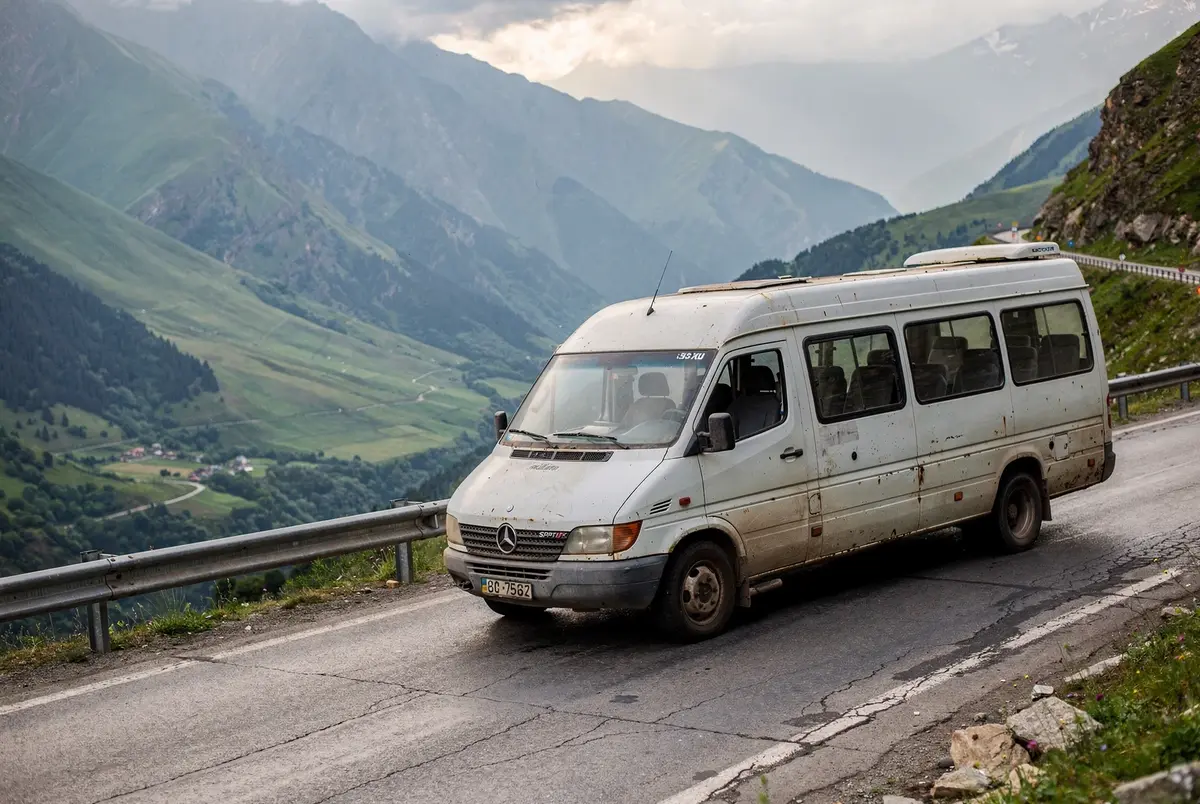
Marshrutka. Shared minivans, the backbone of Georgian transport, roughly $4 to $6 from Tbilisi to Stepantsminda, departing Didube station for the north and Samgori or Ortachala for Kakheti. They leave when full, not on a schedule. The reality: cramped, no photo stops, and drivers who overtake on blind mountain curves. Fine for getting from A to B on a budget, poor for the most scenic road in the country.
Taxis. Use Bolt, with Yandex Go as backup. Uber does not operate in Georgia. Never hail a street taxi near tourist sights unless you enjoy paying five times the meter. A cross-town Bolt ride runs $2 to $4.
Private driver. GoTrip is the platform most travelers use: a car and driver for a fixed route at a fixed price, roughly $70 to $110 a day, stopping wherever you want. Split between two or three people it’s barely more than the marshrutka, and on the Military Highway it’s the difference between seeing the road and enduring it.
The Classic 5-Day Georgia Itinerary
Day 1: Arrival and Old Tbilisi
Land, transfer into Dzveli Tbilisi (the Old Town), drop your bags, and do nothing strenuous. This day exists to get you upright and on local time.
Once you’ve slept off the flight, walk. The Old Town covers easily on foot in an afternoon:
- Ride the cable car from Rike Park to Narikala Fortress. About a dollar, three minutes, and the best orientation view in the city. Walk down through the Botanical Garden path rather than riding back.
- Cross the Bridge of Peace, the glass-and-steel arc locals nicknamed the Always Ultra, for reasons that become obvious.
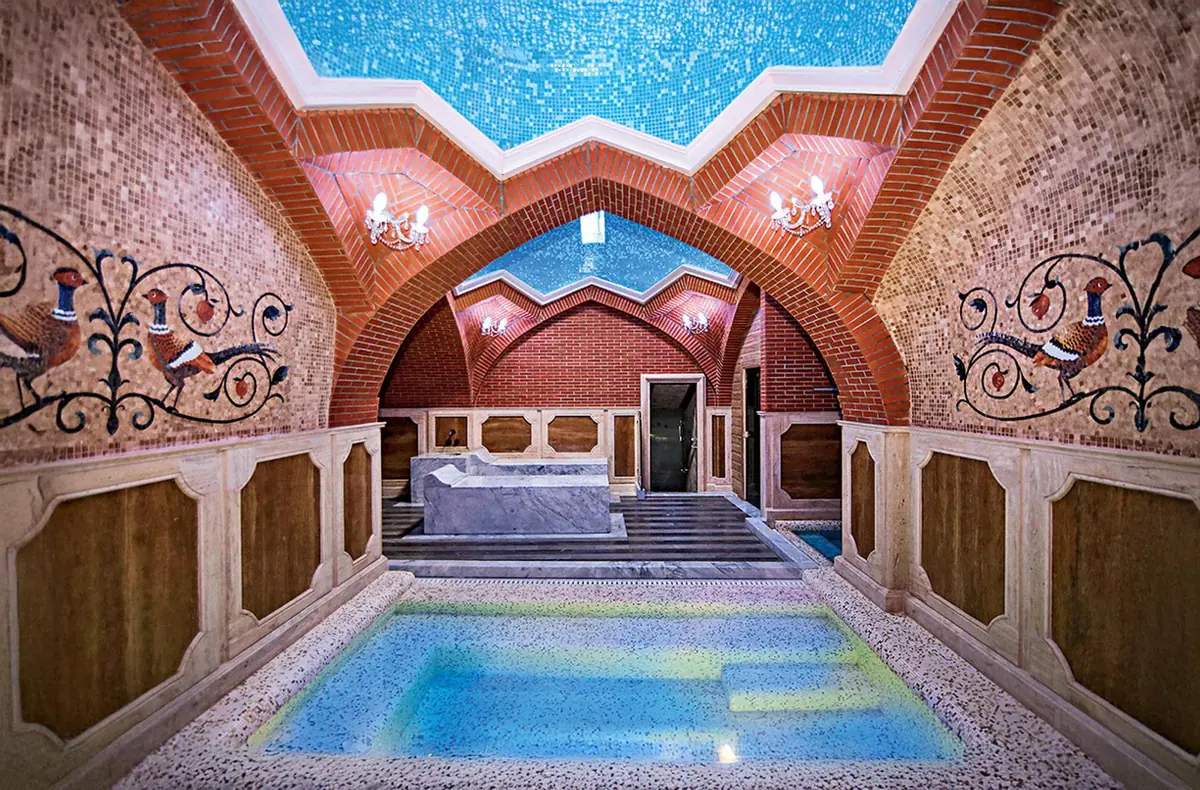
- Wander into Abanotubani, where the bathhouse domes rise out of the ground like half-buried igloos.
Then get in the water. Tbilisi is built on sulfur springs, and the bathhouses are the reason the city exists. Public rooms cost $1 to $6; private rooms run $19 to $57 per hour for the whole room, so split it across your group. A kisa scrub, delivered by an attendant with a coarse mitt, adds $4 to $10, cash only.
What I wish someone had told me: the floors are lethally slick, so bring flip-flops, and the scrub is closer to being sanded than massaged. One hour is the minimum useful booking. Orbeliani, with the blue-tiled Persian facade, is the photogenic one; Chreli-Abano takes online reservations, which matters on weekends.
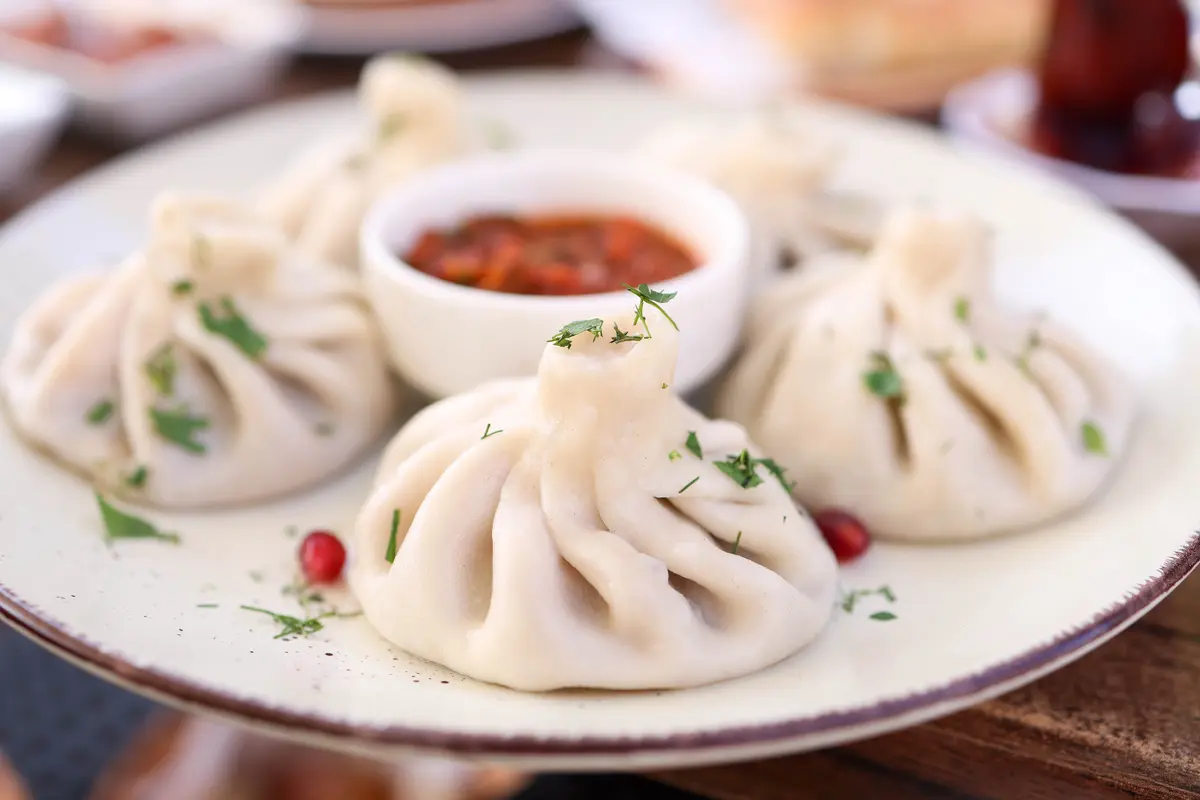
Dinner should be your first proper Georgian meal. Order khinkali, the pleated soup dumplings you eat by hand, holding the knot, biting a small hole, and drinking the broth before anything else. Never eat the knot. Add a khachapuri, the cheese bread, and if you’re within reach of a group of Georgians who start toasting, accept the invitation.
Day 2: Tbilisi Deep Dive and Mtskheta
Spend the morning in the modern city and the afternoon in the ancient capital.
Morning in Tbilisi:
- Rustaveli Avenue, the grand boulevard lined with the opera house, the National Museum, and Parliament. A long rehabilitation project has been closing stretches of it to traffic, so check current conditions before planning around it.
- Holy Trinity Cathedral (Sameba), the enormous modern cathedral on the hill across the river. Cover your shoulders; women should bring a scarf.
- The Chronicles of Georgia, towering black pillars carved with the national history, out by the Tbilisi Sea. Twenty minutes by Bolt, free, and almost no tour buses go there.
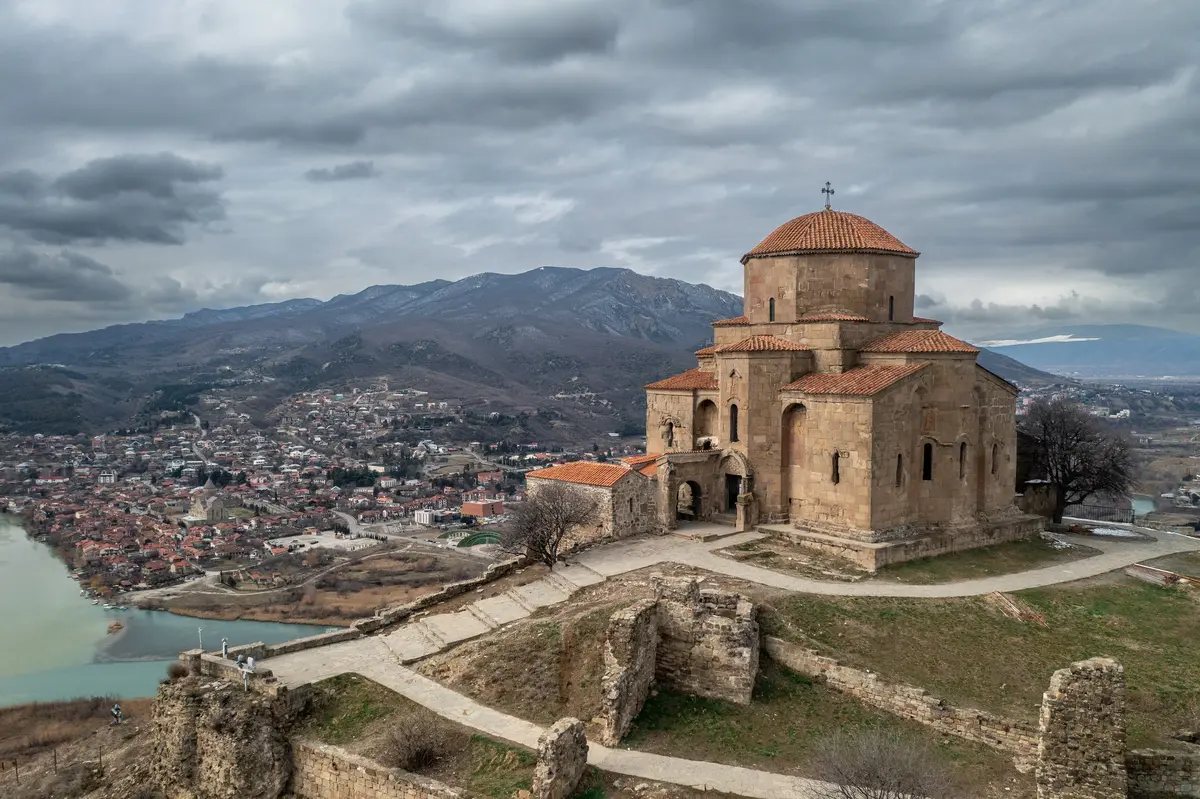
Afternoon in Mtskheta. The spiritual capital sits 16 miles north, about 25 minutes. Two UNESCO-listed sites anchor it: Svetitskhoveli Cathedral, where tradition holds Christ’s robe is buried, and Jvari Monastery on the ridge above, looking down at the point where the Mtkvari and Aragvi rivers meet in two visibly different colors. Half a day is plenty. Bolt won’t reliably pick you up for the return, so book a round-trip driver.
Day 3: The Georgian Military Highway to Kazbegi
This is the day the trip is built around. The Georgian Military Highway runs 93 miles north from Tbilisi to Stepantsminda, and while a determined driver can cover it in three to three and a half hours, you should allow six to eight with stops. Rushing it defeats the purpose.
The stops that earn their time:
- Zhinvali Reservoir, an unnaturally turquoise lake about an hour out.
- Ananuri Fortress at mile 45, a walled church complex directly above the water. Twenty minutes, no entry fee, best photo of the first half.
- Gudauri at mile 75, the ski resort, which in summer is a paragliding base.
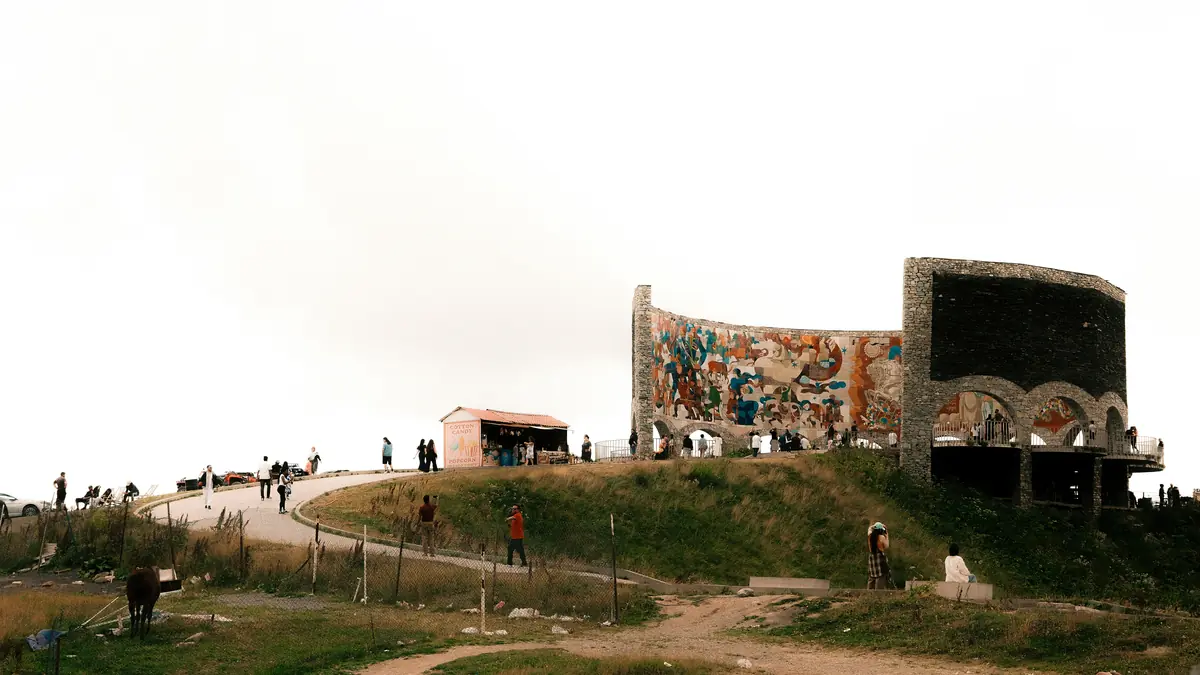
- The Russia–Georgia Friendship Monument, a concrete arc covered in Soviet-era mosaic and cantilevered over a thousand-foot drop. A strange and spectacular piece of propaganda architecture.
- Jvari Pass at 7,805 feet, the high point of the road.
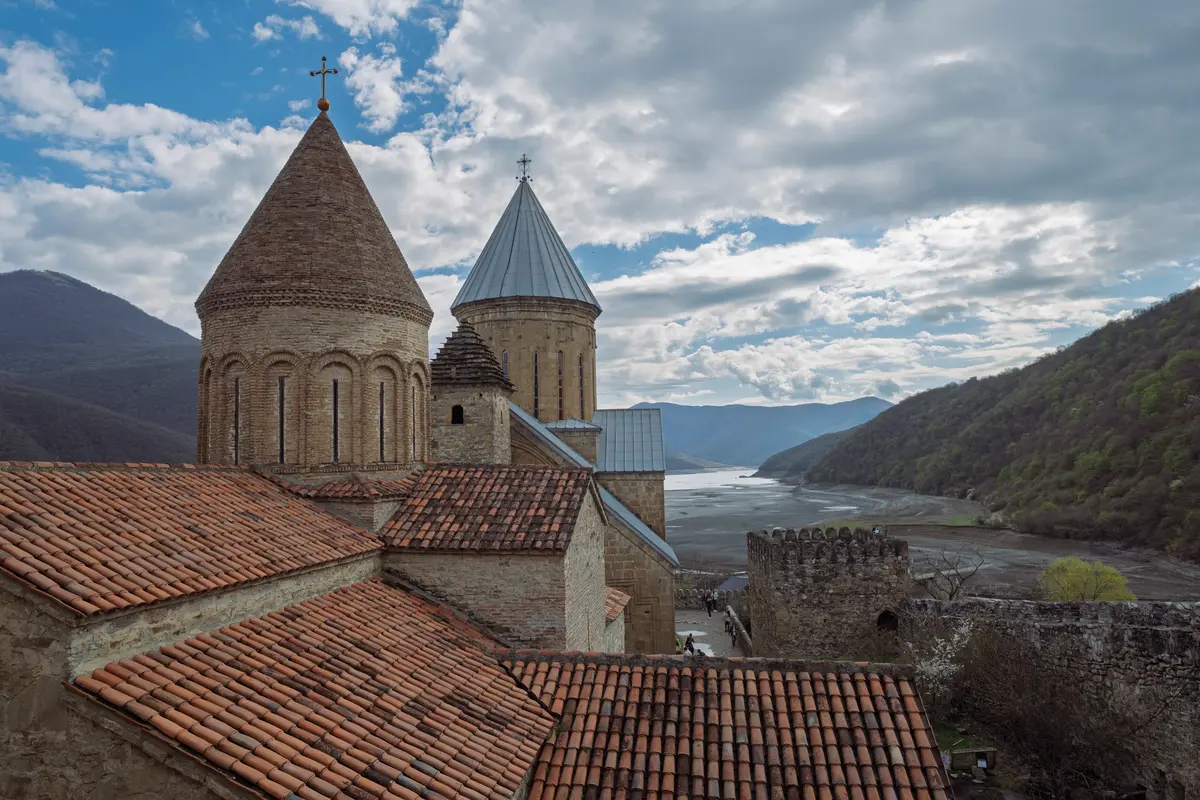
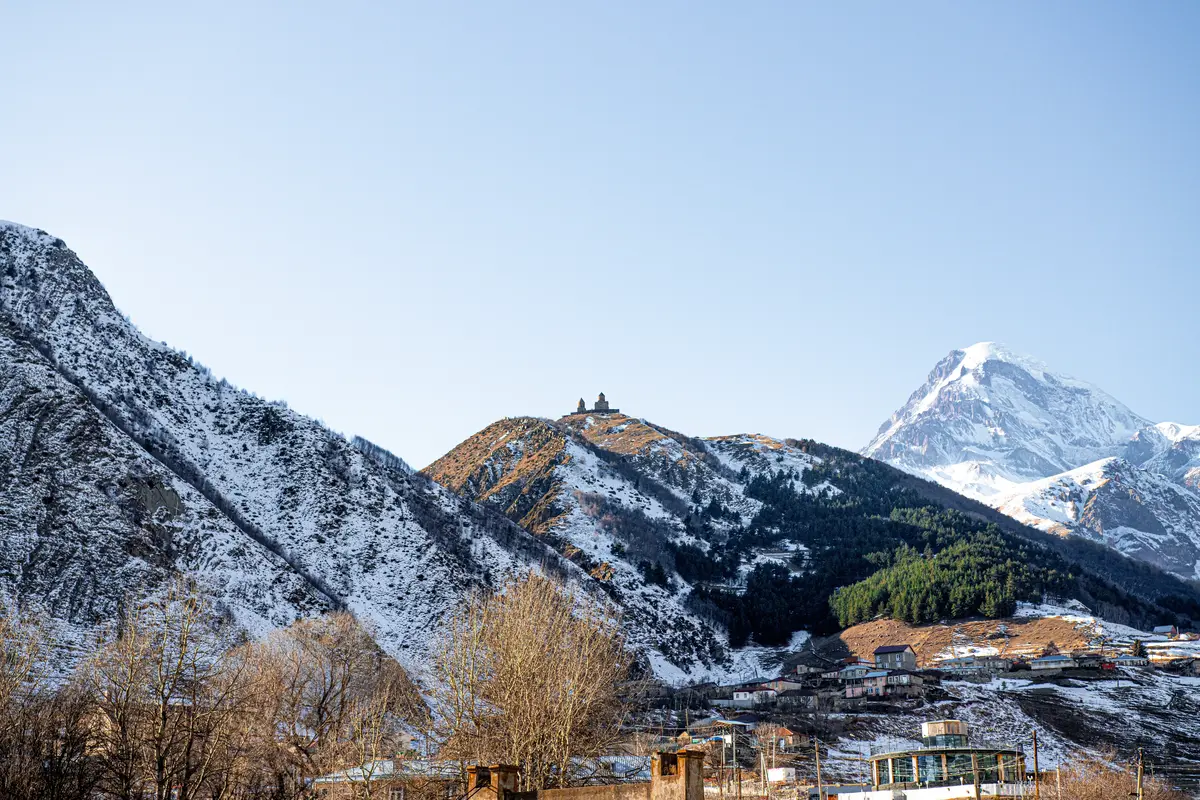
Arrive in Stepantsminda (still widely called Kazbegi) in the afternoon. The reason everyone comes is Gergeti Trinity Church, a 14th-century stone chapel standing alone at 7,120 feet with 16,558-foot Mount Kazbek filling the sky behind it. Hike up in 1.5 to 2 hours on a steep dirt track, or take one of the 4WD shuttles waiting in the village square for about $10 round trip. My recommendation: ride up, hike down. You get the view without arriving too winded to enjoy it, and the descent is where the valley opens up anyway.
Stay the night. Day-tripping Kazbegi means six to seven hours in a car for ninety minutes on the ground, and you’ll miss the light. Rooms Hotel Kazbegi has the famous glass-walled terrace facing the church; village guesthouses cost a third as much and feed you better.
A note on the road ahead: a new Kvesheti–Kobi highway with a 5.6-mile tunnel is under construction and, when it opens, is projected to cut the Tbilisi–Stepantsminda drive to under two hours and keep the route open through winter avalanche season. Completion dates have slipped repeatedly, so plan around the existing road and treat the tunnel as a bonus if it’s running when you go.
Day 4: Kazbegi Back to Tbilisi
Wake up early. The mountain is usually clearest between sunrise and about 9 a.m., and by midday the cloud often swallows the summit entirely. I’ve watched people sleep in and never see Kazbek at all.
If you have the morning, add one short excursion before driving back:
- Gveleti Waterfalls, a 40-minute round-trip walk from the trailhead north of the village, close to the Dariali Gorge and the Russian border.
- Truso Valley, a wider half-day with mineral springs, travertine terraces, and abandoned stone towers, if you started before eight.
Then drive south, stopping at whatever you skipped on the way up. You’ll arrive back in Tbilisi by late afternoon.
Do not reverse this and save Kazbegi for your final day. The pass closes for weather with no notice, landslides happen, and a five-hour delay on the day of an international flight is a problem you cannot solve.
Day 5: Kakheti Wine Day, Then Departure
Georgia’s wine region sits an hour and a half to two hours east of Tbilisi, and it makes a clean final day because you’re driving back toward the airport rather than away from it.
The standard loop:
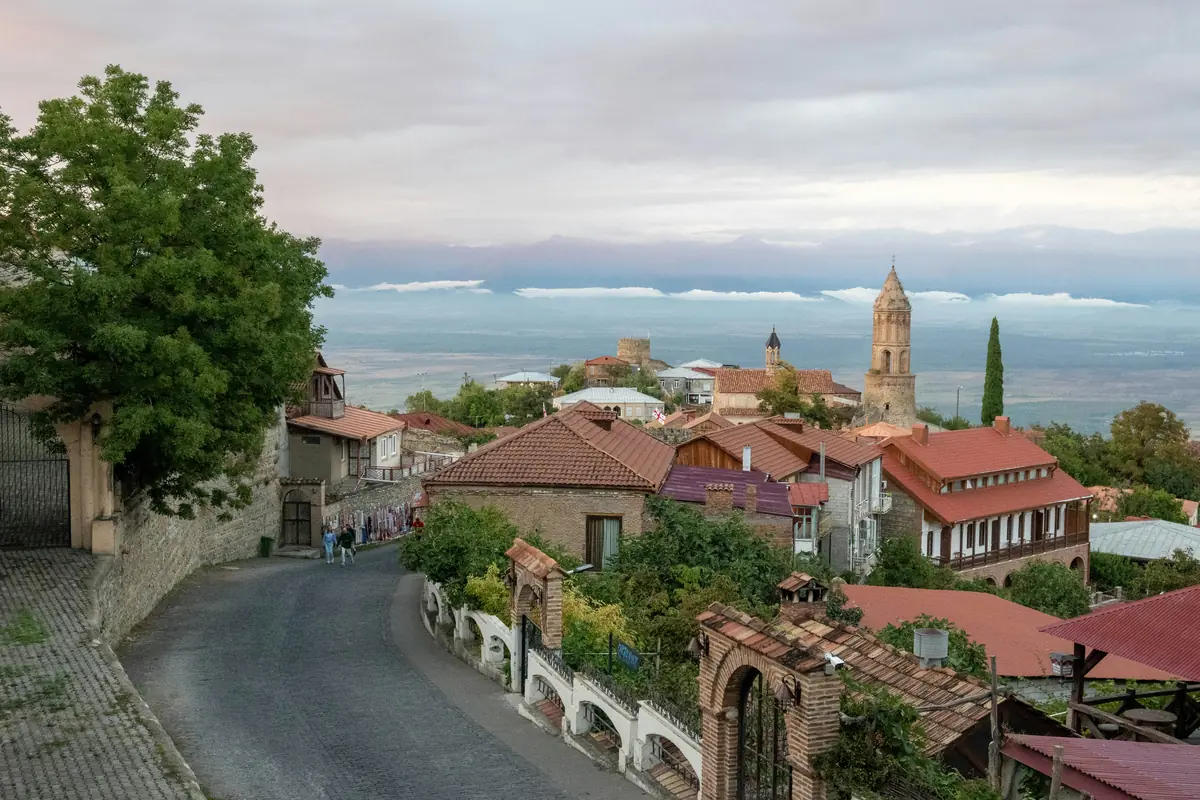
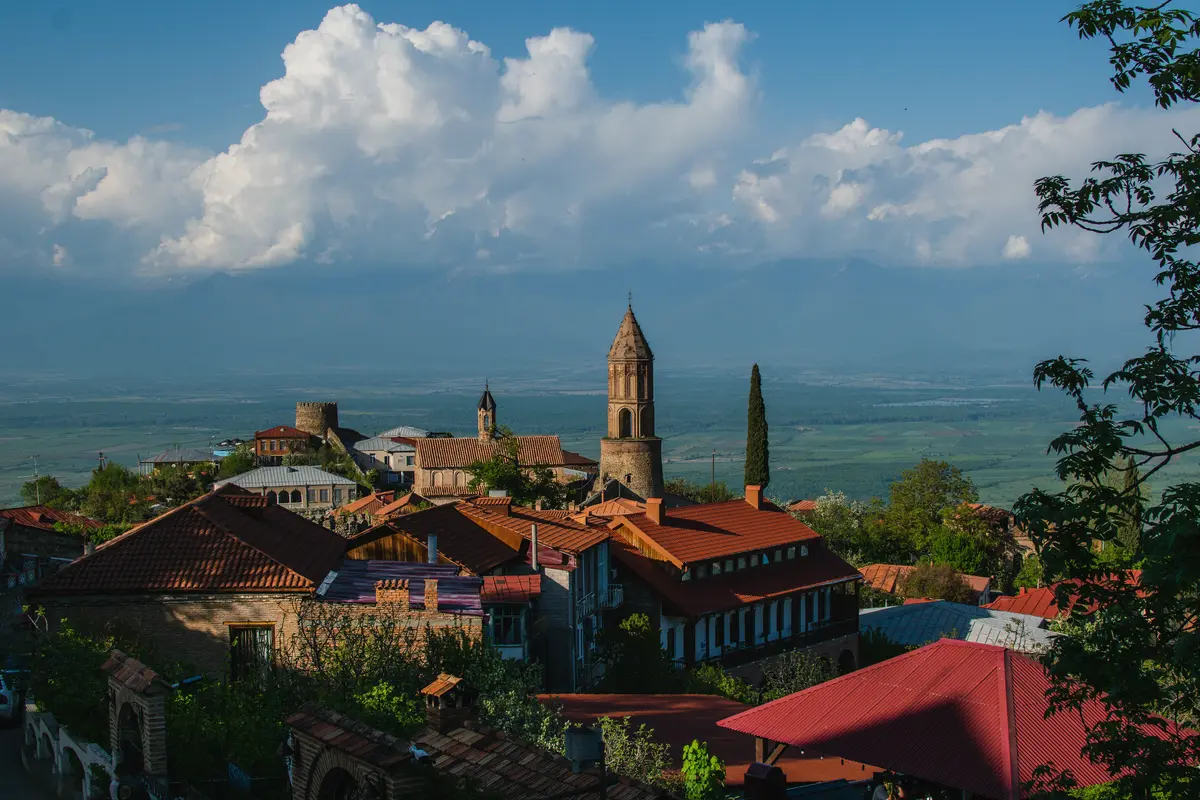
- Sighnaghi, a walled hilltop town of red roofs and wrought-iron balconies, marketed as the City of Love because its registry office does 24-hour weddings. The town wall walk gives you the Alazani Valley spread out below with the Caucasus behind it.
- Bodbe Monastery, five minutes outside town, where St. Nino is buried, set in cypress gardens with the valley view.
- A qvevri winery. This is the point of the day. Look for a family marani (cellar) rather than a corporate tasting room, and ask to see the buried vessels themselves.
What to drink: Saperavi, the flagship red, dark enough to stain the glass. Rkatsiteli, the white that becomes amber wine when fermented on the skins in qvevri. Kindzmarauli, a semi-sweet red worth trying even if you think you dislike sweet wine. And chacha, the grape spirit, which deserves more respect than it usually gets.
Group tours from Tbilisi start around $13 and run to about $39 depending on how many tastings are included. A private driver costs more but lets you set the pace, which is the whole reason to hire one.
One rule with no exceptions: do not drive yourself on a tasting day. Georgia’s blood alcohol limit is effectively zero, far below the 0.08 percent standard in most US states, and enforcement is real.
If you get invited to a supra, understand what you’ve walked into. A tamada leads formal toasts, in a traditional order, and between toasts you’re not supposed to sip. Each toast gets drained. Respond when one is directed at you, eat continuously, and remember that Georgian wine is stronger than it tastes.
Alternative 5-Day Georgia Itinerary Variants
The route above is the one I recommend to most first-timers, but two variations work well if you know what you want.
Wine-Focused: Kakheti Deep Dive
Trade the mountain overnight for two nights in wine country: Sighnaghi one night, Telavi or Tsinandali the next. Add Alaverdi Monastery, where monks have made wine since the 11th century, and the Tsinandali Estate with its restored gardens and cellar. Time it for the Rtveli harvest and you’ll stomp grapes rather than watch someone describe it. Kazbegi becomes a long day trip or gets dropped.
Mountain-Focused: Kazbegi and the High Caucasus
Two nights in Stepantsminda instead of one, which opens up the Truso Valley properly, the hike to Juta and the Chaukhi massif, Gveleti Waterfalls without rushing, and the Dariali Gorge. Cut Kakheti to a half-day tour or skip it. This is what I’d do with five days in August.
First-Timer Classic
The main itinerary. Balanced, and it delivers the three experiences that define the country: a city, a mountain, and a cellar.
What You Cannot Fit in 5 Days
Be honest with yourself about this, because it’s where most people’s plans fall apart.
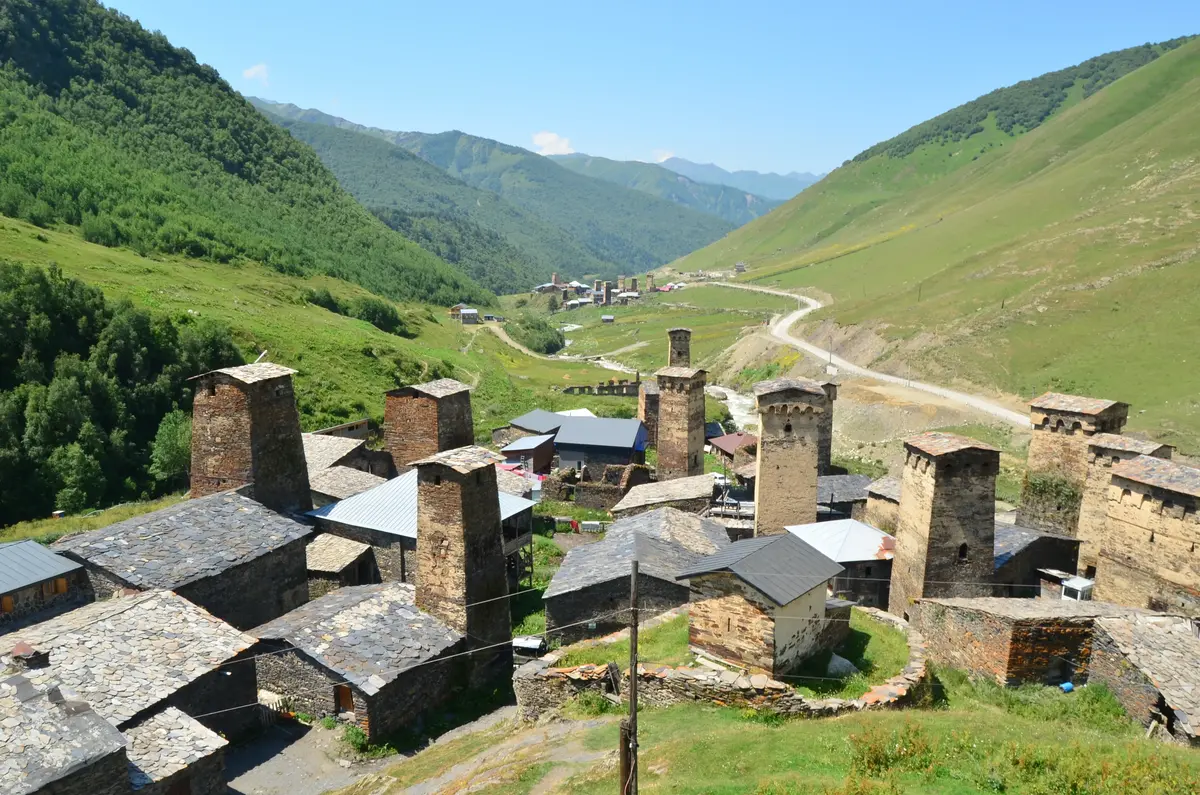
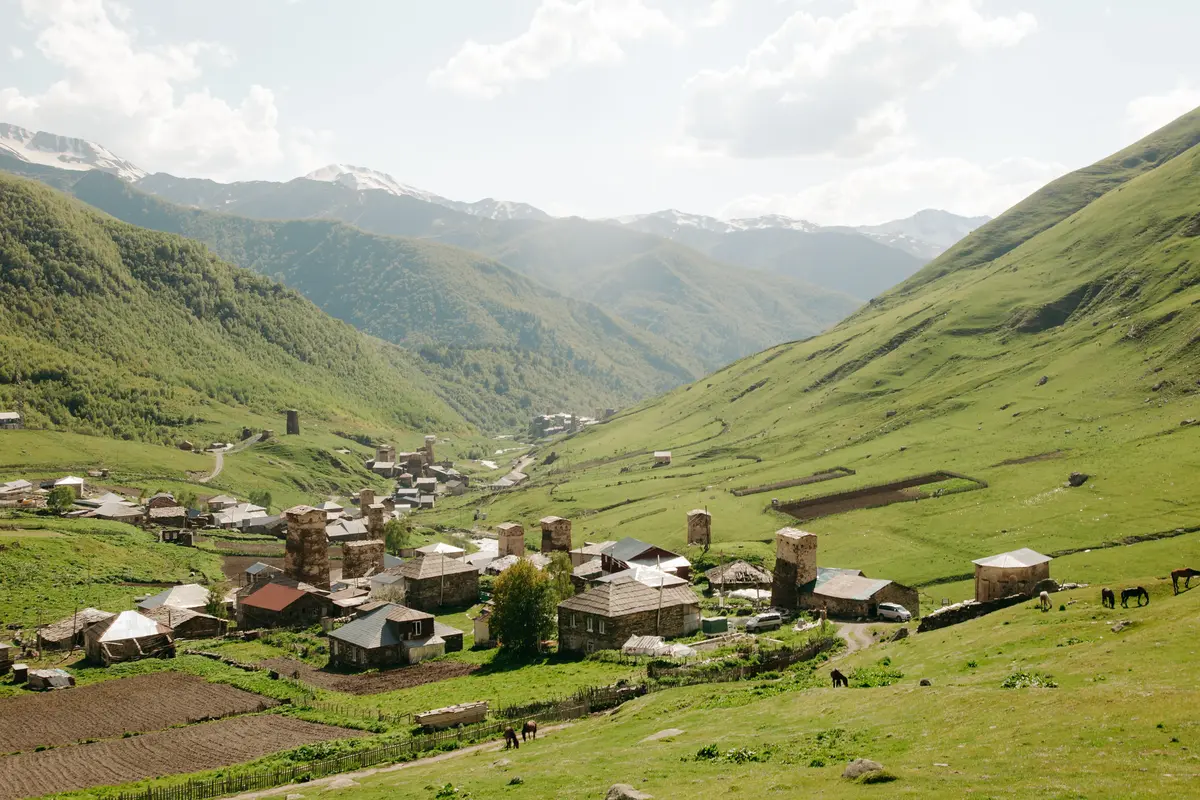
Svaneti (Mestia and Ushguli) needs a full travel day in each direction plus two to three days on the ground. The medieval stone towers are extraordinary and also eight to nine hours from Tbilisi by road. Vardzia, the cave monastery carved into a cliff face, sits four to five hours each way, making it ten hours of driving for ninety minutes of caves. Batumi on the Black Sea is a six-hour drive and a completely different kind of trip. All three belong on an eight to ten day itinerary.
Is Georgia Safe to Visit?
Yes. The US State Department places Georgia at Level 1, Exercise Normal Precautions, its safest category. The UK, Canadian, and Australian governments issue comparable guidance. Violent crime against tourists is rare, and Georgia consistently ranks among the safer countries in the world on crime indices.
Three caveats that genuinely matter:
Occupied regions are off-limits. South Ossetia and Abkhazia carry a Level 4 Do Not Travel designation for crime, civil unrest, and landmines. Russian forces control both, the administrative boundary lines are unmarked, crossing can mean arrest or imprisonment, and the US government cannot provide consular assistance there. Nothing on this itinerary goes near them.
Political demonstrations in Tbilisi. Nightly protests have taken place on Rustaveli Avenue near Parliament for well over a year. They’re overwhelmingly peaceful and confined to that stretch in the evenings. Avoid the area around Parliament after dark, don’t join or photograph demonstrations, and carry your passport or a copy, since penalties for participating in unauthorized gatherings have been tightened. Old Town, Abanotubani, Didube, and everywhere outside the center operate normally, as do Kazbegi, Kakheti, and Batumi.
The Russian border. The Military Highway terminates at the Dariali Gorge crossing into Russia. The tourist section is safe and heavily traveled, but this is a live geopolitical border. Don’t wander past the checkpoint for a photo.
The biggest real risk to your health here is traffic. Drivers overtake aggressively, tailgate, and treat lane markings as advisory. Wear a seatbelt in the back seat, which most locals don’t. The emergency number is 112.
Solo Female Travel Safety
Georgia is widely regarded as a comfortable destination for solo women travelers, and the hospitality culture works in your favor: people will go out of their way to help.
The candid caveats, drawn from what experienced women travelers report:
- Staring and occasional catcalling happen, more often in rural areas than in Tbilisi. Reports vary, and most describe it as annoying rather than threatening.
- Attitudes outside the cities are conservative. Dress modestly at churches and monasteries: covered shoulders and knees, headscarf for women. Many sites keep wraps at the door.
- Use Bolt rather than street taxis at night.
- Watch your drink in Tbilisi bars. Spiking reports are rare but not zero.
- Marshrutkas are fine to ride alone; the concern is the driving, not the passengers.
A firm, unambiguous no is understood and respected.
Water, Health, and Practicalities
Tbilisi tap water is generally safe and comes off the same mountain sources people bottle and sell. Locals drink it. In rural guesthouses, ask.
Beyond the mandatory insurance, note that private clinics expect payment upfront and reimburse afterward. Keep receipts and store your policy documents offline on your phone. Tbilisi has excellent private hospitals; mountain villages do not, so evacuation coverage is worth having if you’re hiking.
Driving in Georgia with a US License
Georgian law allows foreign visitors to drive on a valid home-country license for up to a year, so your US license is legally sufficient. In practice, get an International Driving Permit from AAA before you leave. Rental agencies routinely require one for insurance purposes, and it’s essential if you plan any cross-border driving into Armenia or Turkey.
The practical details:
- Minimum rental age is typically 21, rising to 23 or 25 for SUVs and premium cars, usually requiring two or more years of licensed experience.
- Local agencies rent from roughly $20 a day; deposits run $100 to $300.
- The blood alcohol limit is reported between 0.02 and 0.03 percent depending on the source, a fraction of the US standard. Treat it as zero tolerance.
- There is no right turn on red. This catches Americans constantly.
- Phone use while driving is illegal and camera enforcement is extensive. Fines reach the rental company, which passes them to your card.
My honest take after doing it both ways: on a five-day first trip, hire drivers. The Military Highway has aggressive truck traffic and no shoulder in places, Old Town parking is awful, and the wine day requires a designated driver anyway. A GoTrip car for the two long days plus Bolt in the city costs about the same as a rental once you add fuel, and you’ll actually look out the window.
What 5 Days in Georgia Costs
Georgia remains one of the best value destinations in the region. Here’s the breakdown in dollars.
International flights: $700 to $1,500 round trip from the US.
Daily on-the-ground spending, per person:
| Travel style | Per day | What that looks like |
|---|---|---|
| Budget | $30–45 | Hostel dorms and guesthouses, marshrutkas, bakery lunches, one restaurant meal |
| Mid-range | $50–85 | Private guesthouse or 3-star room, shared drivers, restaurant meals, a bath and a tasting |
| Comfort | $100–150+ | Boutique hotels, private drivers throughout, premium wine tastings |
Sample line items: hostel dorm bed $7–15; guesthouse private room $25–45; three-star Tbilisi hotel $55–75 per night; intercity marshrutka $4–19; full-day private driver $70–110 for the car; Kakheti group wine tour $13–39; private sulfur bath room $19–57 per hour; restaurant dinner with wine $10–20 per person; museum entry $4–6.
For five days at a mid-range level, budget roughly $350 to $600 per person on the ground, excluding flights. Couples land at the lower end, because the biggest costs, hotel rooms, private drivers, and bath rooms, are priced per unit rather than per person.
Common Mistakes to Avoid
The list I’ve assembled from my own errors and from watching other travelers make theirs:
- Trying to add Svaneti or Vardzia. Five days doesn’t stretch that far, and you’ll spend the trip in a car.
- Saving Kazbegi for the last day. Weather closes the pass without warning, and a delay before an international flight is a real risk.
- Taking a marshrutka on the Military Highway. It’s the most beautiful road in the country and the minivan does not stop.
- Accepting dynamic currency conversion. Every terminal offers to charge you in dollars. Decline, every time.
- Hailing street taxis instead of using Bolt. The price difference is not subtle.
- Assuming cards work everywhere. They fail in mountain guesthouses, at small wineries, and on every minivan.
- Underdressing at monasteries. You’ll be turned away, sometimes after a long drive.
- Drinking anything at all before driving. The limit is effectively zero.
- Booking only in Tbilisi. The night in Stepantsminda turns the mountain day from a slog into the best part of the trip.
- Skipping travel insurance. It’s an entry requirement now, and you may be asked for proof before boarding.