Yes, you can travel the country of Georgia without a car, and most Americans should. This Caucasus nation, called Sakartvelo in its own language, runs a dense network of shared minibuses, modern Swiss-built trains, ride-hailing that costs a few dollars, and hire-a-driver services that cover everything else. Skipping the rental counter is usually safer and often cheaper.
Quick summary:
- Trains handle the long, comfortable legs (Tbilisi to Batumi, Tbilisi to Zugdidi for Svaneti), marshrutkas handle everything else, and Bolt handles cities for $2 to $6 a ride.
- For scenic mountain roads like the Georgian Military Highway, hire a driver through GoTrip instead of renting. Split three or four ways, it costs about the same as a rental day and you get to look out the window.
- Budget roughly $60 to $150 per person for two weeks of intercity transportation, not counting private drivers or day tours.
A note on prices: everything below is listed in Georgian lari (GEL) with an approximate US dollar figure in parentheses, calculated at roughly 1 GEL to $0.37. Rates move, so check a live converter before you build a budget. Fares and schedules also change seasonally, so treat the numbers here as planning figures and confirm at the ticket window or on the official site.
The Carless Route Matrix: Every Major Trip at a Glance
This is the fastest way to plan. Find your route, take the recommended option, and read the relevant section below for details.
| Route | Best carless option | Cost | Time |
|---|---|---|---|
| Tbilisi Airport to city center | Bus 337, or Bolt | 1 GEL ($0.37), or 15-35 GEL ($6-13) | 30-45 min |
| Tbilisi to Mtskheta | Marshrutka from Didube | 1-2 GEL ($0.40-0.75) | 25-30 min |
| Tbilisi to Gori | Marshrutka from Didube | around 10 GEL ($4) | 1.5 hr |
| Tbilisi to Sighnaghi | Marshrutka from Samgori | around 10 GEL ($4) | 2 hr |
| Tbilisi to Kazbegi | Marshrutka from Didube | 15-25 GEL ($6-9) | 3-3.5 hr |
| Tbilisi to Kazbegi (scenic) | GoTrip driver with stops | from 185 GEL ($68) per car | 5-6 hr with stops |
| Tbilisi to Batumi | Stadler train | from 35 GEL ($13) | 5-5.5 hr |
| Tbilisi to Kutaisi | Marshrutka from Didube | 15-20 GEL ($6-7) | 3-4 hr |
| Tbilisi to Zugdidi | Daytime train | 16-28 GEL ($6-10) | about 6.5 hr |
| Zugdidi to Mestia | Marshrutka timed to the train | 35-40 GEL ($13-15) | 3-4 hr |
| Mestia to Ushguli | Shared 4WD | 60-80 GEL ($22-30) | 2.5-3 hr |
| Kutaisi Airport to Tbilisi | Georgian Bus shuttle | around 25 GEL ($9) | 4 hr |
| Kutaisi Airport to Batumi | Georgian Bus shuttle | 25 GEL ($9) | 2-2.25 hr |
| Within Tbilisi | Metro, bus, or Bolt | 1 GEL ($0.37), or 3-15 GEL ($1-6) | varies |
Should You Rent a Car in Georgia at All?
For a first trip, no. Georgia’s public transportation reaches nearly every place a first-time visitor wants to see, and the roads that a rental car would unlock are usually the same roads your rental contract forbids you from driving. Hire a driver for the two or three days that genuinely need one and skip the rest.
Here is the honest case against driving. Georgian road culture is assertive in a way that surprises most Americans: overtaking on blind curves is routine, lane markings are treated as suggestions, and horn use is conversational rather than confrontational. Local reporting suggests only a small minority of Georgian drivers carry third-party liability insurance, which means a fender-bender that would be a paperwork exercise at home can turn into an argument on the shoulder of the Georgian Military Highway.
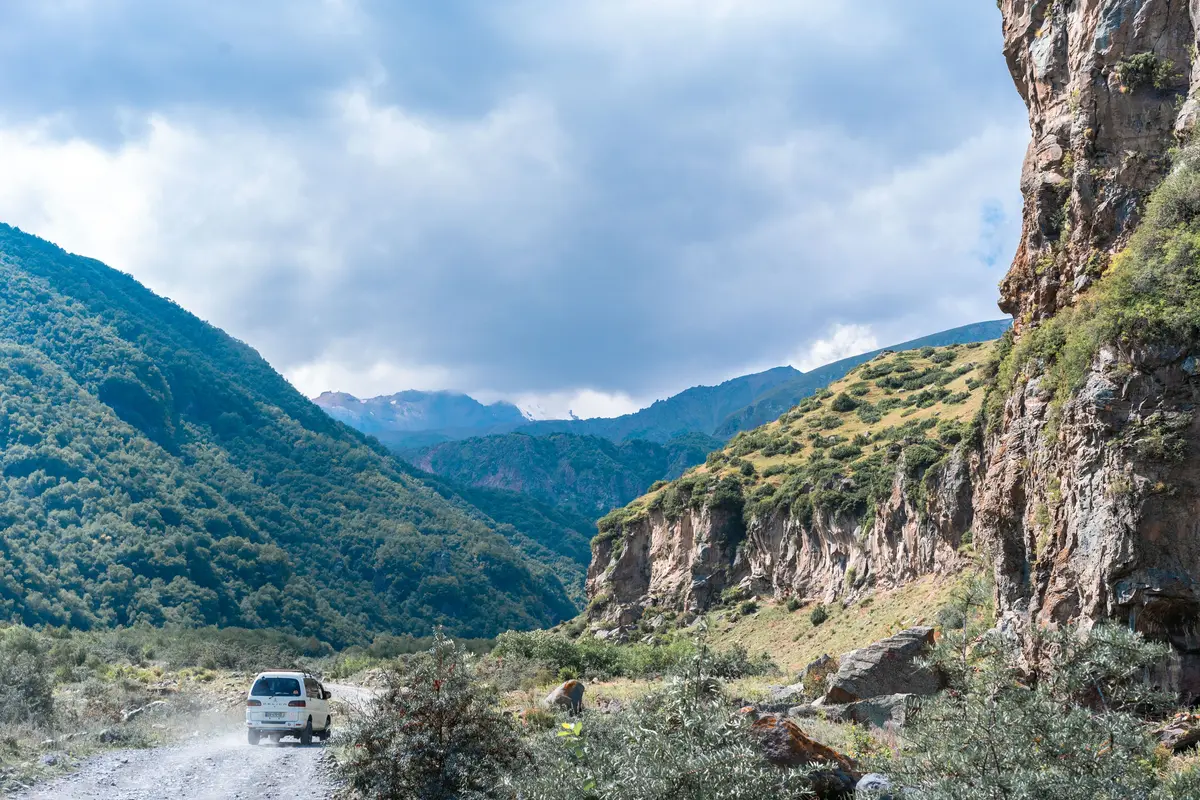
Then there are the contract restrictions. Most rental companies in Tbilisi GPS-track their vehicles and explicitly prohibit the highest-value roads in the country, including the Abano Pass into Tusheti, the track to Ushguli, the Juta valley road, and the Vashlovani protected areas. Drive them anyway and your insurance is void. So you would be paying for a car specifically to avoid the tour bus, only to be barred from the places the tour bus can’t go.
Finally, parking. Tbilisi’s Old Town and Sololaki are a maze of one-way lanes with almost no legal parking, and Batumi’s Old Boulevard district is barely better.
| Renting a car | Going carless | |
|---|---|---|
| Cost per week | $250-450 plus fuel, insurance, parking | $60-150 in fares, plus optional drivers |
| Mountain roads | Often prohibited by contract | Marshrutka or hired 4WD, no restrictions |
| Wine country | You’re the designated driver | Taste everything |
| Flexibility | High, on paved routes | High in summer, thinner off-season |
| Stress level | Real | Low |
| Scenery | You watch the road | You watch the mountains |
When renting still makes sense: you’re a confident driver who has handled traffic in Naples, Cairo, or rural Albania; you’re traveling with small kids and a lot of gear; you want to photograph Racha or the back roads of Kakheti on your own schedule; or you’re staying a month and the math changes. Even then, consider renting only for the segment that needs it, picking the car up in Kutaisi or Telavi rather than driving out of Tbilisi.
The Carless Toolkit: Apps, Cards, and Payment
Set these up before you fly. Georgian SIM cards and eSIMs are cheap and fast, but you don’t want to be configuring a payment app in an arrivals hall at 4 a.m.
Ride-Hailing: Bolt, Yandex Go, and Maxim
There is no Uber in Georgia. Bolt is the dominant app in Tbilisi, Batumi, and Kutaisi, it accepts US credit cards, and it shows a fixed price before you book. Typical city rides run 3 to 15 GEL ($1 to $6). Yandex Go is a solid backup when Bolt surge-prices during rain or late nights, and Maxim has better coverage in smaller towns.
A few practical notes. Cars are ordinary unmarked sedans, so check the plate. Drivers frequently call instead of messaging, and many speak little English, so pin your exact location in the app rather than trying to explain it. Cash is still accepted if you’d rather not link a card. Outside the big cities, coverage thins out fast, and in mountain villages you’re back to negotiating with a local driver in person.
The Tbilisi Metro and the MetroMoney Card
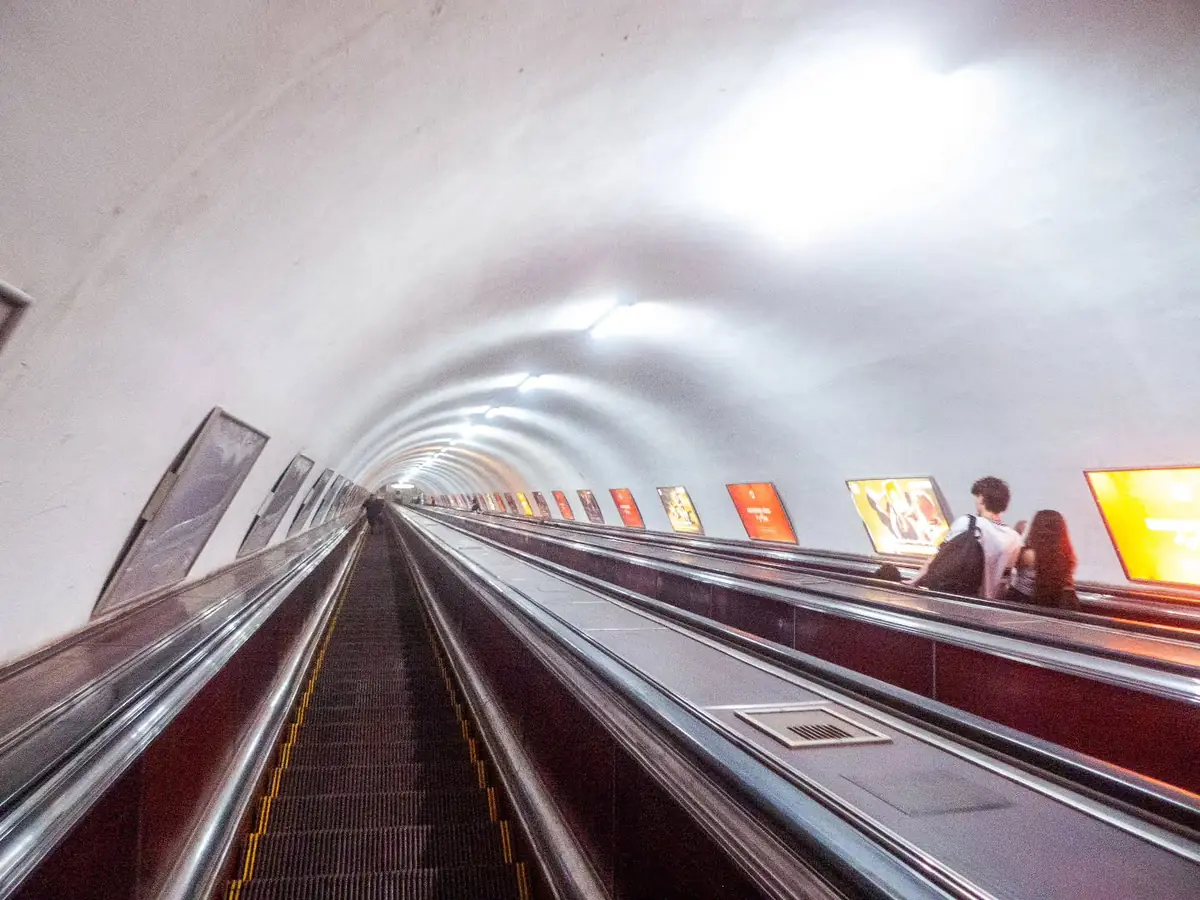
Tbilisi’s metro is two lines and 23 stations, running roughly 6 a.m. to midnight, and it costs 1 GEL ($0.37) per ride. That fare also covers city buses, and transfers within 90 minutes are free.
You have two ways to pay. Tap a contactless US bank card or phone directly at the turnstile, which works and is the simplest option for short visits. Or buy a MetroMoney card for a 2 GEL ($0.75) deposit at any station booth and load it with cash, which is worth doing if you’re staying more than a few days. Top up at the orange Bank of Georgia payboxes found in stations and on street corners.
One quirk that trips people up: a single MetroMoney card cannot swipe two passengers through the metro turnstiles, though it does work for multiple riders on buses. Traveling as a couple? Buy two cards or tap two phones.
The stations themselves are Soviet-era and deep. Rustaveli and Avlabari have some of the longest escalators you’ll ever ride.
Navigation Apps and Offline Maps
Google Maps handles Tbilisi city buses and driving directions well, including real-time bus arrivals, but it is close to useless for intercity marshrutkas, which have no published schedules to index. It also invents hiking trails in the mountains.
Download an offline map before you go. Organic Maps or Maps.me both work well for trails and rural roads. The Tbilisi Transport Company app gives live positions for city buses. And the single most useful trick in Georgia: screenshot your destination written in Georgian script and show it to drivers. Marshrutka placards are almost never in English.
Marshrutkas: How to Actually Use Georgia’s Minibuses
A marshrutka is a 12- to 20-seat van running a fixed route with no fixed schedule. It leaves when it fills, you pay the driver in cash, and it will stop wherever you ask along the way. Fares are absurdly low, the seats are tight, and this is how most of the country actually gets around.
The system is genuinely intimidating on day one and genuinely simple on day two. Here’s what nobody tells you.
Which Tbilisi station you need depends entirely on where you’re going:
| Station | Serves | Metro access |
|---|---|---|
| Didube | North and west: Kazbegi, Gudauri, Mtskheta, Gori, Borjomi, Kutaisi, Zugdidi, Mestia | Didube station, Line 1 |
| Ortachala | East and international: Kakheti, plus buses to Armenia, Azerbaijan, and Turkey | Bus or Bolt, no metro |
| Samgori / Navtlughi | Sighnaghi, Telavi, eastern Kakheti | Samgori station, Line 1 |
| Station Square | Some western routes, adjacent to Tbilisi Central railway station | Station Square, Line 1 |
Didube is the one that generates the horror stories. Come out of the metro and you land in a swirl of market stalls, parked vans, and men shouting destination names at you. Those men are not scamming you. They are informal dispatchers, and if you say your destination clearly, they will physically walk you to the right van. It looks like chaos and functions like a working bus terminal.
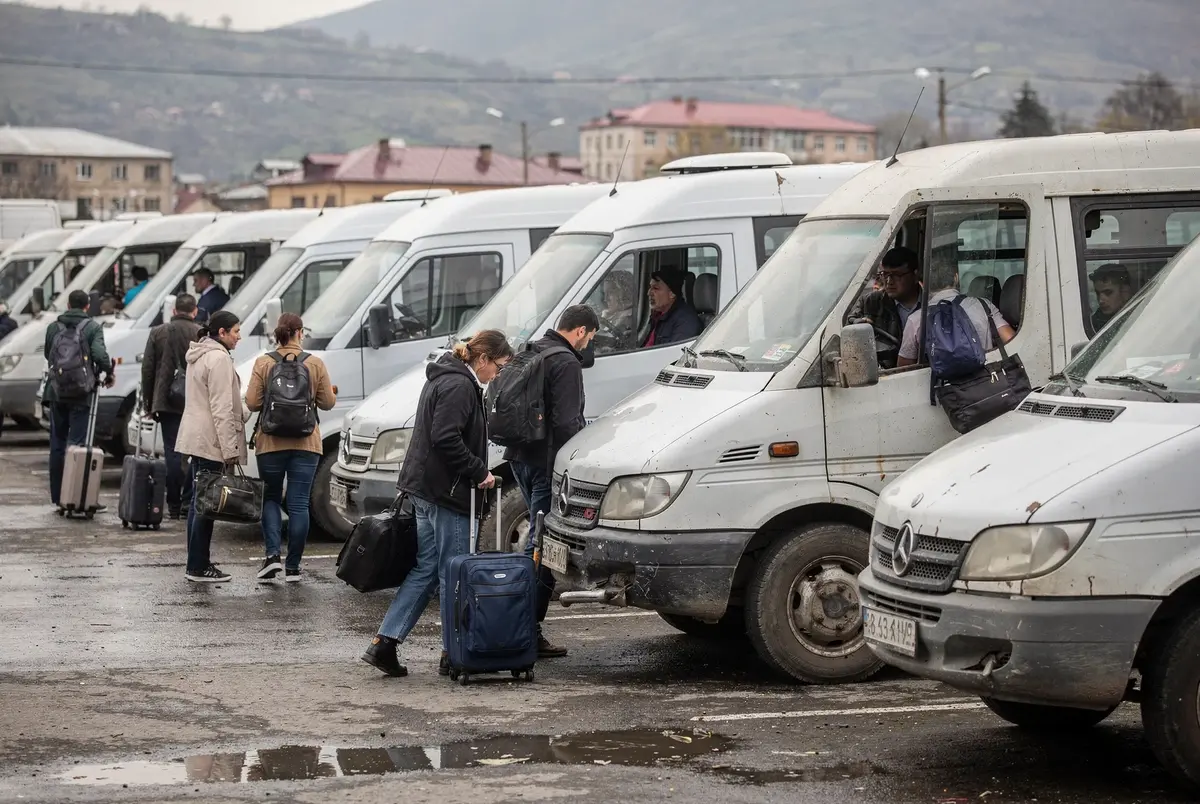
Pay attention to your luggage before anything else. Many marshrutkas have an extra rear seat row installed where the cargo space should be, which leaves almost nowhere for bags. Suitcases get stacked vertically at the back or wedged under seats, and a hard-shell roller may simply not fit. Drivers sometimes charge around 5 GEL ($2) for an oversized bag. A soft duffel or a carry-on-size backpack solves this permanently, and this is the single best reason to pack light for Georgia.
Five things that make marshrutka travel painless:
- Carry small bills. Drivers rarely break a 50 GEL note, and there is no card reader. There’s a Bank of Georgia ATM at Didube just west of the metro exit.
- Arrive early for popular routes. Vans leave when full, so the first departure of the morning fills fastest and the last one may not run at all.
- Expect one rest stop. Long routes pause for 5 to 10 minutes at a roadside cafe. Toilets cost 0.30 to 1 GEL, so keep coins.
- Sit up front if you get carsick. The mountain roads to Kazbegi and Mestia are relentless switchbacks, and there is no bathroom on board.
- Don’t count on air conditioning or a seatbelt anywhere but the front row.
Tell the driver your stop when you board, and say “gaacheret” (stop here) when you want out. Nobody will be annoyed.
Trains in Georgia: The Comfortable Backbone
Georgian Railway runs a small network, but the routes it does cover are the ones long-distance travelers want most. Trains are the most comfortable, most predictable, and most schedule-reliable transportation in the country.
| Route | Duration | Fare | Frequency |
|---|---|---|---|
| Tbilisi to Batumi | 5-5.5 hr | from 35 GEL ($13) | 2 daily each way, more in summer |
| Tbilisi to Zugdidi | about 6.5 hr | 16-28 GEL ($6-10) | 1 daily daytime |
| Tbilisi to Kutaisi area | 3-3.5 hr | from about 20 GEL ($7) | several daily |
| Tbilisi to Yerevan, Armenia | overnight | varies | every other day, seasonal |
Tbilisi to Batumi on the Stadler KISS
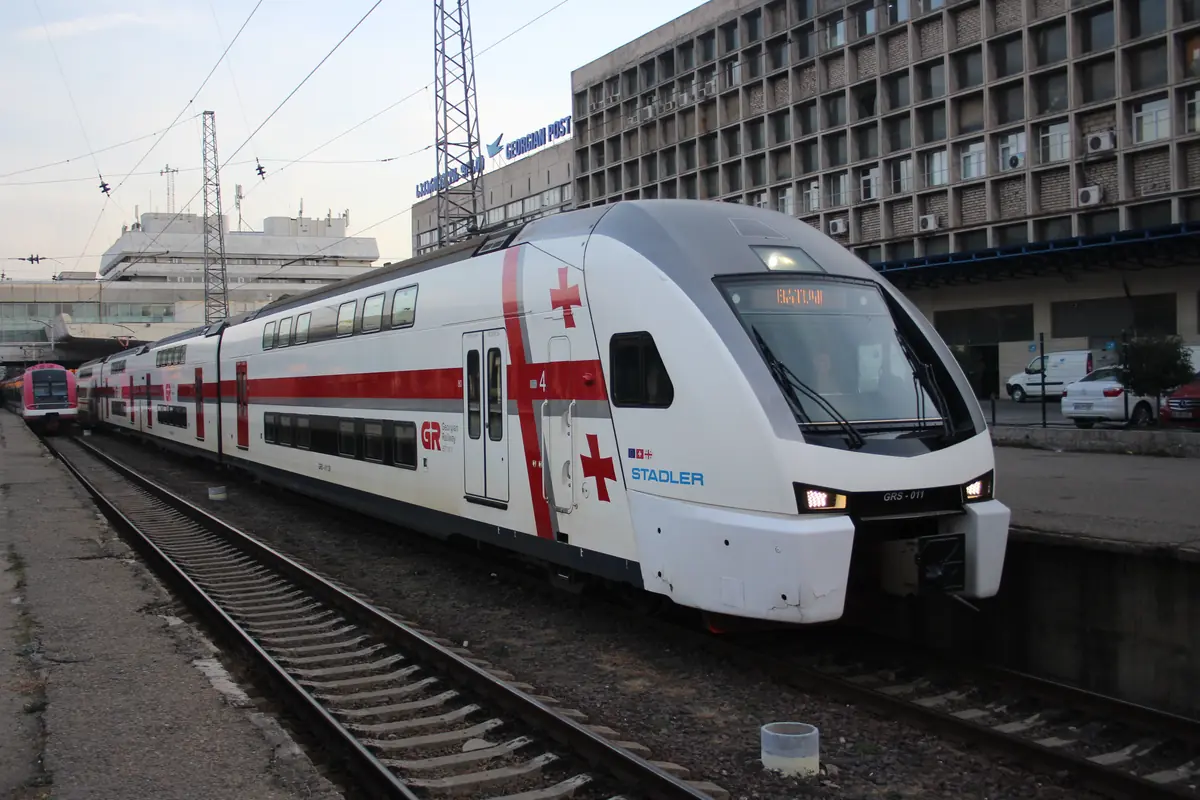
This is the flagship: a Swiss-built double-decker that covers the 165 miles to the Black Sea in about five hours. Trains 802 and 804 run from Tbilisi, with 801 and 803 coming back, giving two departures in each direction daily, year-round. The morning departure from Tbilisi leaves around 8:00 a.m. and the evening one around 5:10 p.m. Summer adds seasonal extras, including late-night services.
Fares start at 35 GEL ($13) in second class, run around 75 GEL ($28) in first, and around 95 GEL ($35) in business. First class is the sweet spot. The premium over second class buys you a power outlet, noticeably more legroom, and enough table space for a laptop, which matters a lot on hour four. Business class is only worth it for a group of three or four who want a semi-private compartment.
Book several days ahead between June and September, when trains regularly sell out. In winter you can usually walk up and buy at the platform. Useful detail for budget-airline arrivals: these trains stop at Kutaisi International Airport station, so you can fly into Kutaisi and ride straight to Batumi or Tbilisi.
Tbilisi to Zugdidi, the Gateway to Svaneti
One daytime train leaves Tbilisi around 8:20 a.m. and reaches Zugdidi in the mid-afternoon. It’s an older electro train rather than a Stadler, though it received newer carriages recently. Second class is 16 GEL ($6) and first class 28 GEL ($10), which makes it one of the best transportation values anywhere in the Caucasus.
Zugdidi itself is not the destination. The point is that marshrutkas and shared taxis to Mestia wait in the station forecourt, timed to this train’s arrival. That connection is the backbone of carless Svaneti travel.
Important: the overnight Tbilisi to Zugdidi sleeper has been suspended since 2020. Plenty of blog posts and forum threads still describe it as if it’s running. Plan for the daytime train.
Tbilisi to Kutaisi
There is no station in central Kutaisi. Trains stop either at Rioni station, roughly 20 minutes from the center on local bus #3, or at Kutaisi International Airport station, which despite the name does not connect to the city. The trip takes about 3 to 3.5 hours from around 20 GEL ($7).
Honestly, most travelers should take a marshrutka instead. The Rikoti Highway through the mountain spine of the country was fully rebuilt and opened as a four-lane route with dozens of tunnels and bridges, cutting the Tbilisi to Kutaisi road trip to roughly three hours and dropping you in the actual city center.
Buying Tickets, and the Kukushka Question
Buy from the official carrier at railway.ge, or from accredited sellers tkt.ge and tre.ge. Tickets go on sale roughly three weeks ahead. You’ll need to enter your passport number during checkout, and if your passport number contains letters, use a desktop browser, since the mobile form sometimes rejects them. Your ticket arrives as a QR code by email, and you must carry the physical passport you booked with to board.
Now the question that comes up constantly: the Kukushka, the century-old narrow-gauge line from Borjomi up to the ski resort of Bakuriani, with a bridge attributed to Gustave Eiffel. It is not running. Service was suspended in spring 2020 and has not resumed. Relaunch dates have been announced more than once and none has materialized, while the rolling stock sits at Borjomi station. Some tour operators still advertise the ride. Do not build a Borjomi itinerary around it without confirming directly with Georgian Railway first. Shared minibuses and taxis cover the same route in about 45 minutes for a few lari.
Hire a Driver: How GoTrip Works
For routes where the drive is the attraction, or where public transportation simply doesn’t go, Georgia has a solution that most countries don’t: GoTrip, a platform that lets you book a driver for a fixed price on a route you design yourself.
Here’s how it works in practice:
- Enter your start point, destination, and any stops you want along the way on gotrip.ge.
- The site returns a fixed total price for the whole day. That price does not change based on how long you linger at each stop.
- Browse available drivers, filtered by rating, vehicle type, and whether they speak English.
- Book, and the driver contacts you the day before to confirm the pickup.
- Pay the driver at the end of the trip.
The pricing is per car, not per person, which is what makes it work for Americans traveling as a couple or a family. A Tbilisi airport pickup runs around $19. A full day to Gori for the Stalin Museum and the cave city of Uplistsikhe costs about 150 GEL ($55) for the car. A one-way transfer to Kazbegi with stops along the Georgian Military Highway starts around 185 GEL ($68). Split three or four ways, that undercuts most group day tours while giving you the itinerary you actually wanted.
One expectation to set: a GoTrip driver is a driver, not a guide. Many are friendly and will point out landmarks, but you’re not buying commentary. Bring your own reading, or book an actual guide if that’s what you want. Child seats are free on request, and airport pickups run 24/7, which solves the 3 a.m. Wizz Air problem neatly.
Alternatives worth knowing: guesthouses everywhere in Georgia will arrange a driver for you, often at a similar rate, and shared taxis wait at every marshrutka station for travelers who want to leave now rather than when the van fills.
Getting From the Airports Without a Car
Georgia has three international airports, and each one has a different best answer.
| Airport | Best option | Cost | Time |
|---|---|---|---|
| Tbilisi (TBS) | Bus 337 daytime, Bolt at night | 1 GEL ($0.37) / 15-35 GEL ($6-13) | 30-45 min |
| Kutaisi (KUT) | Georgian Bus shuttle | 25 GEL ($9) to Tbilisi or Batumi | 4 hr / 2.25 hr |
| Batumi (BUS) | Local bus or Bolt | 1 GEL ($0.37) / 10-15 GEL ($4-6) | 15-25 min |
Tbilisi International Airport (TBS)
The airport sits about 11 miles east of the center. Bus 337, which older guides still call bus 37, is the cheap option: 1 GEL ($0.37) with a MetroMoney card or 1.5 GEL ($0.55) tapping a bank card, and that fare includes 90 minutes of free onward transfers. It runs roughly 7 a.m. to 11 p.m. from the airport and 6 a.m. to 10 p.m. heading out, so it is no longer the 24-hour service that many articles describe. Ongoing reconstruction work on Rustaveli Avenue has also rerouted it, so check where it currently terminates before you rely on it.
Bolt and Yandex Go operate 24/7 from the short-term parking lot and cost 15 to 35 GEL ($6 to $13) depending on time and demand. This is what most visitors should use. Avoid the official taxi rank inside the terminal, where zone-based fares can hit 80 GEL ($30) for the same ride. A prebooked GoTrip transfer at around $19 is the middle path if you want a named driver holding a sign after a long-haul flight.
There is technically an airport train, but it runs only twice a day for 0.50 GEL ($0.18). Treat it as a curiosity rather than a plan. If you land in the small hours and don’t want to deal with any of this, the ibis hotel is attached to the terminal.
Kutaisi International Airport (KUT)
Kutaisi is Georgia’s budget-airline gateway, and almost nobody who lands there is going to Kutaisi. Georgian Bus and Omnibus Express run shuttles timed to every arriving flight, including the 4 a.m. ones, and this is the system to use.
To Tbilisi takes about four hours for roughly 25 GEL ($9) one-way, or 45 GEL ($17) round-trip. To Batumi takes 2 to 2.25 hours at 25 GEL ($9) for adults and 15 GEL ($6) for children. Book online in advance during summer. A free five-minute shuttle also connects the terminal to Kutaisi Airport railway station, where you can pick up the Stadler train toward Batumi or Tbilisi, though that station does not serve Kutaisi city. If Kutaisi itself is your destination, a local bus costs about 5 GEL ($2).
Batumi International Airport (BUS)
Batumi’s airport is barely three miles from the seafront, which makes this the easiest transfer in the country. City bus #10 costs 1 GEL ($0.37) and Bolt runs 10 to 15 GEL ($4 to $6). Bus routes here shift with the seasons, so glance at the posted schedule at the stop rather than trusting a printed guide.
Day Trips From Tbilisi Without a Car
Basing yourself in Tbilisi and radiating outward is the single best strategy for a first trip. You unpack once, you skip the luggage-on-a-marshrutka problem entirely, and Tbilisi has by far the best food and lodging in the country.
| Destination | Method | Cost | Feasible without a car? |
|---|---|---|---|
| Mtskheta | Marshrutka from Didube | 1-2 GEL ($0.40-0.75) | Very easy |
| Gori and Uplistsikhe | Marshrutka to Gori, taxi to the caves | about 10 GEL ($4) plus 30-40 GEL ($11-15) | Easy |
| Sighnaghi | Marshrutka from Samgori | around 10 GEL ($4) | Easy |
| Borjomi | Marshrutka from Didube | 10-15 GEL ($4-6) | Easy, long day |
| Kakheti wineries | Hired driver or tour | from 150 GEL ($55) per car | Needs a driver |
| David Gareja | Hired driver or tour | from 200 GEL ($74) per car | Needs a driver |
| Kazbegi | Marshrutka, better as an overnight | 15-25 GEL ($6-9) | Doable, but stay the night |
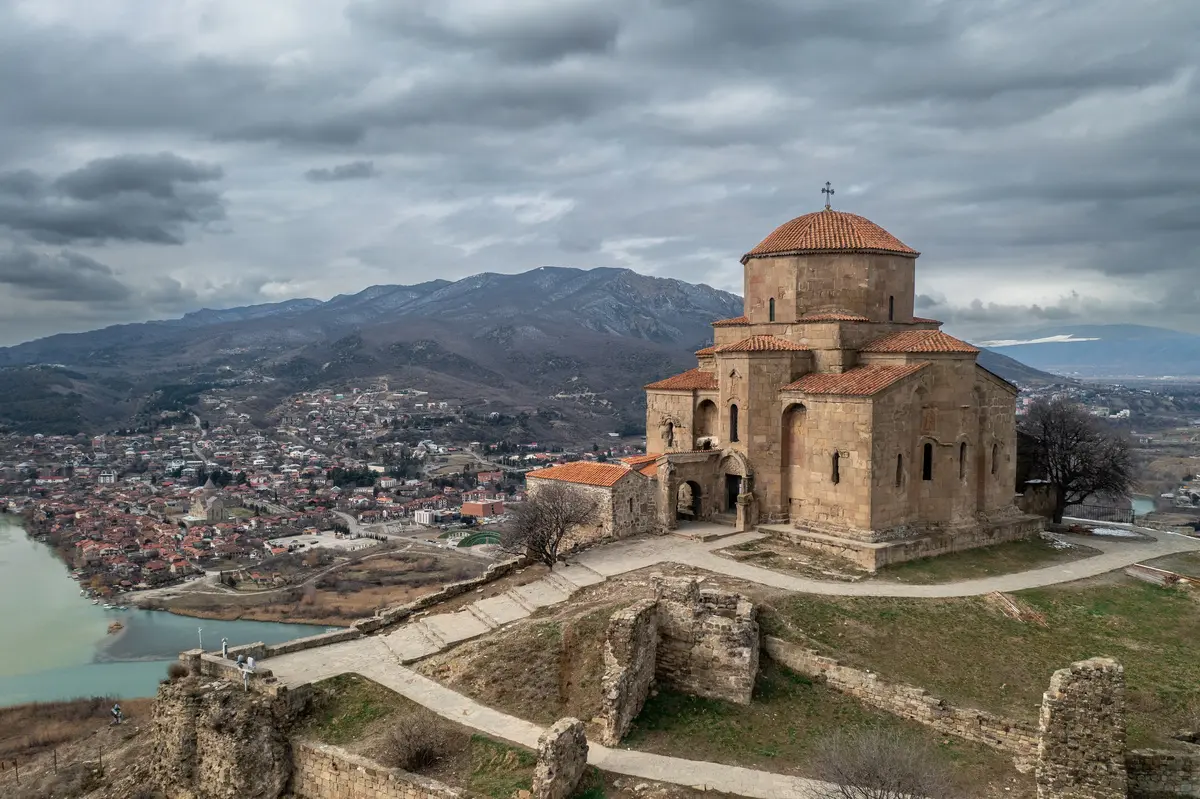
Mtskheta is the easy win. Marshrutkas leave Didube every 10 to 15 minutes, cost about a dollar, and take under half an hour to reach a former royal capital with two UNESCO-listed sites. Svetitskhoveli Cathedral is in the town itself. Jvari Monastery sits on the ridge above the confluence of two rivers and needs a taxi from the center, roughly 30 to 40 GEL ($11 to $15) with waiting time. Negotiate the wait before you get in.
Gori works the same way. The marshrutka takes about 90 minutes, the Stalin Museum is a short walk from the station, and the cave city of Uplistsikhe requires a separate taxi. Sighnaghi is a direct two-hour run from Samgori or Navtlughi station with no transfer, and it’s worth buying your return ticket when you arrive, because afternoon vans back to Tbilisi fill up.
Two trips genuinely need a driver. Kakheti’s better wineries are scattered across valleys with no public transportation at all, so a hired car turns a frustrating day into a great one. And David Gareja, the cave monastery complex on the Azerbaijani border, sits at the end of a long unpaved road that many rental contracts prohibit anyway, which makes GoTrip or a group tour the obvious answer.
The Big Mountain Routes
Tbilisi to Kazbegi and the Georgian Military Highway
Marshrutkas to Stepantsminda, still universally called Kazbegi, leave Didube roughly hourly through the morning and early afternoon. The ride costs 15 to 25 GEL ($6 to $9), takes three to three and a half hours, and is cash only. Expect about 5 GEL ($2) extra for a large bag. Shared taxis leave from the same lot for 40 to 60 GEL ($15 to $22), and it’s worth clarifying whether that price is per seat or per car before you climb in.
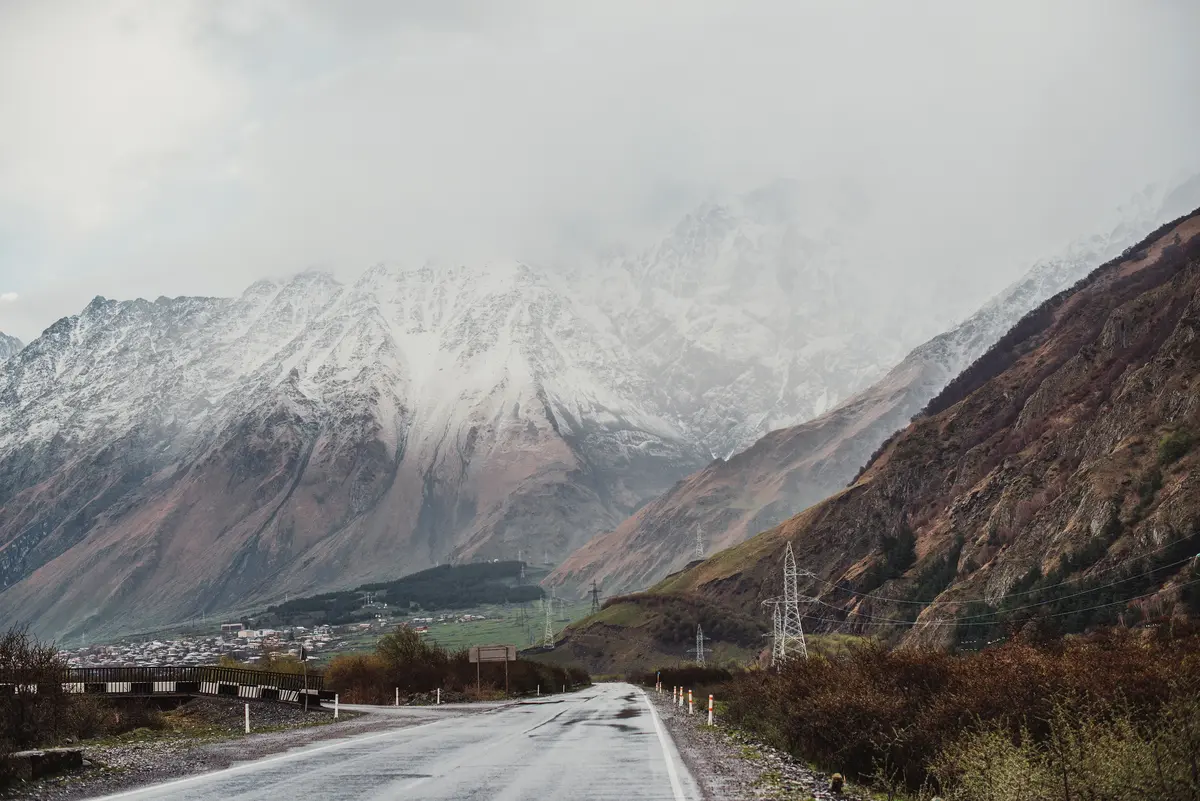
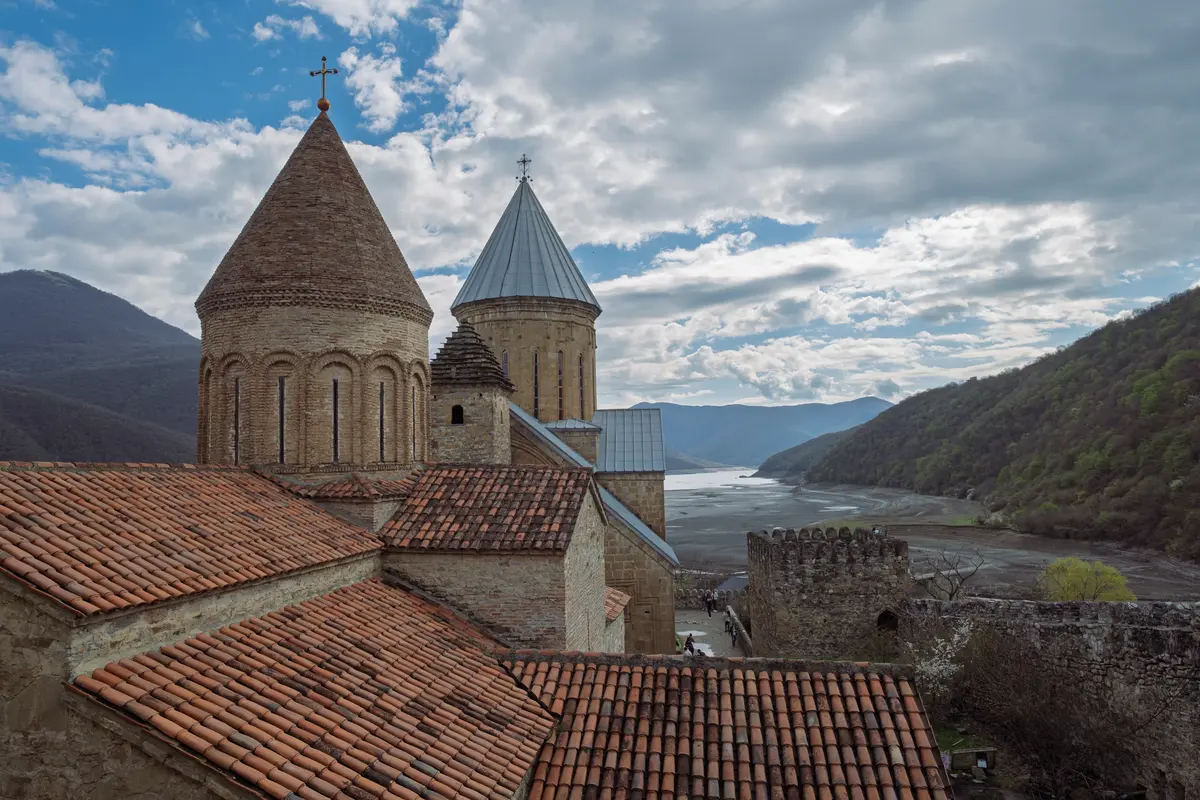
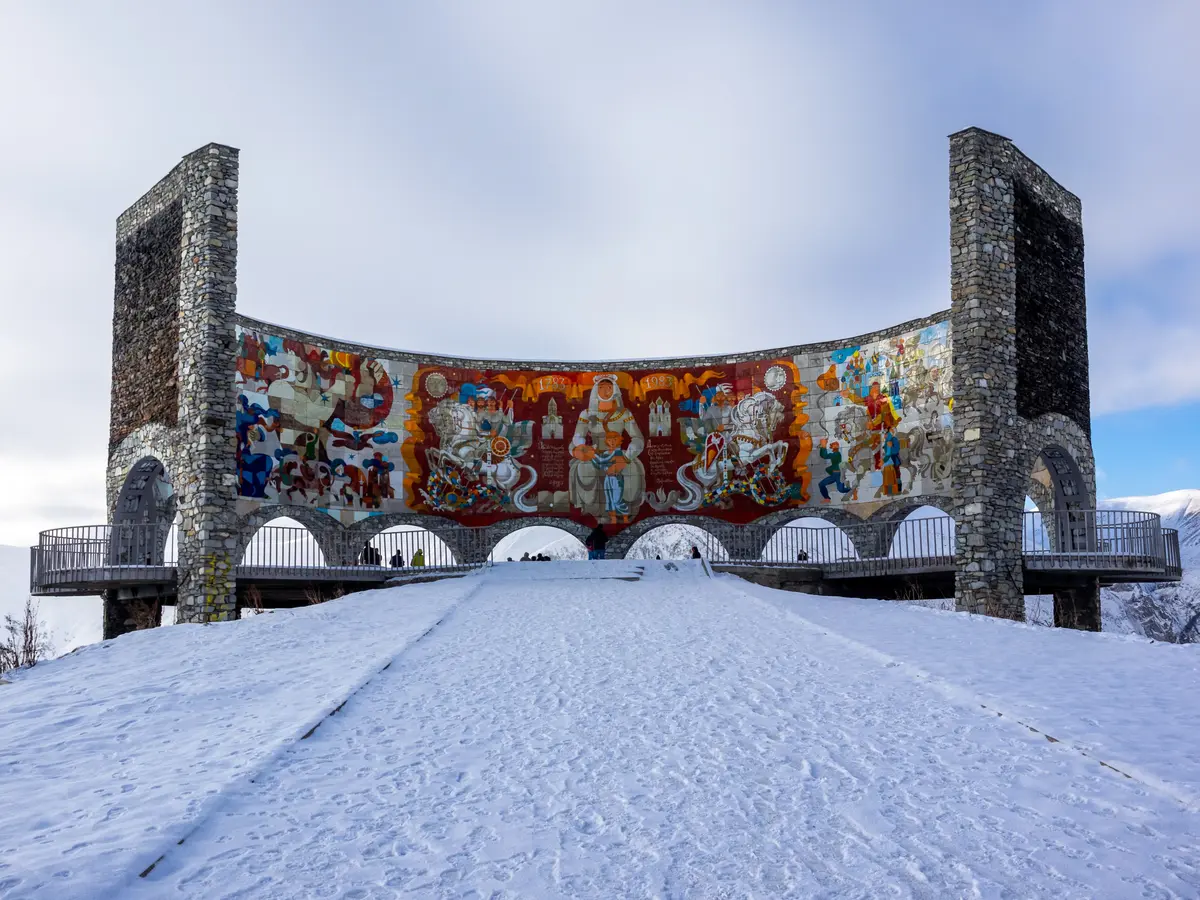
Here is the case for spending more. The Georgian Military Highway is the attraction. It climbs past the Ananuri fortress on a turquoise reservoir, past the Soviet-era Russia-Georgia Friendship Monument with its mosaic panorama, through the ski town of Gudauri, and over the Jvari Pass at roughly 7,800 feet. A marshrutka does not stop at any of it. A GoTrip driver from around 185 GEL ($68) stops at all of it, which for two or more people is money well spent.
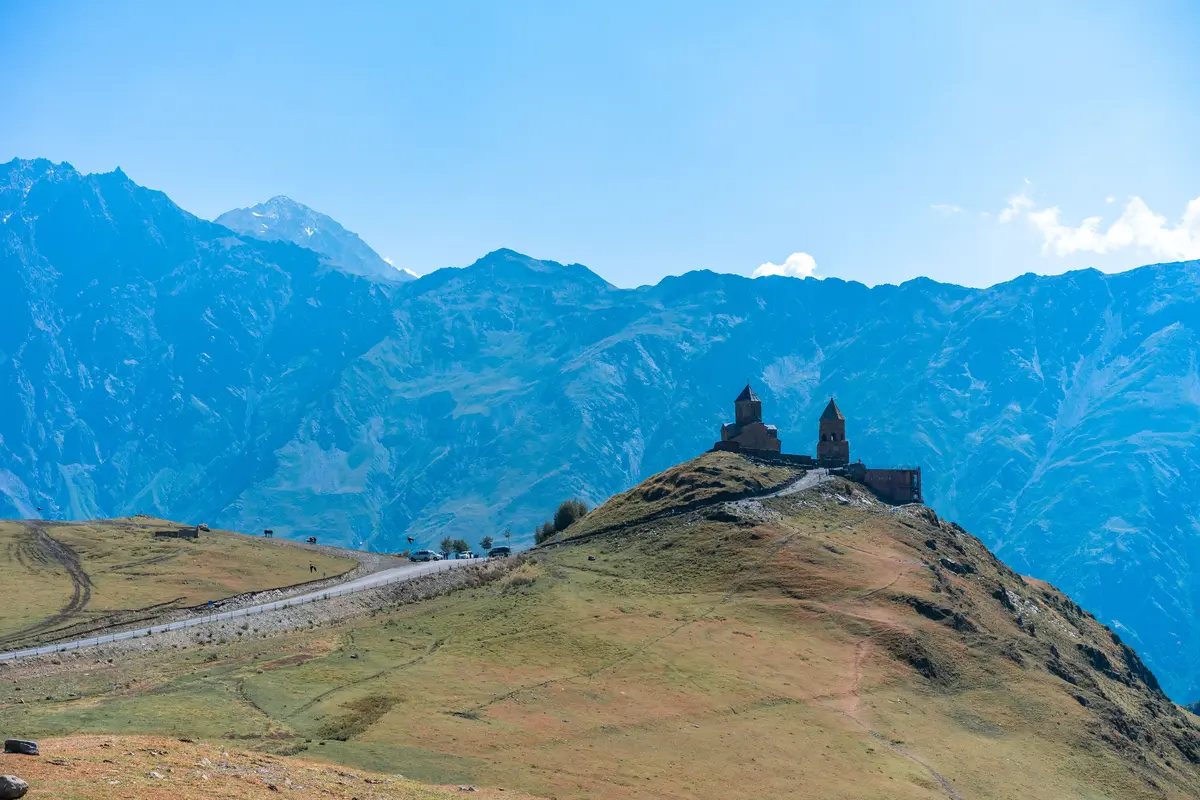
Once you’re in Stepantsminda, Gergeti Trinity Church is a separate trip. Shared 4WD jeeps run up the rough track for 60 to 80 GEL ($22 to $30) round-trip, or you can hike it in about 90 minutes with roughly 1,300 feet of climbing on a clear, well-used trail.
The winter caveat matters. The Jvari Pass closes for days at a time during heavy snow and avalanche risk, typically somewhere between November and May, and spring often brings scheduled midday closures for avalanche control work. The Gudauri to Kobi gondola provides a partial workaround for skiers. Before any cold-season trip up this road, check the Roads Department of Georgia for live restrictions and build a buffer day into your plans.
Tbilisi to Svaneti, Mestia, and Ushguli
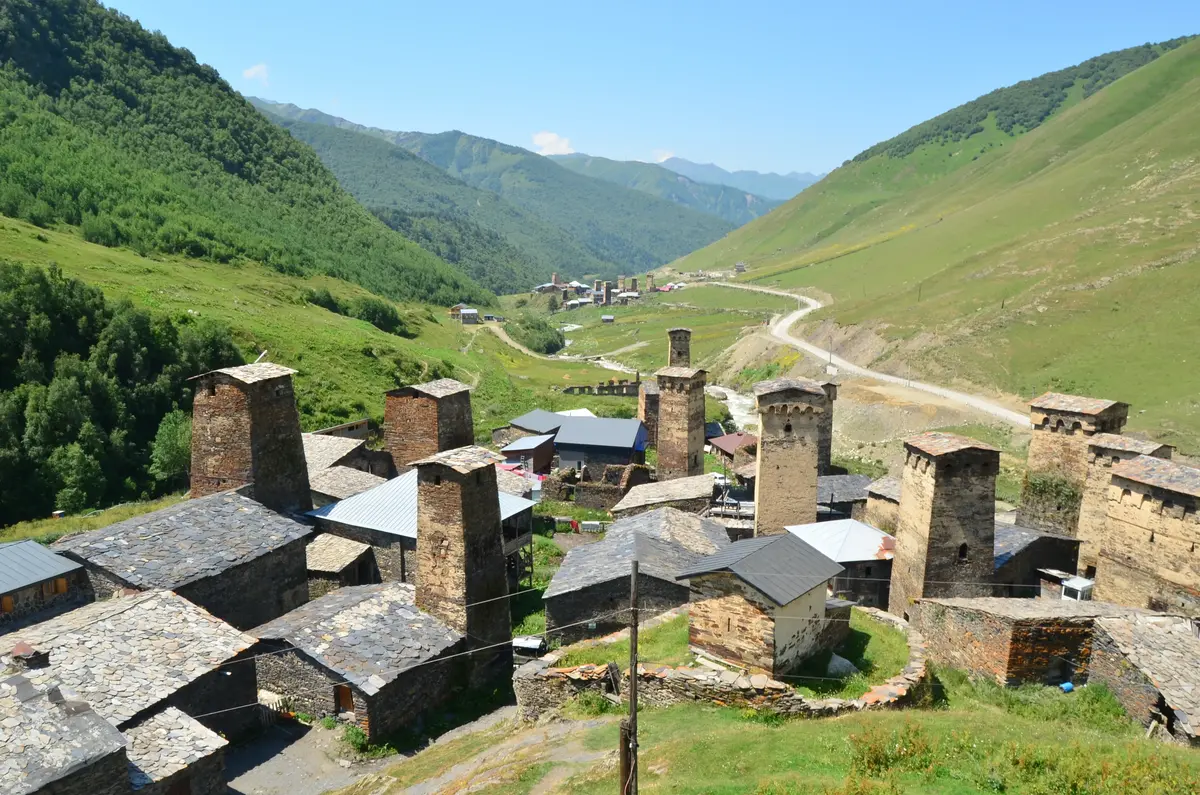
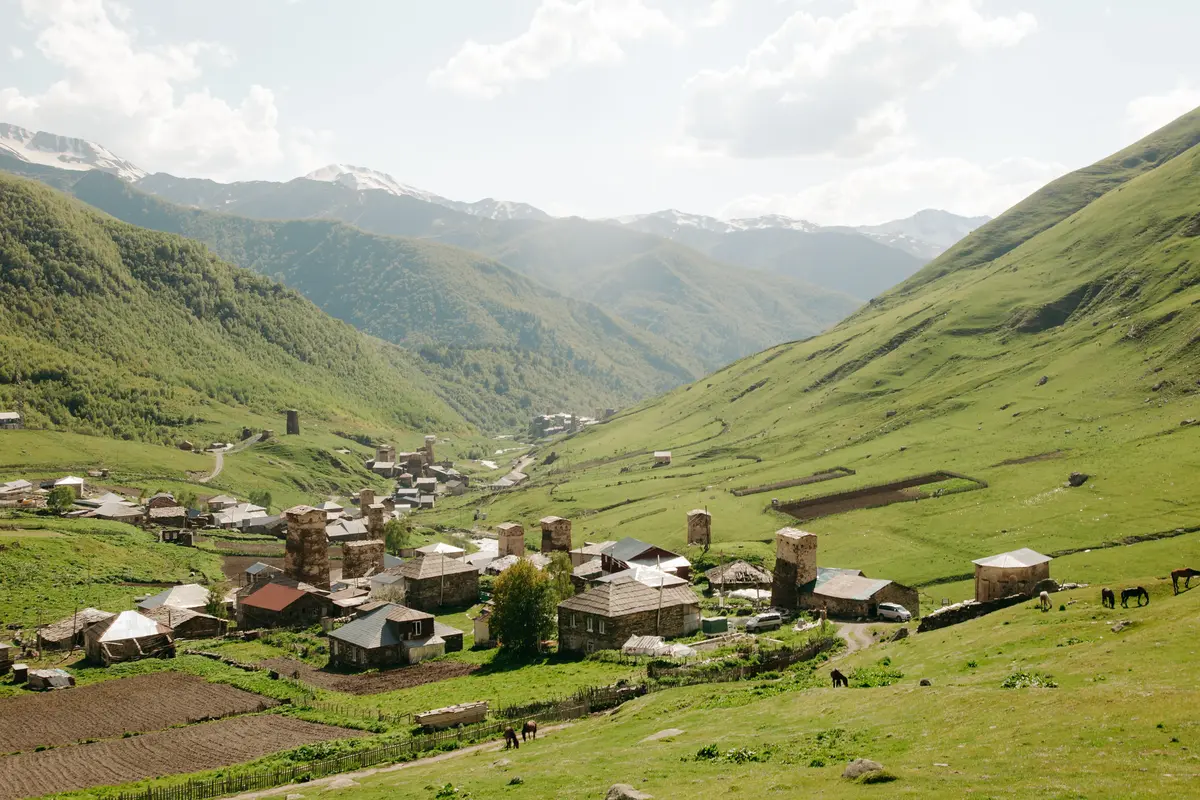
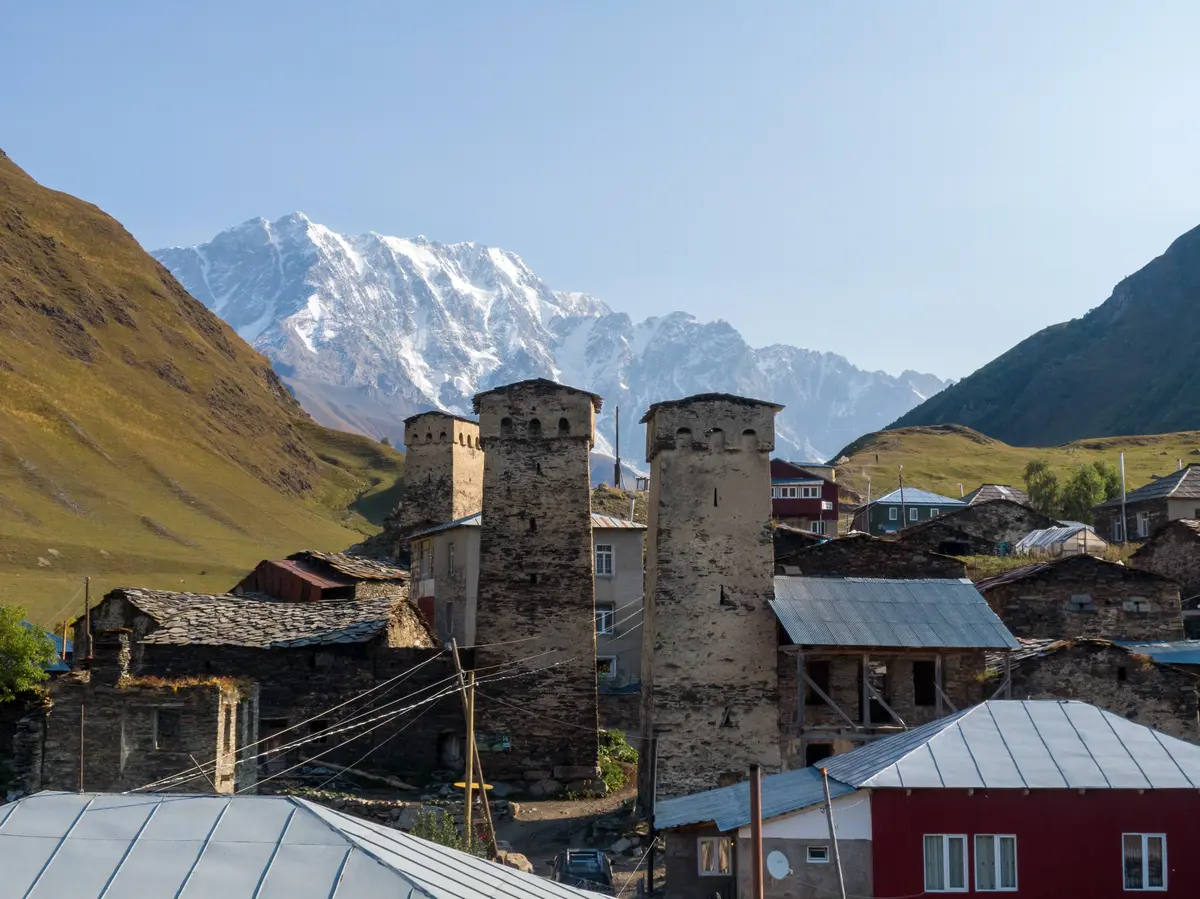
Svaneti, the medieval tower-house region under the highest peaks in the Caucasus, feels like it should require a car. It doesn’t.
| Method | Cost | Time | Notes |
|---|---|---|---|
| Train to Zugdidi, then marshrutka | 16-28 GEL plus 35-40 GEL ($19-25 total) | about 10 hr | Best combination of comfort and cost |
| Direct marshrutka from Didube | around 50 GEL ($19) | about 10 hr | One long haul, early departure |
| Vanilla Sky flight from Natakhtari | varies | 40 min flight | Cheap, scenic, weather-dependent |
The train-plus-marshrutka route is the one to take. Ride the morning train to Zugdidi, walk out of the station, and board one of the vans or shared taxis waiting there specifically for train passengers heading to Mestia. That leg costs 35 to 40 GEL ($13 to $15) and takes three to four hours up the Enguri gorge. Sit toward the front if you’re prone to motion sickness, and bring tablets. The gorge road is spectacular and unrelenting.
The Vanilla Sky prop plane from Natakhtari airfield north of Tbilisi is a genuine bargain and a spectacular flight, but it cancels frequently for weather and books out weeks ahead in summer. Treat it as a bonus, not a plan.
Going deeper, to Ushguli, means a shared 4WD from Mestia for 60 to 80 GEL ($22 to $30) each way, two and a half to three hours over a rough track. Marshrutkas do not cross the Zagari Pass toward Lentekhi, so Ushguli is an out-and-back from Mestia.
Seasonality is the thing to plan around. Svaneti’s transportation network is built for the summer season. Outside roughly June through September, connections thin out dramatically, the Ushguli road can close entirely with snow, and a van that runs three times a day in August may run three times a week in November. The reliable fix is low-tech: ask your guesthouse to call ahead and confirm your onward transportation the evening before you travel. They will, and it works.
Sample Carless Itineraries
Five to Seven Days: Tbilisi Base
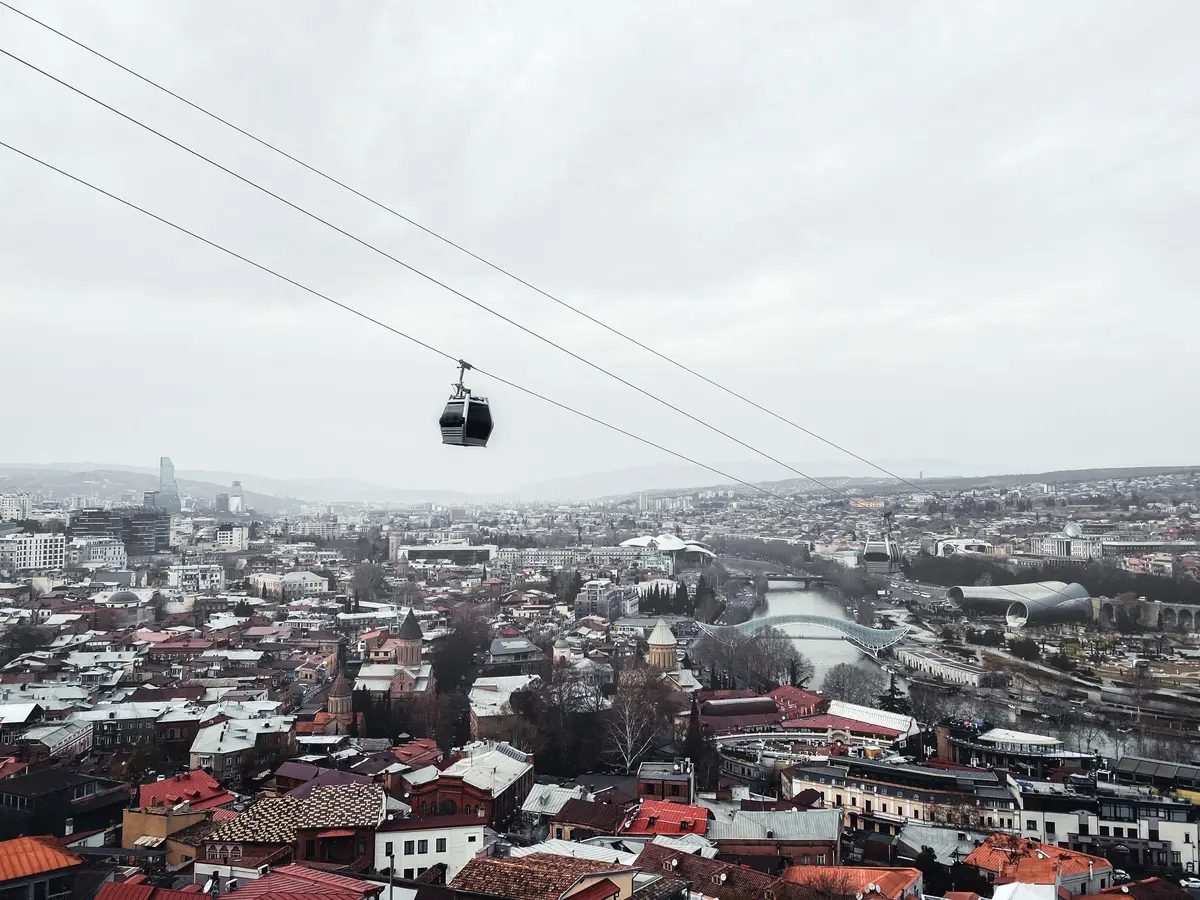
Stay in Tbilisi the whole time and take day trips. Day one and two for the capital itself, including the sulfur baths, the Narikala cable car, and the Dry Bridge market. Day three to Mtskheta. Day four to Sighnaghi or a hired-driver day in Kakheti. Days five and six as an overnight to Kazbegi by marshrutka, coming back the following afternoon. You’ll spend almost nothing on transportation and never repack.
Eight to Ten Days: The Classic Loop
Tbilisi for two or three days, then Kakheti for a night in Sighnaghi, then back through Tbilisi for the marshrutka to Kazbegi and two nights there. From Kazbegi, return to Tbilisi and continue west by marshrutka to Kutaisi, with a night for the caves and the Soviet sanatorium forest at Tskaltubo. Finish in Batumi, then take the Stadler train straight back to Tbilisi in a single comfortable afternoon. Every leg on this loop is public transportation.
Two Weeks or More: Add Svaneti
Run the classic loop, but insert Svaneti between Kutaisi and Batumi. Take the daytime train or a marshrutka to Zugdidi, connect to Mestia, spend three or four nights hiking the Chalaadi Glacier trail and the Koruldi Lakes ridge with a day trip to Ushguli, then come back down to Zugdidi and continue to Batumi along the coast. Two and a half weeks is the sweet spot for seeing the country properly without moving every night.
One structural tip that applies to all three: favor bases with day trips over constant motion. Hauling luggage onto a full marshrutka every 36 hours is the fastest way to sour a Georgia trip, and it’s completely avoidable.
What It Costs: Carless Versus Renting
Rough weekly budgets per person, excluding international flights and organized tours:
| Travel style | Weekly budget | What that covers |
|---|---|---|
| Backpacker | around 560 GEL ($200) | Hostels, marshrutkas, bakery food, no drivers |
| Mid-range | around 1,400 GEL ($500) | Guesthouses, trains in first class, occasional hired driver |
| Comfortable | around 2,800 GEL ($1,000) | Good hotels, private drivers on scenic days, restaurants |
Transportation is the smallest line in every one of those tiers. A full two-week carless circuit of the country, using marshrutkas for the short legs and trains for the long ones, typically lands between $60 and $150 per person in fares.
Compare that to a rental: $250 to $450 a week for the car, plus fuel, plus a security deposit hold on your credit card, plus insurance that excludes the roads you most want to drive, plus parking. Even adding two full days of a private driver at around $60 each, the carless approach usually wins on cost and always wins on stress. Where a rental genuinely competes is for a group of four traveling together for two weeks or more, and even then, the driver-plus-train combination stays close.
Safety, Language, and Practical Tips
Georgia is one of the safest countries in the region for visitors. Street crime is rare, walking around Tbilisi at night feels relaxed, and solo female travelers consistently report a comfortable experience, including with Bolt drivers and hired drivers. The meaningful risk in Georgia is road safety, not crime, which circles back to why handing the driving to someone else and riding trains where you can is the right call.
The language barrier is real but manageable. Georgian uses its own 33-letter alphabet that resembles neither Latin nor Cyrillic script. Metro signage and major highway signs are bilingual, but marshrutka destination placards are almost always Georgian-only. Russian is often more useful than English with drivers over about 40, and English is increasingly common with anyone younger.
| English | Georgian (spoken) |
|---|---|
| Hello | gamarjoba |
| Thank you | madloba |
| How much? | ra ghirs? |
| Stop here | gaacheret |
| Yes / No | diakh / ara |
| Where is…? | sad aris…? |
A handful of logistics worth sorting before you go:
Cash and cards. Cards work fine in city restaurants, hotels, and supermarkets. Marshrutkas, rest-stop bathrooms, village guesthouses, and market vendors are cash only. ATMs from Bank of Georgia and TBC are everywhere in cities and reliable, including one at Didube station just west of the metro exit. Carry small lari notes.
Connectivity. Magti, Silknet, and Cellfie all sell cheap tourist SIM cards at the airports, and eSIM works on Georgian networks. Coverage is good on main roads and patchy in the mountains, which is another reason for offline maps.
Insurance and entry rules. Carry travel insurance that covers mountain activity if you plan to hike. Entry requirements for Americans are straightforward, but rules do get revised, so confirm the current situation on the official Georgian government or US Embassy pages shortly before you fly rather than trusting a travel blog.
Pack light. This is the most useful sentence in this guide. A soft-sided bag you can lift over your head into a marshrutka’s back row changes your entire experience of this country.
The country of Georgia is one of the easiest places in the world to travel without a car, once you know that Didube is navigable, that the Stadler train exists, and that a hired driver costs less than you’d assume. Take the train where there’s a train, take a marshrutka where there isn’t, hire a driver for the Georgian Military Highway and the Kakheti wine roads, and use Bolt for everything inside a city.
Then spend the money you saved on the rental car on an extra night in Svaneti. That’s the better trade.