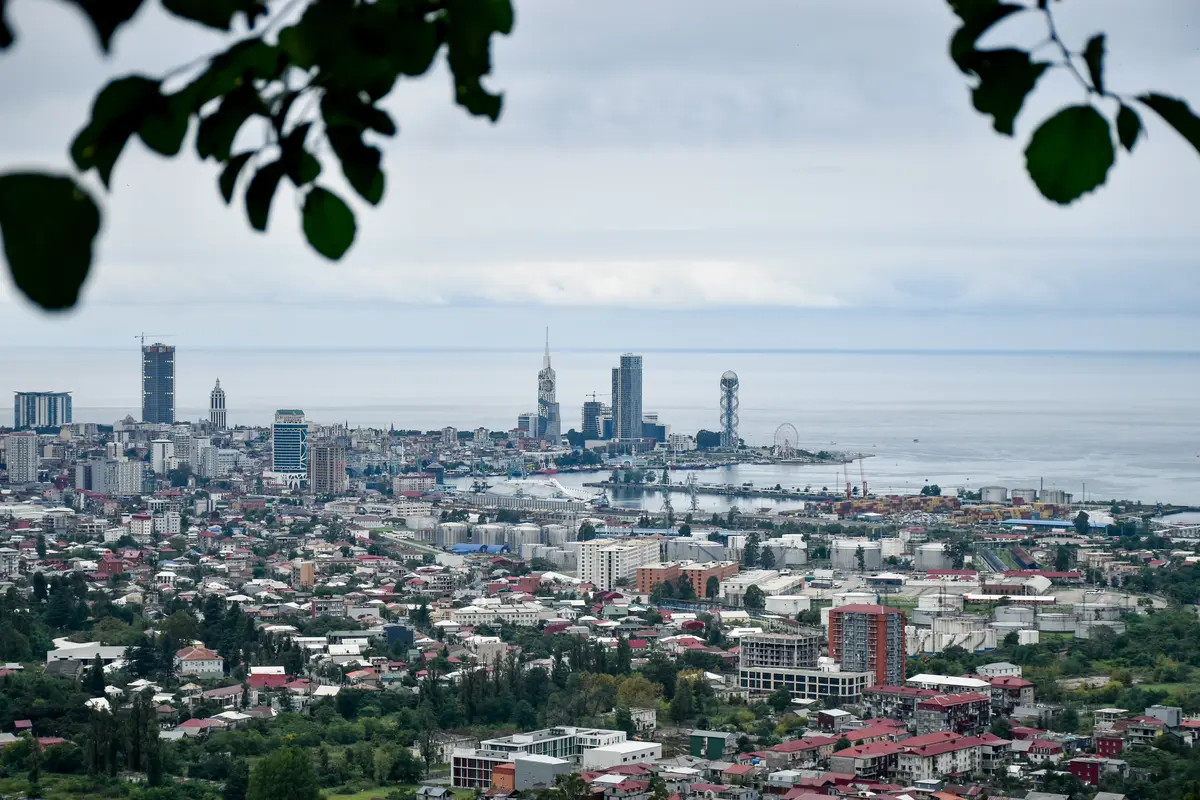
Nearly every seven-day Georgia itinerary you’ll find tells you travel insurance is recommended. That sentence is out of date. Since January 1, 2026, Georgian Government Regulation No. 602 has required every foreign visitor to hold health and accident insurance worth at least 30,000 GEL — about $11,000, at the rate of 2.7 GEL to the dollar used throughout this piece. It applies to Americans, who don’t need a visa to enter. The policy has to cover your whole stay, it has to be readable in English or Georgian, and it can be checked at the border. The U.S. Embassy in Tbilisi published a notice about it. Airlines have been asking for the document at check-in and at the gate.
What broke here isn’t one guide. It’s the consensus — a line written before the rule existed, copied forward ten times.
Fix that, then make the one decision that actually determines what your week looks like. Seven days in Georgia buys you one mountain region, not two. The country is roughly the size of South Carolina, which makes the map look generous, and the roads make the map a liar.
What You Have To Buy Before You Board
Start with the insurance, because it’s the one thing that can end the trip at a check-in desk. The cheapest compliant route is a local Georgian policy — several insurers sell them online from around 2 GEL a day, under a dollar. If you’d rather use a US policy, read it for the actual coverage figure and make sure the document says so in English. Travelers arriving without one can be refused entry or fined, with the fine reported at 300 GEL (about $110); one source says it climbs to 900 GEL if it goes unpaid for 30 days, which I’d treat as unconfirmed.
Understand what that policy is and isn’t. It’s a legal minimum, not a safety net. Your US health plan almost certainly doesn’t travel, private clinics in Georgia expect payment up front, and the State Department specifically urges medical evacuation coverage for anyone heading into the mountains — which, on this itinerary, is everyone. The CDC’s recommendations for Georgia include hepatitis A and pre-exposure rabies vaccination. Buy the mandatory policy to satisfy the border, and buy the evacuation cover to satisfy the mountains.
Entry itself is simple. Your passport needs to be valid for the length of your stay, and that’s it. US citizens can stay up to 365 days — and here’s a second line worth correcting: it’s widely printed as 365 days per calendar year. It isn’t. It runs per entry, and the clock resets when you re-enter. For a week that’s academic. For anyone daydreaming about staying, the difference is enormous, and the wrong version is everywhere. Both travel.state.gov and geoconsul.gov.ge carry the correct one.
Buy a local SIM or eSIM rather than roaming; US carrier plans don’t cover Georgia cheaply. Magti has the best coverage once you leave the highways — travelers report it working in places where the others don’t. Silknet is the easiest to buy online as an eSIM. A physical SIM runs 5–10 GEL with tourist data packs from 15–50 GEL (roughly $6–19), and you’ll need your passport to register it in a store. Handset IMEI registration only becomes an issue past about 30 days, so a week-long visit never meets it.
Two small things people forget. Georgia runs 220-volt power at 50 Hz on European two-pin sockets, types C and F, so pack an adapter; anything dual-voltage needs no converter. And Georgia sits at UTC+4 and doesn’t observe daylight saving, which means the gap from home moves — about eight hours ahead of US Eastern during the American summer, nine in winter. Check it against your actual dates before you book a call home.
The One Cut: Svaneti Or A Slower East
This is the question everyone asks, and the honest answer is a trade rather than a yes.
Getting to Svaneti is the whole problem. The direct Tbilisi–Mestia marshrutka is an 8-to-10-hour day, which travelers describe with a consistency that’s hard to ignore. The better version is the train west to Zugdidi, leaving Tbilisi around 8:20 a.m. and arriving about 2:20 p.m., then a marshrutka onward to Mestia; there’s also an overnight sleeper. People who’ve done both prefer the train, and say so.
The flight looks like the escape hatch and isn’t. Vanilla Sky runs the small aircraft from Natakhtari to Mestia, and it cancels on weather often enough that multiple travelers report losing both legs and hiring drivers instead. Total baggage allowance is 15 kg — 33 pounds, with no excess purchasable. Never build a plan where that flight is your only way in or your only way out.
Then there’s what happens once you’re there. The Mestia–Ushguli road sits on rental companies’ prohibited list, so the drive most people go to Svaneti for is one you cannot legally make in a standard rental car.
Put those three together and you get a conclusion nobody publishes, because it’s a conclusion and not a fact. A land day in each direction, an air link you can’t rely on, and a hired 4×4 required for the marquee road. Svaneti costs two of your seven days before you’ve looked at anything, plus real odds of losing a third to weather. In a seven-day trip that makes it Svaneti instead of Kazbegi and Kakheti, not alongside them. Where this reasoning could break: if a reliable private transfer exists that meaningfully shortens the land leg, the arithmetic changes. Multi-day private Svaneti tours run roughly $200–950 depending on the number of days and the vehicle, and none of the sources checked here described a same-day link that beats the train. Run the numbers against your own dates before you take my word for it.
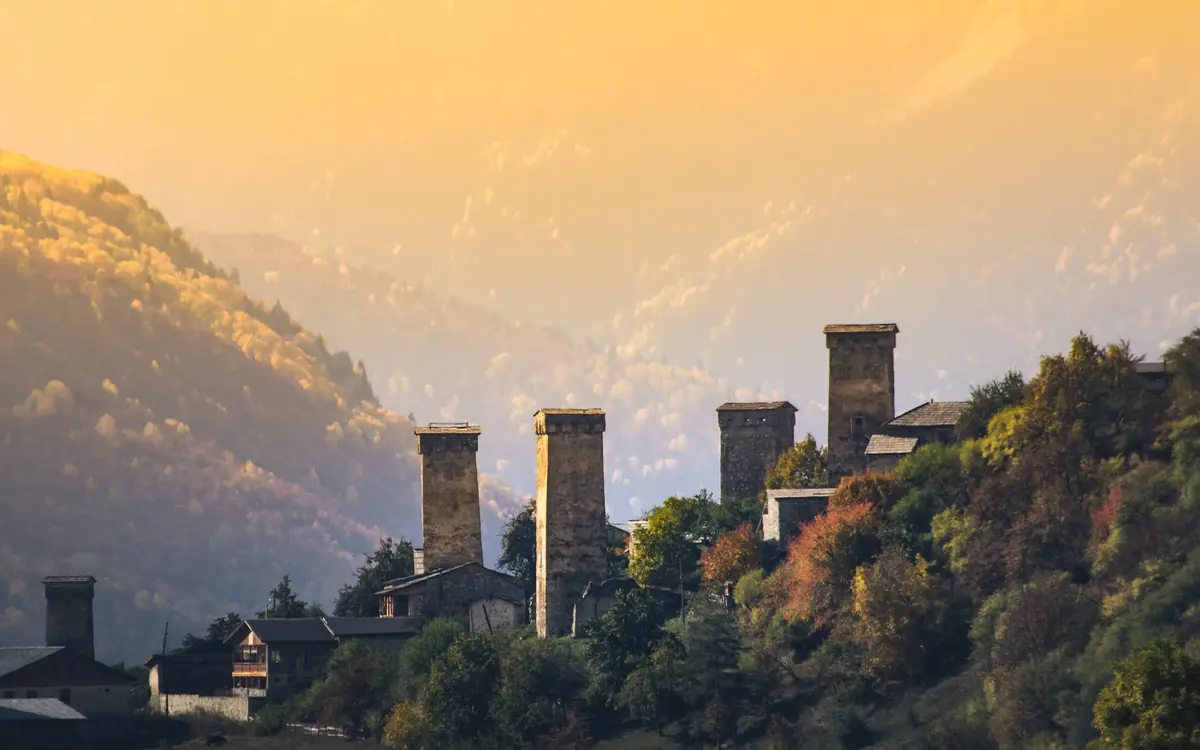
Seven Days, Svaneti Left Out
- Day 1. Land, sleep, then Tbilisi on foot in the late afternoon. Sulphur baths that evening.
- Day 2. Tbilisi proper.
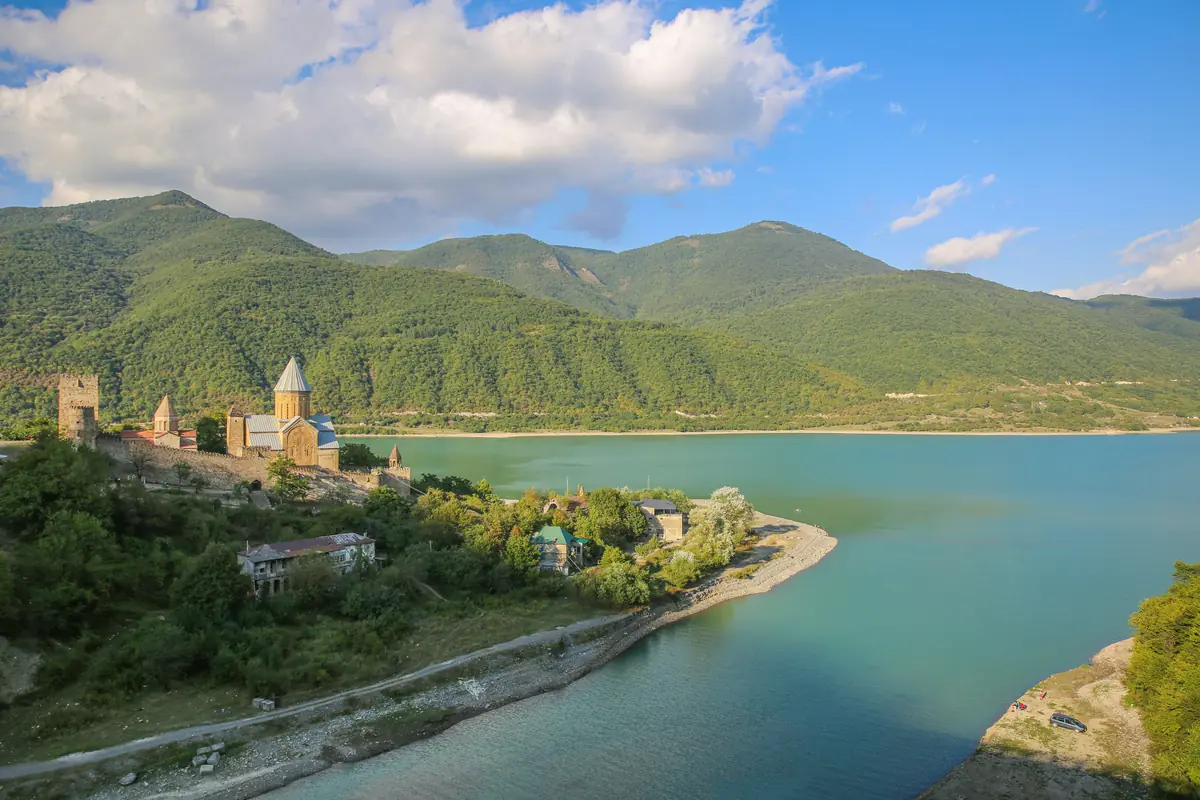
- Day 3. The Georgian Military Highway north to Stepantsminda, stopping at Ananuri and Gudauri. Budget four to six hours with stops, not the three the map promises.
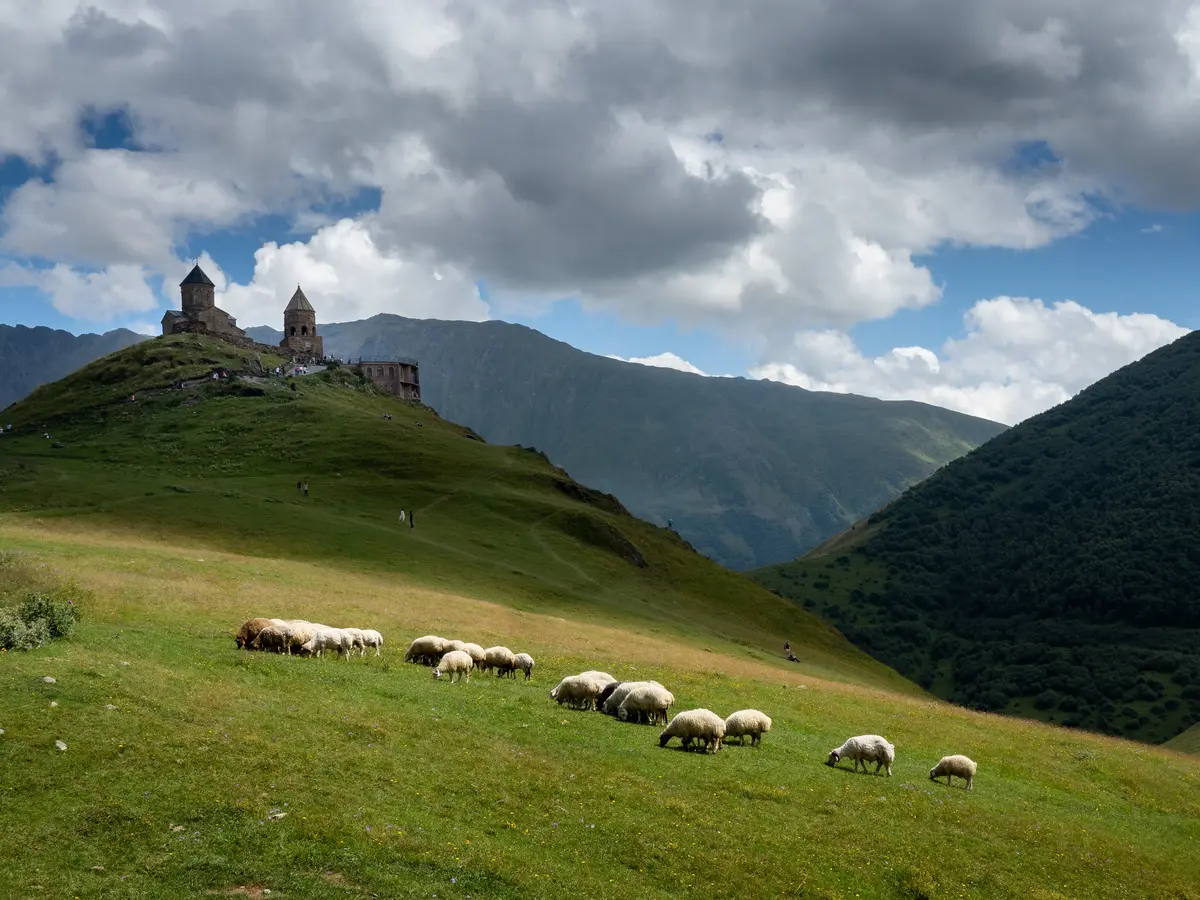
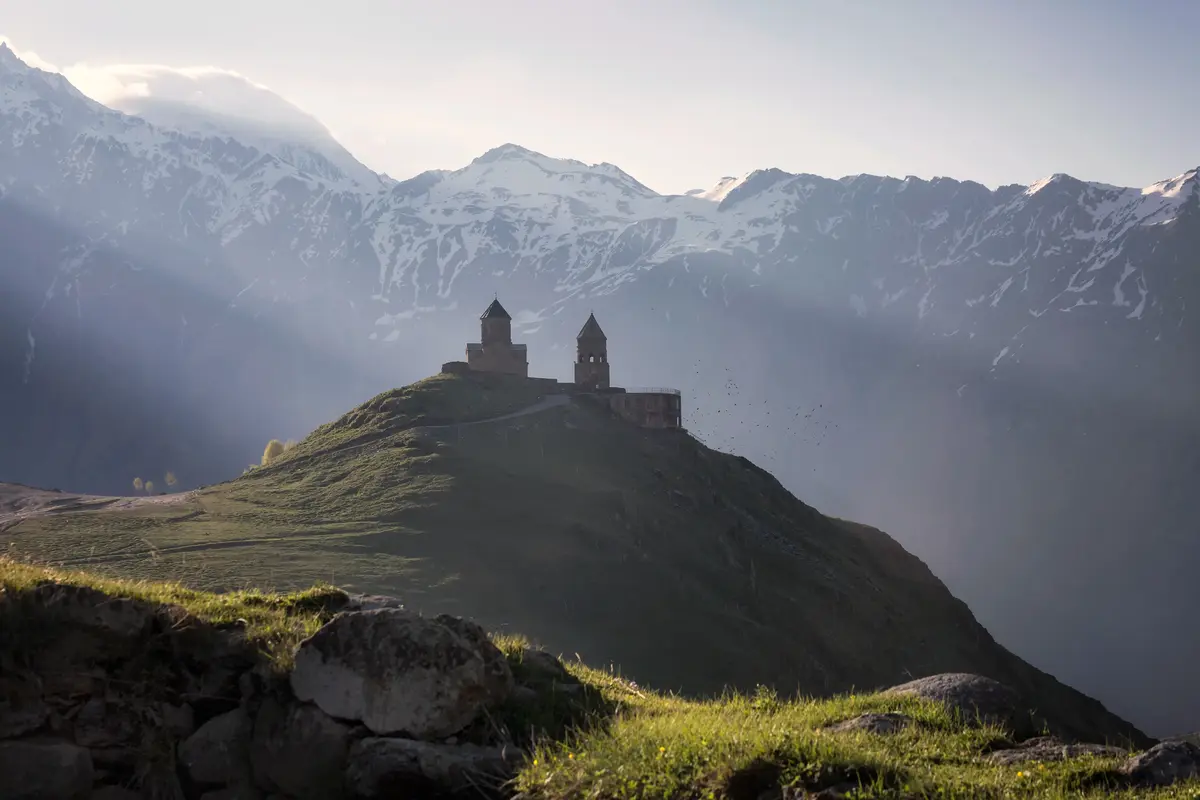
- Day 4. Gergeti Trinity Church, at 7,120 feet (2,170 m). Don’t confuse it with Mount Kazbek behind it, which tops out at 16,558 feet (5,047 m) — higher than any peak in the lower 48.
- Day 5. Back down and east into Kakheti, to Signagi or Telavi.
- Day 6. Wine, then back to Tbilisi.
- Day 7. Fly out.
Prefer the west? Swap Kakheti for the train: about five hours to Batumi, with all four daily services stopping at Kutaisi Airport, and Martvili Canyon and Prometheus Cave within reach of Kutaisi.
Seven Days, Svaneti In
- Day 1. Land, one night in Tbilisi.
- Day 2. Morning train to Zugdidi, marshrutka to Mestia, arrive tired.
- Days 3–5. Mestia, with a hired 4×4 to Ushguli for one of them.
- Day 6. The long journey back.
- Day 7. Fly out.
That version contains no Kazbegi, no Kakheti and one usable day in Tbilisi. If you read that list and feel a pang, you’ve just answered the question.
Somebody Else Should Be Driving
Georgian rental companies publish a list of roads their cars may not go on. Tusheti and the Abano Pass, Mestia–Ushguli, Truso, Juta, Vashlovani and Shatili. Drive them anyway and you’ve voided your insurance, with fines on top. That list is not a footnote — it’s most of the scenery people come for.
Then the paperwork. You need your US license plus an International Driving Permit, and the IDP can only be issued in the United States, before you leave, through AAA or AATA. Mailed applications typically take around two weeks. Georgia follows the 1968 Vienna Convention, and in practice travelers report a mess: some drive for years without ever being asked, while the international chains like Hertz and Sixt and the land border crossings can and do insist, and local operators often accept a Latin-script US license. Get the permit. It’s the one requirement on this list you cannot fix once you’ve landed.
So hire the driving out, which is cheaper than Americans expect. A private GoTrip day on the Military Highway starts around $75 per car. Group day trips to Kazbegi start near $45. Kakheti group tours run roughly $17–56, with private ones up to about $290.
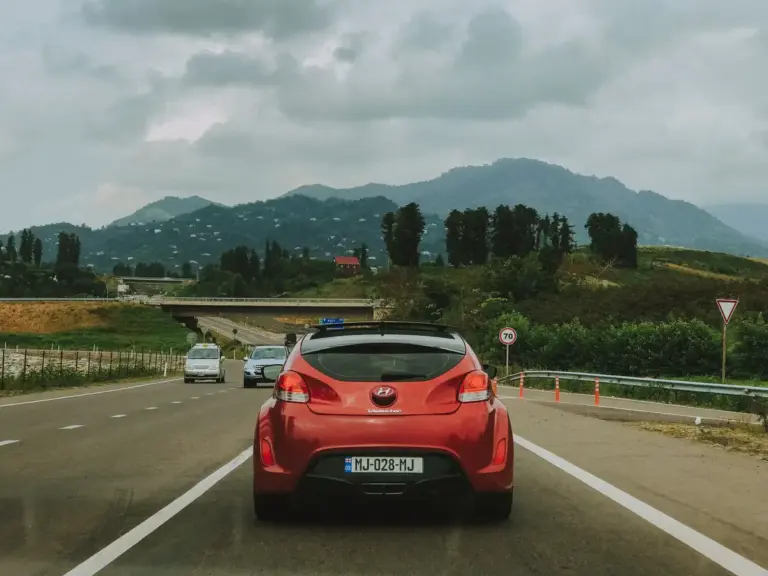
The reason those drives run long, by the way, is texture rather than distance: freight trucks grinding north toward Russia, overtaking on curves that don’t allow it, and livestock on the roadway. In winter the Jvari Pass at 7,805 feet (2,379 m) technically stays open year-round for that freight, but it can shut for hours and occasionally for one to three days when avalanche risk spikes.
Which brings up safety, since it’s the thing people ask first and worry about wrongly. The State Department rates Georgia Level 1, exercise normal precautions. Its Do Not Travel designation applies to the Russian-occupied regions of South Ossetia and Abkhazia — both Level 4, for crime, civil unrest and landmines — with a separate caution for the Pankisi Gorge. None of those are places a seven-day itinerary goes. On crime, the World Bank’s homicide figure for Georgia is about 1 per 100,000 against roughly 5.8 in the United States; the two figures come from different years, so treat it as an order of magnitude rather than a precise ratio, and the order of magnitude is that Georgia’s rate is around a fifth of home. The genuine risk on this trip is vehicular. A couple of travelers also mention street dogs, mostly near trailheads, which is worth knowing and not worth reorganizing a trip around.
Landing At 4 A.M., And Where To Sleep After
There’s no nonstop from the US to Tbilisi. The usual connections are Istanbul on Turkish, Doha on Qatar, or Warsaw on LOT, plus Wizz Air into Kutaisi from European hubs — read Wizz’s baggage rules twice, because they’re where the cheap fare goes to die.
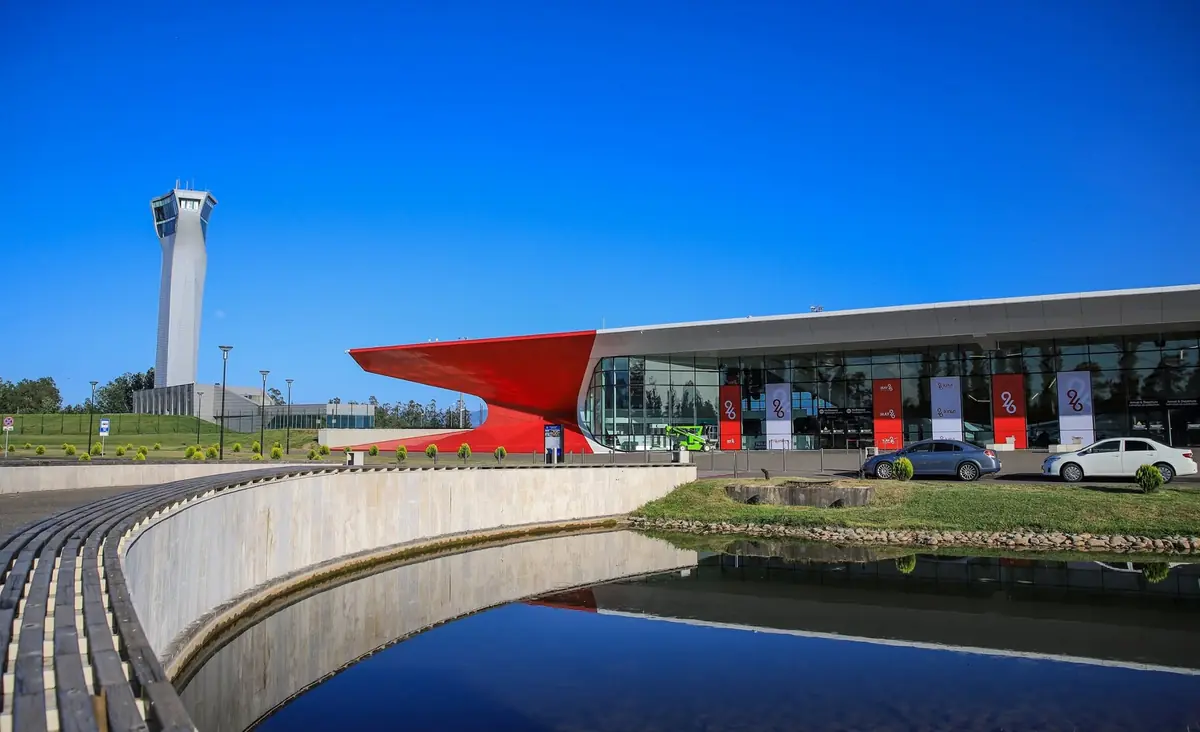
Tbilisi airport is notorious for arrivals between 3 and 5 a.m. Book the room for the night before you land, and pre-book the transfer; GoTrip runs airport pickups from around 60 GEL (about $22). Arguing with a taxi at 4 a.m. after 20 hours in transit is not a plan.
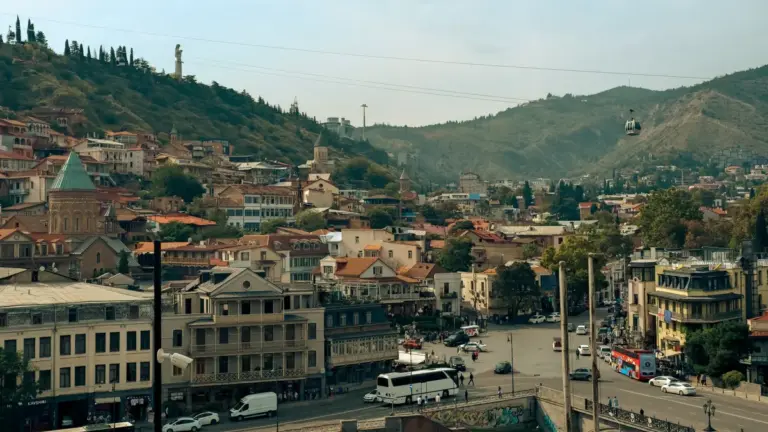
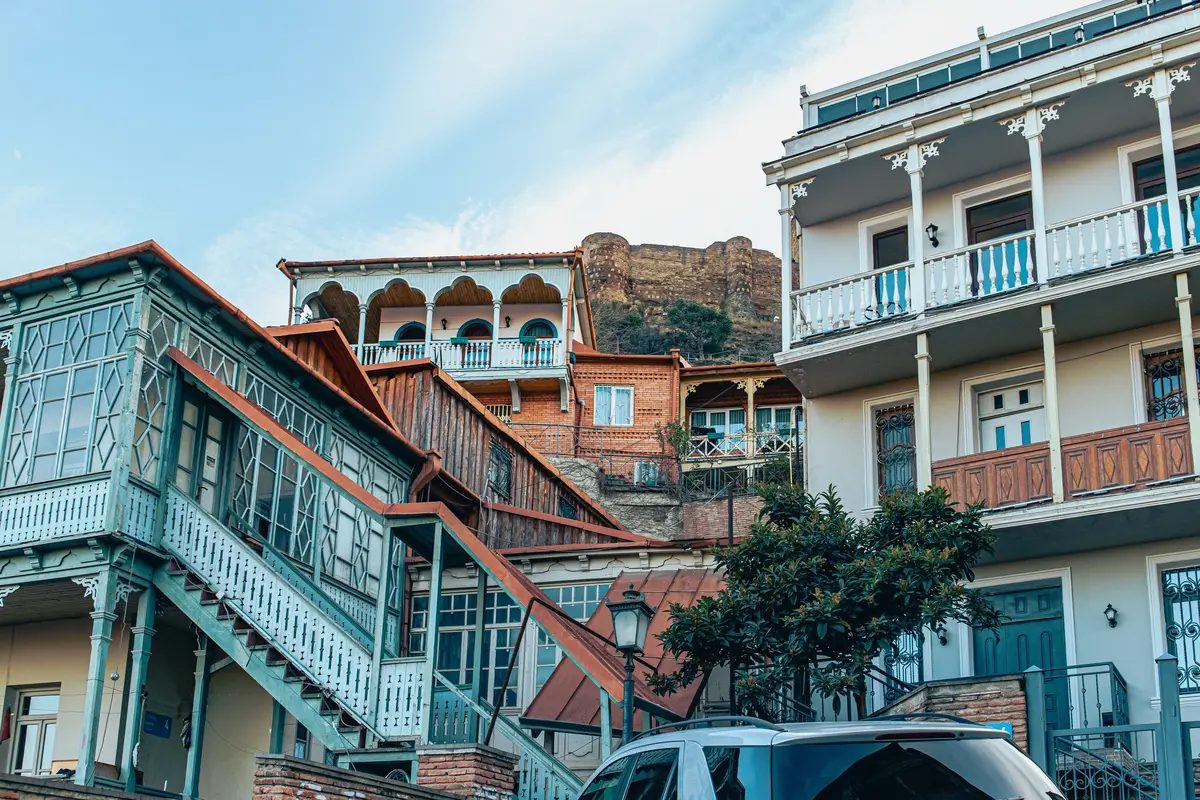
In Tbilisi, Old Town and Sololaki are the most walkable and the most atmospheric, and they come with cobblestones and bar noise. Vera and Marjanishvili are quieter, still central, and don’t leave you dependent on taxis. On either, ask which side of the building your room faces — the lanes carry sound.
In Stepantsminda the center is convenient, but the Kazbek and Gergeti view either costs more or sits outside the center. Ask specifically for a “Kazbek view” rather than assuming; Rooms Hotel Kazbegi is the benchmark for that view and priced accordingly. In Kakheti, Signagi is the hilltop postcard and compact enough to walk; Telavi is larger and more lived-in.
Book the train the moment you fix your dates. Georgian Railways opens sales roughly 40 days out, and the Tbilisi–Batumi Stadler sells out three to five days ahead in summer and on weekends. Second class starts at 35 GEL (about $13), first runs about 75 GEL ($28), business about 95 GEL ($35). First class is the pick — the extra 40 GEL buys a power outlet and room to open a laptop for a five-hour ride. Bring your passport; you can’t board without it. One caveat: the official railway site and the timetable aggregators disagree on the evening Tbilisi departure time, so confirm at ticket.railway.ge before you build a day around it.
For any mountain leg in winter or shoulder season, book refundable. When the Jvari Pass closes you want to be rearranging a booking rather than eating one.
Cash Still Runs The Countryside
The lari is the only legal tender, so don’t arrive with dollars expecting to spend them. Cards work fine across Tbilisi and Batumi. Guesthouses, marshrutkas and most things rural want cash, and ATM fees vary enough that the sensible move is fewer, larger withdrawals.
Tipping is the sharpest difference from home. Around 10% reads as generous here, and rounding up is common practice. The American 20% reflex is not the local norm and doesn’t need importing.
Budget roughly $50–100 a day for mid-range travel, which buys considerably more than the same money does in a US city. A Kakheti wine day with something like nine tastings costs less than a single tasting flight in Napa. Tbilisi metro and bus rides are 1 GEL, about 37 cents.
One correction on cost, though: prices rose sharply after 2022, when the country absorbed a large wave of Russian arrivals. Travelers working from older budget figures report getting caught out, especially in Tbilisi and in mountain towns at peak season. Price the trip from current numbers, not from a blog post written before that shift.
Nobody Publishes When Gergeti Closes
Two of the most photographed places in the country don’t publish opening hours anywhere official. Not Gergeti Trinity Church, not Ananuri fortress. Blogs will give you around 9 to 5 for Gergeti, and anything from “dawn to dusk” to 9 a.m. to 8 p.m. for Ananuri, and they contradict each other. Entry to both is free. Go in the morning and don’t hang a day’s plan on a closing time nobody has actually stated.
The government heritage portal is worse than silent — it’s stale. It still lists adult entry to Vardzia and Uplistsikhe at 5 GEL. The real price is about 15 GEL (roughly $6). Audio guides run about 15 GEL and a private guide about 45 GEL ($17). No last-entry time is published for either site.
Prometheus Cave has a live page at the Agency of Protected Areas listing 10:00 to 17:00 daily, 40 GEL ($15) for foreign visitors, and a boat tour at 30 GEL ($11), with a guide included in the price. Older third-party listings show 23 GEL and Mondays closed. The discrepancy is unresolved. Carry cash for 40 and check the page before you go.
Martvili Canyon is the one clean set of numbers in the group: 10:00 to 18:00 daily, 20 GEL entry (about $7), boat tour another 20 GEL.
And the Kobi–Gudauri cable car, which several itineraries treat as a scenic add-on and which is really the designed backup for when the pass closes, publishes no fare at all. A figure circulates on blogs with no operator page behind it, and its operating status was still unconfirmed at the time of writing. Plan as though it isn’t there.
The Bathhouse Charges By The Room
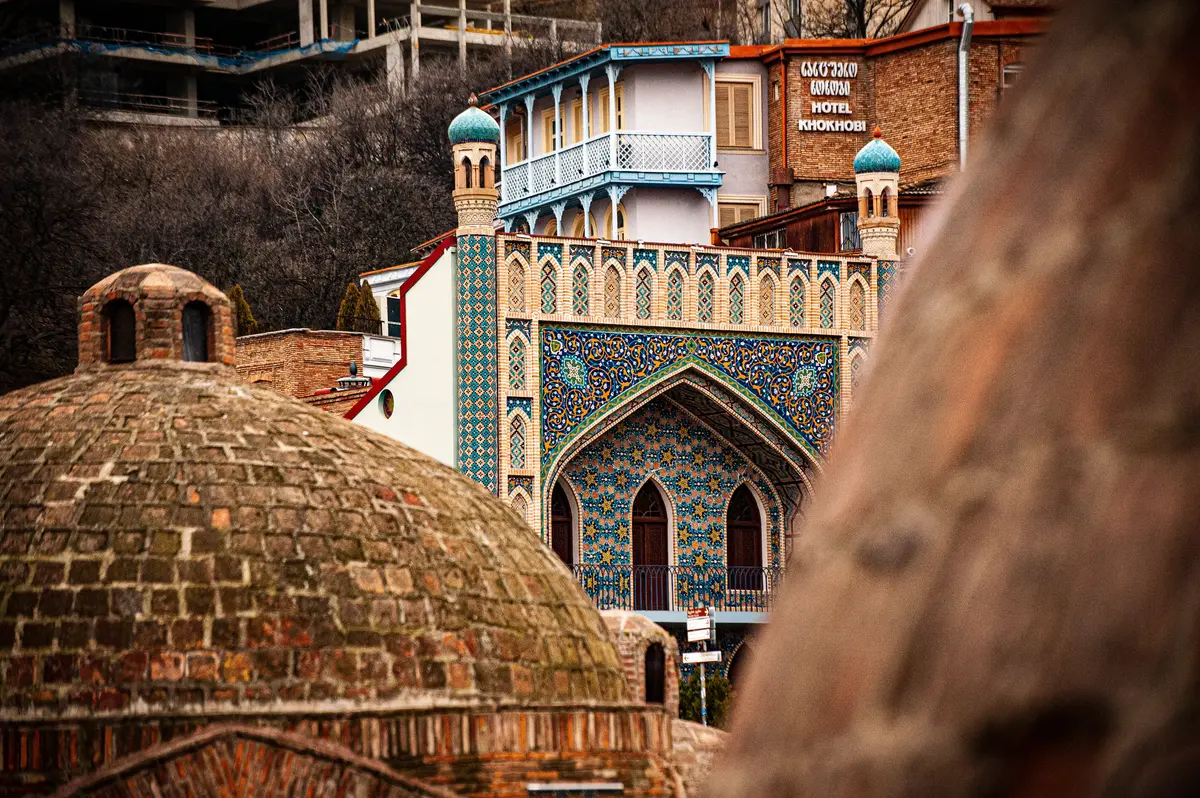
Chreli-Abano, the Orbeliani baths with the tiled facade, states 09:00 to 23:00 daily on its own site. Google and the booking aggregators show slightly different hours; trust the venue.
The pricing catches people out, because private rooms are charged per room per hour, not per person. A one-to-two-person room is 130 GEL (about $48), a standard room 200 GEL ($74), the VIP apartment 500 GEL ($185), and the royal room 600 GEL ($222). Four people sharing the 200 GEL room is about $18.50 each, which reframes the whole thing.
The kisi scrub isn’t included — it’s 30 GEL (about $11), paid separately in cash to the attendant. And turn up on time. Travelers report slots being handed to whoever’s waiting when you’re late. Book through the venue’s site; the smaller bathhouses take bookings over Facebook Messenger, which is less shambolic than it sounds.
Who Should Not Book This Trip
If you need every element confirmed before you leave home, this trip will grind on you. Marshrutkas don’t take bookings — they leave when full, get cancelled outright in low season, and reward arriving 30 to 40 minutes early. That’s the system, and it isn’t going to change for your schedule.
If anyone in your party needs step-free access, look hard before committing. Old Town’s cobbled lanes, the climb to Gergeti and stair-heavy guesthouses are all real obstacles, and none of them are documented at venue level in anything I could find. If anyone gets carsick, the combination of switchbacks and local overtaking is a genuinely rough several hours. The church above Stepantsminda also sits high enough that some visitors notice thin air for the first time.
Traveling with young kids or an older parent? The sights aren’t the constraint. The transfer days are.