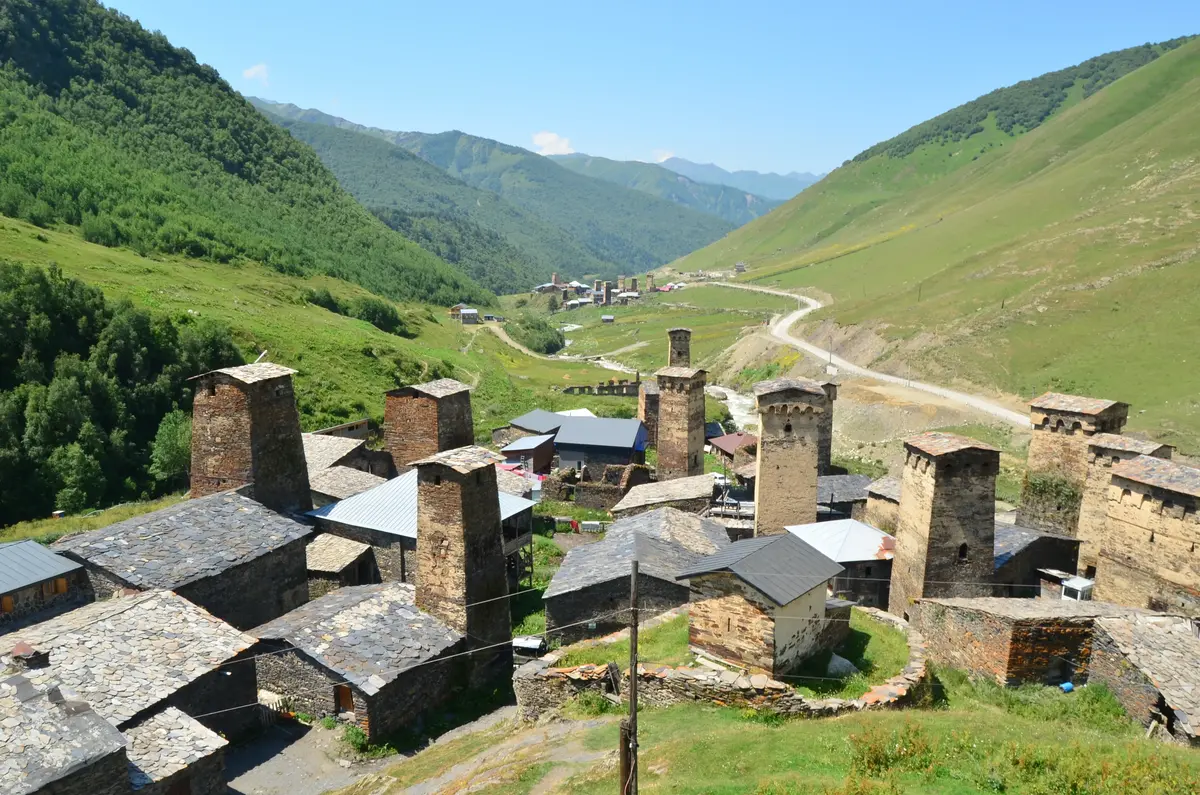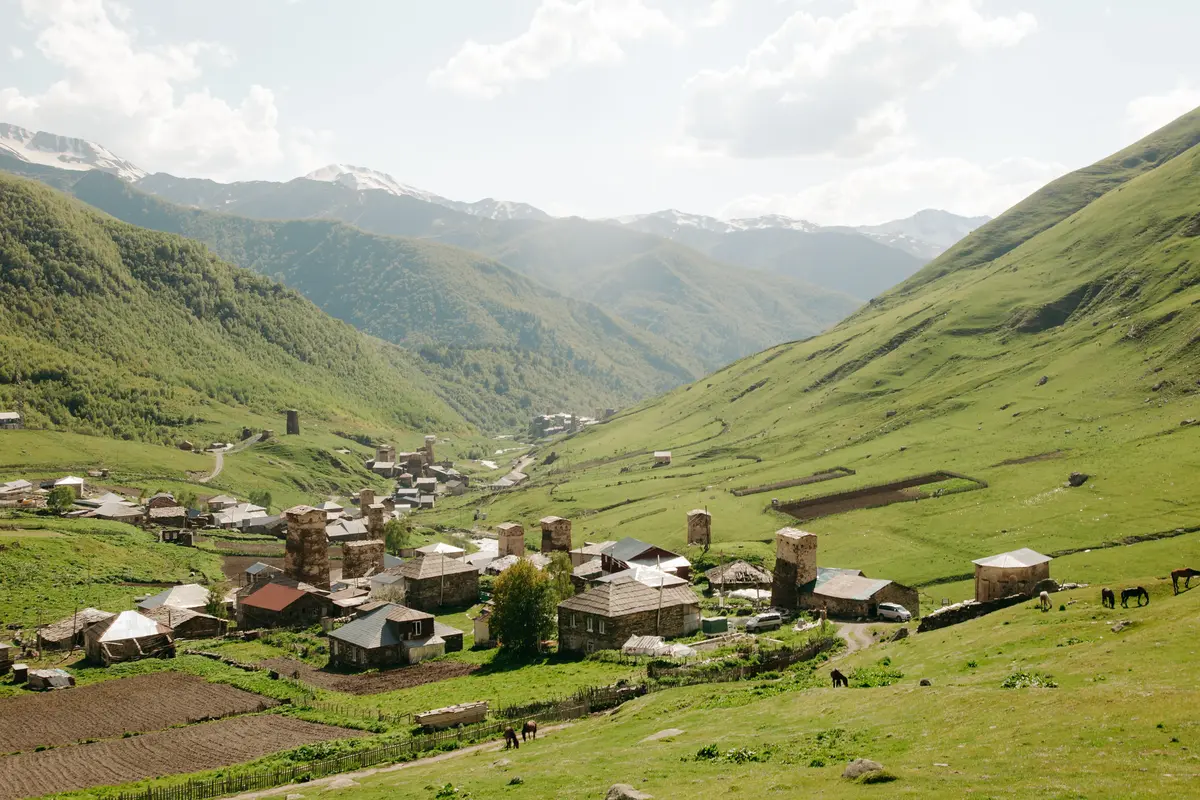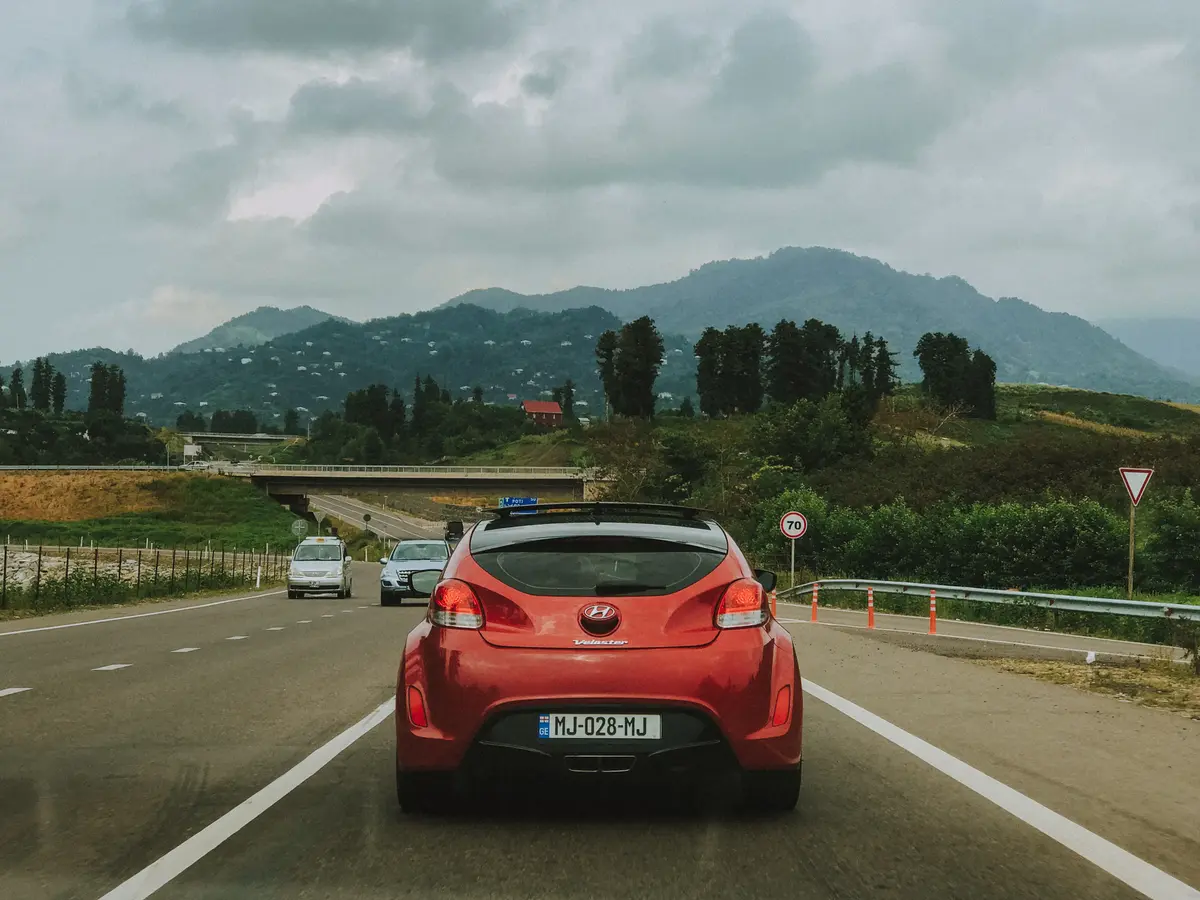
Most rental contracts in Georgia forbid you from driving to Tusheti. That is the trip a lot of people rent the car for.
Georgia — the country, not the US state — covers about 26,900 square miles (69,700 sq km), roughly the size of South Carolina. On a map it reads like a week of easy loops. It does not drive that way. Google’s estimate for Tbilisi to Mestia is about seven hours and fifteen minutes. People who have actually made that drive report seven to nine. The distances are short. The roads are slow, and some of them you are not permitted to use.
So driving in Georgia comes down to three questions that do not share an answer: which roads you’re allowed on, which roads your insurance still covers once you’re on them, and which roads you should hand to somebody who drives them for a living. Sort that out before you book, because the cheap economy car and the itinerary in your head may not be compatible.
The frightening statistic you’ve read about Georgian roads is from around 2015, by the way. It’s further down. It is not the thing to worry about.
The Line in Your Rental Contract That Cancels Half the Country
Most rental agreements here prohibit driving to Tusheti and Omalo outright. Not discourage. Prohibit.
Svaneti is a separate case with its own trap. The Mestia–Ushguli–Lentekhi road is permitted by rental companies only if you buy a paid travel-authorization option when you book, and only between May 1 and September 30. Outside those five months it’s off the table regardless of what you’re willing to pay. The main Mestia–Ushguli road was fully sealed in 2024, so the surface is no longer the reason for the rule. The rule is still the rule.
Then there’s the clause that catches everybody who isn’t going to either place. Unpaved roads are generally excluded from rental insurance. Not banned — excluded. You can drive the car onto gravel, and the coverage you paid for stops applying the moment you do. Abkhazia and South Ossetia are forbidden and void the policy. Turkey and Russia are not permitted in a Georgian rental car under any circumstance. Armenia and Azerbaijan are possible with paperwork, which is its own section further down.
Rental companies publish these route restrictions, and the ones that don’t will tell you if you ask. On the prohibited-routes page of one large aggregator, travelers turn up in the comments asking about specific roads — Kutaisi to Lentekhi, the Goderdzi Pass on the Sh1 — and operators answer them directly: Lentekhi to Mestia is prohibited, unpaved is excluded from insurance. That thread is a better guide to what your contract actually means than the contract’s own English translation.
What “SUV” means on a Georgian lot. Often a soft crossover with a road suspension and no meaningful ground clearance. If a route requires four-wheel drive, confirm the vehicle actually has it and ask about clearance specifically. The word on the booking page won’t tell you.
What your insurance actually is. Base coverage is a collision damage waiver with a high excess, which is the deductible you eat before anything pays out. The counter will offer to sell you that excess down. Your credit card may include collision coverage, but confirm in writing that it applies in Georgia before you decline anything. None of it survives contact with an unpaved road.
Deposits and damage. Expect a card hold of $100 to $300, on a credit card in the primary driver’s name. Plenty of local operators run no-deposit options, and the aggregators surface them. Disputes over “new” damage at return are common enough that people who rent here regularly photograph every panel of the car before leaving the lot, including the wheels and the windshield. Do that. It takes four minutes and it is the cheapest insurance in this article. Verified renters also report getting a smaller car than booked, cars handed over dirty, and desks that aren’t staffed before 10 a.m. — build slack into a same-day pickup.
What it costs. Economy cars run about $25 to $35 a day, crossovers and SUVs $60 to $80 in high season, premium cars and vans $90 to $130 and up. November through February is 20 to 30 percent cheaper. July and August are peak, and that’s when automatics and genuine 4x4s sell out — book four to eight weeks ahead for summer. Reputable operators allow free cancellation about ten days out. Take the refundable rate. A mountain pass can close, and if yours does, you want to be able to walk away from the booking.
Now put the three rules side by side. The contract blocks Tusheti. The insurance stops where the pavement stops. The one permitted Svaneti back-road runs on a five-month window and a paid add-on. Stack those and you get a conclusion the sources don’t state anywhere: the drives most people picture when they book a car in Georgia are precisely the drives the cheap car isn’t cleared for. For Tusheti, and for Svaneti outside that window, the sensible answer is to hire a local driver with a real 4×4 and not rent at all.
That last part is reasoning, not a sourced fact. It’s built from published route rules and from operators answering questions in public, and terms vary company to company. Your own contract governs. If your operator clears a route these don’t, they’re the authority on their own car.
Which Roads You Can Take, and Where You Hand Over the Keys
The paved core, where self-drive works. Kakheti, the Georgian Military Highway up to Kazbegi, and the Tbilisi–Batumi run. All paved, all fine in a normal car, and the Tbilisi–Batumi road is the country’s only official expressway. There are no toll roads anywhere in Georgia.
Real times, not map times:
- Tbilisi to Kazbegi (Stepantsminda): about 93 miles (150 km), three to three and a half hours. Two and a half to four with weather or trucks.
- Tbilisi to Batumi: about 230 miles (370 km), five to six hours. Forum regulars put it at six one way and sometimes five coming back, and note that it depends on how many towns you get stuck in. For a US reader, that’s congested-interstate pace over the distance of Chicago to Cleveland.
- Tbilisi to Mestia: about 280 miles (450 km), seven to nine hours in practice.
- Tbilisi to Omalo, in Tusheti: about 118 miles (190 km), and five and a half to six hours, of which three and a half to four are on the mountain road.
The Military Highway is paved and open year-round, but the Gudauri–Kobi stretch closes for avalanches and rockfall. A tunnel project between Kvesheti and Kobi is meant to reduce that, with completion around 2027. Winter tires or chains are required in mountainous terrain in winter, and there is no calendar date that switches the requirement on — it depends on conditions, and the State Department’s guidance is that they’re required on all vehicles in the mountains in winter. If you’re renting between November and March, ask what the car is fitted with before you drive it out.
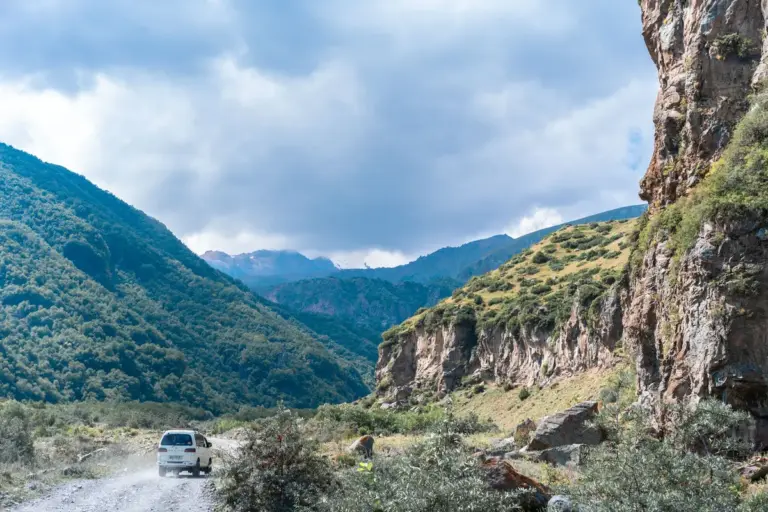
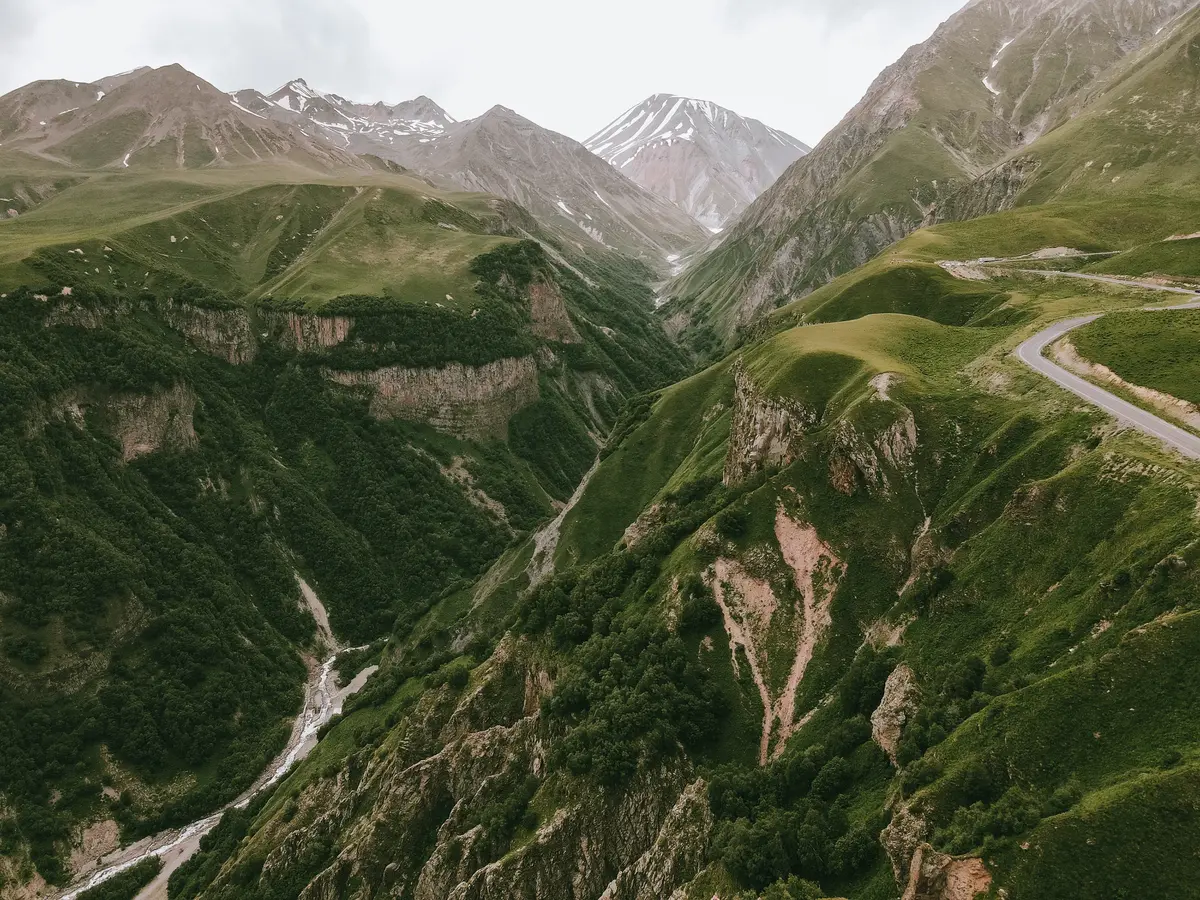
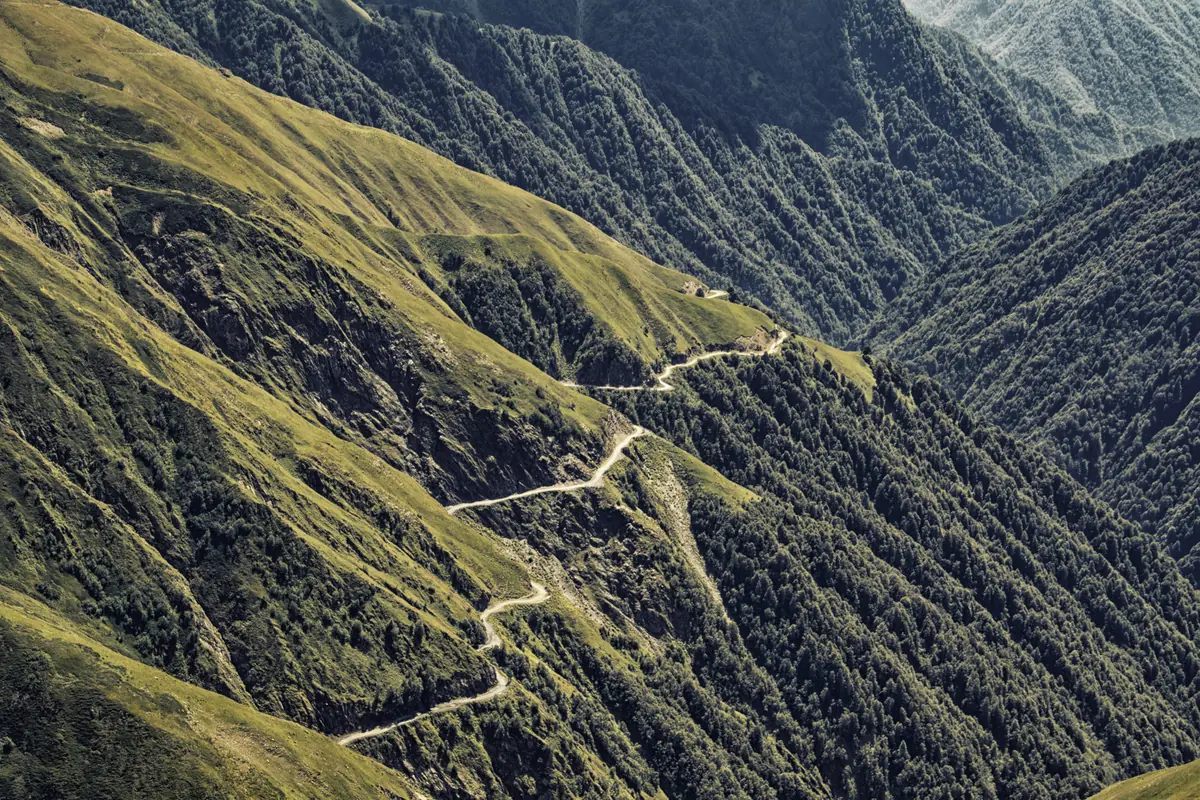
The road that decides the itinerary. Abano Pass, the only way into Tusheti, is unpaved for its entire length of roughly 44 miles (70–72 km) and four-wheel drive is mandatory. First-hand accounts describe a driver stopping every 20 to 30 minutes, switchbacks tight enough that the car has to reverse to get around them, and no phone reception for much of the way.
Two things about this pass that the guides get wrong.
Sources can’t agree on how high it is. Most references say 2,826 meters; one specialist site says 2,864; a Georgian roads source says close to 2,950. Call it somewhere between roughly 9,300 and 9,700 feet and don’t quote a figure at dinner.
And nobody publishes an opening date in advance. The road authority and the Tusheti protected-area administration declare it each year when the snow allows. Realistically it opens between late May and mid-June and closes between late September and late October. Guides that print “early June to mid-September” are quoting a schedule that does not exist. Build a buffer day.
Where you hand over the keys. Hiring a driver in Georgia is a normal booking, not a luxury.
- Private door-to-door driver. Flat-fare services quote the whole route in advance, so there’s no meter and no negotiation at the end.
- Shared 4×4 to Tusheti: about 80 to 120 lari a seat, roughly $30 to $45. A private vehicle runs 400 to 600 lari one way, roughly $150 to $220.
- Marshrutka (shared minibus): Tbilisi to Kazbegi around 15 lari, about $5.50. Tbilisi to Mestia around 50 lari, about $19, in eight or nine hours.
- Flying to Mestia: around 90 lari, about $33, in under an hour. It cancels for weather often enough that you need a backup plan, not a backup hope.
Tip a driver around 10 percent. Georgian tipping does not run at US rates and 20 percent is not expected anywhere.
One more thing to arrange before you leave a city: your phone. US carrier roaming here is poor and expensive. Get a local SIM or an eSIM — Magticom has the best mountain coverage of the local networks. Download offline maps for anywhere you’re going above the tree line, because signal drops on Abano and through Svaneti. Waze is better than Google Maps for flagging speed cameras. Google Maps is better for everything else.
The Scariest Number About Georgian Roads Is From Around 2015
Search for road safety in Georgia and you will hit the same sentence everywhere: the country has the deadliest roads in Europe. The figure attached to it is 163.6 road deaths per million residents, which is about 16 per 100,000 — the same number in different units. It comes from OECD data and it dates to roughly 2015. Almost nobody who reprints it prints the year.
Here is the current authority. The WHO Global Status Report on Road Safety 2023 gives Georgia an estimated 12.7 road deaths per 100,000 people for reference year 2021. That profile also records 449 fatalities reported by Georgia for 2021, against a WHO estimate of 476 with a confidence range of 444 to 507.
The comparison that matters to an American reader: the United States figure in that same WHO dataset, same year, same method, is 14.2 per 100,000.
Georgia is lower. On the current numbers, per head of population, Georgia is not the deadliest place in Europe to drive and it is not more dangerous than the country you live in. The old figure wasn’t fabricated — it was accurate for its year. It stopped being current because Georgia cut its rate by roughly 31 percent, from 18.4 per 100,000 in 2010 to 12.7 in 2021.
Two honest caveats, because a correction with no caveats is just a different oversimplification. World Bank data for the same indicator ends at 12.4 for 2019 — a different reference year, not a conflicting claim, so cite the year whenever you cite the number. And a per-population rate measures deaths per resident, not deaths per mile. Nothing in it tells you how much driving each population does, which means it is not a direct measure of your personal risk on a given road on a given evening. That’s a limitation of the metric, not a finding about Georgia.
The Danger Is Real. It Isn’t the One You Read About.
The aggregate rate was never the useful number, because road deaths here are not spread evenly across the map or the clock. They concentrate at night, on mountain roads, and around overtaking and speeding. Pedestrians account for roughly a quarter of them.
That is a completely different warning from “the roads are deadly,” and it has different instructions attached.
The specific behavior every account converges on is overtaking on blind curves. Drivers here will commit to a pass with no sightline, on a two-lane mountain road, and they expect the oncoming traffic to accommodate them. Which it does, mostly. You are not going to change this and you should not try to match it. Hold your line, stay right, and let anybody who wants past get past. If a car is on your bumper, that is a request, not an insult.
Livestock on rural roads is routine, including around blind bends, which is the same problem in a different form.
Then the piece of evidence that should carry more weight with an American reader than any statistic: US Embassy staff are prohibited from traveling at night outside urban areas except in emergencies. That is a standing restriction imposed on trained adults with resources. You are not better positioned than they are. Plan your driving days to finish before dark once you leave the cities, and treat the Military Highway at dusk as a route you have already declined.
The emergency number in Georgia is 112.
Add jet lag to that. Georgia runs eight to nine hours ahead of US Eastern time, so your first day in the country is your worst day of judgment and reaction time. Putting a mountain road on it is a scheduling decision you get to make differently — that connection is a judgment call, not something a source told us.
Paperwork, in the Order Somebody Will Ask You for It
At the border. US citizens can enter Georgia visa-free for up to 365 days. Your passport needs to be valid at the time of entry, and you need one blank page.
Also at the border, and this one is new. As of January 1, 2026, all tourists must hold health and accident insurance covering their full stay, with a minimum of 30,000 lari of coverage — roughly $11,000 — documented in Georgian or English. It can be checked on arrival. Buy it before you fly. The US Embassy in Tbilisi published the requirement, and Georgia’s consular service confirms it.
While you’re buying that, look at what it actually covers. US domestic health insurance generally doesn’t travel, and the minimum policy is a minimum. If your itinerary includes Tusheti or upper Svaneti, you are hours from a hospital on roads that ambulances also have to drive, so medical evacuation coverage is worth pricing out. That’s a recommendation, not a rule anybody publishes.
At the rental desk. The license question gets mangled constantly, because it’s three separate claims that guides fuse into one.
- The law. Georgia acceded to both the 1949 Geneva and 1968 Vienna road traffic conventions in July 1993 and adheres to six of the seven UN road safety conventions, so International Driving Permits are recognized. Your foreign license is valid for driving here for up to one year from entry.
- Practice. A US license, being in Latin script, is accepted by police in practice.
- Who actually stops you. Rental desks frequently demand the IDP anyway, and you may need it at a land border.
So the answer to “do I need an IDP” is: legally no, practically yes, get one. It costs about $20 at AAA, takes two photos, and is valid for a year — though check current pricing yourself, since we did not re-verify it this pass. The part that catches people is that an IDP can only be issued in the country that issued your license. You cannot get one after you land.
If you’re driving your own foreign-plated car, rather than a rental, compulsory third-party liability insurance applies. It’s bought at TPL.GE and runs roughly 20 to 610 lari, about $7 to $225, depending on the vehicle and duration. Driving without it is a fine of 100 to 200 lari. Rental cars carry their own and this doesn’t apply to you.
Two places you cannot drive, and the penalty is not a fine you shrug off. Abkhazia and South Ossetia carry the State Department’s Level 4 “Do Not Travel” rating for crime, civil unrest, and landmines, while the advisory for Georgia as a whole is Level 1. Entering either territory from anywhere other than Georgia proper is prosecutable under the 2008 Law on Occupied Territories, with a fine up to 5,000 lari — about $1,850 — or up to five years. Embassy staff are barred from going within about three miles (5 km) of the administrative boundary lines except on major highways, and personal travel on those highways inside the zone is not restricted.
Speed Limits Nobody Agrees On, Cameras That Do
Start with the disagreement, because you’ll otherwise find it yourself and assume somebody’s lying. Three different sets of Georgian speed limits circulate on English-language sites, all stated as fact: 60/90/110 km/h, 50/80/120, and the State Department’s 30–70 in town with 80–110 on highways.
The set corroborated by the WHO country profile — the closest thing to an authority in that list — is 60 km/h urban (37 mph), 90 rural (56 mph), 110 on the motorway (68 mph). Use that as your working assumption and understand it is an assumption. Posted signs govern, always, and there is only one motorway anyway.
A few rules that differ from home:
- Right turn on red is prohibited. This is the American reflex most likely to cost you.
- Front seatbelts are mandatory; rear-seat enforcement isn’t consistent. Fine is 40 to 50 lari, roughly $15 to $19.
- Phone in your hand is 30 to 50 lari, about $11 to $19.
Alcohol, and the second thing the guides get wrong. The US State Department’s Georgia page says there is zero tolerance and that anything above 0.0 percent blood alcohol is illegal. The operative Georgian limit is 0.03 g/dl, corroborated by the WHO country profile and by Georgian sources. Practically the advice lands in the same place — don’t drink and drive, because 0.03 is well under half the 0.08 threshold you’re used to and roughly one drink will put you near it. But the number in wide circulation is not the legal number. Penalties start at 700 lari, about $260, and a repeat offense runs to 2,500 lari and a six-month suspension.
The cameras. There are around 3,000 of them and they are the enforcement mechanism, not traffic stops. Driving 15 to 40 km/h over the limit is a 50-lari fine, about $19. Above 40 over, sources split: some publish 150 lari and at least one publishes 300, and we could not resolve which is current. Fines double if unpaid after 30 days, and there’s a 20 percent discount for paying within 10. You can check outstanding tickets at protocols.ge and pay at bogpay.ge. Do it before you return the car, because unpaid fines find their way back to the rental company and then to your deposit.
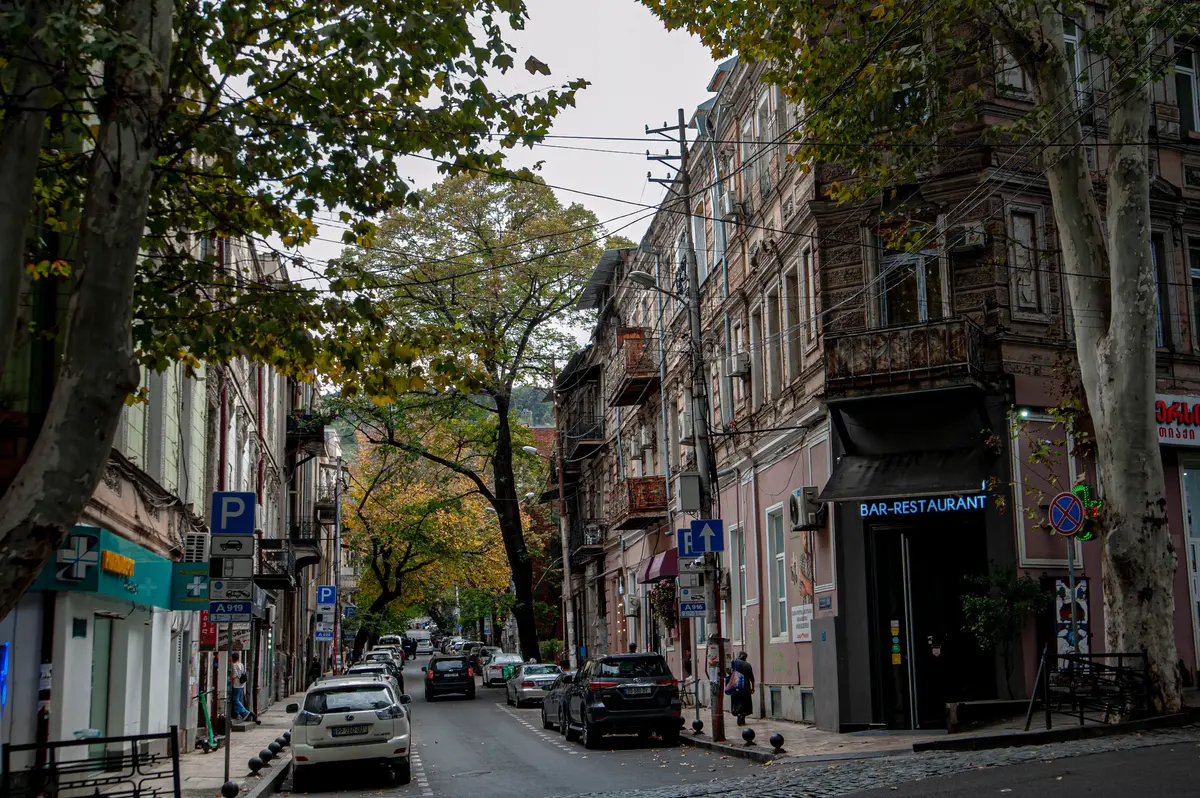
Parking, and an app with a reputation. Only Tbilisi, Batumi, and Kutaisi charge for street parking. In central Tbilisi it’s 1 lari an hour, about 37 cents, with a free 15-minute window. Passes run 4 lari a week, 25 for six months, and 50 for a year; the all-inclusive zonal version is 20 lari a day up to 800 a year. Foreign plates pay the same as Georgian ones. Electric vehicles park free. Miss a payment and it’s 50 lari, doubling after 30 days, and a tow is 150 lari plus 20 a day in storage.
The official Parking Tbilisi app has a foreign-plate mode that needs nothing but your plate number, which is genuinely useful when it works. Its app-store reviews are full of people describing verification-code loops where the code never arrives and the session ends in a fine, and sessions that can’t be stopped when the connection drops. One resident describes paying at a terminal, having the transaction cancelled, and getting no refund.
Which points at an obvious workaround: if you’re keeping a car in Tbilisi for more than three days, buy the weekly pass for 4 lari and stop interacting with the app entirely. That’s arithmetic, not advice from anyone official — a week costs less than four hours of metered parking.
Armenia Yes, Turkey Never, Russia Not in That Car
Rental cars can cross into Armenia and Azerbaijan, but only with a notarized power of attorney issued by the rental company, arranged before you travel. Enterprise charges a one-time fee of $80; Starcar quotes around €100; arranging one independently runs about 150 lari, roughly $56, and takes around two weeks. Armenian third-party insurance is bought at the border itself.
In practice this means Armenia. Azerbaijan’s land borders have been closed to entry since April 2020, so the paperwork buys you a route you can’t currently use — worth confirming the current status before you pay for a POA naming it.
Turkey and Russia are not permitted in any Georgian rental car. Not with a fee, not with a waiver.
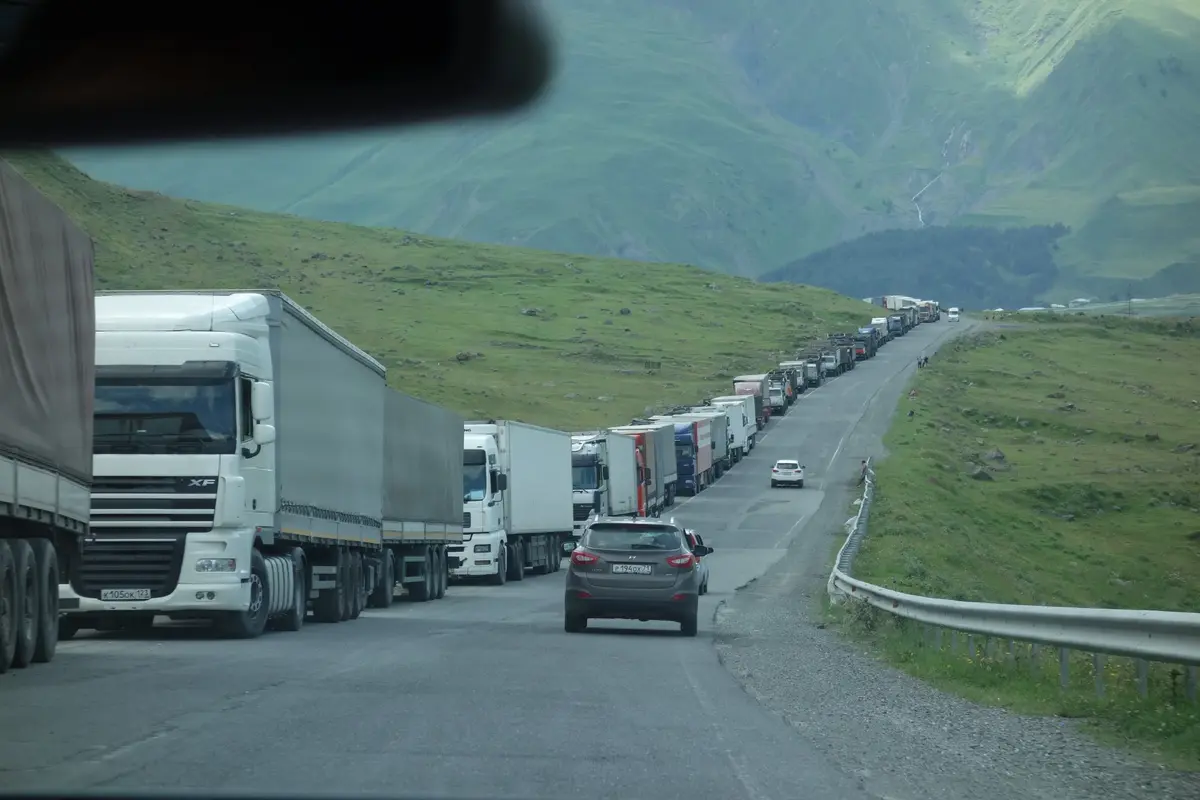
That said, the Russia crossing matters to you even though you aren’t using it. Verkhny Lars, in the Dariali Gorge, is the only legal border crossing between Georgia and Russia, and it sits at the far end of the Georgian Military Highway — the same road you’d drive to Kazbegi. It closes constantly: one analysis counted 42 closures in a single year, including a stretch of about 20 consecutive days in December 2025 for snow and most of a week in January 2026 for avalanches. Truck queues have run 20 hours in August. You are not crossing, but freight bound for that crossing is on your road, and it’s part of why a three-hour drive to Kazbegi becomes four. Live status is worth checking the morning you drive it.
Fuel Costs More per Gallon Than It Does at Home
Georgian fuel is cheaper than Western European fuel. It is not cheaper than American fuel, and the guides that call it cheap are comparing against the wrong country.
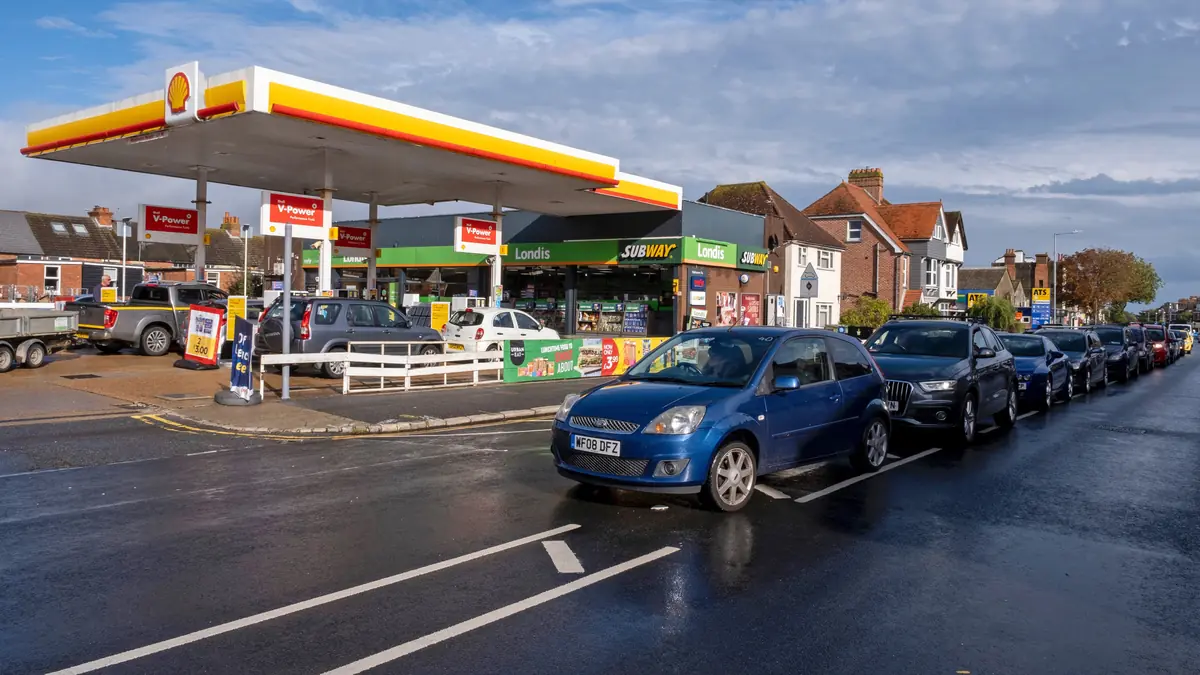
Pin the exchange rate at about 2.7 lari to the dollar and the arithmetic runs like this. As of July 2026, 95-octane is around 3.77 lari a liter, which is about $1.40. Multiply by 3.785 liters and you get roughly $5.30 per US gallon. The AAA national average for regular gas at the same date is about $4.00. Georgian fuel is running about a third more than what you pay at home. For reference on the rest of the pumps: 92-octane is around 3.63 lari, diesel around 4.05, and LPG around 1.64.
Two operational notes. Nearly every station is full-service — an attendant fills the car and you pay afterward, so don’t get out and start pumping. SOCAR, Wissol, and Gulf all take cards as well as cash, but terminals fail often enough that you should keep lari on you.
And there is no fuel in Tusheti. Fill up before the mountains, every time, whichever mountains they are.
Who Should Not Drive Here at All
Somebody has to say this, so: there are readers for whom the answer is no, and it is not a failure of nerve.
If steep drops with no guardrail make you physically anxious, don’t do Abano. The road has switchbacks tight enough that vehicles reverse to get around them, and there is no way to abandon the drive partway. Hire the seat in someone else’s 4×4 and look out the window.
If you can’t drive a manual, budget for it. Automatics are scarcer and more expensive here, and they’re the first thing to sell out in July and August.
If your whole reason for renting is Tusheti or the Svaneti back-roads, the contract already answered you at the top of this article. Take the driver, keep the money you’d have spent on the SUV upgrade.
If you’re traveling with small children or with anyone who has mobility needs, we don’t have good information for you, and it would be dishonest to invent some. Child-seat rules, rental-desk seat availability, and accessible-vehicle options in Georgia are genuinely under-documented in English, and this piece is not the place that closes that gap. Ask your operator directly, in writing, before you pay.
And the clean case in favor, which is a real one: if your itinerary is Kakheti and the Military Highway to Kazbegi, on pavement, driving yourself is straightforward and cheaper than the alternatives. Economy cars at $25 to $35 a day undercut typical US rates. That trip is a good self-drive trip. The other one isn’t.