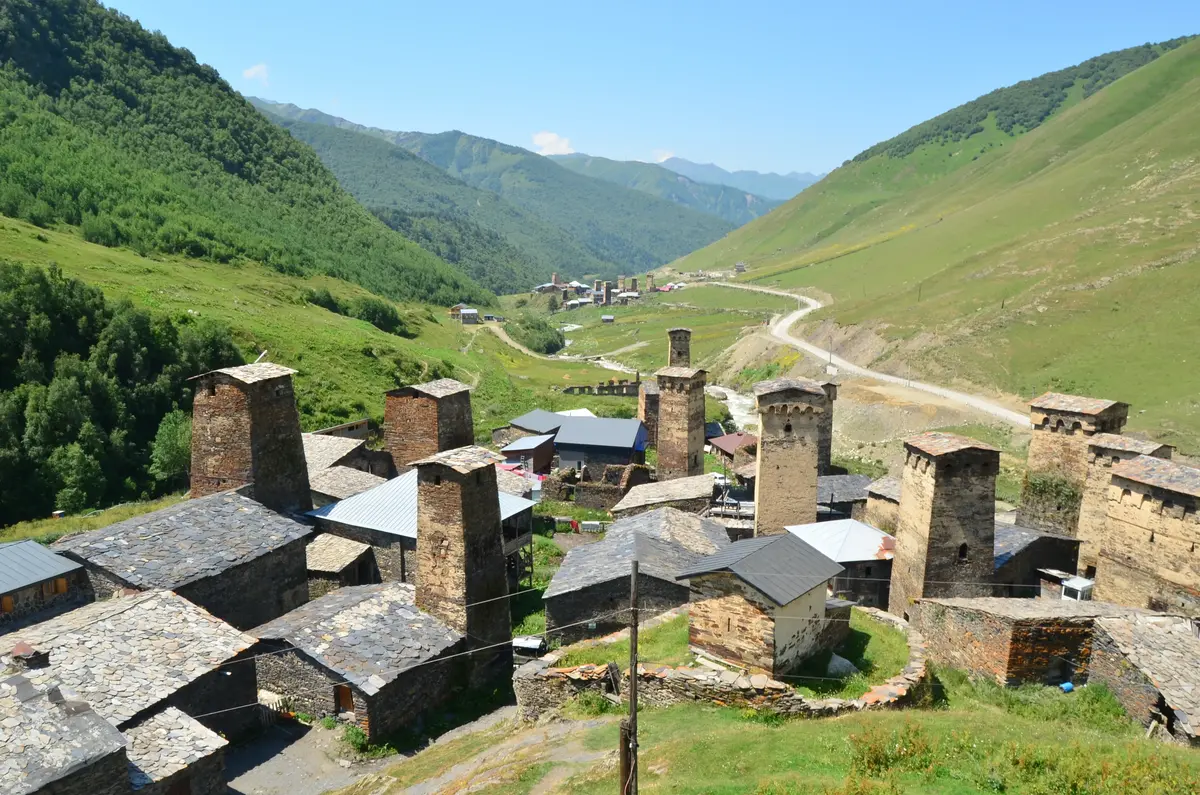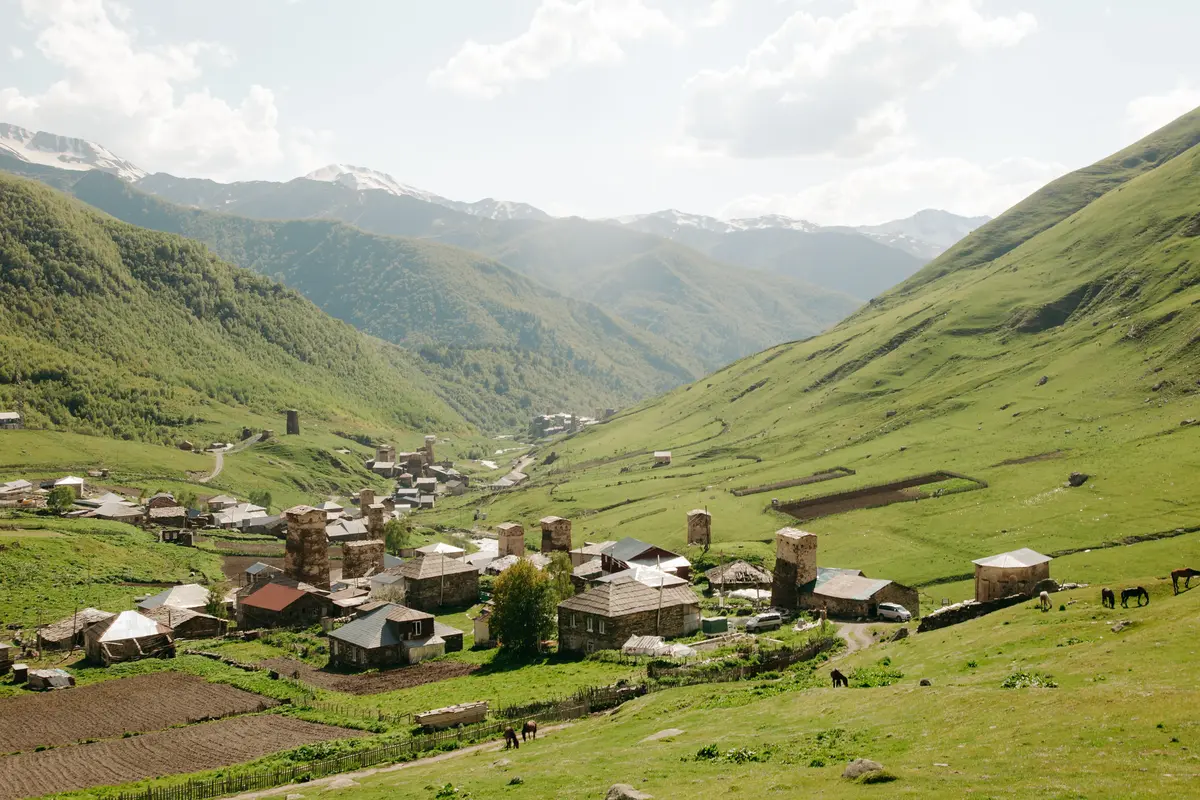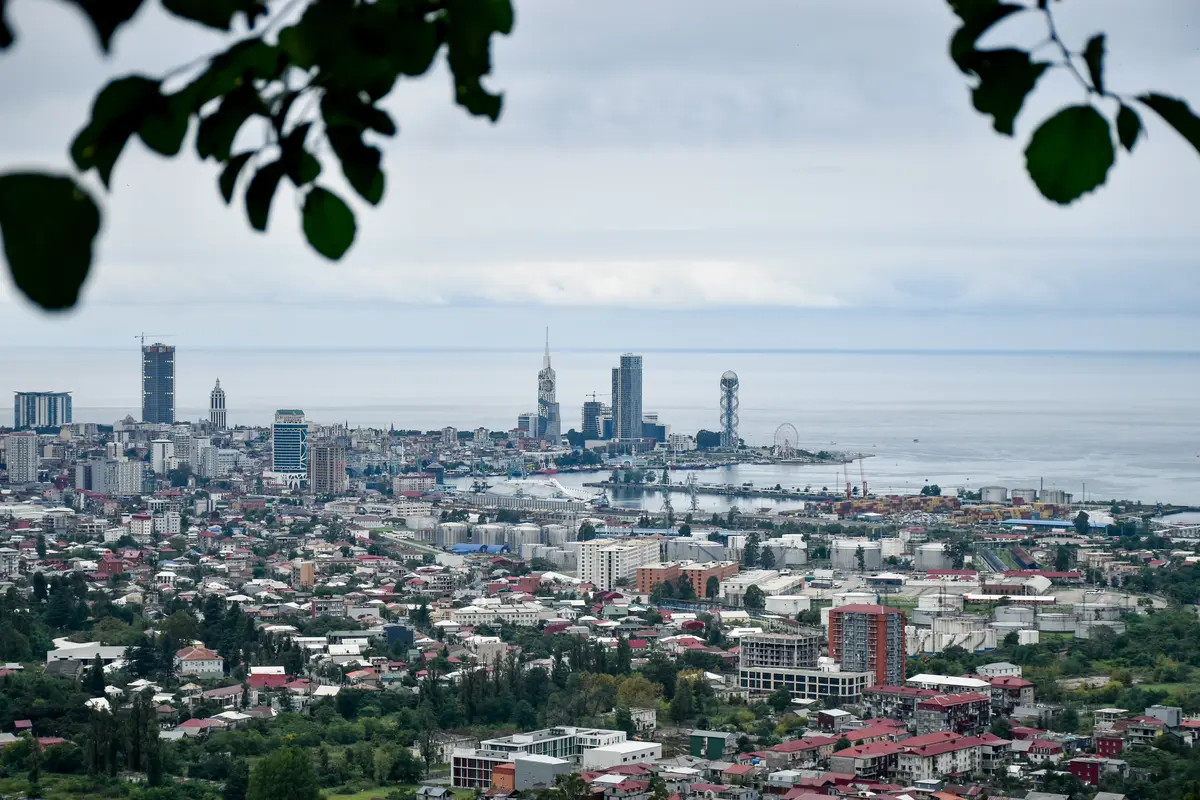
The Tbilisi to Batumi run is about 218 miles (350 km) of mountains, river valleys, and finally the Black Sea — and you have five real ways to cover it. I’ve weighed the double-decker train against buses, a private driver, a rental car, and a small-plane flight. Here’s what each one actually costs, and which to book.
Before the mode-by-mode detail, here’s every option side by side. Prices are per person unless noted; convert at roughly 2.6 GEL to $1, and expect small swings in the rate.
| Option | Travel time | Price | How often | Best for |
|---|---|---|---|---|
| Stadler double-decker train | ~5h 12m | 35–125 GEL ($13–47) | 2–5 daily | Most travelers |
| Coach bus (Metro Georgia) | ~6h | ~40 GEL ($15) | 30+ daily | When the train sells out |
| Marshrutka (minibus) | 5–7h | 20–35 GEL ($8–13) | Very frequent | Absolute last resort |
| Private transfer (GoTrip) | 4.5–6h + stops | 300–350 GEL/car ($115–135) | On demand | Groups and sightseeing |
| Rental car | 4.5–6h | from ~$27/day + fuel | — | Road-trippers |
| Flight | ~45–60 min in the air | 125 GEL / ~$99 | Seasonal, limited | Very tight schedules |
What’s the Best Way to Get From Tbilisi to Batumi?
For most travelers, the Stadler double-decker train wins: roughly $13–28 for a comfortable seat, about five hours of scenery, and no highway traffic. Take a coach bus if the train is sold out, a GoTrip private driver if you want to stop at sights along the way, and fly only when your schedule leaves no other choice.
That verdict holds for most trips, but the right pick shifts with how you travel:
- Budget backpackers: second-class train or the coach bus, both around $13–15.
- Comfort seekers: first or business class on the train, or a private car.
- Families: the train, since it’s stable, has toilets, and kids ride cheaper.
- Tight schedules: the morning train, or a flight if the timing is truly brutal.
- Road-trippers: a GoTrip driver or a rental, so you can break the trip at Mtskheta, Gori, and Kutaisi.
One thing to set straight before you book anything: “high-speed” is marketing. The Stadler is comfortable and modern, but it hits about 75 mph (120 km/h) only on the coastal flats and slows to a crawl — maybe 20 mph (30 km/h) — over the mountain pass. Picture a comfortable scenic express, not a bullet train.
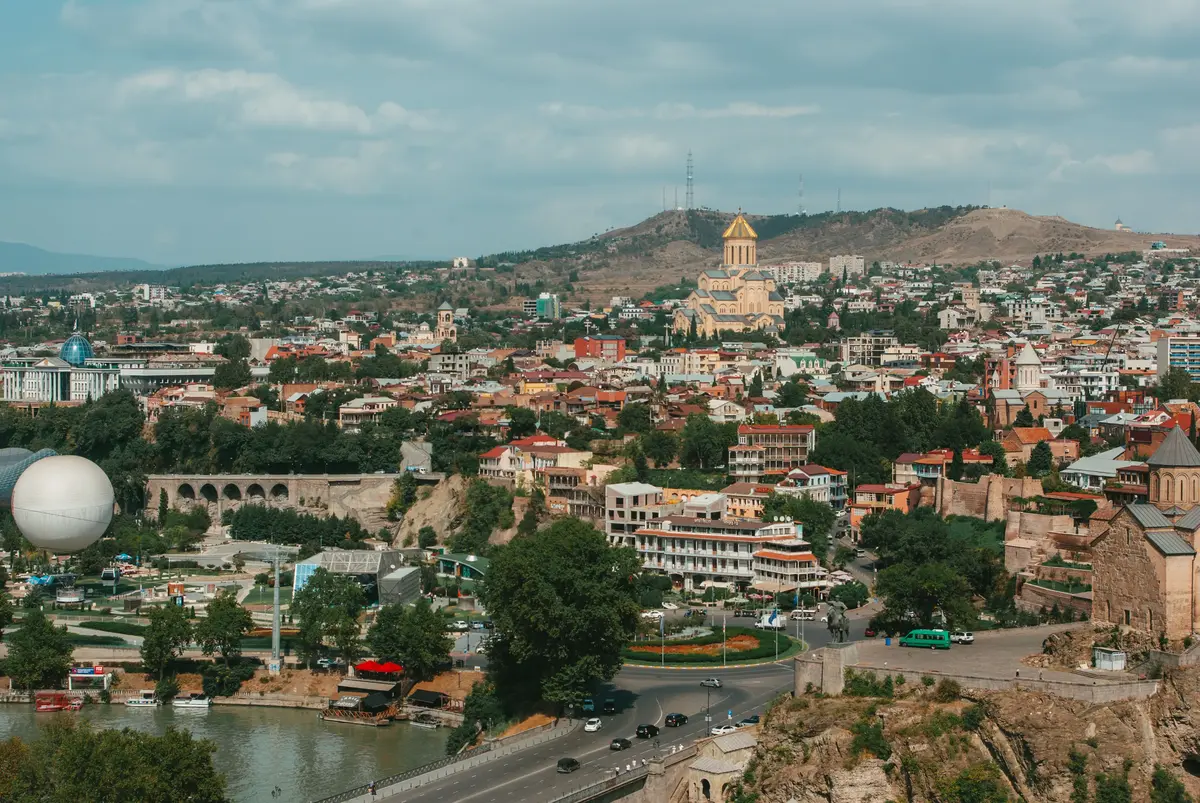
How to Take the Tbilisi to Batumi Train (and What It Costs)
The Tbilisi to Batumi train is a Swiss-built Stadler double-decker that runs the route in about 5 hours 12 minutes for 35–125 GEL ($13–47), depending on class. Book on TKT.ge, bring your passport, and reserve early, because summer and holiday trains sell out. It leaves from Tbilisi Central at Station Square and arrives at Batumi Central.
The essentials at a glance:
- Route: Tbilisi Central (Station Square, on the metro red line) to Batumi Central
- Duration: about 5h 12m to Batumi, a touch faster near 4h 59m coming back
- Departures: a morning train around 8 a.m. and an evening train around 5 p.m. run year-round, with two or three extra services and overnight trains added in the summer high season
- Cost: 35 GEL ($13) in second class up to about 125 GEL ($47) in business
- Book at: TKT.ge (easiest) or the official railway.ge
The ride is half the reason to choose the train. It leaves Tbilisi, passes the old capital of Mtskheta, then Kaspi with its colored hills and rock tombs, and Gori under its hilltop fortress. It stops near Kutaisi’s airport, drops toward the coast at Ureki and Kobuleti, then delivers the finale below.
Second, First, and Business Class — What You Get
Three classes, and each price jump buys a real difference:
- Second class, 35 GEL ($13): 3+2 seating, seats that don’t recline, one power outlet per row, air-con, and (in theory) Wi-Fi. Fine for five hours.
- First class, 75 GEL ($28): reclining seats, more legroom, more outlets. The sweet spot if second is sold out or you want to stretch.
- Business class, about 95–125 GEL ($34–47): 16 boxed seats with tray tables and a coffee service. Sources disagree on the exact fare, so treat it as a range and check the live price when you book. Business seats usually go on sale only about 24 hours before departure.
One useful quirk: if business shows sold out, you can sometimes upgrade onboard by paying the difference to the conductor by card. That’s an official procedure, not a bribe. On TKT.ge, seat selection adds about 1 GEL, and service fees push a second-class ticket to roughly 39 GEL all in.
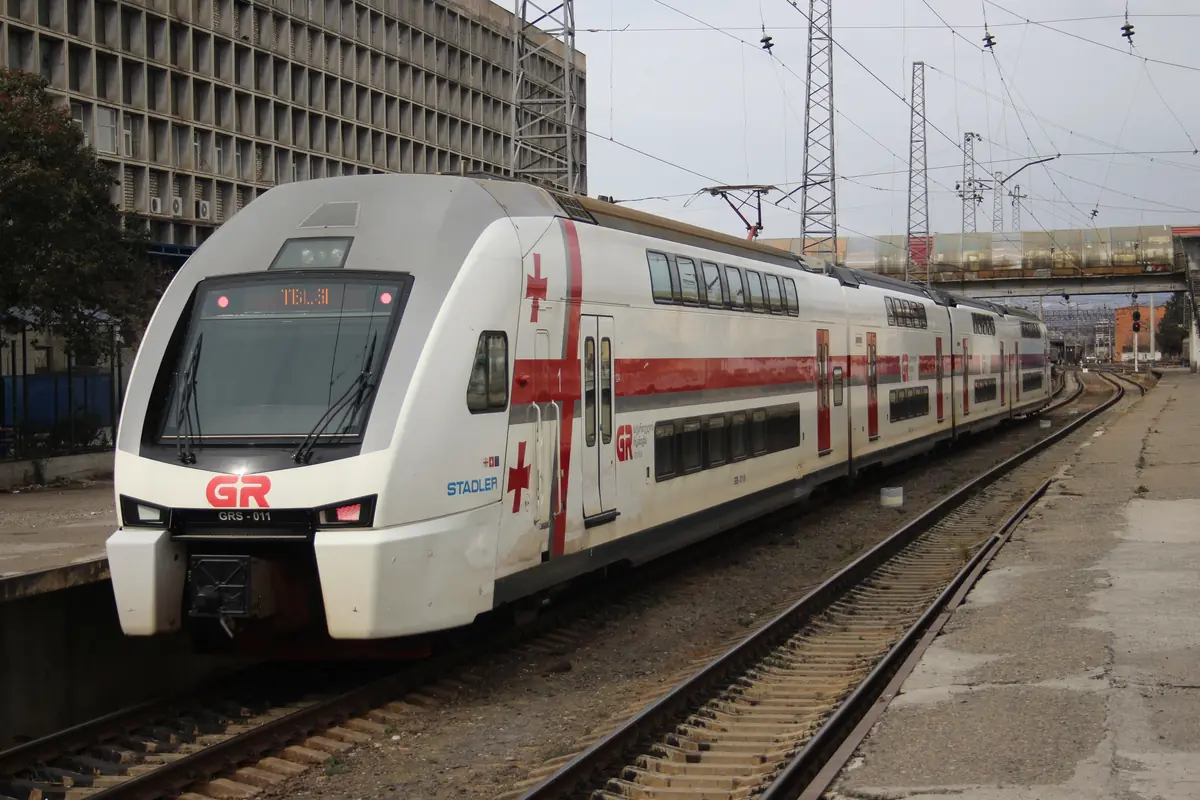
How to Book Tbilisi–Batumi Train Tickets
Booking is simple if you use the right site:
- Buy on TKT.ge. It has a clean English interface, a live seat map, and it accepts foreign cards. The official railway.ge and gr.com.ge work too but are clunkier, and they’ve been known to reject some foreign cards (one traveler’s card failed there but went through on TKT.ge).
- Tickets release about 10–20 days before departure, depending on the platform.
- Book early. In summer, autumn, and around holidays, trains sell out. Aim for 20–40 days ahead, or the moment sales open.
- Have each passenger’s passport number ready. You need it to buy and to board.
- Your ticket arrives as a QR code on your phone. No printing needed.
Pro Tip: Buy directly on TKT.ge or railway.ge rather than resellers like 12Go, Omio, or Rail Ninja. They work, but they add fees on top of a ticket you can book yourself in five minutes.
Where to Sit for the Black Sea Views
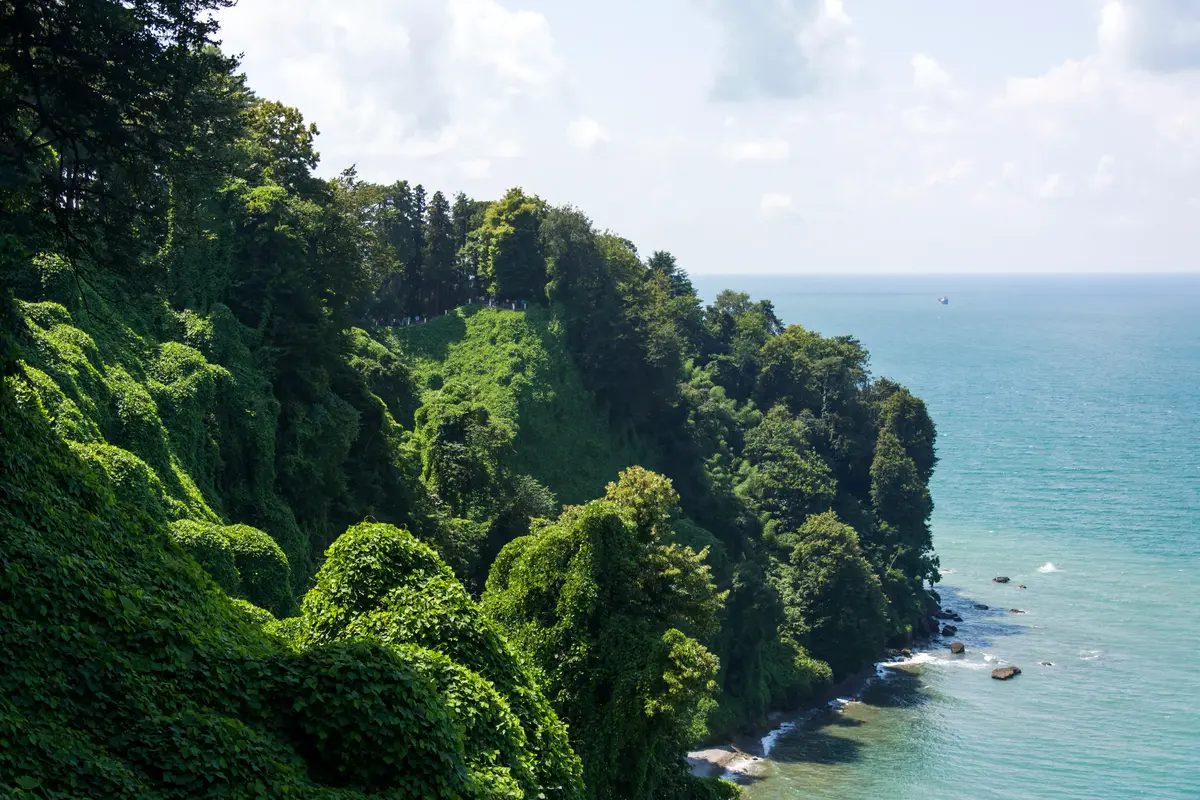
For the payoff view, book the right-hand side of the train heading to Batumi and sit on the lower deck. The right side faces the Black Sea on the final coastal stretch after Green Cape, and the lower deck holds a mobile signal and Wi-Fi far better than the top.
A few things no booking page warns you about:
- Some seats face backward, and the train reverses direction at a couple of points, so “forward” isn’t guaranteed. If motion sickness is a problem for you or your kids, this matters.
- The big panoramic windows are sometimes wrapped in advertising that blocks the view entirely. It’s a genuine gamble, even on the scenic side.
- There’s no dining car. You get vending machines with water, soft drinks, chocolate, and cold sandwiches that, in my experience and plenty of others’, aren’t worth eating. Bring your own food and coffee. Only business class gets a hot drink.
- Wi-Fi is unreliable and often just doesn’t work. Download what you need before you board.
- Staff can be curt with foreign travelers and speak limited English. Have your QR code and passport out and you’ll be fine.
The last twenty minutes redeem all of it. The train dives into a tunnel at Green Cape (Mtsvane Kontskhi) and comes out running right along the Black Sea, the water a few feet from the tracks, and holds that line into Batumi. On my run, half the car went quiet and reached for their phones at the same moment. That stretch is why you take the train.
Getting From Batumi Central Station to the Center
Batumi Central sits about 2.5 miles (4 km) north of the Old Town and Boulevard, out on the edge of the city despite the name. You cannot comfortably walk in, because the footpath gives out and turns into a highway. Plan for a short ride.
Your options from the platform:
- Bolt taxi: about 10–12 GEL ($4–5) to the center. The cheapest reliable choice.
- City buses #10, #15, #20, #31: 0.30–0.80 GEL with a Batumi/MetroMoney card. Bus #10 continues to Batumi airport.
- Skip the taxi touts on the platform, who quote wildly inflated fares to arriving tourists.
Pro Tip: Order your Bolt while the train is still pulling in, not after you’ve walked out to the road. A few hundred people get off at once, and surge pricing kicks in within minutes.
On the Tbilisi end, life is easier: the station is at Station Square on the metro red line, with left-luggage on Platform 1, and a Bolt from Freedom Square runs about 8–10 GEL.
Bus and Marshrutka: The Cheaper Road Options
If the train is sold out or you want to shave a few dollars, the road works. A Metro Georgia coach costs about 40 GEL ($15) and takes around six hours in real comfort. A marshrutka minibus is cheaper at 20–35 GEL ($8–13), but it’s cramped and slow, and worth it only when nothing else is left.
The Coach: Metro Georgia
Metro Georgia is the Turkish-run operator most travelers end up on, and it’s a clear step up from a minibus:
- Departs: Ortachala Bus Station (1 Dimitri Gulia St), Tbilisi
- Arrives: Batumi Central / Argo cable-car area
- Cost: ~40 GEL ($15), range 40–50 GEL
- Time: about 5–6.5 hours
- On board: reclining seats, air-con, Wi-Fi, seat-back screens, free tea, coffee, and water
Buses leave often, with 30-plus direct departures a day across operators, and you can book through metrogeorgia.ge, citybus.ge, 12Go, or tre.ge. City Bus and Omnibus run the route too, though some City Bus services leave from the north of the city, so double-check your departure point. Reality check: one first-hand comparison clocked the coach at seven hours against five on the train, with dead USB ports and Wi-Fi. Road time is always a gamble.
The Marshrutka: Cheap, but a False Economy
Marshrutkas, the shared minibuses, leave Didube Bus Station when they fill up:
- Cost: 20–35 GEL ($8–13)
- Time: 5–7 hours
- Booking: none. Pay the driver in cash, no seat reservation
Here’s the math that kills it: a marshrutka saves you maybe 15 GEL over a second-class train seat or a coach bus. For that, you get a cramped seat, nowhere sensible for luggage, unpredictable driving, and a trip that runs as long or longer. Take the minibus only if the train and the coaches are both full and you have to move today.
Private Driver or Rental Car: Go With Stops
Going by road on your own terms buys you something the train can’t: stops. A GoTrip private driver runs 300–350 GEL ($115–135) per car, includes waiting time, and turns the transfer into a sightseeing day. A rental car starts around $27 a day if you’d rather drive yourself.
Hire a GoTrip Driver and Turn the Drive Into a Day Trip
GoTrip.ge works like a long-distance Uber with a fixed, transparent price:
- Cost: 300–350 GEL ($115–135) per car, Tbilisi to Batumi direct
- Included: a vetted driver, unlimited stops, free waiting time, water, and child seats on request
- Time: 4.5–6 hours direct, longer with stops
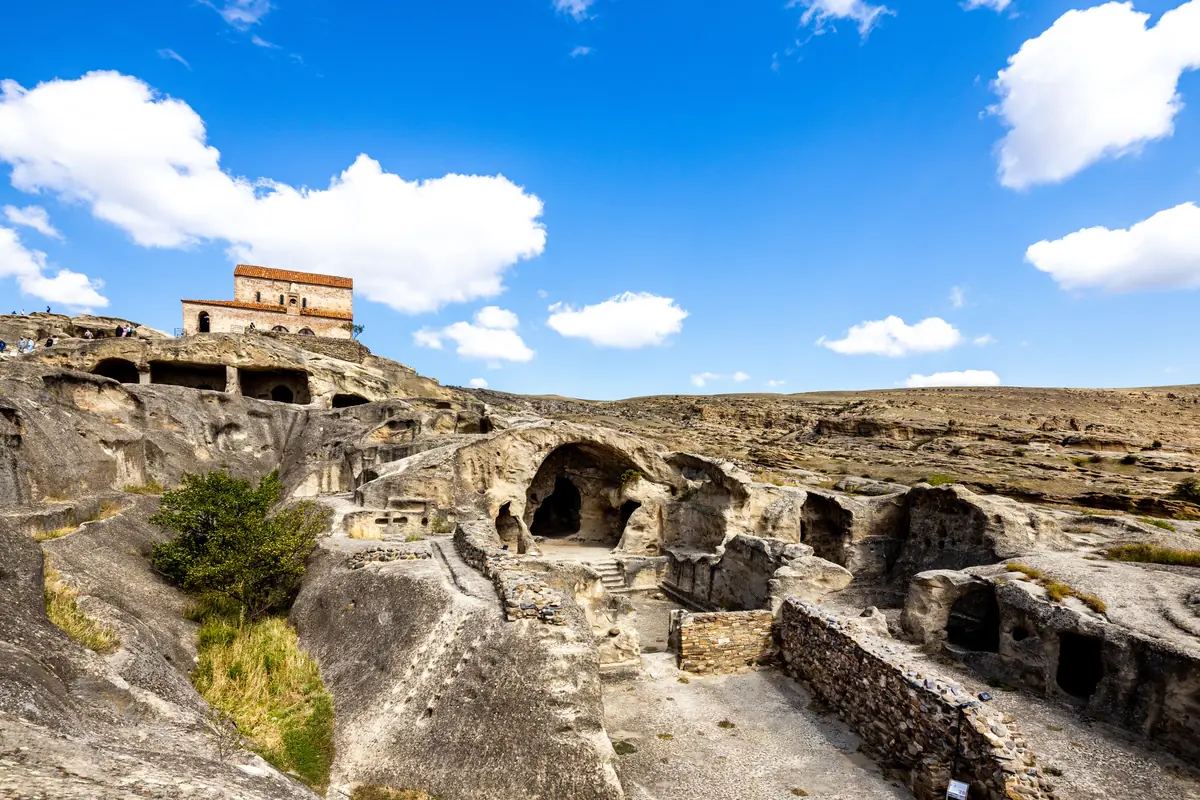
Split three or four ways, that lands close to a first-class train seat per person, except you can break the drive at Mtskheta (Jvari Monastery and Svetitskhoveli Cathedral), Gori (the Stalin Museum and hilltop fortress), the cave city of Uplistsikhe, and Kutaisi (Prometheus Cave, Gelati Monastery). For a group, it’s the most underrated option in the whole lineup.
Renting a Car and Driving the Rikoti Highway
Prefer your own wheels? Rentals start around $27–35 a day, with larger cars up to 140 GEL/day:
- Fuel: roughly 100 GEL ($38) for a one-way tank; petrol runs about $4–4.60 a gallon
- One-way drop-off surcharge: about 100–200 GEL
- Tolls: none in Georgia
- Watch for: heavy speed-camera enforcement, and the fines add up fast
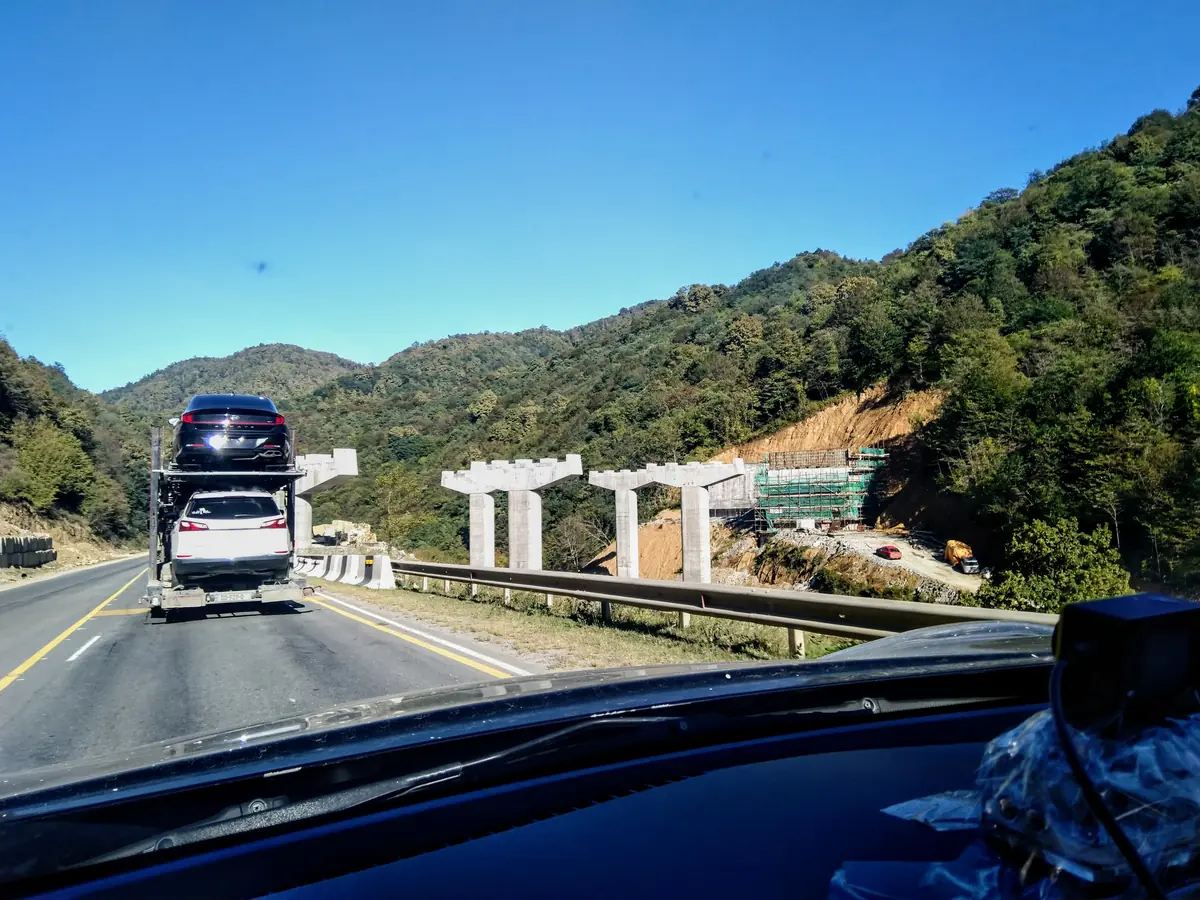
The drive itself has gotten much better. The Rikoti Pass section of the East–West Highway, the mountain crossing that used to be the slow, truck-clogged bottleneck, is finished, with dozens of new tunnels and bridges (sources cite figures around 96–97 bridges and 51–53 tunnels). Georgia’s government has floated a three-hour Tbilisi–Batumi drive as the goal; in practice the real number is closer to 4.5–6 hours, so don’t plan around three. Expect occasional dust and single-lane, flag-controlled stretches where crews are finishing bypass work.
Can You Fly From Tbilisi to Batumi?
You can, but it rarely saves real time door to door. The 45–60 minute flight looks fast until you add airport transfers, check-in, and the small-plane cancellation risk, at which point the five-hour train, which ends closer to the center, usually wins. Fly only on a genuinely tight schedule or for an onward airport connection.
The flight picture is confusing, and most guides get it wrong. Two very different services exist:
- Vanilla Sky (operated by AK-Air Georgia) flies from Natakhtari airfield, about 14–19 miles (23–30 km) north of Tbilisi, not the main airport. A free shuttle leaves Rose Revolution / First Republic Square two hours before the flight. One-way fares run about 125 GEL ($47) plus a 3% card fee, with a strict 15 kg total baggage limit that includes hand luggage. Book only on ticket.vanillasky.ge; it won’t show up on Skyscanner. Fair warning: it’s notorious for last-minute, weather-related cancellations.
- Georgian Airways flies from Tbilisi International (TBS) to Batumi on a seasonal schedule, roughly June through October, about four flights a week, on regional jets, in 45–60 minutes. Fares hover around $99 one-way and book through normal channels. Watch the currency, since some sites quote the fare in pounds, which travelers often misread as dollars.
A third carrier, Georgian Wings, launched a Tbilisi–Batumi route but appears to have suspended it. Treat it as unavailable unless you can confirm a live schedule.
A Few Questions Travelers Always Ask
Is There a Direct Train Between Tbilisi and Batumi?
Yes. The Stadler double-decker runs directly between Tbilisi Central and Batumi Central with no changes, several times a day. You don’t transfer or switch trains anywhere along the route.
Can You Do Tbilisi to Batumi as a Day Trip?
Not really. At about five hours each way by train, a round trip eats ten-plus hours of travel for a few hours in Batumi. If you only have a day, fly one way or don’t go. Batumi deserves at least one overnight, especially in beach season, when the sea sits around 77–86°F (25–30°C).
How Far Ahead Should You Book?
For the train, book 20–40 days ahead in summer and around holidays, when it sells out; a week or two is usually fine off-season. Buses and marshrutkas you can grab same-day. GoTrip and Vanilla Sky are worth locking in a few days out.
Before You Book
TL;DR: For the Tbilisi to Batumi trip, book the Stadler train (second class at $13 is plenty), sit right-side and lower-deck, and reserve early in summer. If it’s sold out, take a Metro Georgia coach; if you’re a group who wants to sightsee, hire a GoTrip driver; fly only when the clock forces it.
Whatever you pick, the last stretch along the Black Sea makes the trip worth taking slowly. Which option are you leaning toward, and if you’ve already done this run, did the train live up to it or leave you wishing you’d driven? Tell me in the comments.