Renting a car in Georgia — the Caucasus country, not the US state — is what separates seeing Tbilisi from seeing the country. Outside the main corridors, public transport thins out fast. Here is what it actually costs, whether your US license is legal on its own, and which roads will strand a sedan.
Georgia the Country, Not the State: Start Here
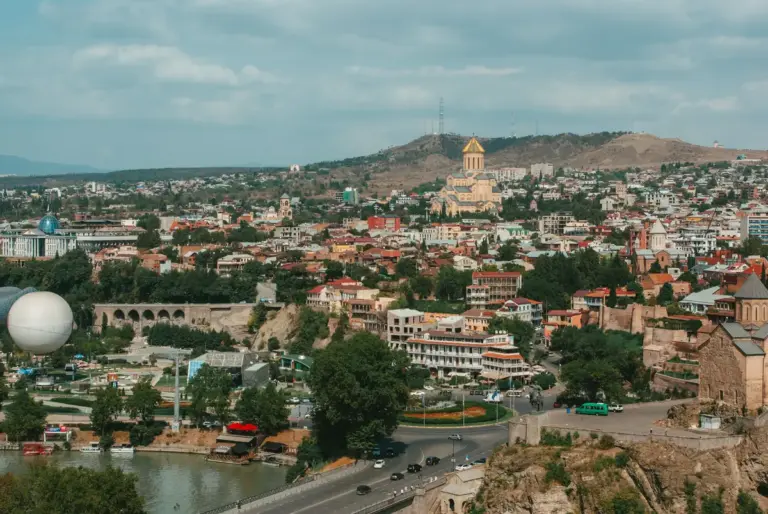
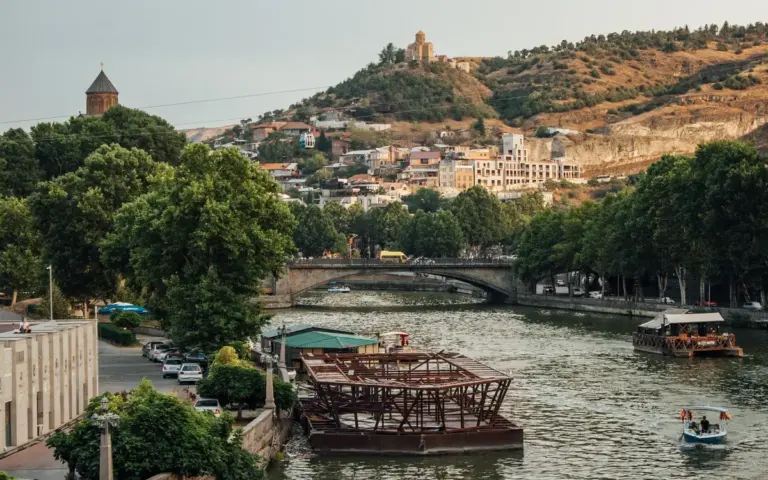
This is the Georgia in the South Caucasus — Tbilisi, Batumi, Kazbegi — not Atlanta. The two names collide in search results constantly, which is why half the rental pages you land on quote Peach Pass tolls and Savannah pickups. In this Georgia, a car is usually the best way to see the place.
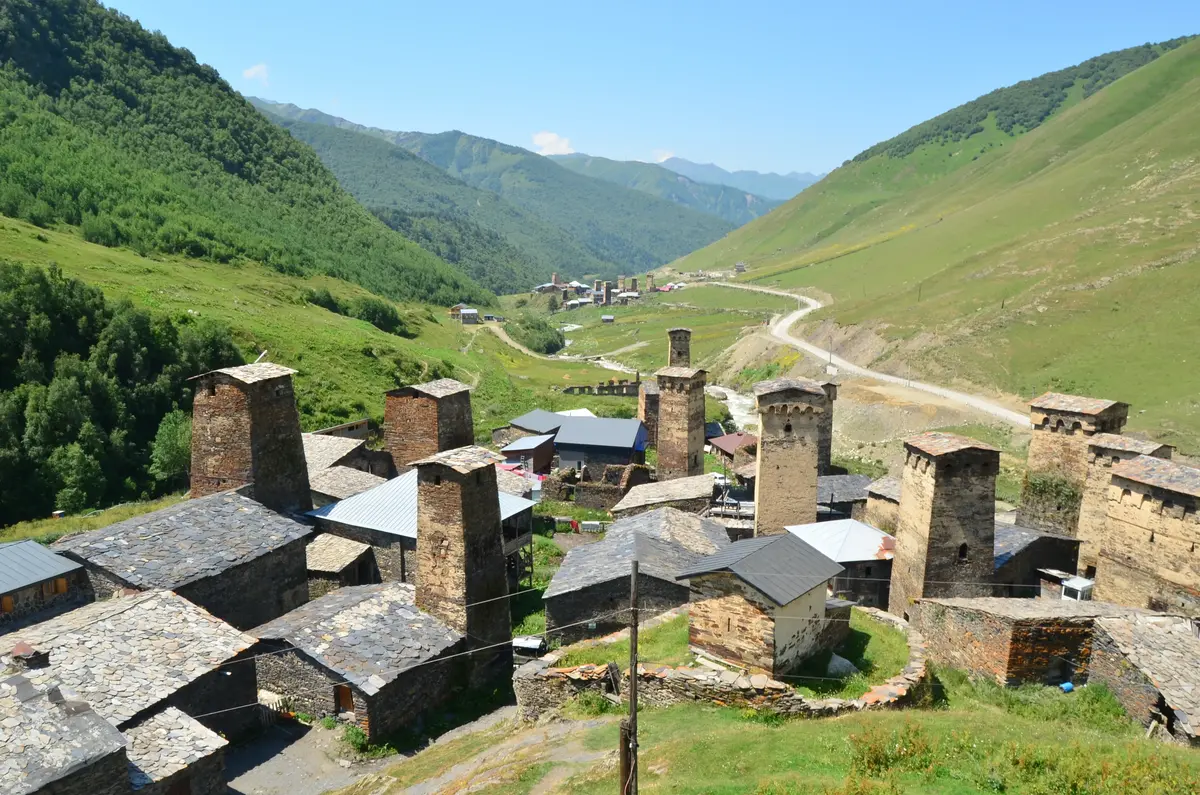
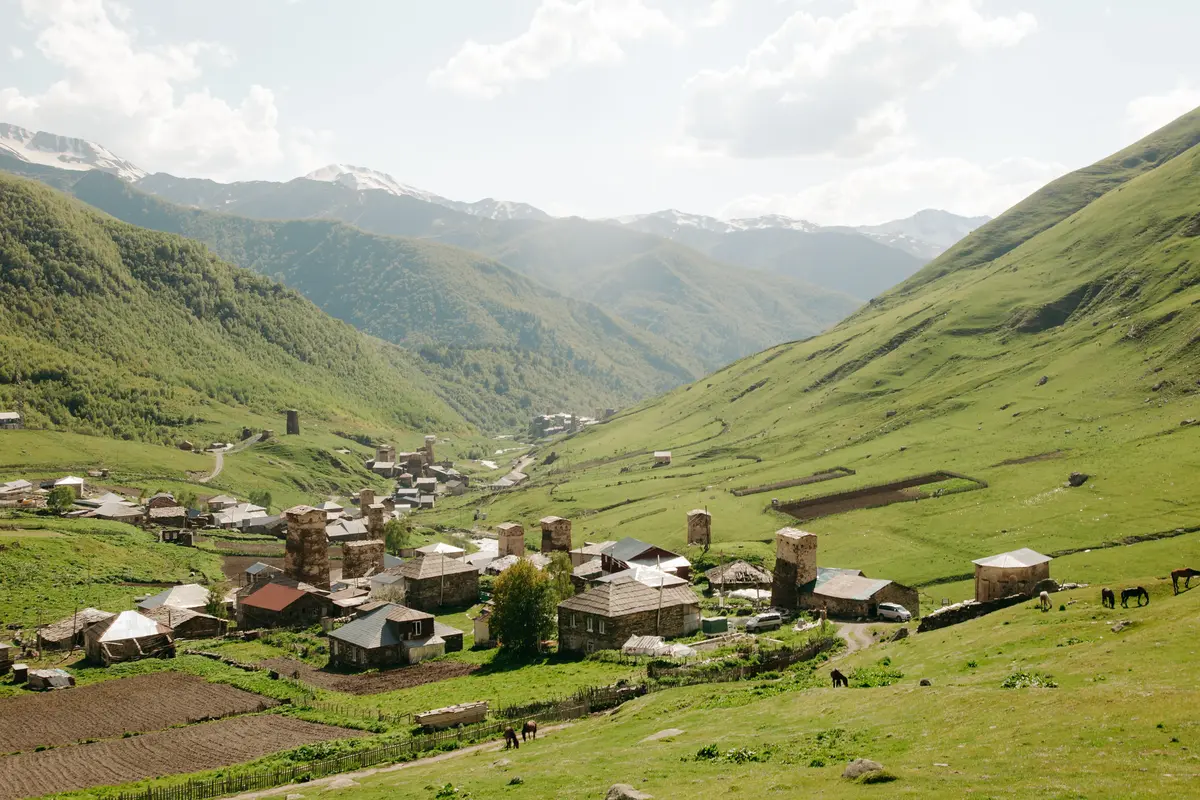
The country sits between Russia, Turkey, Armenia and Azerbaijan, and it is compact. You can leave the Black Sea coast in the morning and be standing at 7,800 feet (2,380 m) in the high Caucasus the same evening. Minibuses called marshrutkas cover the main routes cheaply, but they run to fixed departures, rarely have English signage, and will not stop at the viewpoint you actually came for.
Should You Rent a Car or Hire a Driver?
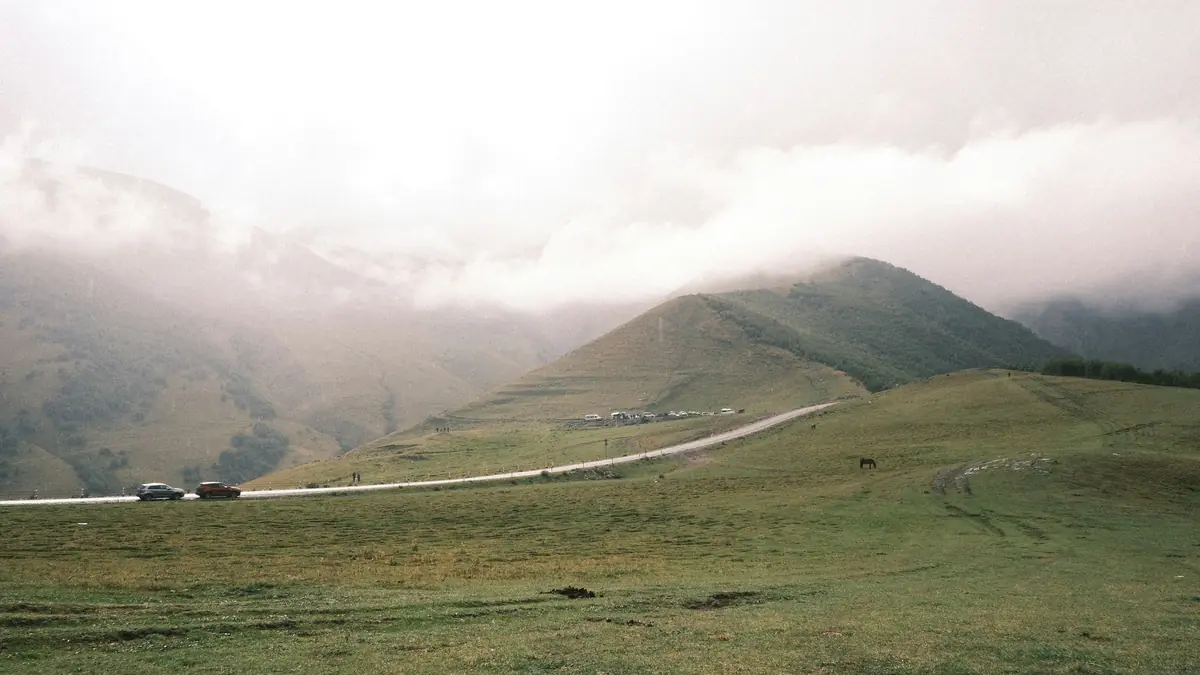
Rent if you are building a multi-day loop — Kakheti, Kazbegi, the coast — where the freedom pays for itself. Hire a driver for a single Kazbegi day trip, for a wine day where somebody has to stay sober, or for Tusheti, where the road itself is the whole problem. Plenty of trips use both.
What the alternatives cost and what they cost you:
- Private driver or taxi, Tbilisi to Stepantsminda (Kazbegi), one way: roughly $80-120
- GoTrip-style point-to-point driver: price agreed up front, stops included, no meter anxiety
- Bolt (rideshare): cheap and reliable inside Tbilisi, not a mountain-day solution
- Marshrutka: cheapest option, fixed schedules, minimal English, no photo stops
Here is the take most guides will not give you: for a Kazbegi-only visit or a wine day in Kakheti, hiring a driver often beats renting on both cost and stress. One long day of unfamiliar mountain driving, plus a 0.03% blood-alcohol limit in a region built around tasting rooms, plus parking hassle, adds up to a poor trade. Rent when the itinerary is genuinely multi-day and the car earns its keep.
Pro Tip: If Kakheti is on the plan, decide who is driving before the first cellar visit. Georgia’s limit is effectively zero, and enforcement is not casual about it.
What Do You Need to Rent a Car in Georgia?
A passport, a valid driver’s license, a card for the deposit, and usually 21 years of age. Your US license alone is legally sufficient to drive; an International Driving Permit is recommended rather than required. Rental desks set their own rules on top of the law, and some will ask for the IDP anyway.
Your US License and Whether You Need an IDP
A valid foreign license is legal to drive on for up to one year from your date of entry. Georgia is party to both the 1949 Geneva and 1968 Vienna Conventions on Road Traffic, and the Law of Georgia on Traffic subordinates domestic licensing rules to those treaties, requiring a certified translation only when the license data is not in readable Latin script. A US license is.
That is the law. The counter is a different negotiation. Big international chains such as Hertz and SIXT frequently ask for an IDP, and some local suppliers list it in their terms. An IDP is cheap at AAA and takes minutes, and it ends the argument at the desk, at a police stop, and at a border.
Age, Passport, Deposit and Cards
- Minimum age: generally 21 at local agencies, 23-25 at international chains, often with a young-driver surcharge
- Documents: passport, home license, IDP if you have one, booking voucher
- Deposit: held against a card, scaling with vehicle class; some local agencies still take cash
- Debit cards: workable through platforms like Localrent, which list debit-friendly and no-deposit suppliers — chains generally want a credit card in the driver’s name
- Child seats: legally required for young children, so book them with the car rather than hoping
How Much Does Renting a Car in Georgia Cost?
Economy cars from Georgian agencies start around $20-40 per day. Aggregator data for Tbilisi puts small-car averages near $43 a day, peaking around $59 in August and dropping to about $34 in March. Local companies run roughly 30% cheaper than the international chains for an identical car.
| What you are booking | Typical daily rate (USD) | Worth knowing |
|---|---|---|
| Economy sedan, local agency | around $20-40 | Cheapest route; hotel delivery often included |
| Small car, aggregator average (Tbilisi) | around $43 | Near $59 at the August peak, near $34 in March |
| 4×4 / SUV, local platform | from around $20-25 when booked ahead | One traveler booked a 4×4 through Local Rent for about $20 a day, delivered to and collected from their Tbilisi accommodation |
| Same class, international chain | roughly 30% above local | Desks at the airport, newer fleets, stricter documents |
Costs that show up after the headline rate:
- Weekly rates: most suppliers cut the daily figure at five to seven days
- Delivery: local operators commonly bring the car to your hotel or the airport lot, free or for a small fee
- One-way drop-off (Tbilisi to Batumi or Kutaisi): expect a fee, and confirm it in writing
- Mileage: unlimited is standard, but read the contract’s mileage line anyway
- Peak summer: the cheap automatics disappear first, so book weeks out
Where to Pick Up: Tbilisi, Kutaisi or Batumi
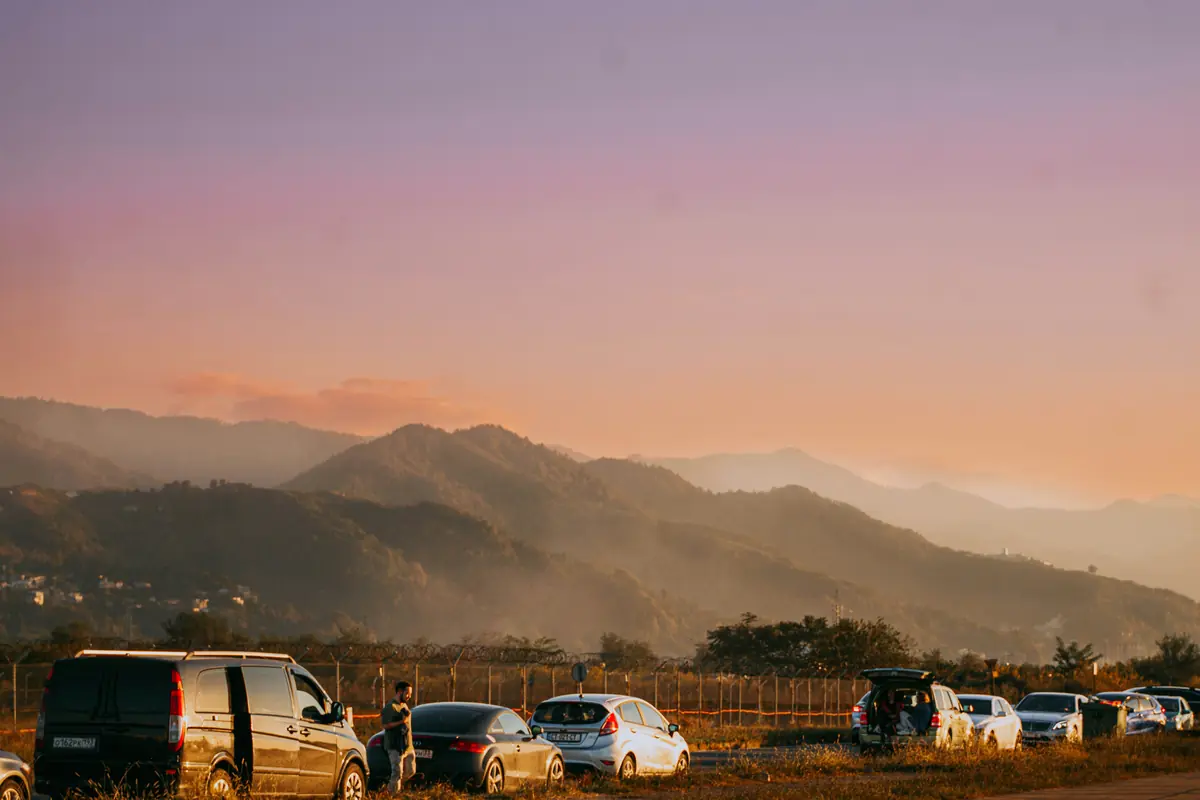
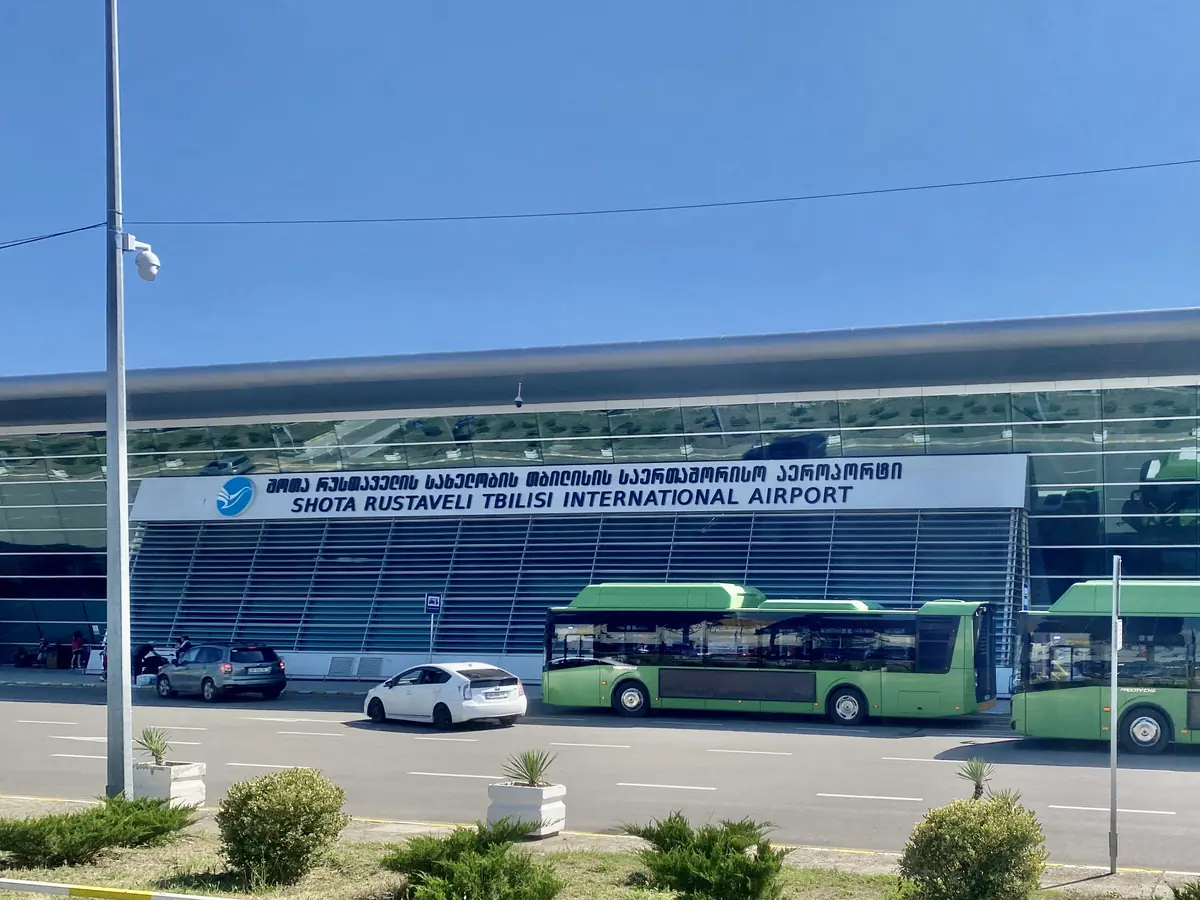
At Tbilisi International (TBS), the international chains keep staffed desks in the arrivals hall. Most local agencies do not — they meet you in the parking lot with the keys, or hand the car over at your hotel the night before, which is often the easier arrangement after a long flight.
- Tbilisi (TBS): every class available, chain desks in arrivals, local operators deliver curbside or to your accommodation
- Kutaisi (KUT): the practical gateway to Svaneti and western Georgia, with a thinner supply of cars — book ahead
- Batumi (BUS): coast base, and a common one-way finish after the run across the country
- One-way rentals between the three cities are routine, and priced accordingly
What “Full Insurance” Doesn’t Cover in Georgia
Basic CDW still leaves you owing a deductible — the franchise — on any damage. Super CDW buys that down, sometimes to zero. Neither typically covers the undercarriage, glass, tires or roof. That matters here more than almost anywhere, because those four are exactly what Georgian roads attack.
Match the exclusion to the hazard and the fine print stops looking like boilerplate:
- Undercarriage: unpaved shoulders, drainage gutters cut across mountain tracks, and speed bumps that arrive without paint
- Glass: gravel thrown by trucks grinding up the Military Highway
- Tires: shale and broken stone on any road above the tree line
- Roof: rockfall on high passes, and hail that arrives with no warning in the mountains
Two more clauses to read before you sign. First, the approved-roads line: most contracts and platforms prohibit driving on unpaved roads, and a vaguely worded version of that clause is what agencies reach for when a deposit is in dispute. Second, your US credit card’s rental coverage. Card benefits vary enormously by issuer and often carve out specific countries and vehicle classes — call the number on the back and get the exclusions confirmed rather than assuming you are covered.
Pro Tip: Film a slow walkaround video of the car at pickup — all four corners, the windshield, the wheels, the roof, the underside if you can. Renters who do this consistently report getting their deposits back. One got a full 350 euro deposit (about $380) returned and put it down to exactly that habit.
Do You Need a 4×4 in Georgia?
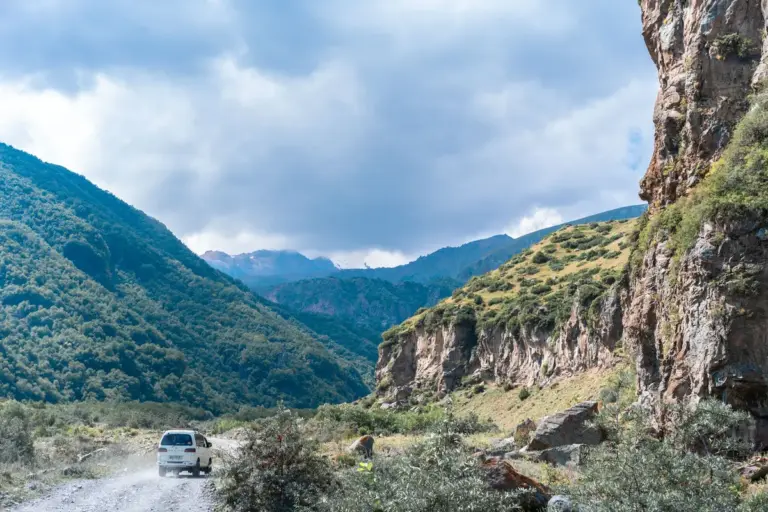
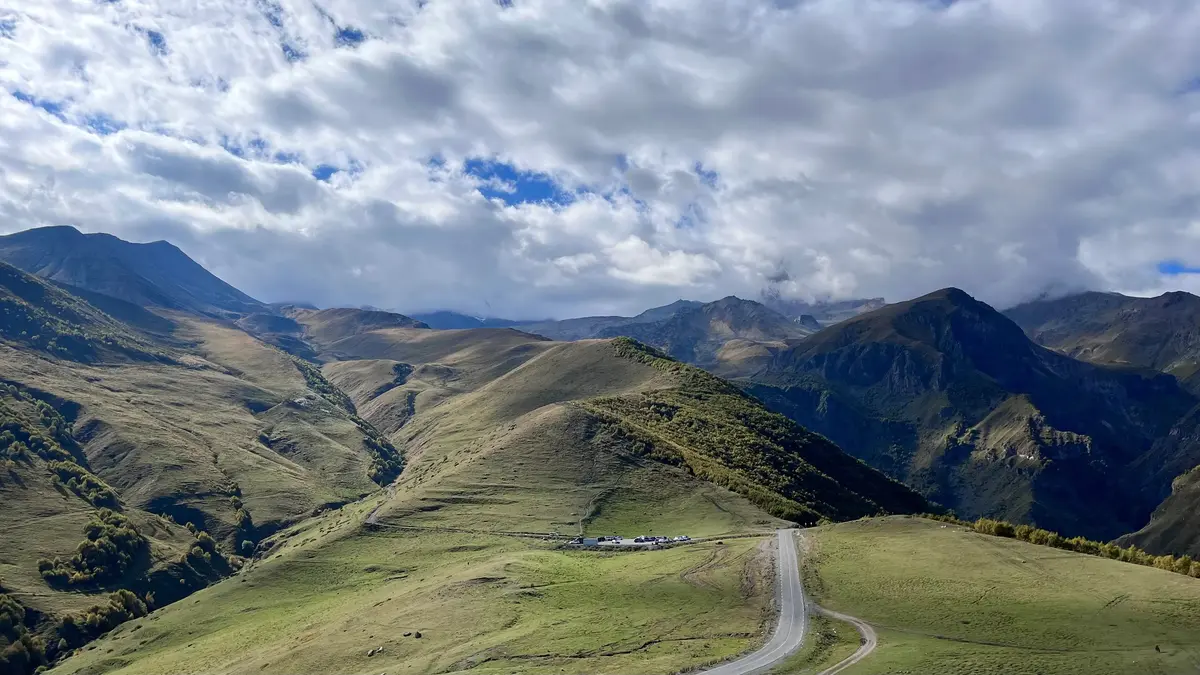
Only for specific routes. A 2WD sedan handles the Georgian Military Highway to Kazbegi, the Kakheti wine roads, and the completed Rikoti highway to Batumi. A high-clearance 4×4 is mandatory for Tusheti, the Mestia-to-Ushguli road in Svaneti, and Khevsureti — where most contracts forbid sedans outright and void your insurance if you try.
Routes a Regular Sedan Handles
- The Georgian Military Highway, Tbilisi to Stepantsminda (Kazbegi): paved the whole way
- Kakheti wine country: Telavi, Sighnaghi, the cellar roads in between
- Mtskheta, Gori and the central corridor
- The E60 East-West Highway to Batumi via the Rikoti Pass
The Rikoti motorway is the single biggest change to driving in Georgia in a generation. The 32-mile (52 km) four-lane section threads 51 tunnels and 97 bridges through the ridge that used to be the country’s worst bottleneck, at a cost of about 2.6 billion GEL (roughly $1 billion) with financing from the Asian Development Bank, the European Investment Bank and the World Bank. Coast-to-capital driving that once ran to eight hours now compresses toward four; the old Tbilisi-Batumi slog was a solid six to six and a half.
Routes That Genuinely Require a 4×4
- Tusheti, via the Abano Pass
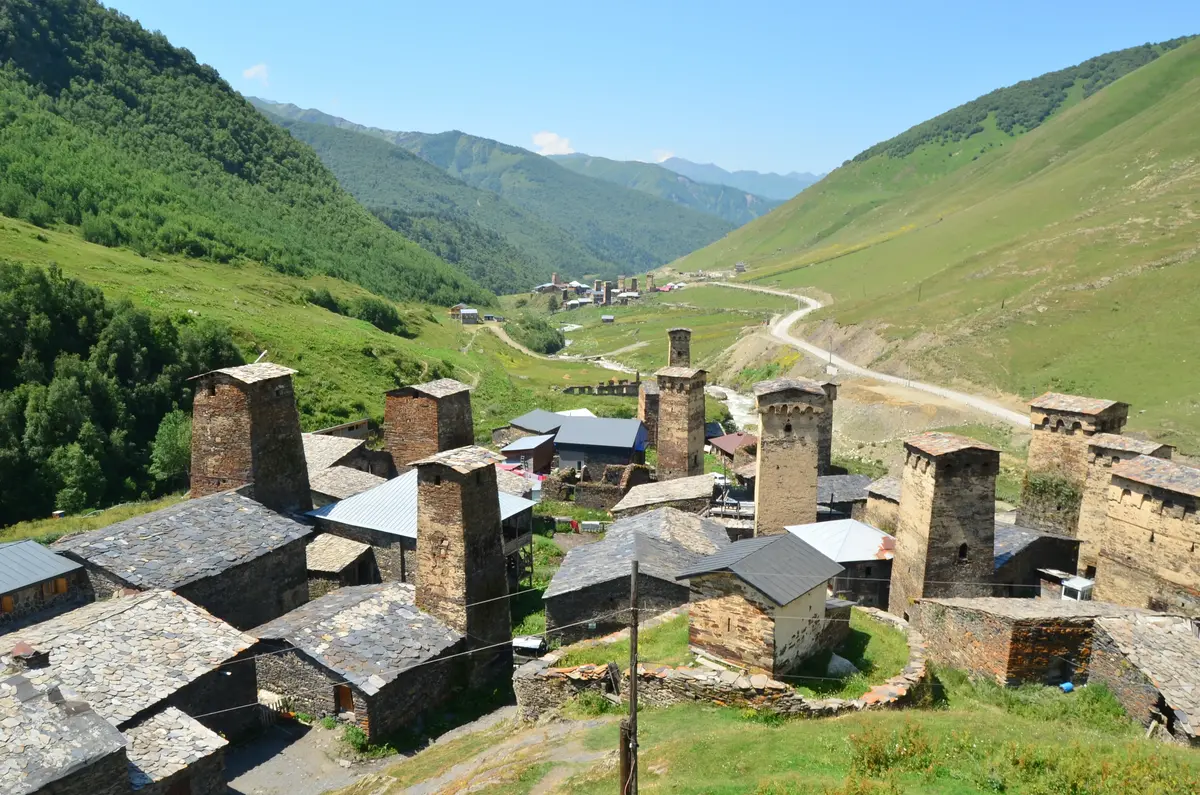
- Svaneti’s Mestia-to-Ushguli road
- Khevsureti (Shatili and Mutso)
- The Truso Valley and upper Juta
Tusheti deserves a straight warning rather than a bucket-list caption. The Abano Pass tops out around 9,272 feet (2,826 m) and is generally open from mid-June to somewhere between late September and October. Tbilisi to Omalo is about 118 miles (190 km), but the average speed is 12-19 mph (20-30 km/h) — that is a full day behind the wheel, not a morning. Georgian guides and rental operators both note that memorial crosses mark the points where vehicles have gone over the edge, and that fatal accidents occur on the road every summer. It has appeared on more than one “world’s most dangerous roads” list, and the ranking is not marketing.
Driving the Georgian Military Highway to Kazbegi
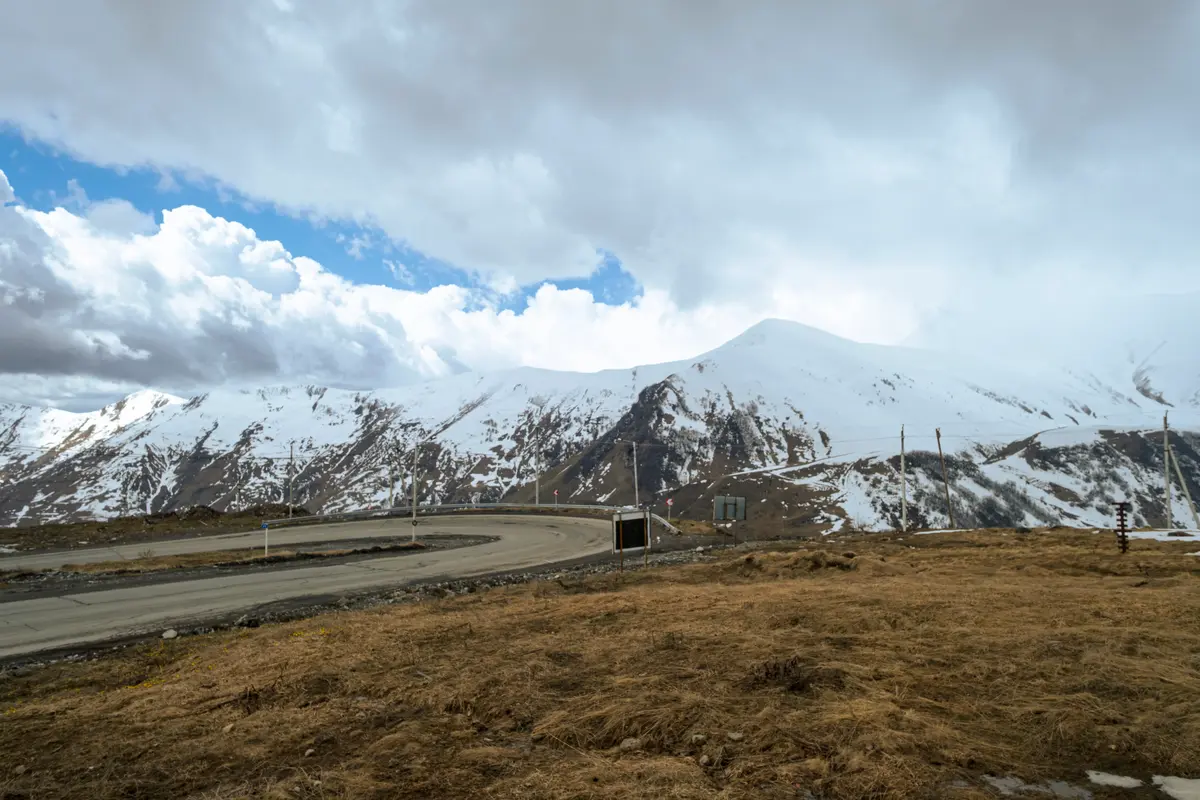
The Military Highway is paved end to end and open year-round, topping out at the Jvari Pass at roughly 7,810-7,860 feet (2,379-2,395 m). That does not make it a predictable drive in the cold months.
- Avalanche control closes the Gudauri-to-Kobi section without much notice in winter
- Tunnel construction on the same stretch adds single-lane running and queues
- Truck lines build up near Zemo Larsi, the only open land crossing with Russia, and they back up onto the highway
- Weather at the pass can be an entirely different climate from Tbilisi an hour and a half behind you
Before any mountain day, check the live alerts from the Roads Department of Georgia. It is the source the local drivers use, and it beats guessing.
How Do Georgians Actually Drive?
Fast, close and confident. Expect overtaking across solid lines and on blind curves, right of way going to the biggest vehicle (roundabouts included), livestock standing in rural lanes, and unlit potholes after dark. Expat drivers who have rented ten or twenty cars here describe it as different rather than dangerous, and the risks are specific rather than general.
That is the honest counter to the loudest advice online. “Georgian drivers are reckless, don’t rent” gets repeated constantly, sometimes by people who sell tours. Drivers with years of local experience say the same three things instead: do not drive the mountains at night, do not drive passes in bad weather, and assume the car behind you will pass whether or not there is room. Those are avoidable behaviors, not a reason to abandon the car.
The Horn and Headlight Language
Georgian traffic communicates, and once you can read it the aggression drops away:
- A short beep: I am here, I have seen you, I am coming through
- A long beep: actual anger, and it is rare
- A headlight flash: either a warning that police are ahead, or a yield telling you to go
- The pass: a car will commit to overtaking before there is space for it, on the assumption you will drift right and let it tuck back in. Drift right. Let it in.
The Rules That Get Tourists Fined
Speed cameras are everywhere and they do not care that you are a visitor. Fines are billed back to the rental agency and reconciled at drop-off, which is why the deposit is still sitting on your card.
- Blood alcohol: the legal limit is 0.03%, and the US State Department’s Georgia page describes enforcement as zero tolerance. Treat it as zero.
- Speeding: about 50 GEL (roughly $18) for 9-25 mph (15-40 km/h) over; about 150 GEL (roughly $55) beyond that
- Phone in hand: about 30 GEL (roughly $11)
- No seatbelt: about 40 GEL (roughly $15)
- No right turn on red, ever
- Limits: 31 mph (50 km/h) urban, up to 75 mph (120 km/h) on the motorway
Which Navigation App Works in Georgia?
Not Google Maps, at least not alone. Travelers repeatedly report it routing drivers onto tracks that are not roads — the area around Gonio, south of Batumi, comes up again and again. Organic Maps and Yandex Maps handle Georgian road data far better, and both work offline.
Skip the rental company’s GPS unit while you are at it. Renters describe old units that freeze mid-route with no remedy offered. Bring a phone mount and a car charger; they cost less than one day of the GPS add-on.
Fuel, Parking and Money on the Road
Fuel is attended-service and runs around $5.30 per US gallon (roughly $1.40 per liter) for 95-octane, with diesel a little higher and LPG far cheaper. There are no toll roads anywhere in Georgia. Tbilisi charges about 1 GEL (roughly $0.37) an hour for zonal street parking, with the first 15 minutes free.
- Networks: Wissol, Gulf, SOCAR, Rompetrol and Lukoil, with only a few tetri per liter separating them — pick the one on your side of the road
- Attendants pump for you; say the amount in lari or ask for a full tank
- LPG is common and cheap, but if the car is converted, ask how to switch it
- Fill up before Tusheti, Svaneti, Khevsureti and Truso. Stations get scarce and cash-only quickly
- Tbilisi parking runs 24/7; non-payment is about 50 GEL (roughly $18), and towing starts near 200 GEL (roughly $74) all in
- The official parking app usually wants a Georgian card or phone number. Travelers who could not register have paid successfully through the translated municipal parking website with no local ID needed
- Carry some cash. Small agencies, mountain guesthouses and rural pumps still prefer lari in hand
Can You Drive Into Armenia, Azerbaijan or Russia?
Armenia and Azerbaijan are possible with paperwork: a notarized power of attorney from the rental company, arranged one to two weeks ahead. Russia and Turkey are generally excluded outright by rental contracts. Driving into Abkhazia or South Ossetia is illegal under Georgian law, and the consequences are not a fine.
- Cross-border permit: around 300 GEL (roughly $110) at many local agencies
- Enterprise Georgia: a flat $80 one-time cross-border fee
- StarCar: around 100 euros (roughly $110)
- Book the permit when you book the car, not the week you leave
The occupied territories are the one hard line. Abkhazia and South Ossetia are governed by Georgia’s Law on Occupied Territories, and entering them without Georgian authorization can get you prosecuted and barred from re-entering the country. No rental contract covers it, and no scenic detour is worth it. The same State Department page above spells out the position.
When to Drive: Seasons, Snow and Pass Closures
Late spring through early autumn is the window where everything is open. Outside it, the mountains set the terms.
- Abano Pass to Tusheti: roughly mid-June to late September or October, and never a certainty
- Ushguli, Khevsureti and Truso: confirm seasonal access with the agency before you book, not after
- Winter tires: Local Rent supplies them free on request, and they are mandatory for mountain driving in the cold season. Ask explicitly — you may not get them by default
- Chains: worth having in the trunk for any winter pass day
- The Military Highway stays open year-round, but closures at Gudauri come with the weather, not with warning
The Deposit Trap and the Friction Nobody Books For
Start with the number that stings. A traveler on the Tbilisi forum lost a $100 cash deposit to a small local agency after driving on roads the contract had not listed as approved — and described the clause as loose enough that the agency could have found a reason regardless. That approved-roads pattern recurs across the thread, and even the major local platform’s own terms prohibit driving on unpaved surfaces. In a country where half the good stuff sits at the end of a gravel road, that clause is the whole ballgame. Read it, ask exactly which roads are permitted, and get the answer in writing.
The rest of the friction is boring and preventable:
- Pre-existing damage disputed at drop-off. The video walkaround at pickup is the answer, and it works — the renter who documented everything got their full deposit back
- Fuel-policy games. Take a photo of the gauge at pickup and return it at the same level
- Tired fleets. Renters report old cars, worn engines and no remedy offered mid-trip. Inspect before you sign, not after
- Camera fines arriving late. They are settled against your deposit at return, so allow time at drop-off
Pro Tip: Do not leave the drop-off until someone confirms the deposit release on screen or in writing. That five-minute conversation is the difference between a closed rental and a month of emails.
So, Should You Drive Georgia Yourself?
Yes, if you are a confident driver who will stay off the passes at night and in bad weather. The roads are better than the internet says, the police leave tourists alone, and the country is small enough that a week’s rental genuinely opens it up. If you are nervous behind the wheel, or if the trip is one day to Kazbegi and one day in the vineyards, hire a driver and enjoy the view instead. That is not a compromise; for that itinerary it is the better call.
Before you book:
- Confirm this is the Caucasus country, not the state, on whatever site you are booking through.
- Decide the routes first, then the car. Tusheti, Ushguli or Khevsureti means a 4×4 and nothing less.
- Compare a local agency against the chain price for the same class — expect roughly 30% in your favor.
- Read the approved-roads clause and ask which surfaces are permitted.
- Price the Super CDW, and ask specifically about undercarriage, glass, tires and roof.
- Check what your US credit card actually covers in Georgia, by phone.
- Request winter tires in writing for any cold-season mountain driving.
- Order the cross-border power of attorney one to two weeks ahead if Armenia or Azerbaijan is in the plan.
- Download Organic Maps or Yandex Maps offline, and skip the rental GPS.
- Film the walkaround video at pickup. Every time.
Questions Travelers Ask Before You Book
Do I Need an International Driving Permit to Drive in Georgia?
No. A valid US license alone is legal for up to one year from your entry date, because Georgia is party to the 1968 Vienna Convention on Road Traffic and US licenses use the Latin alphabet. An IDP is recommended, not required. Most local agencies accept your national license, but large chains such as Hertz and SIXT often ask for one, and it helps at police stops and borders.
Is It Safe to Drive in Georgia the Country?
Yes, for a confident driver. Roads keep improving and the Patrol Police rarely trouble tourists, but expect overtaking on blind curves, livestock on rural roads and unlit potholes, so avoid night driving and mountain passes in bad weather. The blood-alcohol limit is a strict 0.03%, enforced as zero tolerance. Nervous first-timers may prefer hiring a driver.
How Much Does It Cost to Rent a Car in Georgia?
Local agencies start around $20-40 per day for an economy car. Aggregator averages for small cars in Tbilisi sit near $43 a day, climbing toward $59 at the August peak and falling to about $34 in March. Local companies run roughly 30% cheaper than international chains. Fuel is around $5.30 per US gallon, and there are no toll roads.
Do I Need a 4×4 in Georgia?
Only for specific routes. A regular sedan handles the Georgian Military Highway to Kazbegi, Kakheti wine country and the Rikoti highway to Batumi. A high-clearance 4×4 is mandatory for Tusheti via the Abano Pass, Svaneti’s Mestia-to-Ushguli road, and Khevsureti. Most rental contracts forbid sedans on those roads and void your insurance if you attempt them.
Can I Take a Georgian Rental Car Into Armenia or Azerbaijan?
Sometimes, with advance paperwork. You need a notarized power of attorney from the rental company, arranged roughly one to two weeks ahead; costs range from a flat $80 with Enterprise to around $110 elsewhere. Russia and Turkey are generally excluded by rental contracts, and driving into Abkhazia or South Ossetia is illegal and can get you banned from Georgia.