Tbilisi’s airport is small and modern; the real challenge is covering the 11 miles (17 km) into the city without overpaying the drivers crowding the arrivals doors. This Tbilisi Airport guide breaks down every route into town in lari and dollars, plus lounges, SIM cards, cash, and what to do if you land at 3 a.m.
How Do You Get From Tbilisi Airport to the City Center?
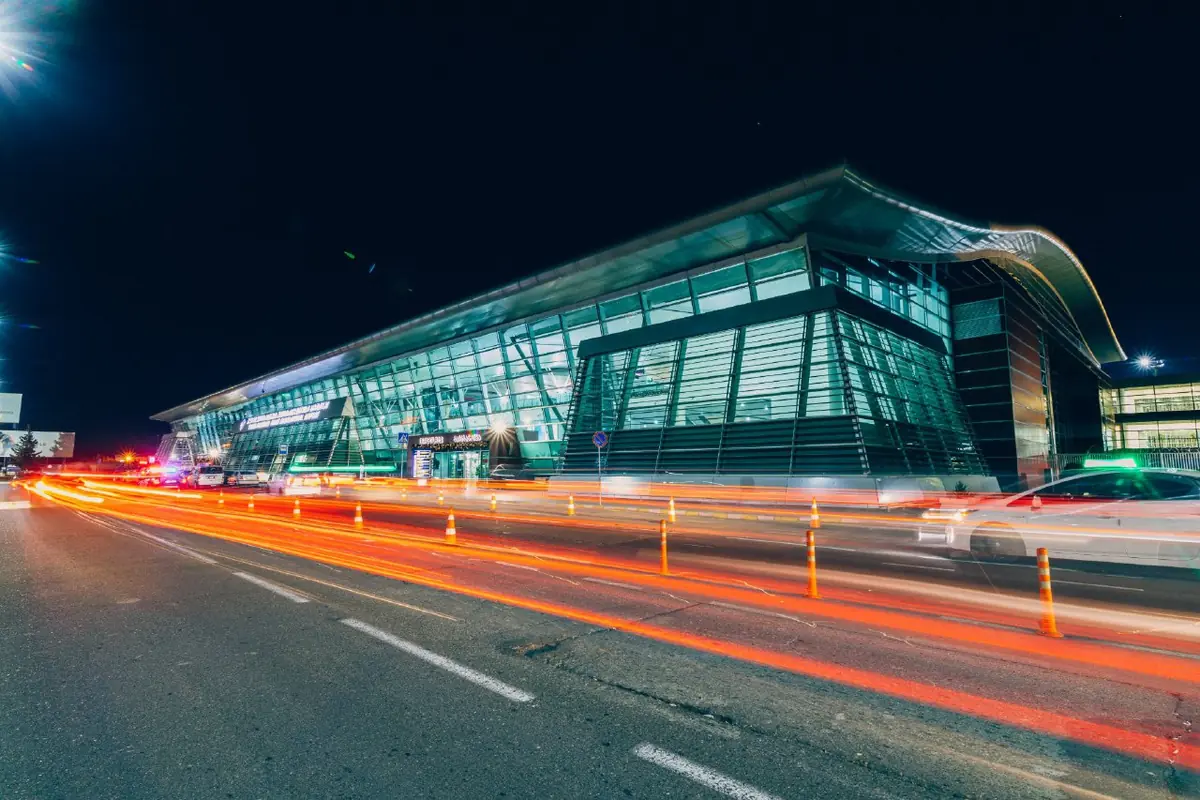
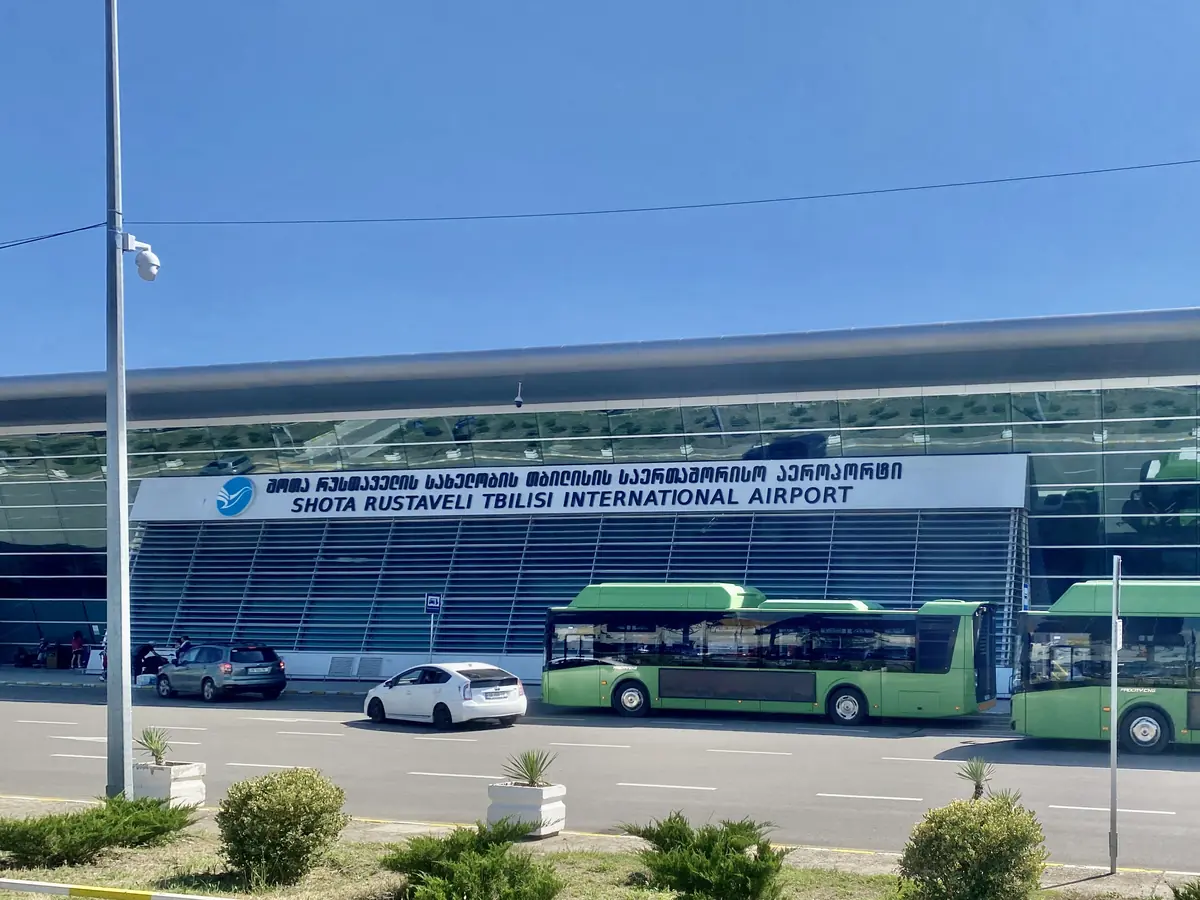
Tbilisi International Airport (TBS) sits about 11 miles (17 km) southeast of the center, a 20-to-30-minute drive. You have four ways in: Bus 337 for under $1, a Bolt ride for about 25–35 GEL ($9–13), the official FlyTaxi rank with fixed 40–60 GEL zones, or a pre-booked transfer from around 55 GEL ($20).
Guides disagree wildly on the distance — you’ll see everything from 9 to 22 km quoted. The airport’s own material and the most reliable sources cluster at roughly 17 km, so that’s the number to trust. Here’s how the four options actually compare:
| Option | Cost | Door-to-door time | Runs at night? | Best for |
|---|---|---|---|---|
| Bus 337 | ~1 GEL local card / ~1.5 GEL foreign card (under $1) | 40–60 min | No (about 7 a.m.–11 p.m.) | Budget travelers, daytime arrivals |
| Bolt | ~25–35 GEL ($9–13) | 25–35 min | Yes (fewer cars, higher fares) | Value and comfort |
| FlyTaxi (official rank) | Fixed 40–60 GEL zones ($15–22) | 25–35 min | Yes, 24/7 | No app, want a set price |
| Pre-booked transfer | From ~55 GEL ($20) | 25–35 min | Yes, driver waits | Families, luggage, late flights |

Bus 337: The Cheapest Way Into Town
Bus 337 is the cheapest ride into Tbilisi, and it’s cashless — leave your coins in your pocket. Tap a Georgian Transport (Metromoney) card for 1 GEL, or tap a foreign contactless bank card straight on the reader for about 1.5 GEL (roughly $0.55). No paper ticket prints; the fare just deducts.
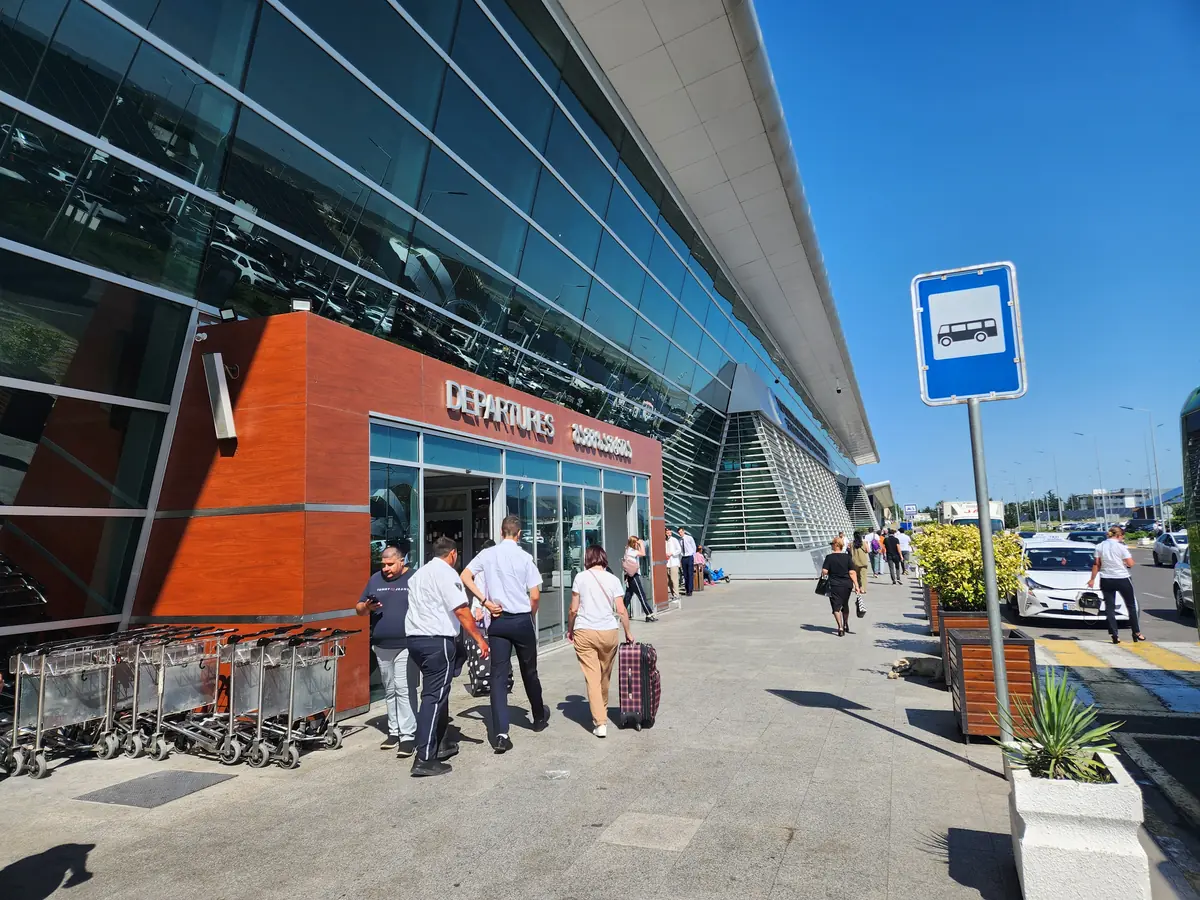
- Where to catch it: the stop is to your right as you walk out of Arrivals
- Route: Kakheti Highway, then Avlabari, Freedom (Liberty) Square, Rustaveli Avenue, and Station Square
- Journey time: 40–60 minutes, depending on traffic
- Frequency: roughly every 15–20 minutes
- Hours: about 7 a.m. to 11 p.m. — it does not run overnight
- Transport card: 2 GEL from the Bank of Georgia counter in arrivals, if you’d rather not tap your own card
Pro Tip: You don’t need to buy a transport card at all. A regular contactless credit card taps straight onto the bus reader, so skip the counter line unless you want the local card for the metro later.
Bolt, and Why There’s No Uber
No — there’s no Uber anywhere in Georgia. Bolt is the ride-hailing app to use, with Yandex Go and Maxim as backups. A Bolt from the airport to Freedom Square usually runs about 25–35 GEL ($9–13), and you can pay by cash or card in the app.
Here’s the catch almost nobody warns you about: the free airport WiFi is weak in the arrivals hall and often won’t load ride-hailing apps at all. Set up an eSIM before you fly, or buy a local SIM the moment you land, so you can actually order the car.
- No Uber; use Bolt, with Yandex Go and Maxim as fallbacks
- Typical fare to the center: about 25–35 GEL ($9–13)
- After midnight: fewer cars, and prices around 1.5–2 times higher
- Payment: cash or card, set inside the app
The app points you to the ride-hailing pickup zone just outside the arrivals doors.
Pro Tip: Download and log into Bolt before your flight. Setting up a new account needs an SMS code, which is hard to receive before your Georgian SIM is active.
Official Taxis, FlyTaxi Zones, and the Touts to Avoid
The airport’s official taxis wait at the curb, and FlyTaxi runs a fixed-zone desk so you know the price before you get in. The risk isn’t the official rank — it’s the men who approach you inside the terminal offering a “taxi” and quoting whatever they think you’ll pay.
FlyTaxi’s posted zone pricing:
- Zone 1 — 40 GEL (about $15): Avlabari, Isani, Ortachala, Varketili, Vazisubani
- Zone 2 — 60 GEL (about $22): Freedom Square, Rustaveli, Vake, Saburtalo, Marjanishvili, Tsereteli, Didube
- Zone 3 — 60 GEL (about $22)
- Beyond the city: about 1.60 GEL per km
Book at the official FlyTaxi desk, not with anyone who waves you over. The street touts are where the real overcharging happens — reports of 80–100 GEL for a run a Bolt does for a third of the price are common. The plain truth: the app is not the rip-off. The guy who found you first inside the terminal usually is.
Pre-Booked Transfers for Families and Late Flights
A pre-booked transfer is the low-stress choice when you’re arriving late, traveling with kids, or hauling more bags than you want to wrestle onto a bus. A driver meets you in arrivals holding a sign, waits if your flight is delayed, and takes you door to door.
- Cost: from about 55 GEL ($20) with GoTrip.ge; Welcome Pickups is similar
- Best for: families, late-night landings, anyone with heavy luggage
- Included: meet-and-greet in arrivals, wait time for delays, child seats on request
- Worth it vs a hotel transfer? Usually yes — hotels often charge 80 GEL or more for the same trip
Is There a Train From the Airport?
A golden-glass railway station sits about 230 feet (70 m) from the terminal, and when it runs, the train reaches Tbilisi’s Central Railway Station in 35–40 minutes for 0.50 GEL (under $0.20). But service has been unreliable and appears suspended, with only a couple of departures a day even at its best. Treat the train as a lucky bonus, not a plan.

What If You Land in the Middle of the Night?
Plenty of flights from Istanbul, Dubai, and the Gulf touch down at TBS between midnight and 5 a.m., when Bus 337 has stopped running. Your reliable options are Bolt (short wait, mild price bump), the 24/7 FlyTaxi rank, or — for zero hassle with bags or kids — a pre-booked transfer with a driver already waiting in arrivals.
Match the move to your situation:
- Carry-on only, on a budget: grab a Bolt, or wait in the 24-hour terminal for the first morning bus
- Bags or kids: book a transfer in advance so someone’s holding a sign when you walk out
- No SIM yet and WiFi won’t load Bolt: walk to the FlyTaxi desk for a fixed-price ride
- Early onward connection: the terminal stays open around the clock with seating and free WiFi if you’d rather not pay for a room
How Do You Get Cash and a SIM Card in Arrivals?
Two things to handle before you leave the arrivals hall: cash and a SIM. ATMs from TBC Bank, Bank of Georgia, and Liberty Bank run 24/7 in both halls, and three carriers sell SIM cards from kiosks that never close. Bring your passport — registration is required and takes about 10–15 minutes.
For a SIM:
- Carriers: Magti, Silknet (Geocell), and Cellfie (Beeline)
- Best coverage: Magti, if you’re heading into the mountains
- Cost: tourist data packages run about 15–30 GEL ($5.50–$11)
- Bring: your passport, since registration is mandatory
- Time: 10–15 minutes, longer when two flights land together
For cash:
- ATMs: TBC Bank, Bank of Georgia, Liberty Bank — 24/7 in both halls
- Currency: the Georgian lari (GEL)
- Exchange rates: fairer here than at most airports, so changing a small amount is fine
- Better plan: withdraw lari from an ATM for the best rate
The airport-exchange advice is worth flagging, because it goes against the usual rule. At most airports you avoid the exchange counters; at TBS the rates are reasonable, so swapping a little cash won’t hurt. An ATM withdrawal still gets you the best rate for anything more than pocket money.
Pro Tip: An eSIM bought before you land skips the kiosk line entirely and gets you online the second you switch off airplane mode — handy when the free WiFi won’t load your ride app.
What’s Inside the Terminal: Lounges, Food, and Luggage
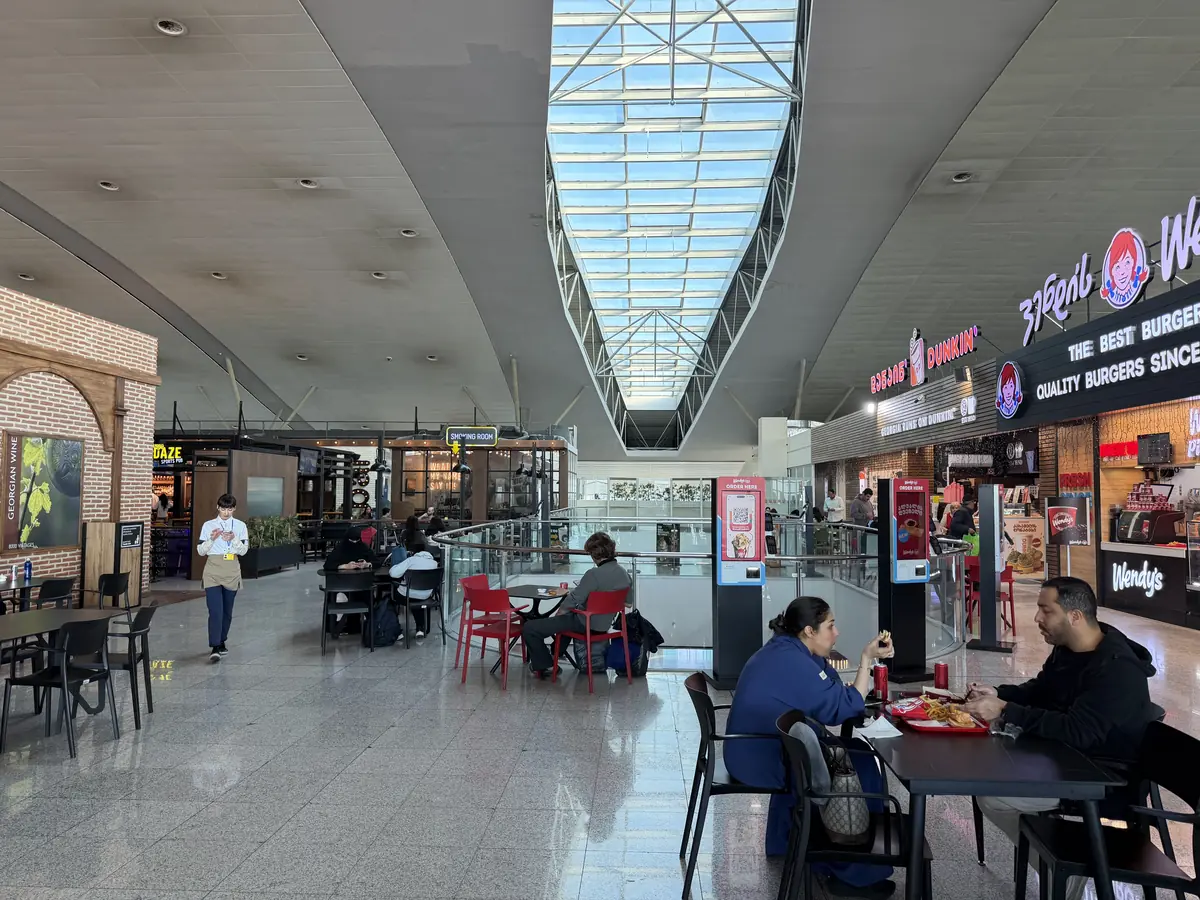
TBS is small and quick to read: two connected terminals, one real lounge, and a handful of food counters. Don’t expect a shopping mall — expect to clear it fast.
The lounge:
- Primeclass Lounge: airside after passport control, second floor by Gate 101, open 24/7
- Size: about 3,500 sq ft (328 m²), 115 seats
- Access: walk-in around $60 (€55), or via Priority Pass, DragonPass, or LoungePair from about $51
- Max stay: 3 hours
- No showers — worth knowing before a long layover
- The look: an art-gallery theme, with local pieces displayed for sale
There’s also a landside Primeclass in the arrivals area if you’re waiting to meet someone.
Food and services:
- Dining: limited — Wendy’s, Illy, and Dunkin’ landside (24 hours); Brewmark airside
- Luggage storage: about 10 GEL ($3.70) standard, 20 GEL ($7.40) for large bags, in arrivals
- Baggage wrapping: about 30 GEL ($11) in departures
- WiFi: free, named “Tbilisi Loves You,” but weak for ride apps in arrivals
- Parking: free for the first 5 minutes; about 3–7 GEL for the first three hours; 1 GEL/hour after that; roughly 26 GEL ($10) a day
Can You Sleep at Tbilisi Airport or Stay Nearby?
The terminal is open around the clock, but there are no dedicated rest zones. Travelers report bedding down on the artificial turf tucked under the escalators — functional, not comfortable. If you want a real bed, there are a few options within a short hop.
- ibis Tbilisi Airport: about a 10-minute walk from the terminal
- Budget options nearby: Hotel Lilo (about 1.5 miles / 2.4 km) and Hotel Marcos (about 1.9 miles / 3 km), from roughly $21–35 a night, many with airport shuttles
Do US Travelers Need a Visa for Georgia?
No. US citizens can enter Georgia visa-free and stay up to 365 days — one of the most generous entry policies anywhere. There’s no fee and no application; just arrive with a passport valid for your stay. Passport control at TBS is usually quick, about 10–15 minutes.
- Who qualifies: citizens of nearly 100 countries, including the US, UK, EU nations, Canada, and Australia
- Length of stay: up to 365 days per entry, no fee
- Insurance rule: Georgia requires visitors to carry travel health insurance with at least 30,000 GEL (about $11,000) of coverage
- Overstaying: carries steep fines, so keep track of your days
Entry rules do change, so check the insurance requirement against an official source before you book.
Which Airlines Fly to Tbilisi, and Can You Fly Direct From the US?
There are no nonstop flights between the US and Tbilisi, so you’ll connect — most often through Istanbul (Turkish Airlines), a Gulf hub (Qatar Airways or flydubai), or a European hub (Lufthansa or Wizz Air). TBS connects to roughly 70 destinations across dozens of airlines, with Georgian Airways as the flag carrier and main hub.
- Flag carrier: Georgian Airways
- Common US connection points: Istanbul, Doha, Dubai, and major European hubs
- Also serving TBS: Turkish Airlines, Azerbaijan Airlines (AZAL), Pegasus, Wizz Air, flydubai, Qatar Airways, Lufthansa, British Airways, and easyJet
The busiest routes in and out of Tbilisi are Istanbul and Baku, which is why those two cities are the most common places to change planes on a US itinerary.
Is a Short Tbilisi Layover Worth Leaving the Airport?
With a layover of four hours or less, stay airside — the round trip isn’t worth it. With six hours or more, you can bus or taxi the 11 miles (17 km) into town, walk up to Narikala Fortress, soak in the Old Town sulfur baths, and eat a plate of khinkali before heading back.
- Narikala Fortress: ride the cable car up from Rike Park for the best view over the city
- Abanotubani: the brick-domed sulfur bathhouses in the Old Town
- Holy Trinity Cathedral (Sameba): the largest church in Georgia
- Freedom Square: the central landmark, walkable to most of the above
- Stash your bags first: airport luggage storage runs about 10 GEL ($3.70)

How Is Tbilisi Airport Changing?
The airport you land in is mid-transformation. TAV Airports (part of France’s Groupe ADP) is putting roughly $150 million into expanding the terminal — adding about 210,000 square feet (19,500 m²) to the existing footprint, doubling the number of jet bridges to ten, and tripling lounge space. The work is set to push capacity past 10 million passengers a year; the airport already handles well over 5 million.
There’s a bigger plan behind it. Georgia has announced a brand-new airport at Vaziani, about 16 miles (25 km) from Tbilisi, designed for at least 18 million passengers a year, and it’s expected to eventually replace the current airport. Until that opens, everything in this guide runs through the existing terminal.
Common Questions About Tbilisi Airport
Is There Uber at Tbilisi Airport?
No. Uber doesn’t operate anywhere in Georgia. Bolt is the main ride-hailing app, with Yandex Go and Maxim as backups. A Bolt to the center runs about 25–35 GEL ($9–13). Download and log in before you fly, because the free airport WiFi often won’t load the app.
Does Bus 337 Run All Night?
No, despite what some older guides claim. Bus 337 runs roughly 7 a.m. to 11 p.m., every 15–20 minutes, and is cashless — tap a Metromoney or contactless bank card. Land overnight and you’ll want Bolt, the 24/7 FlyTaxi rank, or a pre-booked transfer instead.
Can You Buy a SIM Card at Tbilisi Airport?
Yes. Magti, Silknet, and Cellfie all have kiosks in the arrivals hall, open 24/7. You’ll need your passport to register, and it takes about 10–15 minutes. Tourist data packages cost roughly 15–30 GEL ($5.50–$11). Magti has the strongest coverage if you’re heading into the mountains.
How Much Is a Taxi to the City Center?
An official FlyTaxi ride from the desk runs a fixed 40–60 GEL ($15–22) by zone. A Bolt is usually cheaper at about 25–35 GEL ($9–13). Avoid drivers who approach you inside the terminal — their quotes tend to start at 80 GEL and climb from there.
Before You Land
TL;DR: Take Bus 337 for under $1 if it’s daytime and you’re watching money; grab a Bolt (about 25–35 GEL / $9–13) for the best mix of price and comfort; book a transfer if you’re landing late, carrying bags, or traveling with kids. Whatever you choose, walk past the drivers offering rides inside the terminal — that’s where the overpaying starts.
That’s the core of this Tbilisi Airport guide: the trip into town is cheap and simple once you know to skip the touts and get your phone online before you leave arrivals. Which route are you leaning toward for your landing — the $1 bus, a Bolt, or a driver waiting with your name on a sign?