Buying a SIM card and getting internet in Georgia is refreshingly simple — three networks, a 24/7 airport counter, your passport, and you’re online in minutes. Two things trip travelers up, though: the coverage cliff in the mountains, and a phone-registration rumor that doesn’t actually apply here. Below is exactly what to buy and what to skip.
Which Georgia SIM Card Should You Actually Buy?
For most travelers, Magti (Magticom) is the one to buy. It has the widest reach — the network covers close to 99% of populated areas, including mountain towns where the others quit. Silknet is a close second in the cities and runs the smoothest eSIM. Cellfie is the cheapest, but it fades outside Tbilisi, Batumi, and Kutaisi.
If I had to pick one network for a trip that leaves the capital, it’s Magti, every time. The extra couple of dollars buys you signal in valleys where the cheaper options show a blank bar.
Magti — Buy This If You’re Leaving the Cities
Magti is the market leader, holding roughly 41% of the mobile market and around 2.4 million subscribers. Its own figures put coverage near 99% of Georgia’s populated territory, and that isn’t marketing fluff — it’s the only network people report using deep in Tusheti. A SIM runs about 10 GEL (roughly $4), and it supports everything from 2G up to 5G.
Silknet — Best for City Stays and eSIMs
Silknet (the old Geocell) sits second with about a 35% share and roughly 2.1 million subscribers. City coverage is excellent, it was first to switch on 5G in central Tbilisi, and it has the least painful eSIM setup of the three. A SIM is about 5 GEL (roughly $2). If your trip is Tbilisi–Batumi–Kakheti and nothing higher, Silknet is plenty.
Cellfie — Cheapest, but City-Bound
Cellfie (formerly Beeline) is the smallest network, around 23% share, and it competes on price. SIMs start near 1-5 GEL (under $2), and its data packs are the cheapest going. The catch: coverage drops off sharply once you leave Tbilisi, Batumi, and Kutaisi. It’s fine for a city-only trip and a poor bet for anyone driving into the hills.
Does Georgia Have a Phone-Registration Trap?
No. Georgia has no IMEI or device-registration rule. Any unlocked GSM phone works on a Georgian SIM indefinitely — no time limit, no device tax, no separate device fee. Only the SIM itself gets registered to your passport at the store. The panic comes from neighboring Turkey and Azerbaijan, which do block foreign phones.
This is the single most useful thing to know before you land, because generic “IMEI registration by country” lists tend to lump Georgia in with its neighbors. They’re wrong. Long-term residents run the same phone on a Georgian SIM for years with no cutoff, and Georgia is quietly absent from the registration lists that name Turkey and Azerbaijan.
Here’s what the neighbors actually do, so you can tell them apart:
- Turkey: blocks unregistered foreign phones about 120 days after you enter, unless you register the IMEI and pay a one-time tax. That tax has climbed into the tens of thousands of Turkish lira (the equivalent of well over a thousand US dollars) and most tourists can’t even pay it, because registration requires a Turkish ID or residence permit.
- Azerbaijan: requires IMEI registration within 30 days of a device connecting to the network — but phones running on a foreign roaming SIM are exempt. The fee starts around 30 manat (roughly $18) for cheaper phones.
Georgia does none of this. There is one tiny wrinkle worth a single sentence: the government levies about 0.40 GEL a month (roughly 15 cents) for access to the 112 emergency line, and it typically isn’t charged on standard tourist SIMs anyway. It’s not a device fee, and it’s nothing to plan around.
What Does a SIM Card and Mobile Data Cost in Georgia?
A tourist SIM with a generous data pack runs about 15-30 GEL ($6-11) all in. The SIM chip alone is 1-10 GEL, depending on the network. Airport counters charge 20-30% more than city stores for the same thing. eSIMs cost more per gigabyte but let you land already connected. Here’s the full breakdown.
Local operator tourist packs (prices approximate, in GEL with USD):
| Plan | Data | Validity | Price (GEL) | Price (USD) |
|---|---|---|---|---|
| Magti tourist (small) | 3 GB + 30 intl min + free local calls/SMS | 15 days | ~30 | ~$11 |
| Magti tourist (data) | 5 GB + free local SMS | 15 days | ~15 | ~$6 |
| Magti unlimited (via MyMagti app) | Unlimited, throttled to 5 Mbps after 50 GB | 30 days | ~32 | ~$12 |
| Silknet Tourist Start | 4 GB + 30 domestic + 15 intl min | 15 days | ~15 | ~$6 |
| Silknet Tourist Unlimited | Unlimited data/calls + 30 intl min | 15 days | ~30 | ~$11 |
| Cellfie Optimum+ | 10 GB | 30 days | ~12 | ~$4.50 |
| Cellfie Platinum | 20 GB | 30 days | ~25 | ~$9 |
The SIM chip is extra on top of the pack: about 10 GEL for Magti, 5 GEL for Silknet, and as little as 1-5 GEL for Cellfie.
eSIM options (in USD), with the network each one actually runs on:
| Provider | Runs on | Sample plan | Price (USD) |
|---|---|---|---|
| Local Magti eSIM | Magti (strongest) | Same packs as above + a local number | SIM ~$4 |
| Local Silknet eSIM | Silknet | Same packs + a local number | SIM ~$2 |
| Roafly | Silknet / Geocell | 10-20 GB / 30 days | Value pick |
| Airalo | Cellfie (weaker in mountains) | 1 GB / 7 days up to 20 GB | From ~$4.50 to ~$49 |
| Holafly | Fair-use “unlimited” | 1-90 days | ~$11 to ~$235 |
| Jetpac | — | 10 GB / 25 GB | ~$28 / ~$38 |
Prices and plan names shift often, so treat these as the shape of the market rather than a locked quote. The pattern that stays true: a local SIM is the cheapest per gigabyte and the best coverage; global eSIMs cost more but get you online the second you land.
eSIM or Local SIM — Which Wins in Georgia?
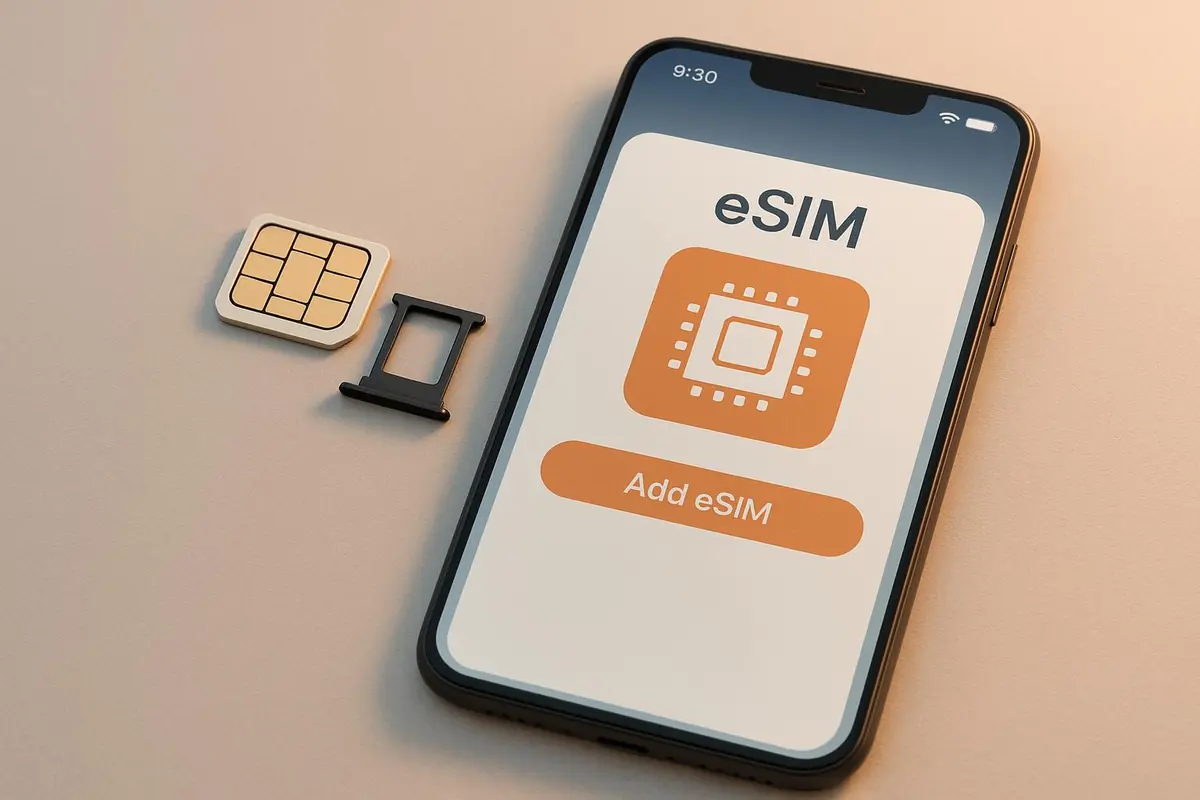
It depends on whether you’re going into the mountains. A local Magti SIM wins on price and coverage but means a counter visit and a physical SIM tray. A global eSIM wins on convenience — instant data, keep your home number for security codes — but costs more per gigabyte, and most global eSIMs run on Cellfie, the weakest of the three networks.
That last point is the one nobody says out loud. Airalo and several other well-known global eSIMs sit on Cellfie’s network, which is fine in Tbilisi and useless on a trek. If you’re eSIM-first and heading for the hills, choose one that runs on Silknet/Geocell (Roafly is one), or just buy a local Magti SIM when you arrive.
Quick decision guide:
- City-only trip, want zero hassle: any decent eSIM, or Silknet’s own eSIM.
- Mountains, trekking, road trips: local Magti SIM, full stop.
- Modern iPhone with no SIM tray: eSIM only — buy a Magti or Silknet eSIM for the local network, or a Silknet-based global eSIM.
Pro Tip: Keep your home SIM or eSIM active for bank one-time codes and two-factor logins, and add Georgian data as a second line. Plenty of banks text security codes only to your home number, and losing access to those on the road is a real headache.
Where to Buy a Georgia SIM Card
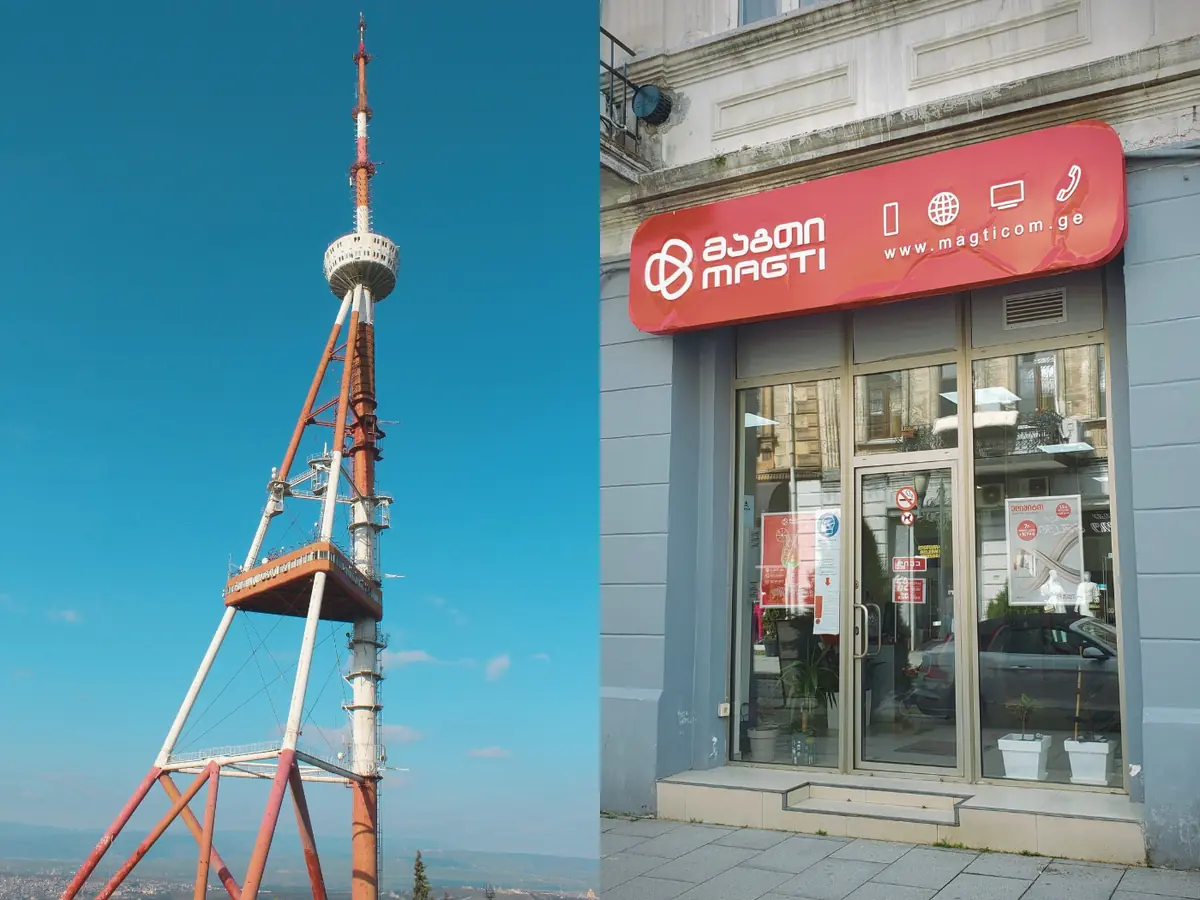
You can buy at all three international airports — Tbilisi (TBS), Kutaisi (KUT), and Batumi (BUS) — where Magti, Silknet, and Cellfie all run kiosks in arrivals, open 24 hours. Bring your passport; the SIM is registered to it, and the whole process takes about 5-15 minutes.
Where to actually get one:
- Airport arrivals halls: all three networks, 24/7. Fastest if you want data before you leave the terminal, but prices run 20-30% higher.
- City stores on Rustaveli Avenue in Tbilisi: flagship shops for all three, cheaper, and staff speak good English.
- Supermarkets (Carrefour, Goodwill) and PayBox top-up terminals: everywhere, handy for reloading rather than first purchase.
Two things to plan around. First, there are no operator stores in Kazbegi (Stepantsminda) or in Mestia. If your route runs to Svaneti, buy your SIM in Zugdidi on the way in — it’s the last real town before the mountain road, about 85 miles (135 km) below Mestia. Second, the airport queue is unpredictable: it moves fast with one flight in, but if two land together it can run over an hour.
Pro Tip: If you land with data already — an eSIM or home roaming — skip the airport counter entirely. Buy a cheaper local SIM at a city store the next morning instead of standing in the arrivals queue.
Will Your Phone Work in the Georgian Mountains?
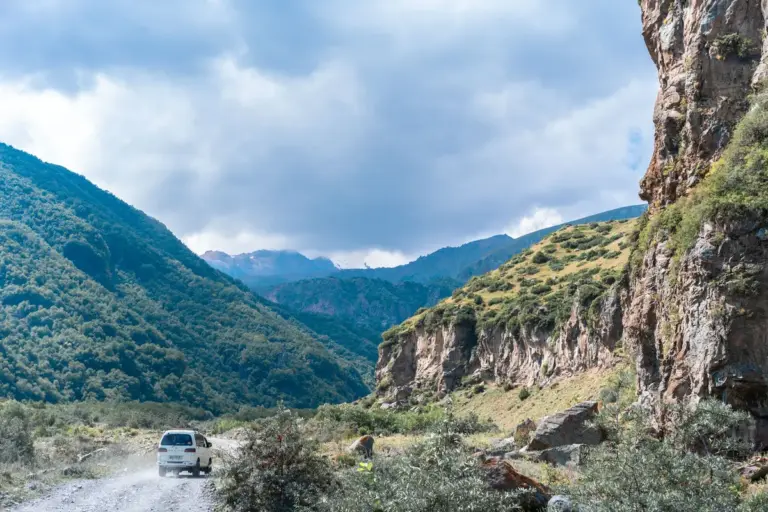
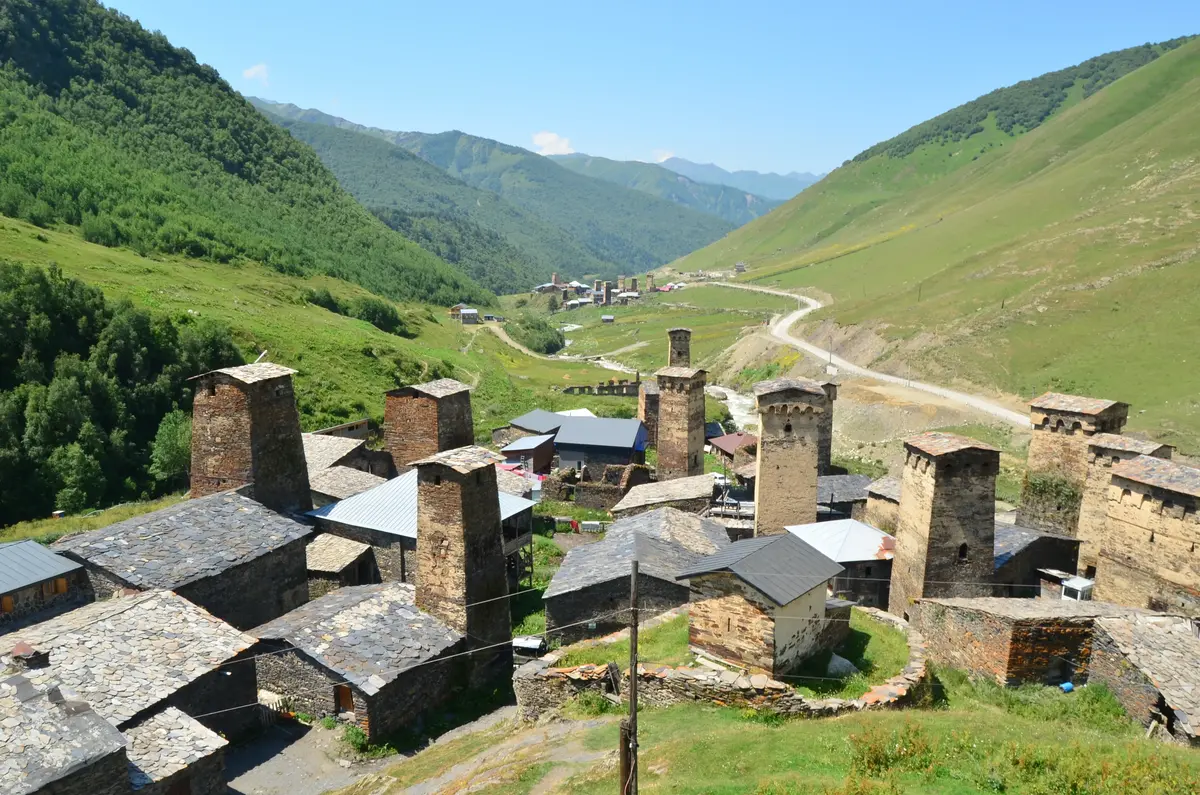
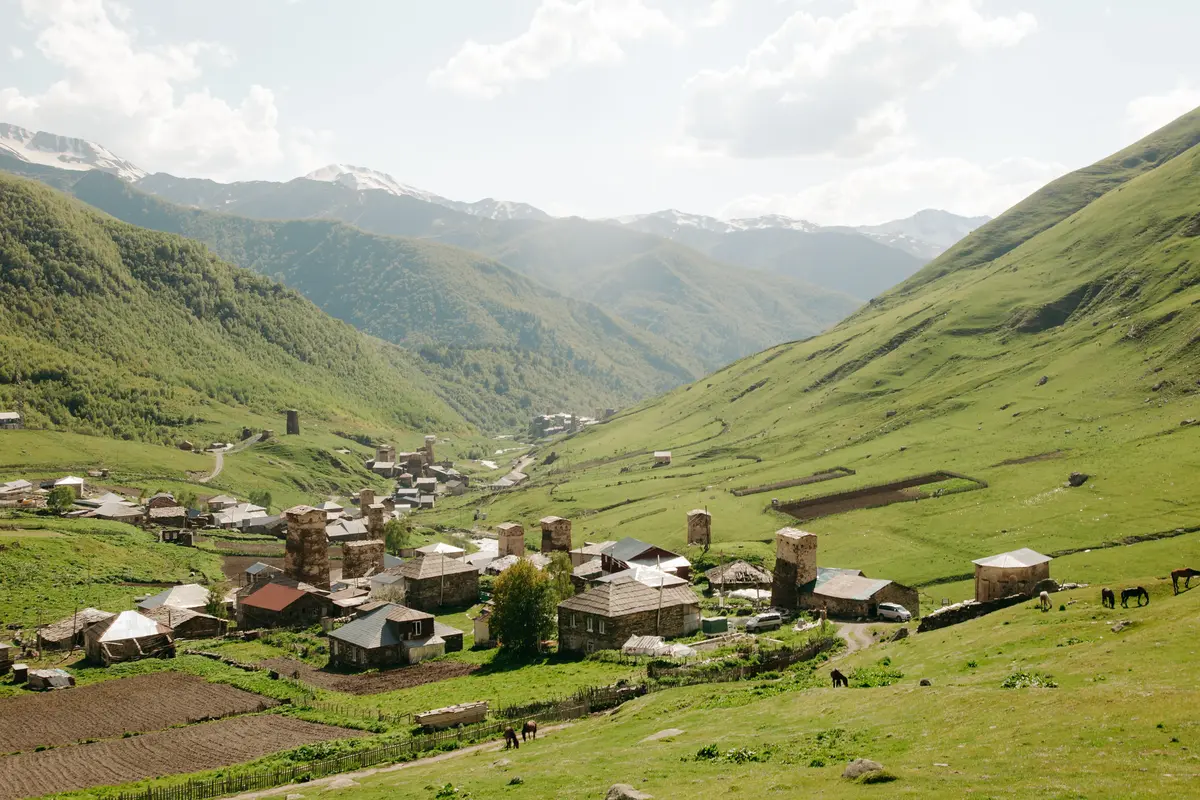
Mostly yes in the towns, often no between them. In every mountain hub — Kazbegi, Mestia, the Kakheti wine villages — you’ll get reliable 4G on Magti and usually Silknet. The dead zones show up on the trails and passes between villages, where only Magti has a real shot, and even it drops out in a few genuinely off-grid spots.
Coverage by region, network by network:
| Destination | Magti | Silknet | Cellfie | Notes |
|---|---|---|---|---|
| Tbilisi / Batumi / Kutaisi | Excellent, some 5G | Excellent, some 5G | Good | Buy anywhere |
| Kazbegi / Stepantsminda | Reliable 4G in town | Reliable 4G in town | Patchy | No stores — buy before you go |
| Mestia / Svaneti | Reliable 4G in town | OK in town | Weak | No stores — buy in Zugdidi |
| Ushguli | Patchy | Patchy | None | Dead zones on the Lentekhi road |
| Tusheti (Omalo, Diklo) | Reaches remote villages | Spotty | Spotty | Off-grid in spots; seasonal access |
| Kakheti / Sighnaghi | Good | Good | Good | Wine country is well covered |
| Vardzia | Works | Spotty | Spotty | Magti, realistically |
| Vashlovani Reserve | Near-zero | None | None | Plan for no signal at all |
Magti’s edge in the far corners is real, not a spec sheet: travelers have made video calls from Diklo, one of the most isolated villages in Tusheti, on Magti’s network. The one place it consistently fails is Vashlovani Nature Reserve near the Azerbaijani border, where you should simply expect nothing.
Pro Tip: Download offline Google Maps and the Georgian offline pack in Google Translate before you leave a city with signal. A phone hunting for a network burns through battery two to three times faster than normal, so carry a power bank on any trek.
How Fast Is Georgia’s Mobile Internet?
Very fast, and getting faster. Georgia ranks among the world’s top 15 countries for mobile internet speed, with median mobile downloads well above 150 Mbps — genuinely quicker than in a lot of Western Europe. On a strong Magti or Silknet signal in the cities, streaming and video calls are effortless.
A few honest caveats:
- 5G is real but mostly urban. You’ll find it in Tbilisi, Batumi, Kutaisi, and a few ski resorts like Gudauri and Bakuriani. Plan around 4G — it’s what carries you everywhere else.
- WiFi is everywhere in Tbilisi. Nearly every cafe and hotel has it, plus a free public network across the city. That public network is slow and not secure, so treat it as a fallback, not your main connection.
- Guesthouse WiFi lags behind mobile. Fixed home broadband across Georgia is comparatively weak — the national median fixed download sits around 20 Mbps, and the large majority of connections come in under 30. In a mountain guesthouse, your mobile data will often beat the house WiFi. Tether to your phone.
How Do You Top Up a Georgian SIM Card?
Reloading is easy once you know the shortcuts. The cleanest way is the operator’s own app — MyMagti, MySilknet, or the Cellfie app — where you can add a data pack in a couple of taps. If the app is glitchy with a foreign card, the yellow-and-green PayBox terminals on the street and in malls take cash and top up any number instantly.
Handy shortcuts and rules:
- USSD codes on Magti: dial *111# for internet options, *100# or 1111# to check your balance.
- USSD code on Silknet: dial *100# for balance.
- PayBox terminals: cash top-ups for any network, no account needed.
- Data rollover (Magti): unused data carries over for 7 days if you top up before the pack expires.
- Keeping a number alive: a Magti number stays active as long as you use it or top up within 60 days, useful if you’ll return.
Most travelers never need a local phone number at all — WhatsApp, Messenger, and Viber handle nearly everything, and data-only is fine. A local number occasionally helps for booking a guesthouse or a sulfur-bath slot, in which case the tourist packs above already include one.
Can You Use Your Georgian SIM in Armenia or Azerbaijan?
Not cheaply. A Georgian SIM doesn’t roam affordably in Armenia or Azerbaijan, so a wider Caucasus trip means buying a fresh SIM in each country or using a multi-country eSIM. One thing to check before you rely on the eSIM route: coverage of the specific countries you’re crossing.
Airalo’s regional “Discover” plan, for instance, covers Georgia, Azerbaijan, and Turkey — but not Armenia. If Armenia is on your itinerary, don’t assume a Caucasus eSIM includes it; confirm the country list first, or just plan to buy locally at each border.
Before You Land
TL;DR: Buy a Magti SIM at the airport or a Tbilisi store with your passport — around 15-30 GEL ($6-11) gets you a tourist pack with plenty of data. Ignore the phone-registration rumor: Georgia has no IMEI trap (that’s Turkey and Azerbaijan). If you’re heading into the mountains, Magti is the only network worth trusting, and there are no stores in Kazbegi or Mestia — sort your SIM before you go.
Georgia is one of the easier places in the region to get online, once you cut through the myths and match the network to your route. Which part of your trip are you most worried about staying connected for — the cities, or the mountains? Drop it in the comments and I’ll tell you what’s actually worked up there.