Skip the “magical Caucasus” throat-clearing — this Georgia country travel guide gets to the money, the routes, and the honest calls. You enter visa-free, pay in lari, and can go from a wine cellar to a 16,500-foot (5,050 m) peak in one morning. Prices climbed, a few rules changed, and one coastal city splits every traveler.
Do Americans Need a Visa or Insurance for Georgia?
No visa. U.S. citizens can enter Georgia and stay up to 365 days per visit without one — you just show a passport. The catch most guides miss: Georgia also requires proof of health and accident insurance covering your full stay, with a minimum of 30,000 GEL (about $11,000). Carry the policy, printed or on your phone.
A few details that trip people up:
- The 365-day clock resets on exit and re-entry, which is why long-stay travelers do a quick border run.
- Overstays get fined, so don’t treat the year as a soft limit.
- The insurance can come from a Georgian or foreign insurer, and the certificate can be in Georgian or English, physical or electronic.
The insurance rule applies even though the visa waiver is generous. That combination — no visa but mandatory coverage — is new enough that plenty of older guides skip it entirely.
Pro Tip: A standard travel-medical policy that names Georgia and meets the 30,000 GEL (about $11,000) minimum satisfies the rule. Buy it before you fly, and keep the certificate saved offline in case you’re asked at the border.
Is Georgia Safe to Visit, Protests and All?
Yes. The U.S. State Department rates Georgia Level 1, Exercise Normal Precautions — its lowest advisory tier. Petty theft, not violent crime, is the main risk for tourists. There are two hard exceptions: the Russian-occupied regions of Abkhazia and South Ossetia are Level 4, Do Not Travel, and peaceful protests gather most evenings on one avenue in central Tbilisi.
Those protests are worth understanding, not fearing. Pro-EU demonstrations have been meeting outside Parliament on Rustaveli Avenue for a long stretch, and they’re now small and largely peaceful — the prime minister has described a few hundred people rotating through on a given evening. They concentrate on that single central avenue in the evenings and on Saturday nights, and they have not spread to the tourist regions.
Two practical notes drawn from official guidance:
- Demonstrations can cause minor disruption in the immediate Rustaveli area — road closures, foot traffic. Give it a wide berth at night and you’ll barely notice.
- The UK Foreign Office flags that people who take part in protests may face extra questioning on exit or be refused re-entry. As a traveler passing through, that isn’t your concern; as an activist, it might be.
Because the official Level 1 rating predates the current protest stretch, check travel.state.gov and the UK FCDO shortly before you fly — that’s just good practice for any evolving situation, and the honest move for a guide that can’t be re-edited every week.
The most common way to lose money here isn’t crime — it’s the airport taxi.
Pro Tip: Use the Bolt app for every ride, from the airport onward. Unmetered street taxis, especially at Tbilisi airport, overcharge foreigners by a wide margin. Bolt fixes the price before you get in.
How Much Does a Week in Georgia Cost?
Less than Western Europe, but not the $20-a-day bargain it once was. Prices climbed roughly 30–40% over five years. Budget about $35–50 a day for comfortable budget travel, $50–125 mid-range, and $120–150+ for private drivers and boutique hotels. A week runs from around $250 to well over $1,000 per person, before flights.
Here’s the split by traveler type:
| Traveler type | Daily budget (per person) | What it covers |
|---|---|---|
| Backpacker | ~$20–35 | Hostel dorm, bakeries and street food, marshrutkas, house wine |
| Mid-range | ~$50–125 | Guesthouse or 3-star, sit-down meals, mix of shared and private transport |
| Comfort / luxury | $120–150+ | Boutique hotel, private driver (GoTrip), small-group wine tours |

What things actually cost on the ground:
- Khinkali (dumpling): 1.20–3 GEL (about $0.45–1.15) each, usually a five-piece minimum
- Adjaruli or Imeruli khachapuri: 7–15 GEL (about $2.70–5.70)
- House wine by the glass: 3–5 GEL (about $1.15–1.90)
- Public sulfur bath: from about 5 GEL/hour ($2); private room 50–200 GEL/hour (about $19–76)
- Rike–Narikala cable car: 2.5 GEL (about $0.95), plus a 2 GEL travel card
- Prometheus Cave entry: 23–40 GEL (about $9–15)
- Kakheti wine day tour: group tours from about $35; a qvevri masterclass runs $120–150
One number tells the whole story. A plain Imeretian khachapuri — the cheese bread economists here actually track as an inflation gauge — has crossed 8 GEL (about $3) and kept climbing. That single, humble price is the clearest proof the dirt-cheap era is over.
Pro Tip: Carry cash. Bakeries, sulfur baths, canyon-jeep drivers, and the mekise (bath scrubber) all want lari in hand, and ATMs thin out fast once you leave the cities.
How Do You Get Between Tbilisi, Kazbegi and Batumi?
Georgia is small but slow — mountain roads and a single main highway do the work. Marshrutkas (shared minivans) are cheapest and reach everywhere; trains are far more comfortable on the long hauls; short flights save a full day to Svaneti or Batumi. Base in Tbilisi and radiate out, rather than dragging luggage across the country every morning.
| Route | Distance | Best option | Price | Time | Note |
|---|---|---|---|---|---|
| Tbilisi ↔ Kazbegi | 93 mi (150 km) | Marshrutka from Didube | 15 GEL (~$6) | 2.5–3.5 hrs | Cheap but cramped; drivers overtake on hairpins |
| Tbilisi ↔ Kazbegi | 93 mi (150 km) | Private transfer (GoTrip) | from ~180 GEL (~$68)/car | 2.5–3 hrs | Photo stops; splits well between 3–4 people |
| Tbilisi ↔ Batumi | 215 mi (345 km) | Stadler train, 2nd class | ~35 GEL (~$13) | ~5 hrs | A new tunnel cut about 30 min; two daily |
| Tbilisi ↔ Batumi | 215 mi (345 km) | Flight | varies | under 1 hr | Fastest, least scenic |
| Tbilisi ↔ Kutaisi | 137 mi (220 km) | Marshrutka | ~$4–6 | ~3.5 hrs | Gateway to the Imereti caves |
| Tbilisi ↔ Mestia | 286 mi (460 km) | Train to Zugdidi + marshrutka | 16 GEL + ~35 GEL (~$6 + $13) | 8–10 hrs total | The smart split beats the direct van |
| Tbilisi ↔ Mestia | 286 mi (460 km) | Vanilla Sky flight (Natakhtari) | ~90 GEL (~$34) | 40 min–1 hr | 17 seats, weather-dependent, books out |
Two honest warnings from the road. Marshrutkas are unbeatable on price but genuinely rough on the scenic long routes — overtaking on blind curves is common on the Military Highway, and the hairpins turn stomachs. A planned ban on long-distance minivans keeps getting pushed back, so they still run every route for now.
Pro Tip: On the Batumi run, the train wins outright — comfort, scenery, and no white knuckles for the price of a few extra minutes. On the Kazbegi run, a GoTrip driver split three or four ways costs little more than a taxi and lets you stop at Ananuri.
When Is the Best Time to Visit Georgia?
May–June and September–October. Those shoulder windows give you warm, mostly dry weather, hills that are green or gold, and prices below the summer peak. July and August turn Tbilisi hot — often above 86°F (30°C) — so locals flee to the mountains or the Black Sea. Winter is for skiing, and many mountain roads close from mid-autumn into late spring.
| Season | Tbilisi range | Best for | Watch out for |
|---|---|---|---|
| Spring (May–June) | ~68–81°F (20–27°C) | Cities, Kakheti, first mountain trails | Rain showers, but green everywhere |
| Summer (July–Aug) | often above 86°F (30°C) | Svaneti and Kazbegi hikes, the coast | Heat, humidity, peak crowds |
| Autumn (Sept–Oct) | ~64–79°F (18–26°C) | Wine harvest, Batumi’s driest stretch | The best all-round window |
| Winter (Dec–Feb) | ~46–57°F (8–14°C) | Skiing Gudauri and Bakuriani | Mountain passes and roads shut |
Regional timing matters as much as the calendar. Batumi is subtropical and soaked — it gets roughly five times Tbilisi’s rain — so September is its sweet spot. The high mountains around Mestia and Kazbegi are reliably hikeable from about June through September. And autumn brings Rtveli, the Kakheti grape harvest, when cellars open their doors and roadside stands sell churchkhela by the string.
Which Georgian Regions Deserve Your Days?
You cannot do all six well on one trip. Pick two or three and go deep. Here’s how the main regions stack up, with the honest verdict on each.
Tbilisi — Base Yourself Here First
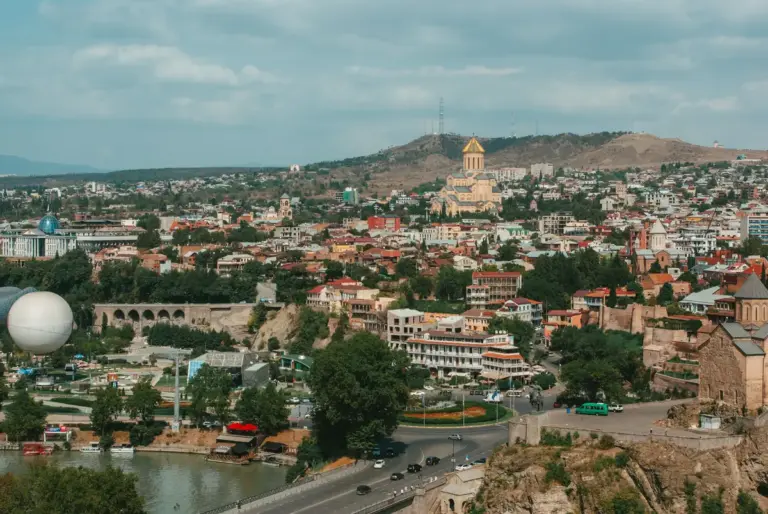
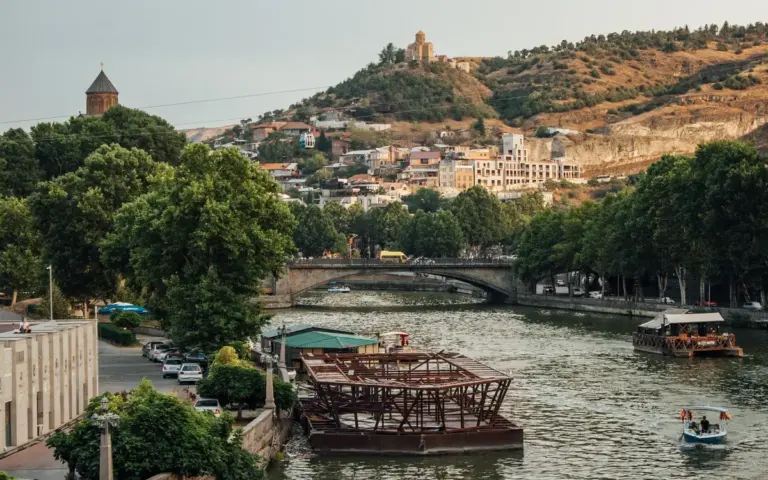
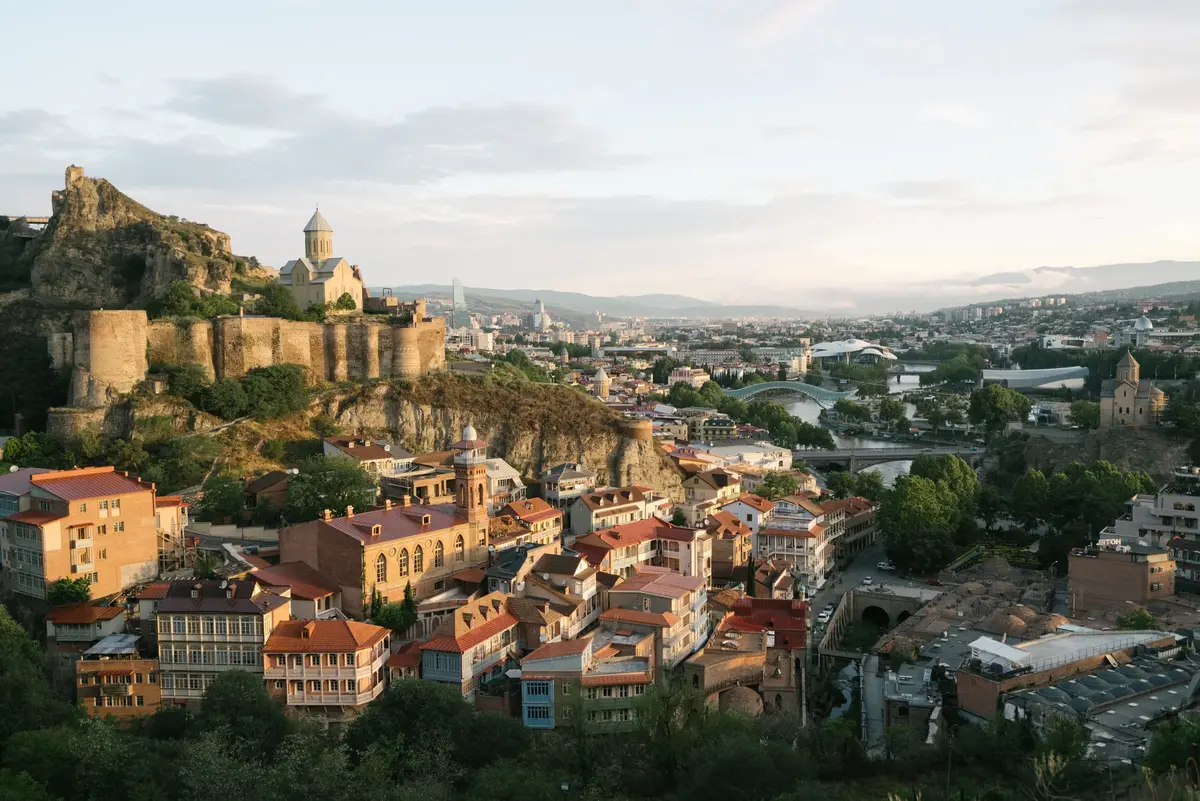
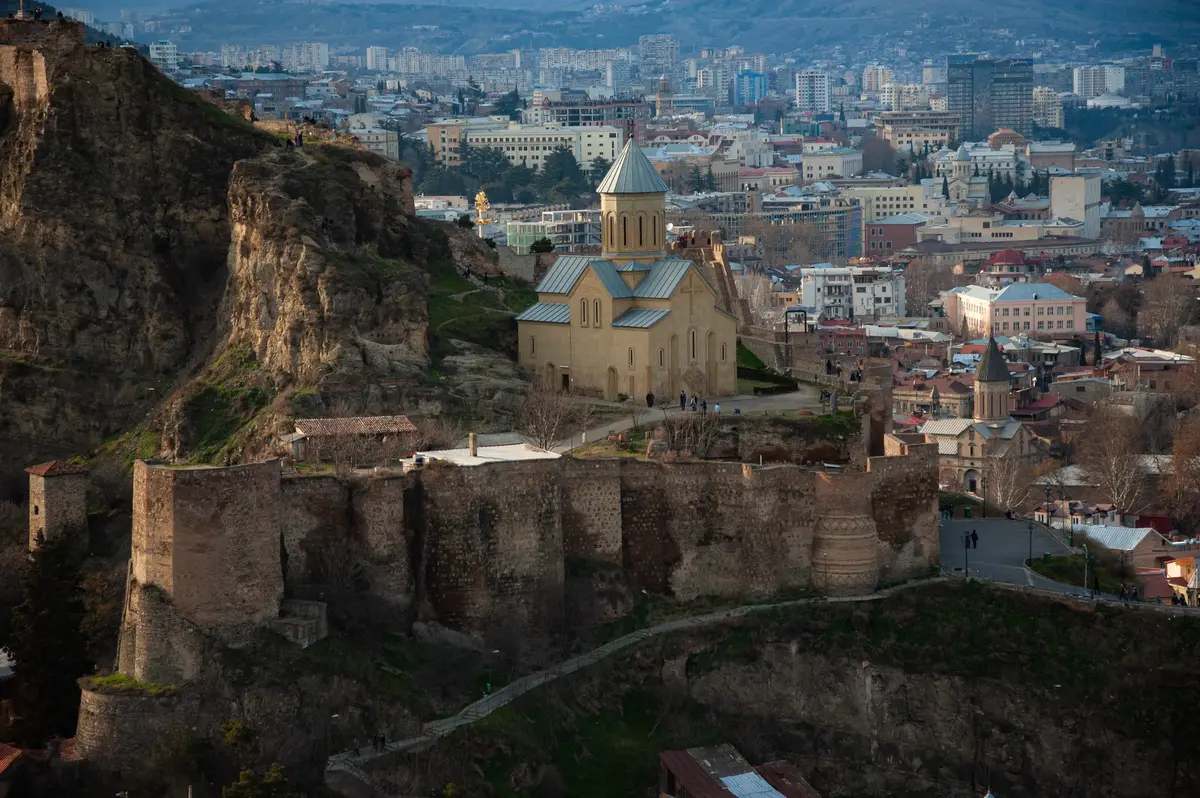
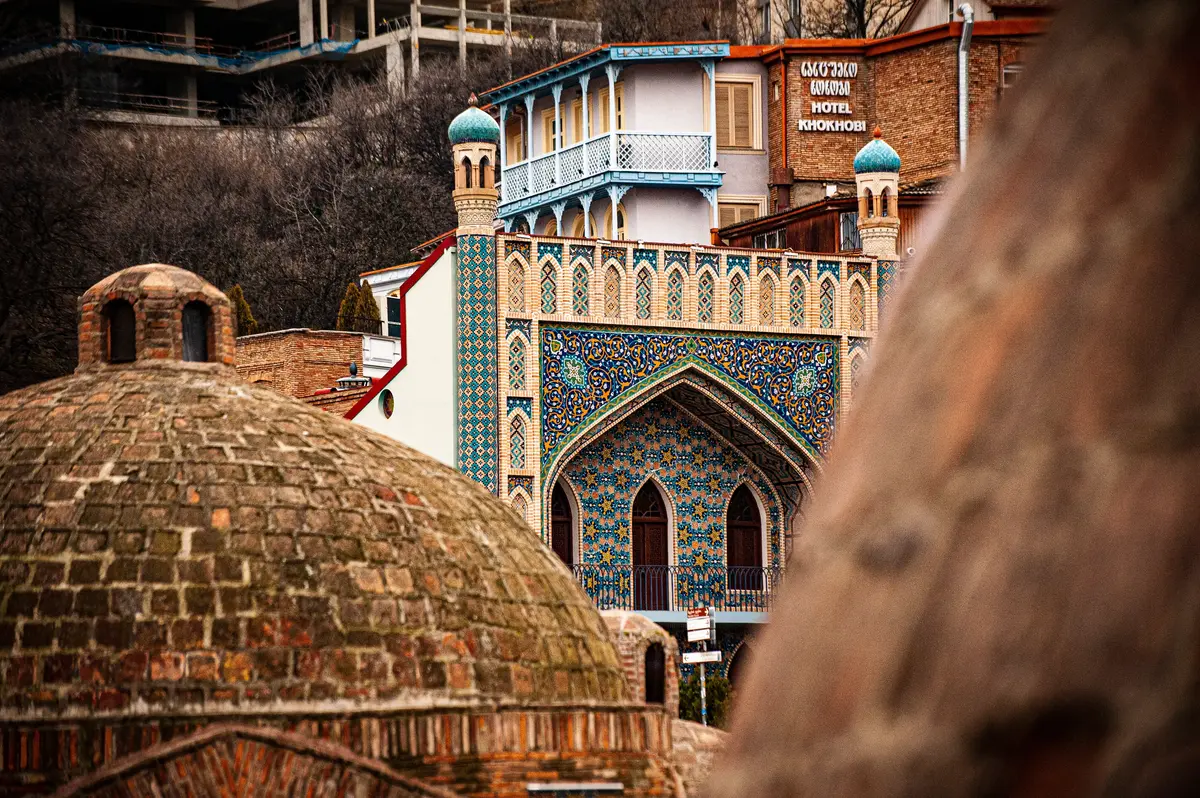
Tbilisi packs a lot into a walkable core: sulfur bathhouses steaming under brick domes in Abanotubani, wine bars in Old Town courtyards, and the glass Bridge of Peace crossing the Mtkvari to Rike Park. Stay in Sololaki or Vera to keep the good coffee and the Narikala cable car within reach.
Two full days cover the highlights without a rush; three let you slow down for the baths and a Mtskheta or Kakheti day trip. Rooms right by Rustaveli Avenue can catch protest-evening noise, so book a street or two back if you sleep lightly.
- Base: Sololaki, Vera, or Old Town for walkability
- Days: 2–3
- Best for: First-timers, food, sulfur baths, easy day trips
- Getting there: Tbilisi International Airport, about 11 mi (17 km) from the center; take a Bolt
Kazbegi and the Georgian Military Highway
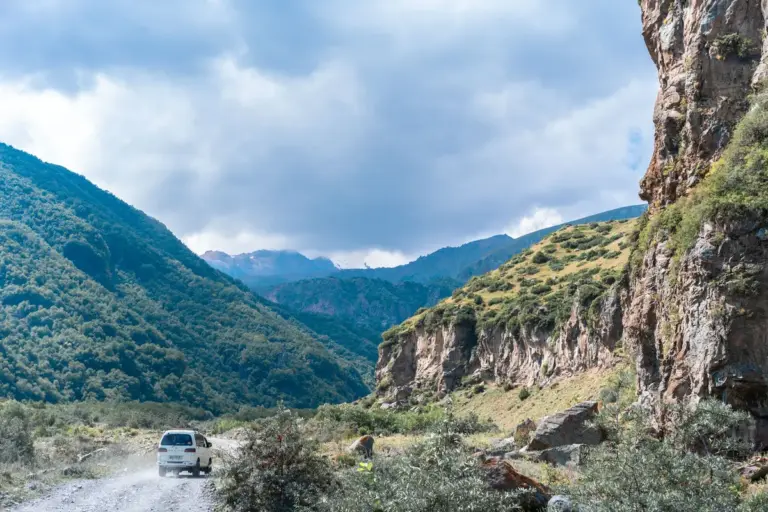
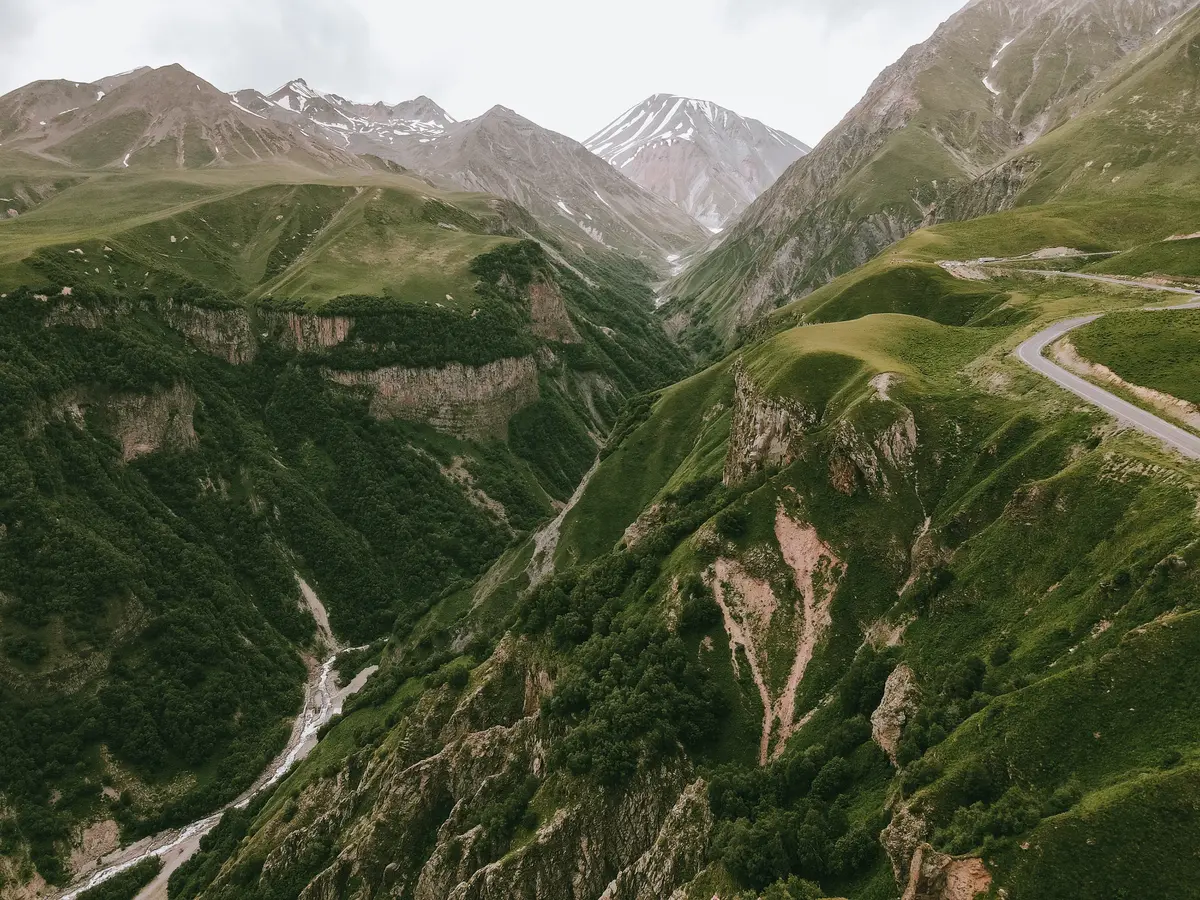
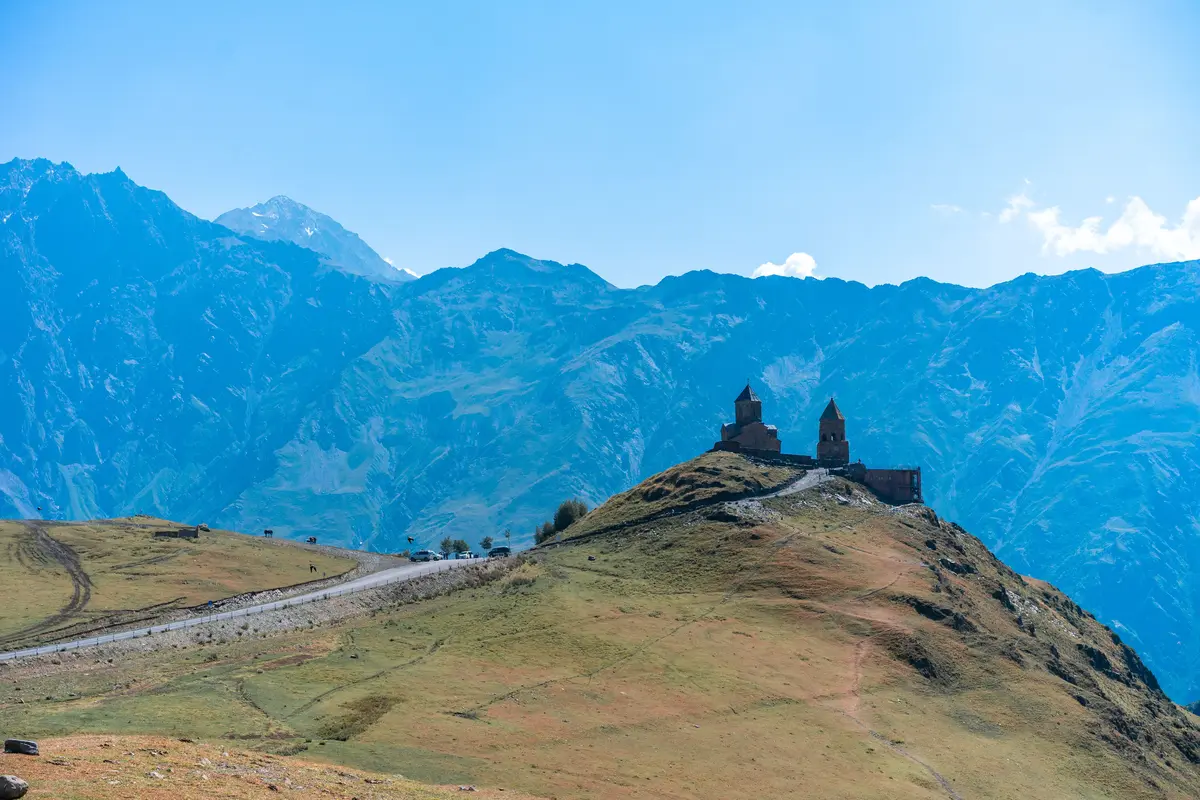
The drive north is half the reward — Ananuri fortress on its reservoir, the Jvari Pass near 7,800 ft (2,379 m), and Gergeti Trinity Church standing alone above Stepantsminda at around 7,100 ft (2,170 m). The mountains here feel genuinely big.
Do it as an overnight, not a day trip. Mt Kazbek hides behind cloud more than half of summer days, so a second morning roughly doubles your odds of catching the church clear. The Truso Valley walk is the easy add-on if you stay.
- Base: Stepantsminda village guesthouses
- Days: overnight, ideally 2
- Best for: Mountain views, Gergeti church, Truso Valley
- Getting there: 93 mi (150 km) / 2.5–3.5 hrs from Tbilisi on the Military Highway
Kakheti — Georgia’s Wine Country
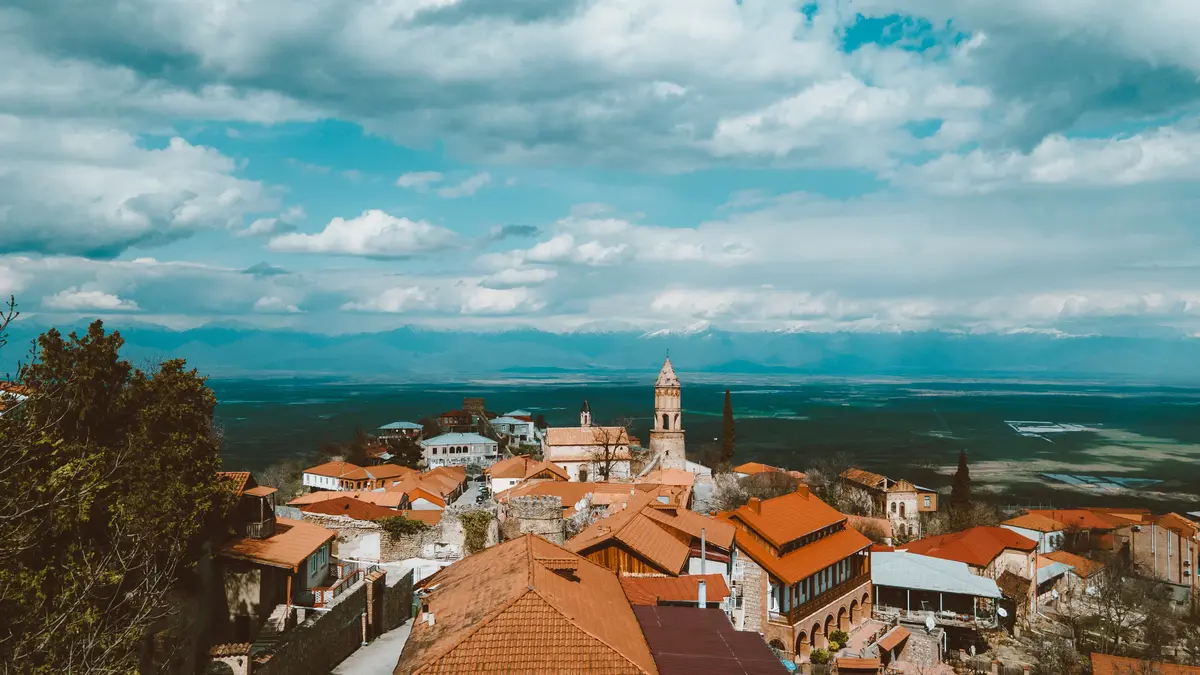
Kakheti runs on qvevri — clay vessels buried underground, a winemaking method with roots going back some 8,000 years and a UNESCO listing to prove it. Sighnaghi is the hilltop base over the Alazani Valley; Telavi is the workaday hub sitting closer to the big cellars.
One day gets you a couple of tastings and a long lunch; two let you slow down for a family supra, the Georgian feast run by a tamada, or toastmaster. Time it for autumn’s Rtveli harvest and the region shifts into a different gear.
- Base: Sighnaghi or Telavi
- Days: 1–2
- Best for: Qvevri wine, supra feasts, Bodbe and Alaverdi
- Getting there: 1.5–2 hrs from Tbilisi
Svaneti — The Tower Villages
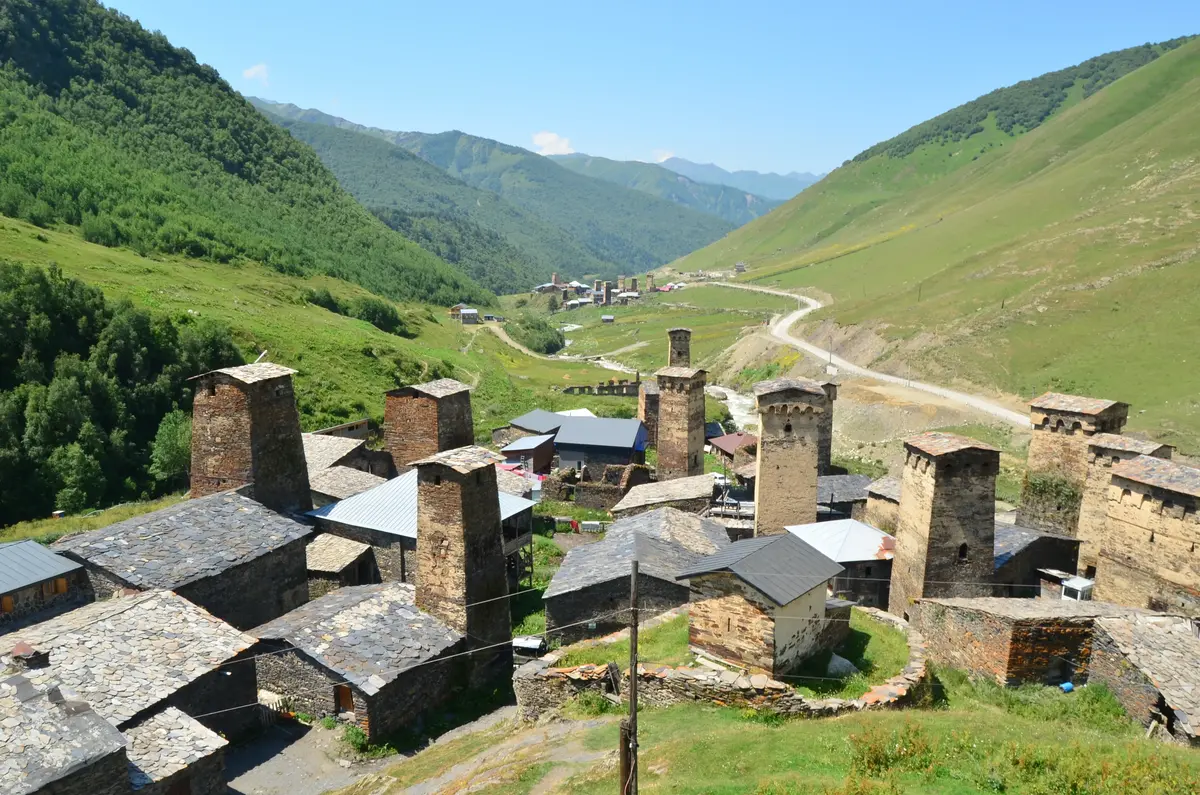
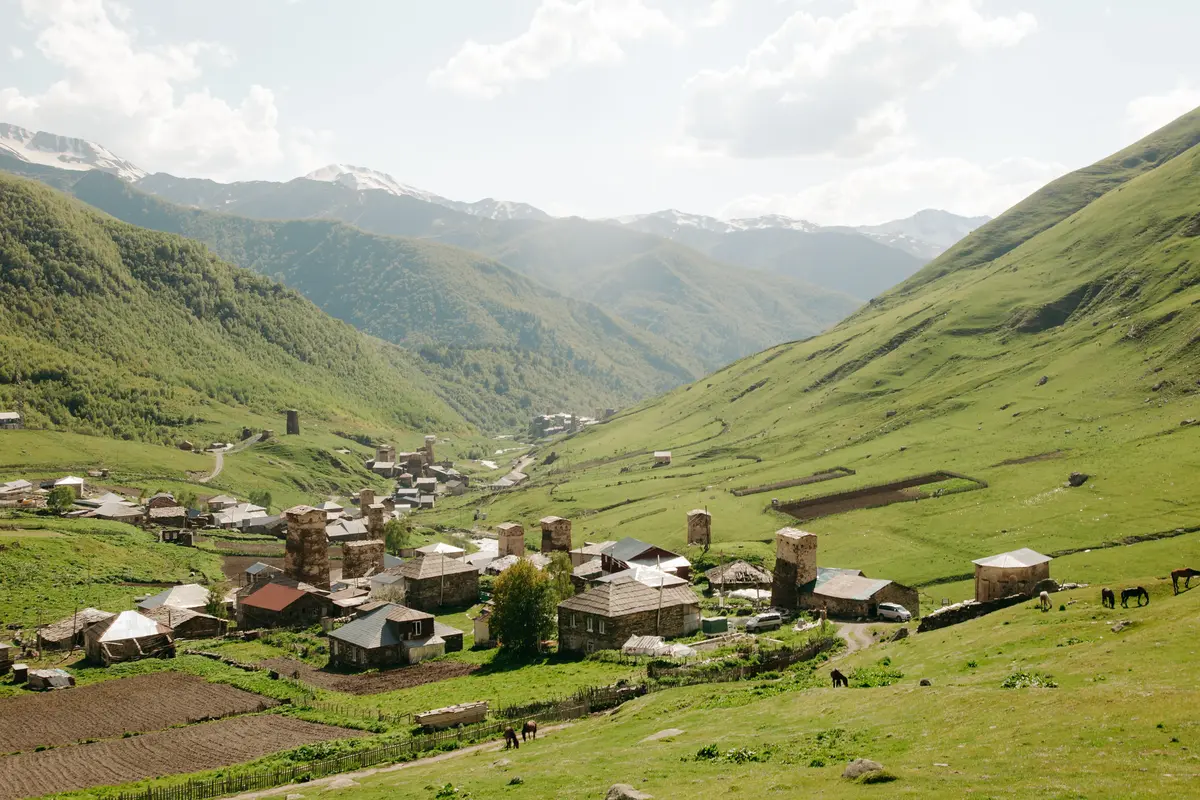
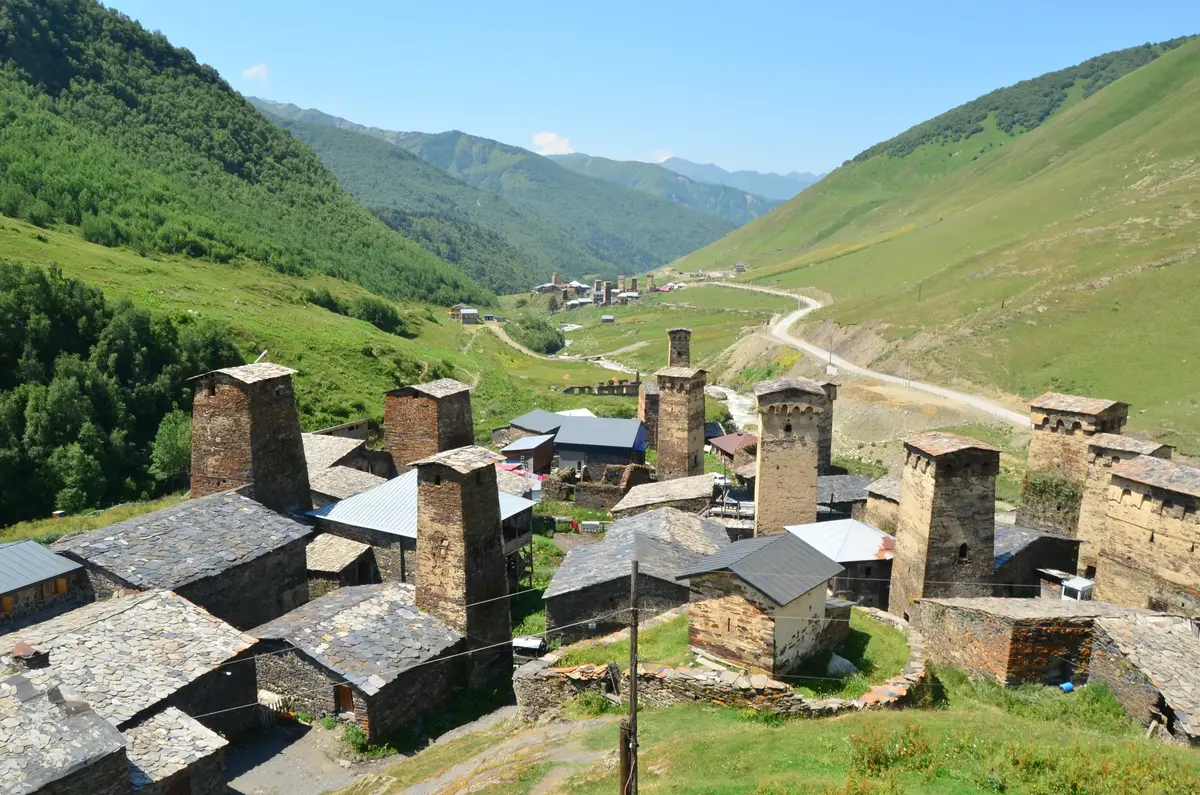
Svaneti is the high, remote corner: medieval stone defensive towers in Mestia and Ushguli, glacier hikes out to Chalaadi, and ridgelines under Shkhara and Tetnuldi. Ushguli sits around 7,200 ft (2,200 m), among the highest villages in Europe that stay lived-in through winter.
Give it 3–4 days, because getting there eats most of a day each way. The Mestia-to-Ushguli trek is the classic. Roads and trails open roughly June through September; outside that window, snow shuts the passes and the guesthouses.
- Base: Mestia
- Days: 3–4
- Best for: Trekking, stone towers, glaciers
- Getting there: 8–10 hrs by land, or a roughly 45-minute Vanilla Sky flight; hikeable June–September
Kutaisi and Imereti — Caves and Canyons
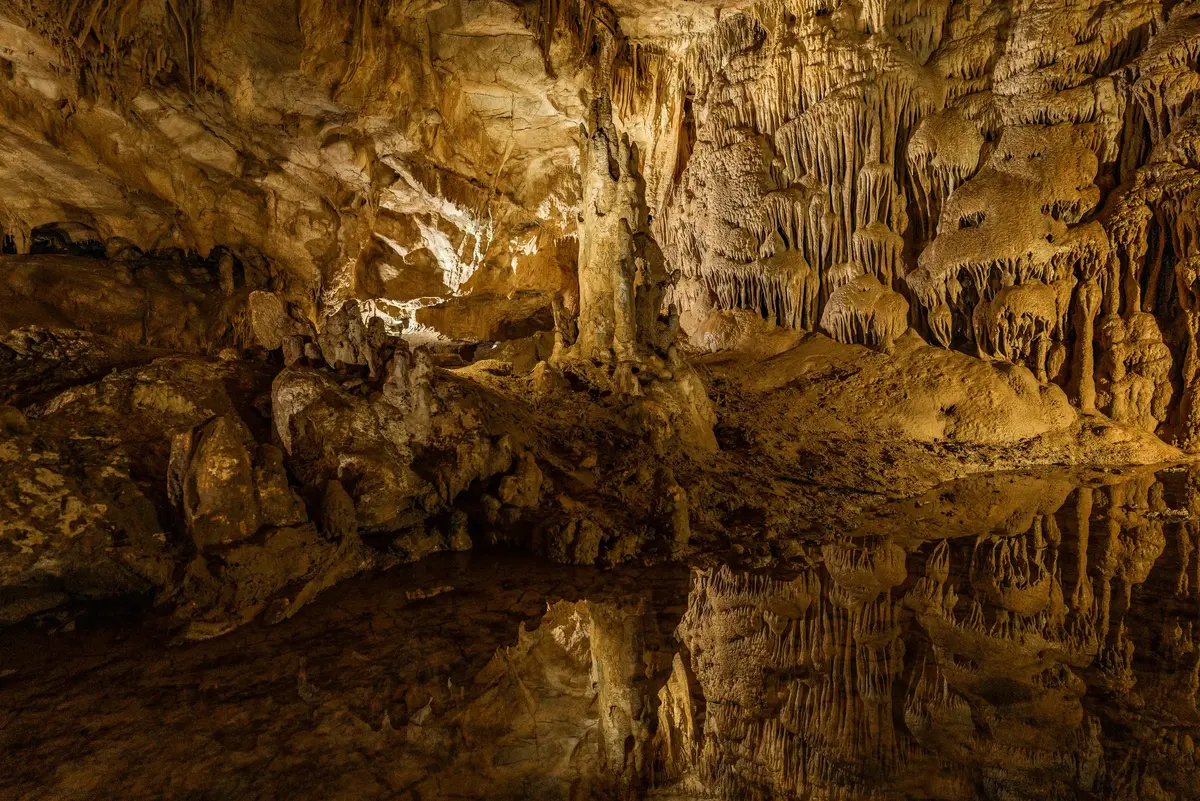
Kutaisi is the practical western hub, mostly because Wizz Air’s budget flights land at KUT, and it’s the launchpad for Imereti’s caves and canyons. Prometheus Cave, the Okatse and Martvili canyons, and the medieval Gelati and Motsameta monasteries are all short drives out.
A day or two is plenty here. If you’re flying Wizz Air in or out of the country, this is your natural first or last stop rather than a destination you’d cross Georgia to reach.
- Base: Kutaisi
- Days: 1–2
- Best for: Prometheus Cave, canyons, Gelati, budget flights
- Getting there: about 3.5 hrs from Tbilisi; Kutaisi airport (KUT) is 9 mi (14 km) from town
Batumi and Adjara — The Black Sea Coast
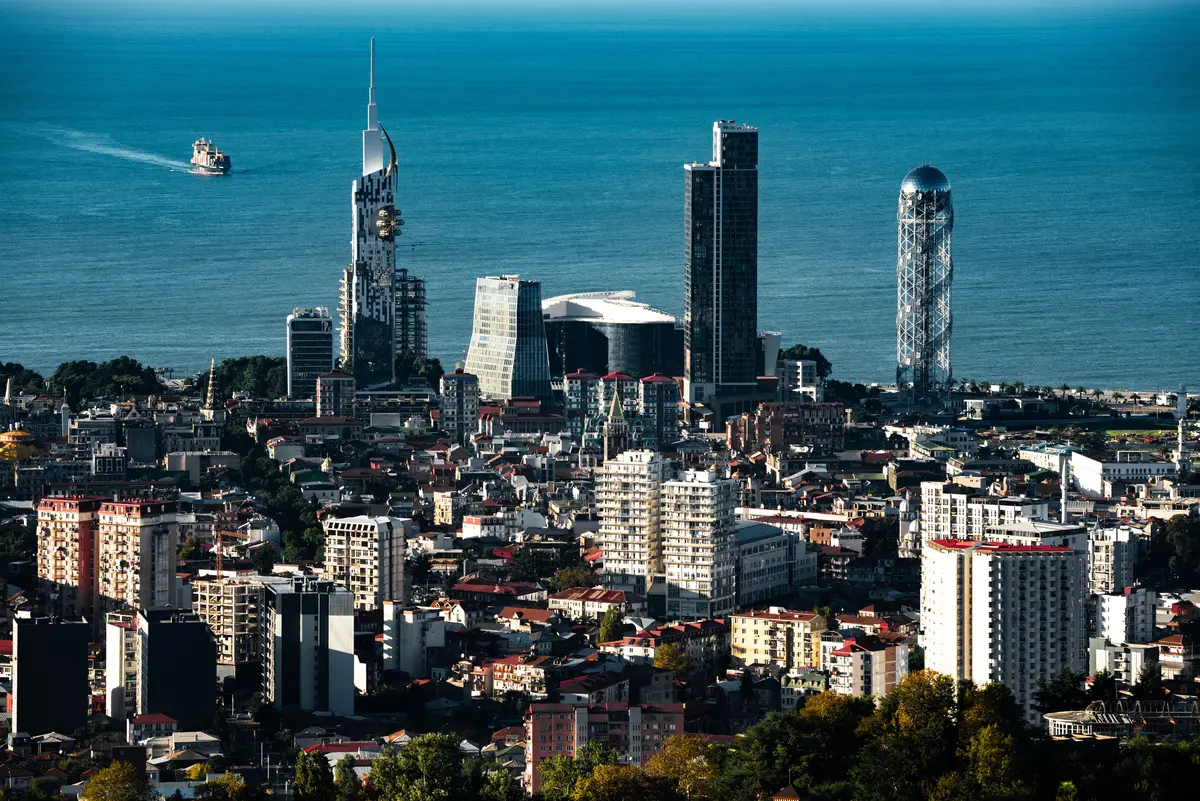
Batumi is the Black Sea resort city — a long seaside Boulevard, the Alphabet Tower, the sliding Ali and Nino statue, and a skyline that leans more casino-glitz than old Georgia. It is also the greenest, wettest place in the country by a wide margin.
This one splits travelers, and honestly. For culture-first visitors on a short trip, it’s skippable. For beach time, Adjaruli khachapuri — the boat-shaped one with a runny egg — and as a gateway toward Svaneti, it earns a night or two. September is its driest, most bearable month.
- Base: Batumi
- Days: 1–2, or skip it (see below)
- Best for: Beach, Adjaruli khachapuri, seaside architecture
- Getting there: about a 5-hr train or under-1-hr flight from Tbilisi
What’s Overrated in Georgia (and What to Do Instead)
A few Georgia staples get more hype than they hold up to, and a couple of standard day trips are built to disappoint. Here’s where the honest call parts ways with the generic guide.
- Batumi for culture-seekers: skippable on a short trip; genuinely worth it for beach, Adjarian food, and as a Svaneti gateway. Match it to why you came, not to a checklist.
- The Tbilisi–Kazbegi day trip: 12–14 hours round trip, most of it in a van, for a peak that’s clouded more than half of summer days. Overnight in Stepantsminda instead and you’ll actually see it.
- Marshrutkas on the scenic long routes: the fare is a gift, but the overtaking on the Military Highway isn’t. Take the train to Batumi and split a GoTrip driver to Kazbegi.
- The “$20 a day” myth: prices rose roughly 30–40% over five years. A basic khachapuri over 8 GEL (about $3) is your receipt that the old backpacker math no longer works.
Itineraries for Six Kinds of Traveler
Same country, six very different trips. Pick the track that matches how you travel, then trim to your days.
First-Timer: 8 to 10 Days
- Route: Tbilisi (3 days) → Kazbegi overnight (2) → Kakheti (2) → back to Tbilisi, with a Mtskheta or Gori day trip.
- Tips: Base in Tbilisi at both ends. Book the Kazbegi guesthouse ahead in summer. Add Svaneti or Batumi only if you can spare another 3–4 days.
The Budget Backpacker Route
- Route: Fly into Kutaisi on Wizz Air → Imereti caves → Tbilisi → Kazbegi → Kakheti, all by marshrutka.
- Tips: Hostel dorms run $7–15, bakery bread costs about a dollar, house wine is 3–5 GEL a glass. Plan on a realistic $35–50 a day, not $20.
The Digital Nomad Setup
- Route: Settle in Tbilisi (Sololaki or Vera) and take weekend trips out to Kazbegi and Kakheti.
- Tips: The 365-day visa waiver covers a long stay. Cafe wifi is solid and co-working is cheap. Open a local bank account for rent and utilities, and escape the summer heat to the mountains.
The Wine and Food Trip
- Route: Tbilisi (2 days) → Kakheti via Sighnaghi and Telavi (3) → optional Imereti for Megrelian cooking.
- Tips: Time it for the autumn Rtveli harvest. Book a qvevri masterclass or a family supra. Work through Saperavi and Kindzmarauli reds, and treat chacha, the grape brandy, with respect.
The Hiking and Adventure Loop
- Route: Tbilisi → Svaneti for the Mestia-to-Ushguli trek (4 days) → Kazbegi for Truso and Gergeti (2).
- Tips: Go June–September. The Vanilla Sky flight to Mestia saves a full day but books out and cancels for weather, so have a train-plus-marshrutka backup. Carry cash — mountain ATMs are rare.
The Comfort and Family Version
- Route: Tbilisi (3 days) → a Kakheti wine day with a private driver → Kazbegi overnight by GoTrip.
- Tips: Skip the long marshrutkas entirely. GoTrip drivers from about 180 GEL/car split well and stop where you want. Boutique hotels start around $150, and Batumi’s Boulevard and Botanical Garden keep kids busy.
What I’d Tell a Friend Before They Go
If this Georgia country travel guide leaves you with one habit, make it this: plan more than you bucket-list. Enter visa-free, carry the required insurance, base in Tbilisi, and pick two or three regions instead of chasing all six. The country is small on the map and slow on the road — respect that and it opens right up.
TL;DR: Georgia is easy to enter (visa-free up to 365 days), no longer dirt cheap (budget about $35–50 a day for comfortable-budget travel), and best in May–June or September–October. Base in Tbilisi, add Kazbegi and Kakheti, skip the rushed day trips, carry the required 30,000 GEL insurance, and check current advisories before you fly.
So which version are you building — the wine trip through Kakheti or the tower trek in Svaneti? Drop your dates and how many days you’ve got, and tell me what you’d never cut.