Most 10-day Georgia itineraries you’ll find online quietly lie to you. They put Svaneti on Day 3, the Black Sea on Day 5, and a Kakheti winery on Day 7, as if the country were the size of Vermont and the roads behaved like I-95. They don’t. The drive from Tbilisi to Mestia is eight to ten hours through mountain passes, and it has wrecked more trips than bad weather ever has.
This Georgia country itinerary for 10 days is built the other way around: drive times first, sightseeing second. You’ll get three complete routes, honest mileage, current entry rules that changed recently and that most published itineraries still haven’t updated, and the kind of specifics that make the difference between a good trip and a great one.
First, the obvious question: which Georgia?
This guide is about Sakartvelo, the country at the eastern edge of the Black Sea, wedged between Russia and Turkey in the Caucasus Mountains. Not Atlanta. Not the Okefenokee. The country calls itself Sakartvelo; “Georgia” is the name the rest of the world uses, and the overlap with the U.S. state is a genuine headache for anyone trying to Google flights.
What you get for the long flight: a mountain range that regularly gets compared to the Dolomites, an 8,000-year winemaking tradition that predates the Romans, a cuisine that will ruin ordinary cheese bread for you forever, and prices that make Western Europe feel like a scam. Americans can stay for up to a year without a visa. Almost nobody from the U.S. has been.
Is 10 days enough for Georgia?
Ten days is enough for Georgia if you pick one anchor and build around it. You can comfortably combine Tbilisi, the Kazbegi mountains, Kakheti wine country, and either Imereti or Svaneti — but not all of them at once. Trying to add the Black Sea coast on top is what turns a great trip into a road trip with sightseeing breaks.
The honest math: Georgia is roughly the size of South Carolina, but a quarter of it is vertical. Distances that look trivial on a map take three times as long as you’d expect. Ten days gets you two or three regions done well, or five regions done badly.
Before you book: entry rules, safety, and getting there
Entry requirements for U.S. passport holders
No visa. American citizens can enter Georgia visa-free and stay up to 365 days, one of the most generous policies in the world. You show your passport at immigration, get a stamp, and walk out. No application, no fee, no e-visa portal.
There is one new requirement that trips people up. Under Government Regulation No. 602, implementing Georgia’s Law on Tourism, every foreign tourist entering the country must now carry valid health and accident insurance covering the entire length of their stay, with minimum coverage of 30,000 GEL (roughly $11,500). The policy has to be presentable in English or Georgian, digital or printed, and it must include your name, coverage dates, coverage amount, and insurer.
What this means in practice:
- Buy it before you fly. There are no insurance counters at the airport or land borders.
- Airlines have been instructed to check documentation at check-in, so this can stop you before you even board.
- Most standard U.S. travel medical policies qualify, but confirm the certificate names Georgia as a covered territory and meets the coverage minimum. Many domestic U.S. health plans do not, and a credit card travel benefit usually won’t produce the certificate you need.
- If you plan to ski, trek above roughly 6,500 feet, raft, or ride ATVs, check the exclusions. Adventure activities are commonly carved out of basic policies and need a rider.
- Noncompliance can mean a fine of 300 GEL (about $115) or, at the border officer’s discretion, refused entry.
Diplomats, holders of Georgian residence permits, international transport drivers, and airport transit passengers are exempt. Almost no leisure traveler is.
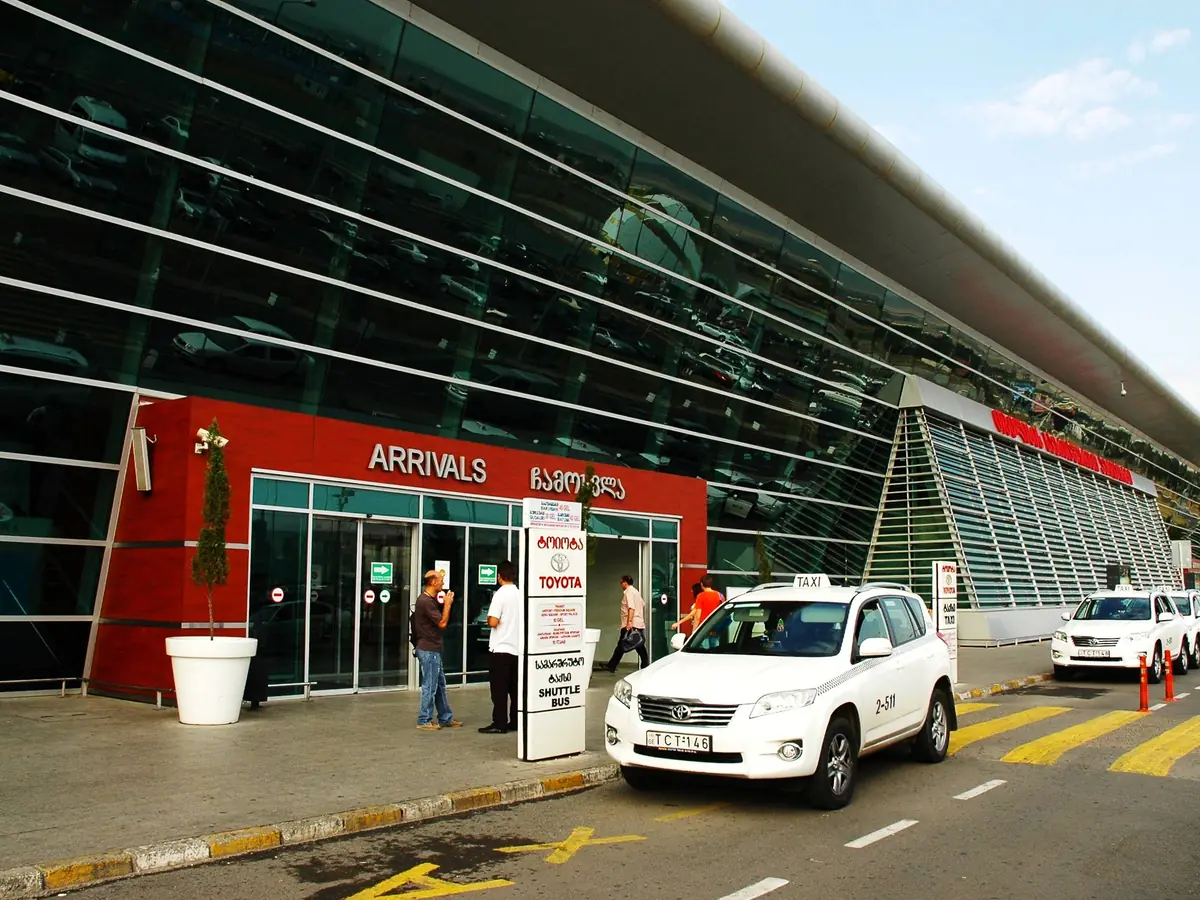
How Americans actually get there
There are no direct flights from the United States. Your realistic options:
- Istanbul on Turkish Airlines is the workhorse routing and usually the fastest. New York to Tbilisi runs about 13 to 15 hours of total travel time with the connection.
- Warsaw (LOT), Munich or Vienna (Lufthansa group), Doha (Qatar), Dubai, and Riga (airBaltic) all work, generally with longer layovers.
- Round-trip fares from the East Coast commonly land between $900 and $1,400 depending on season. West Coast adds a leg and a few hundred dollars.
- Kutaisi (KUT) is Georgia’s budget airport, served mostly by Wizz Air from European hubs. It is meaningfully closer to Svaneti than Tbilisi is, which matters for one of the routes below.
Here is the detail nobody tells you: a lot of flights into Tbilisi land between 2:00 and 5:00 in the morning. Combine that with Tbilisi being eight hours ahead of Eastern Time, and Day 1 is not a sightseeing day. Pre-book an airport transfer or use the Bolt app, sleep, and start your trip that afternoon. Every itinerary below assumes this.
Safety, honestly
The U.S. State Department rates Georgia Level 1, “Exercise Normal Precautions” — the safest tier there is, the same rating as Japan, Iceland, and Denmark. Violent crime against tourists is rare. Petty theft and taxi overcharging exist in Old Tbilisi in high season, and that’s about the extent of what most visitors encounter.
Three things do deserve your attention:
South Ossetia and Abkhazia are Russian-occupied and rated Level 4, “Do Not Travel,” due to crime, civil unrest, and landmines. The administrative boundary lines are poorly marked and shift. Entering can result in arrest, imprisonment, or a fine. Stay a few miles clear, don’t test GPS-drawn borders, and don’t hike near them without a local guide. Nothing in this itinerary goes near either territory.
Pro-EU demonstrations have taken place daily in Tbilisi since late 2024, concentrated on Rustaveli Avenue outside the Parliament building. They typically draw a few hundred people on weeknights and more on weekends, and they are usually peaceful. Police have at times used tear gas and water cannons, and protesters have been detained and prosecuted. Practical advice: don’t join, don’t film police, and route around Rustaveli in the evenings. The rest of the country — Kazbegi, Kakheti, Svaneti, Kutaisi, Batumi — is entirely unaffected. Also note that Rustaveli Avenue has been undergoing a full reconstruction with vehicle traffic restricted, so check current conditions before booking a hotel directly on it.
The war in Ukraine is not in Georgia. Georgia borders Russia, and that fact makes a lot of American travelers hesitate. It shouldn’t drive your decision. Georgia is not a combatant, the tourism infrastructure is running normally, and the border regions relevant to travelers are ordinary mountain valleys full of guesthouses.
The drive-time reality check
Print this. It is the single most useful thing in this guide, and it’s the reason the routes below look the way they do.
| Route | Approximate distance | Realistic driving time |
|---|---|---|
| Tbilisi to Mtskheta | 15 miles | 30 minutes |
| Tbilisi to Gori and Uplistsikhe | 55 miles | 1 hour 15 minutes |
| Tbilisi to Sighnaghi (Kakheti) | 70 miles | 1 hour 45 minutes |
| Tbilisi to Telavi (Kakheti) | 60 miles | 2 hours |
| Tbilisi to Stepantsminda (Kazbegi) | 95 miles | 3 hours |
| Tbilisi to Kutaisi | 145 miles | 3 to 3.5 hours |
| Tbilisi to Batumi | 230 miles | 5.5 to 6 hours |
| Kutaisi to Mestia (Svaneti) | 175 miles | 5 to 6 hours |
| Zugdidi to Mestia | 85 miles | 3 to 4 hours |
| Tbilisi to Mestia | 285 miles | 8 to 10 hours |
| Mestia to Ushguli | 28 miles | 2 to 2.5 hours each way |
Read that last block again. Mestia is 28 miles from Ushguli and it takes two hours, because the road is unpaved, rutted, and requires a high-clearance vehicle. That ratio holds across most of mountain Georgia.
The practical takeaway: Svaneti is a commitment. A round trip from Tbilisi eats three to four days minimum before you’ve hiked a single mile. If Svaneti is your priority, restructure the whole trip around it (Route 2). If it isn’t, leave it out entirely and come back — you’ll have a far better 10 days.
Route 1: The Classic Loop
Best for first-timers, couples, families, travelers who want variety without a punishing schedule, and anyone visiting outside high summer. This is the route I’d hand to someone going to Georgia for the first time. It runs as a clean loop with no backtracking, uses good roads, and never asks you to sit in a car for more than about four hours.
Day 1 — Arrive Tbilisi. Assume a pre-dawn landing. Pre-arrange a transfer or use Bolt (about 25 to 35 GEL, roughly $10 to $13, to the center). Sleep. In the afternoon, walk the Old Town without an agenda, eat khinkali, go to bed early.
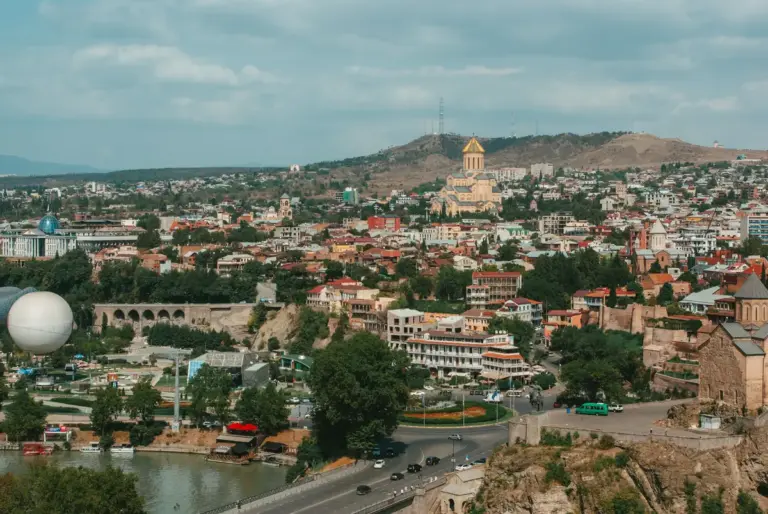
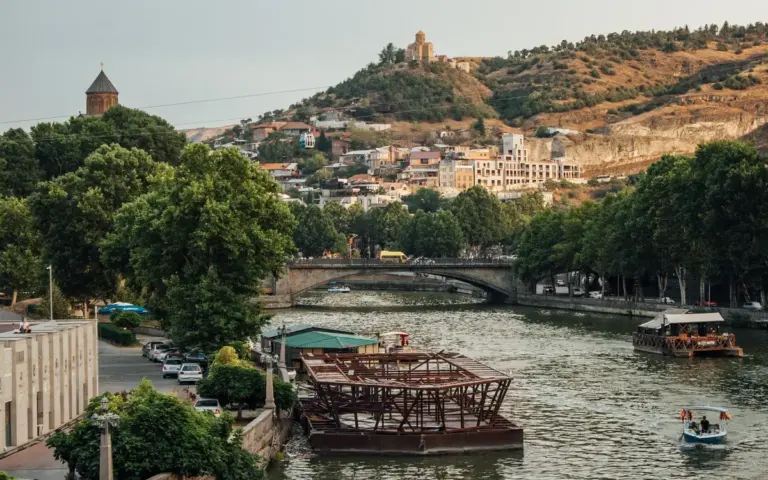
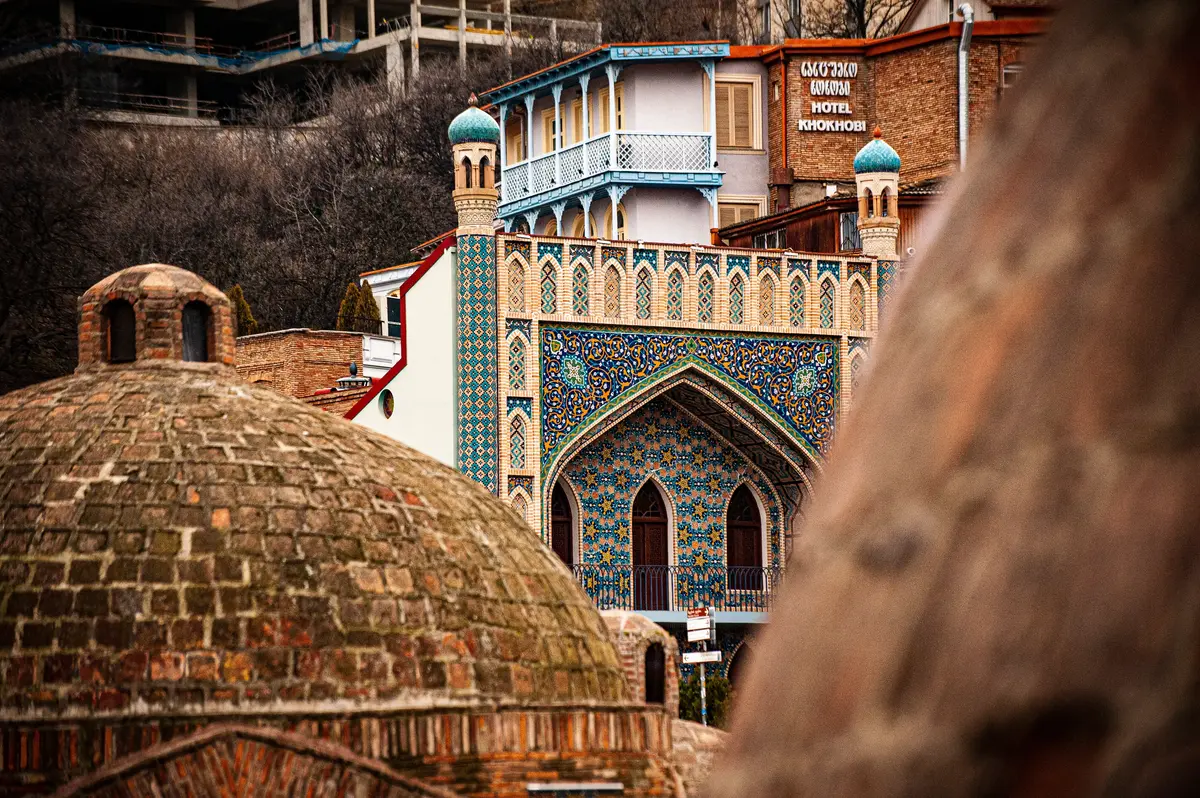
Day 2 — Tbilisi. Start at Abanotubani, the domed sulfur bath district at the foot of the Narikala ridge, where Tbilisi was founded and where Pushkin and Alexandre Dumas both soaked. Book a private room in advance: Chreli-Abano, the ornate blue-tiled Moorish bathhouse, runs roughly 130 to 200 GEL an hour ($50 to $77) and needs a reservation; Bathhouse No. 5, operating since 1925, is the more traditional and cheaper option at around 70 to 110 GEL. Add a kisi scrub for 15 to 30 GEL, cash. Then take the cable car from Rike Park up to Narikala Fortress (2.5 GEL, paid with a MetroMoney card — the machines don’t take cash), walk the ridge to Kartlis Deda, the aluminum Mother of Georgia holding a wine bowl for friends and a sword for enemies, and descend into the Sololaki backstreets. Evening: the Bridge of Peace at twilight, then dinner at Barbarestan, a restaurant built entirely from a 19th-century cookbook by the Georgian noblewoman Barbare Jorjadze.
Day 3 — Mtskheta, Uplistsikhe, and on to Kutaisi. Leave early. Mtskheta, the ancient capital 30 minutes north, holds Svetitskhoveli Cathedral and, on the bluff above, Jvari Monastery with its view over the confluence of two rivers. Continue west to Uplistsikhe, a cave city carved into a sandstone hillside and inhabited for something like three thousand years. Gori, ten minutes on, has the Stalin Museum — a genuinely strange piece of unreconstructed Soviet hagiography, and worth the hour for that reason alone. Arrive Kutaisi for dinner. Total driving with stops: about four hours.
Day 4 — Imereti. Gelati Monastery, a UNESCO site with mosaics and frescoes layered across nine centuries, plus Motsameta perched over a river gorge. In the afternoon pick one canyon: Martvili for the turquoise water and short boat ride, or Okatse for the cliff-edge walkway. Prometheus Cave is the wet-weather backup. Second night in Kutaisi.
Day 5 — Kutaisi back to Tbilisi. Three and a half hours on the upgraded Rikoti route. Afternoon in Tbilisi: the Chronicle of Georgia, Zurab Tsereteli’s unfinished monument of sixteen enormous pillars on a hill above the Tbilisi Sea, about seven miles north of the center and free to visit at any hour. It is best at sunset and almost always empty. Dinner in the Vera district — Shavi Lomi, the restaurant widely credited with launching modern Georgian cooking, or Keto & Kote in its hidden mansion.
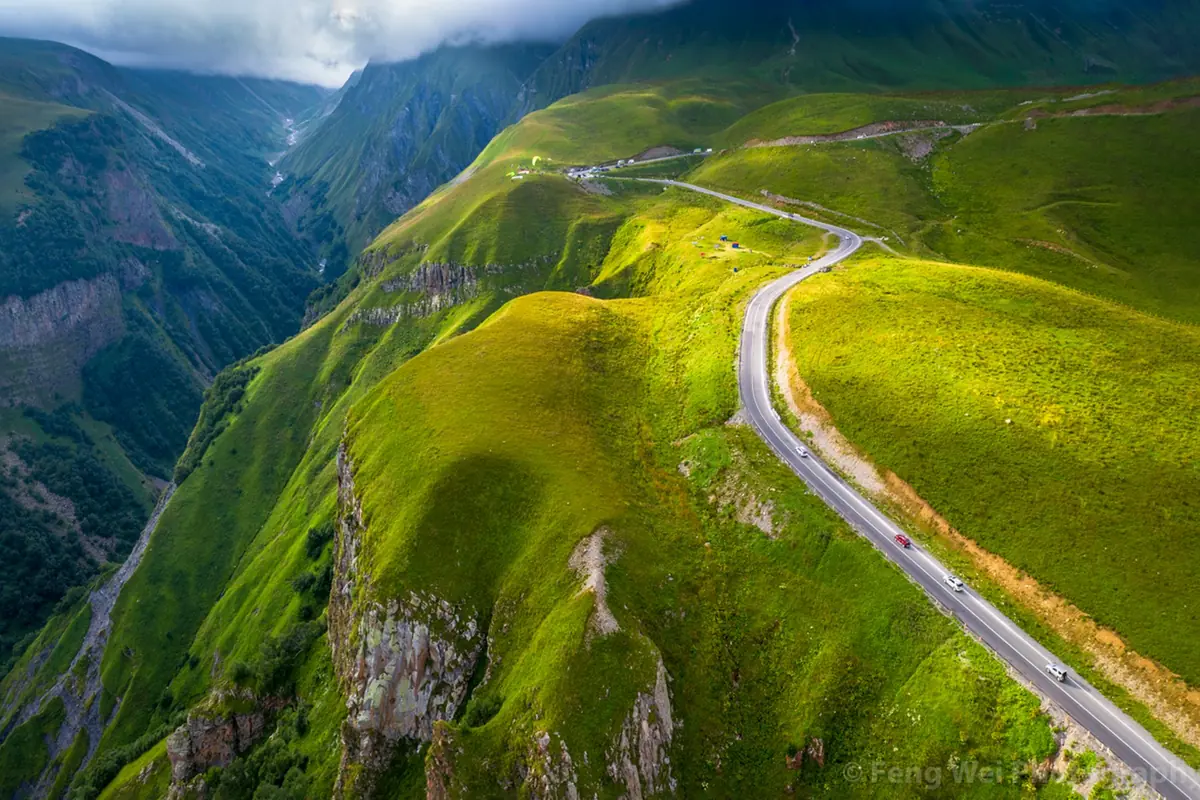
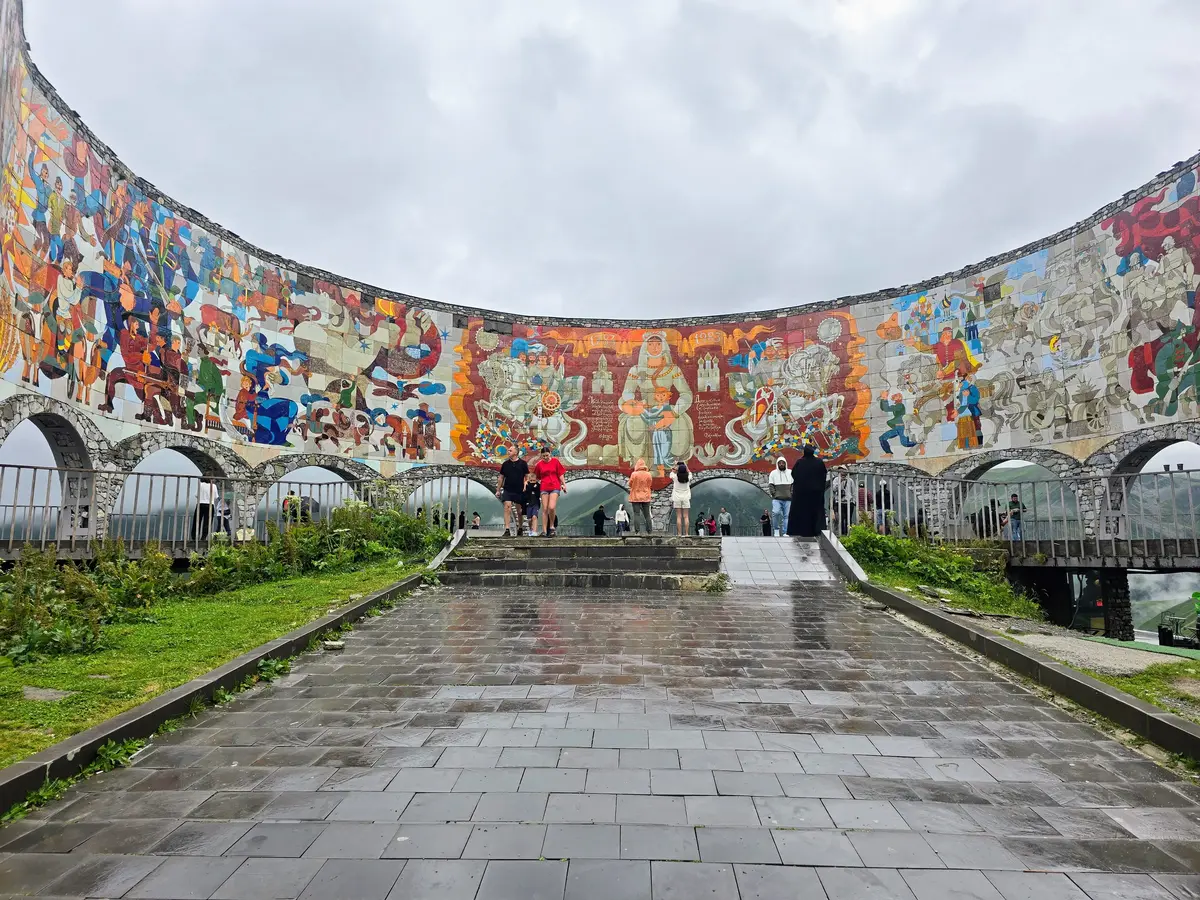
Day 6 — The Georgian Military Highway to Kazbegi. This is one of the great drives on earth. Stop at Ananuri fortress on the Zhinvali reservoir, then the Russia-Georgia Friendship Monument above Gudauri, a Soviet mosaic amphitheater cantilevered over a thousand-foot drop. Cross the Jvari Pass at nearly 7,900 feet and descend into Stepantsminda. Three hours of driving, six with stops. Note that a major bypass with new tunnels and bridges is under construction on this stretch; when fully commissioned it will cut the worst section from an hour to about 15 minutes and make the road far more reliable in winter. Until then, budget three hours and check conditions in bad weather. Overnight in Stepantsminda — Rooms Hotel Kazbegi if you’re splurging on the view, Oma Guest House or Guesthouse Lela if you’re not.
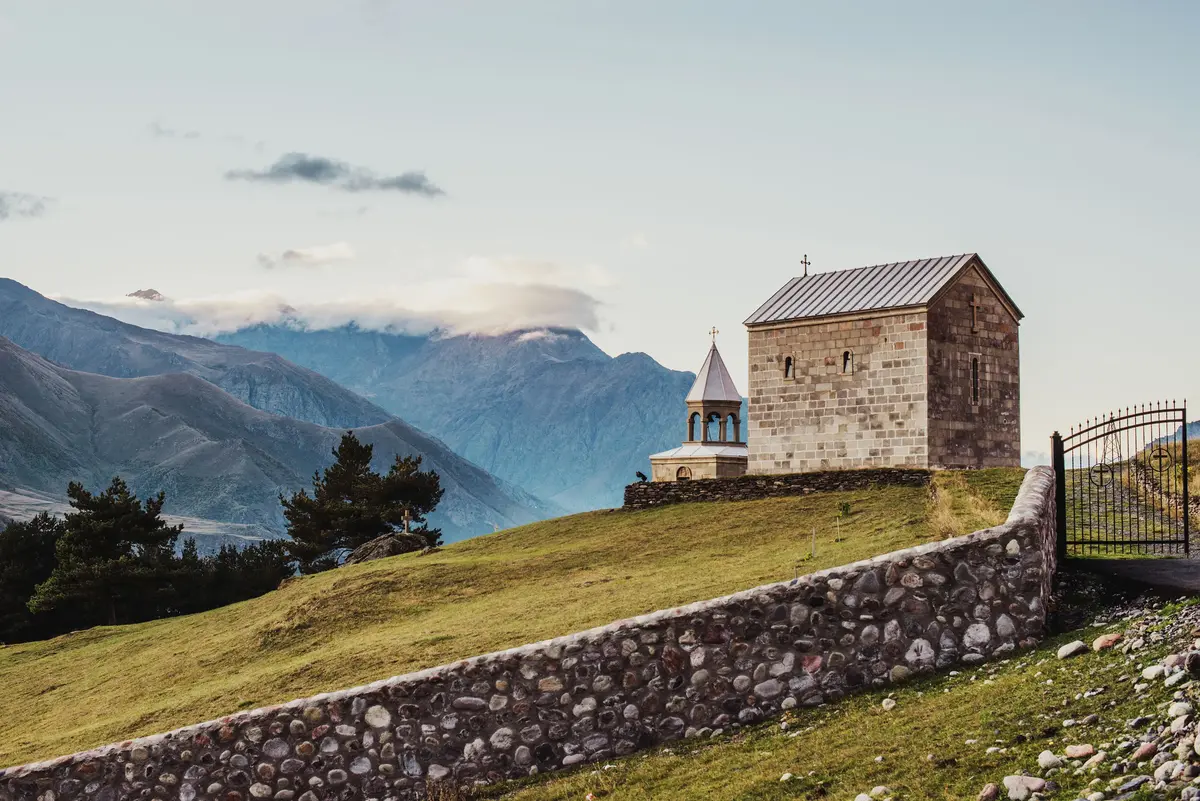
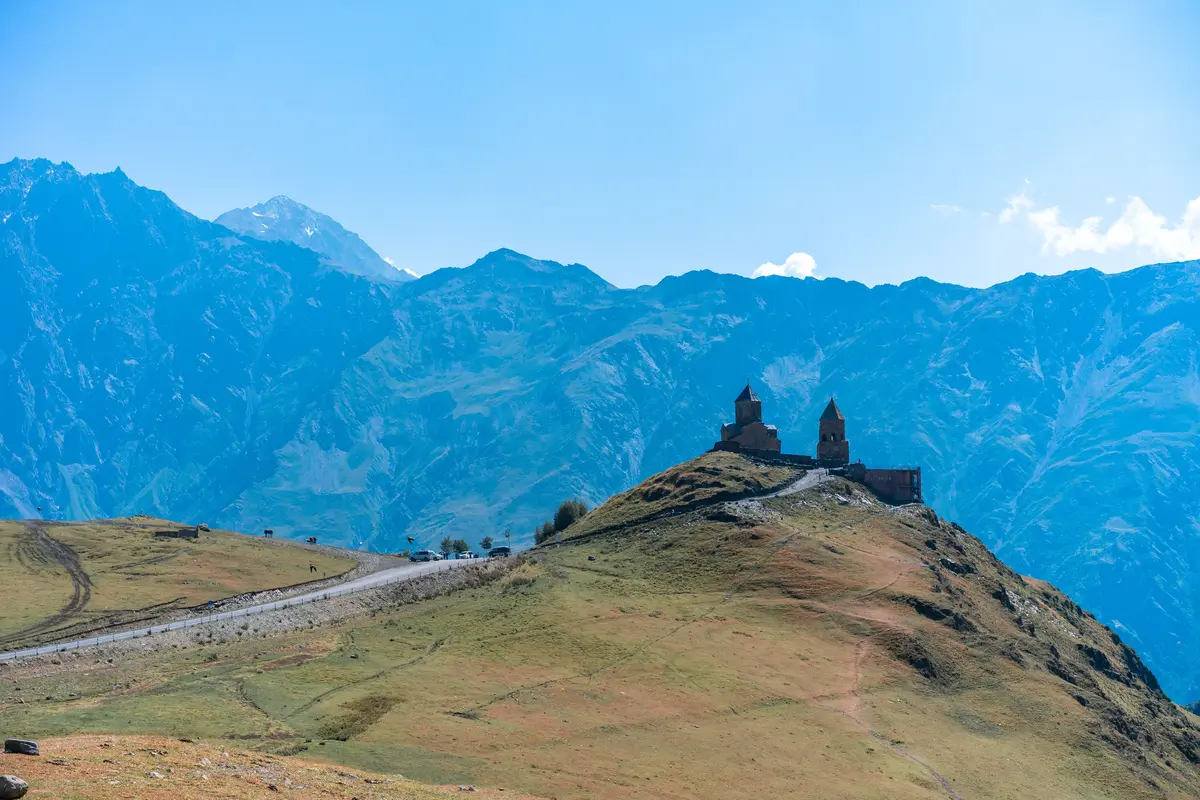
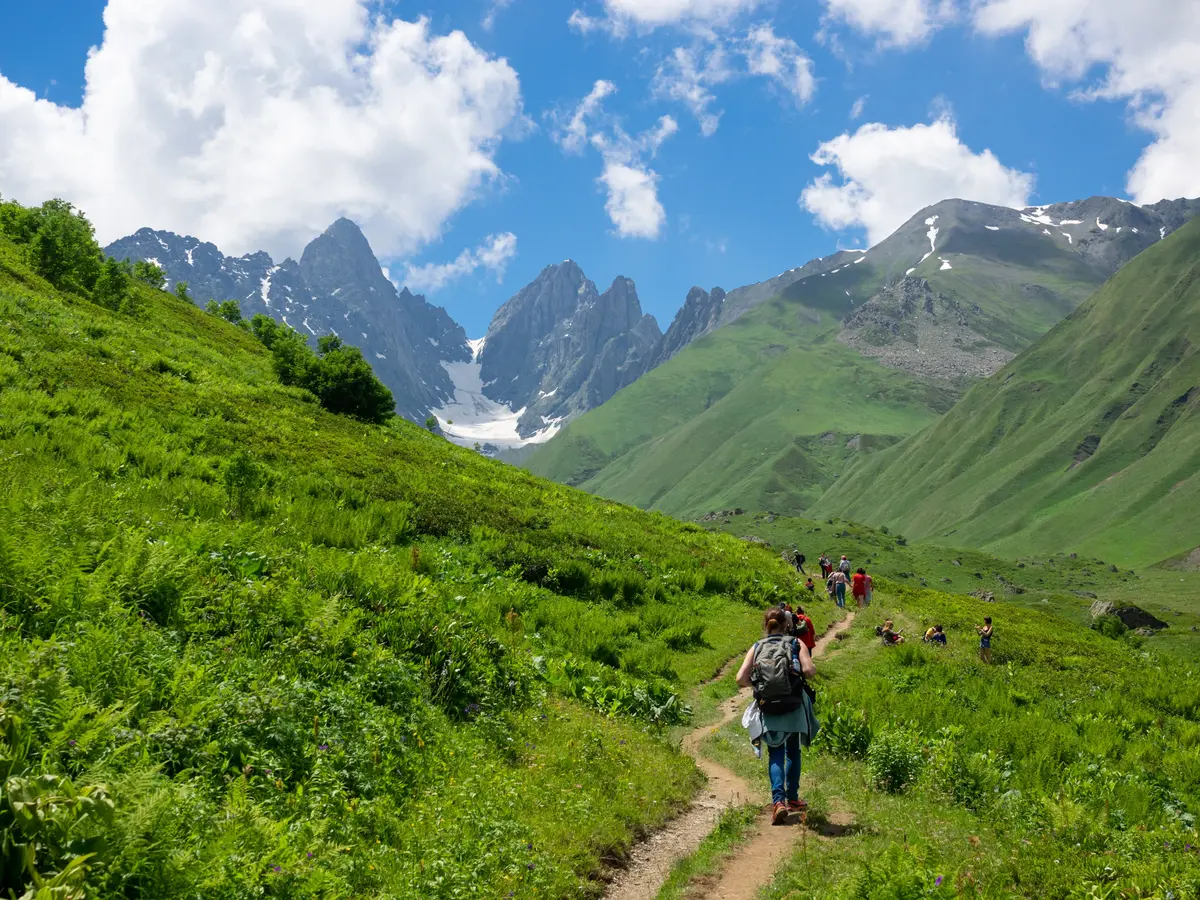
Day 7 — Gergeti and the valleys. Gergeti Trinity Church sits at about 7,100 feet on a spur beneath Mount Kazbek (16,558 feet). Walk up — roughly 2,000 feet of gain, an hour and a half to two hours — or take a 4×4 if knees or altitude are an issue. Go at sunrise or after 4:00 p.m.; between noon and 2:00 in July and August there can be several hundred people up there. In the afternoon, choose Truso Valley (easy, mineral springs, travertine terraces, a crumbling fortress) or Juta (higher, harder, more dramatic). Second night in Stepantsminda.
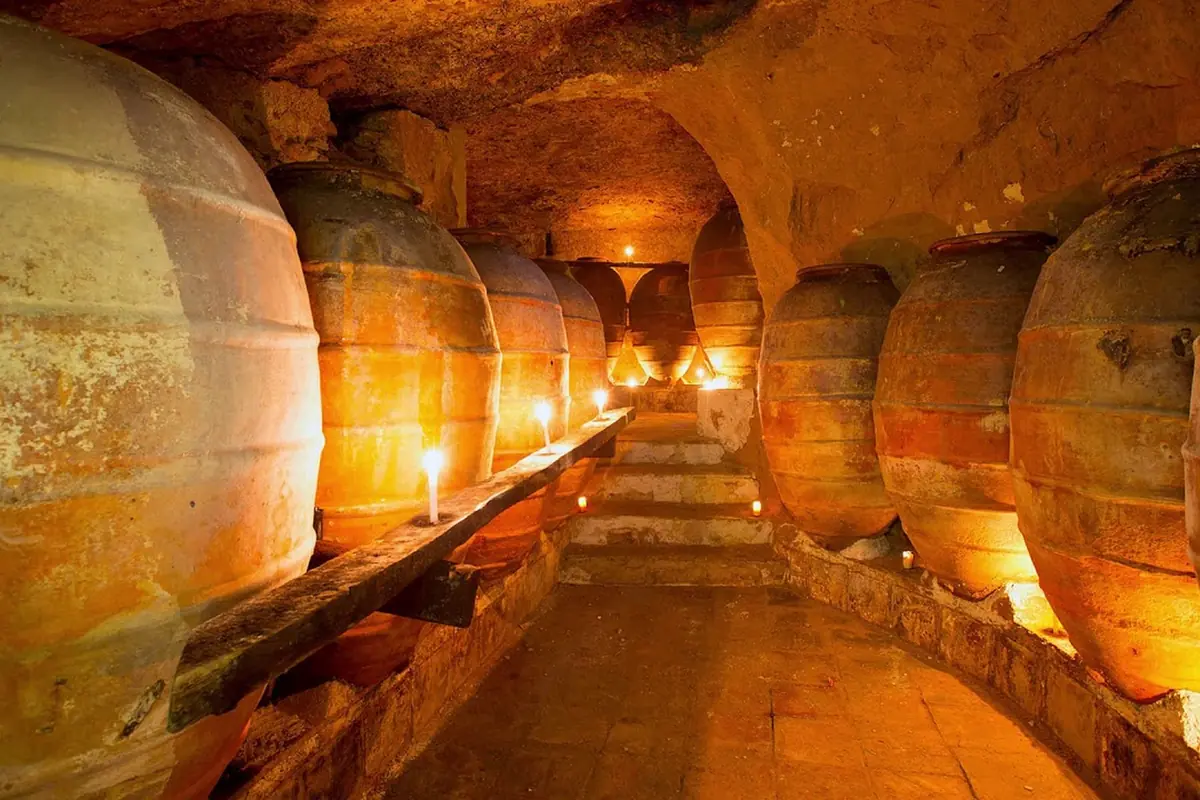
Day 8 — Kazbegi to Kakheti. About four hours across to Telavi. Spend the afternoon in wine country: Tsinandali Estate for the aristocratic history and the cellar, Schuchmann for a polished modern tasting, or Alaverdi Monastery, where monks have been making wine in clay qvevri since the 11th century. Overnight near Telavi or push on to Sighnaghi.
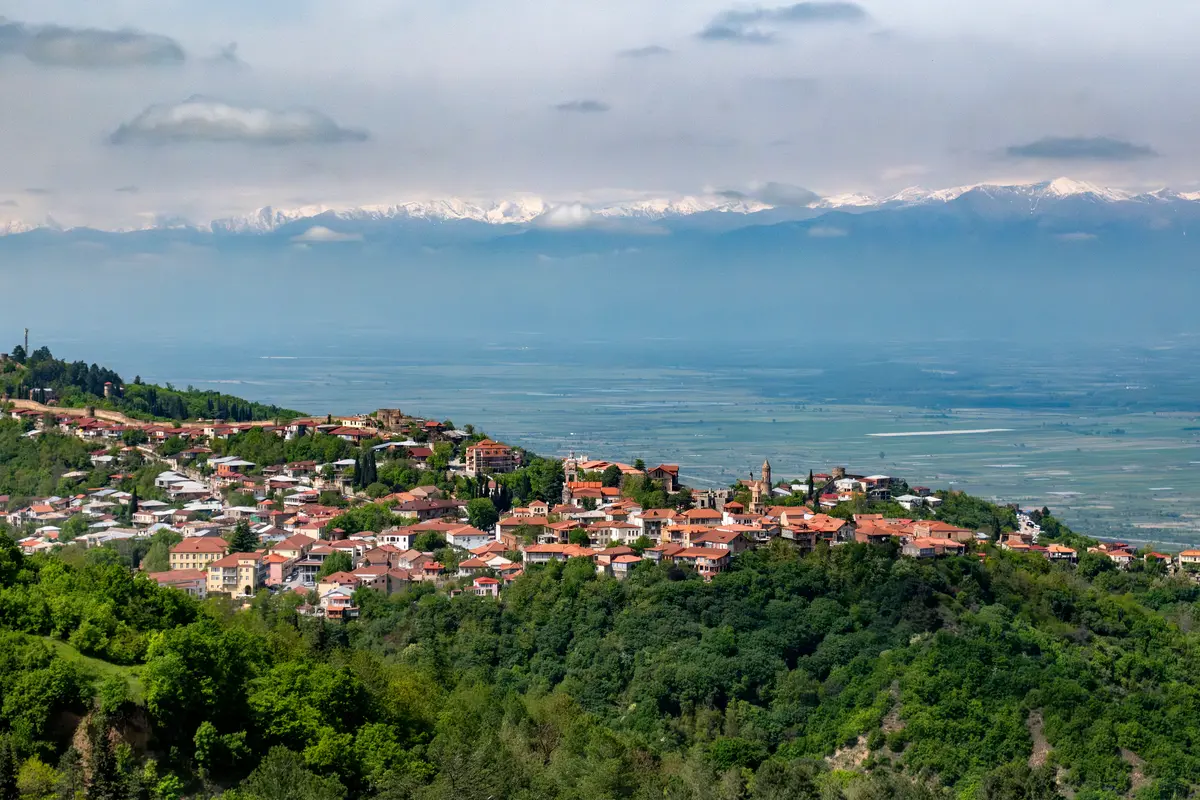
Day 9 — Sighnaghi and back to Tbilisi. Sighnaghi is the walled hill town everyone photographs, with the Alazani Valley and the Greater Caucasus laid out below it. Visit Bodbe Monastery, then taste at Pheasant’s Tears, co-founded by an American painter and a Georgian winemaker, which does zero-sulfur qvevri wines from rare grapes and a set-menu restaurant worth booking ahead. Two hours back to Tbilisi. Last dinner, last wine bar.
Day 10 — Depart.
Route 2: Mountains and Hiking
Best for hikers, photographers, and repeat visitors. Summer only — realistically mid-June through early October. This route makes Svaneti the anchor and accepts the cost of getting there.
Fly into Kutaisi if you can. It cuts three hours off the approach compared to Tbilisi.
Day 1 — Arrive Kutaisi. Recover. Walk to the Bagrati Cathedral hill for sunset.
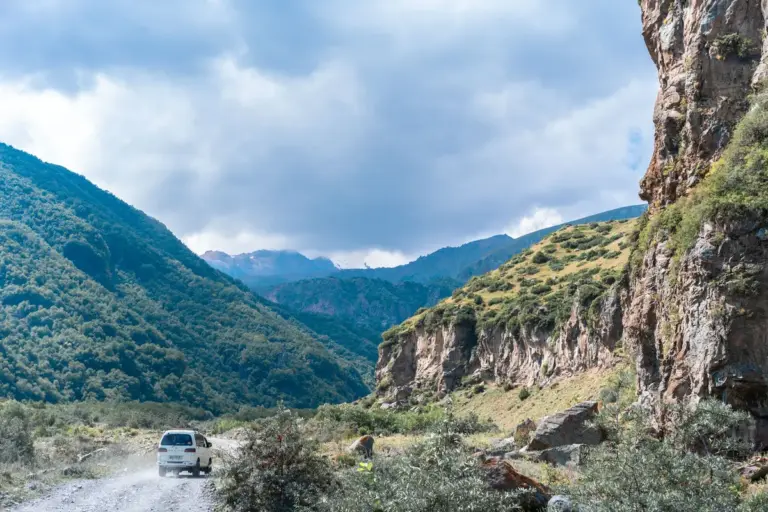
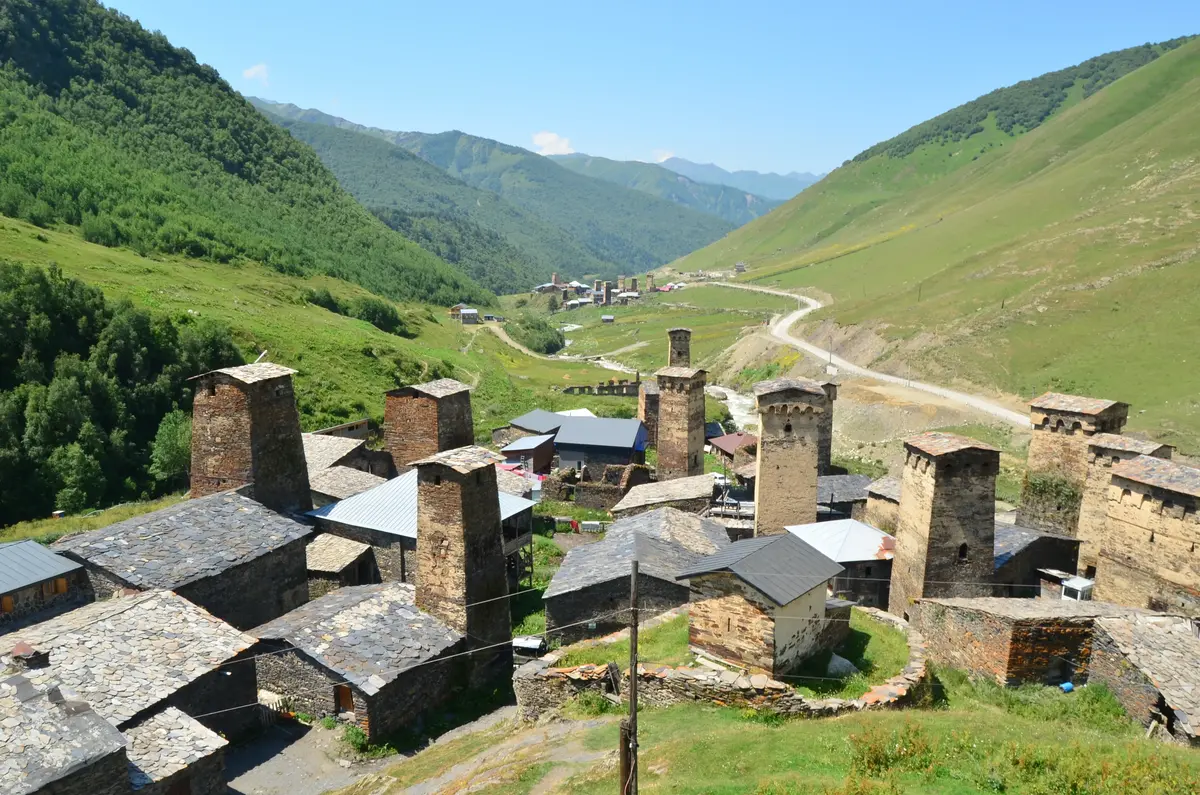
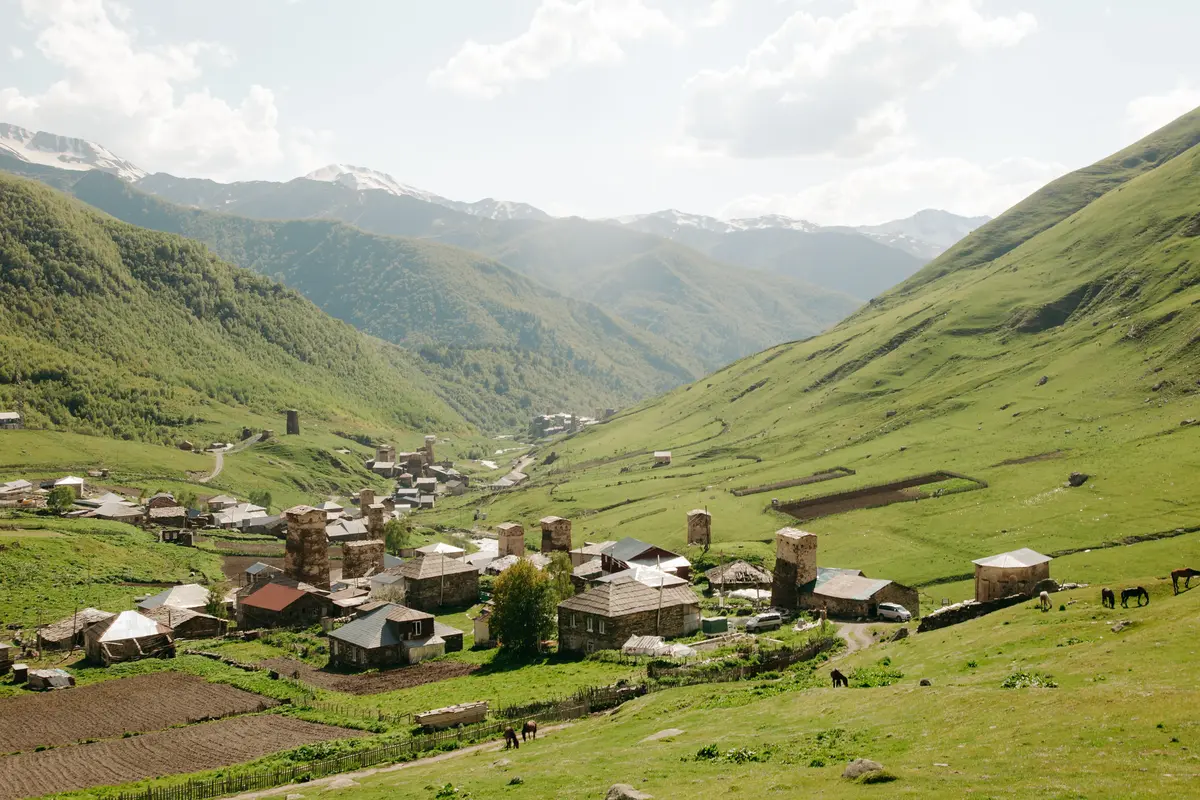
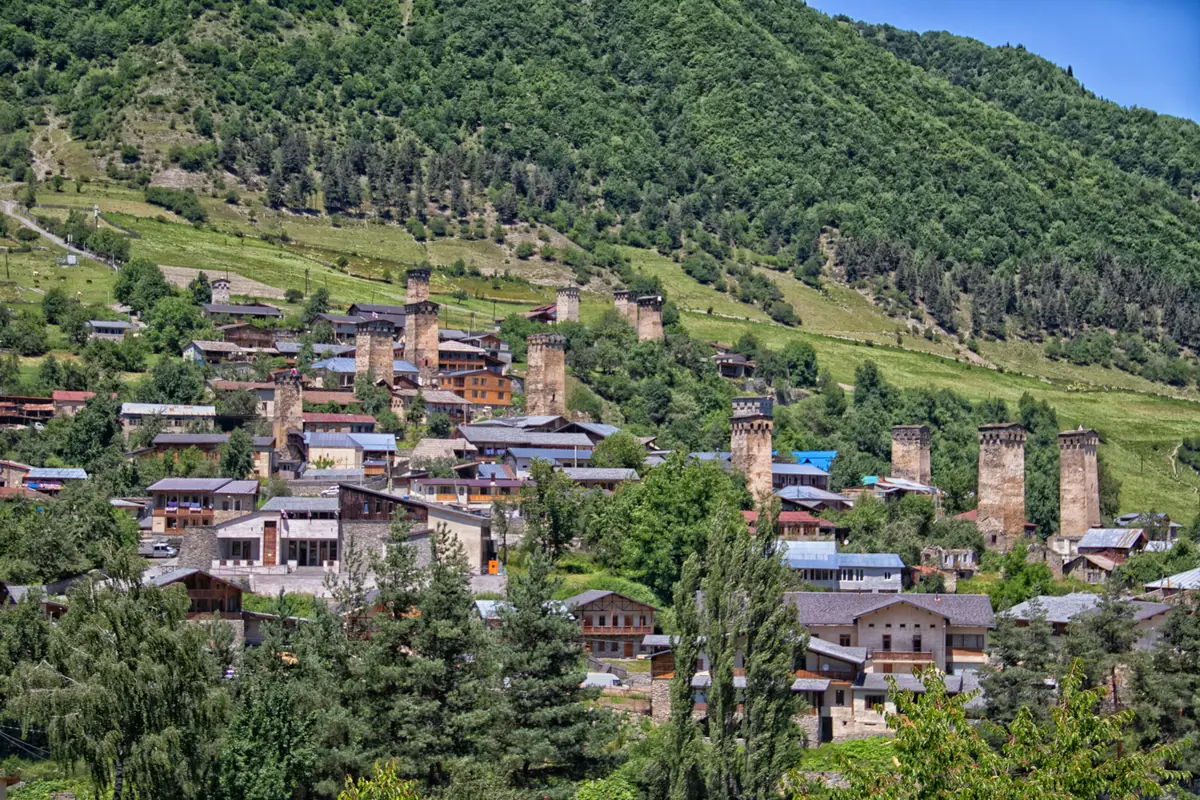
Day 2 — Kutaisi to Mestia. Five to six hours via Zugdidi. Break it at Martvili Canyon or in Zugdidi. Arrive Mestia in the afternoon and walk among the Svan defensive towers — stone family fortresses, some nine hundred years old, that give the valley its unmistakable skyline.
Day 3 — Mestia. Chalaadi Glacier is the accessible half-day hike, about four hours round trip through birch forest to a wall of blue ice. Add the Svaneti Museum of History and Ethnography, which is far better than a small mountain town has any right to have. If you’re strong, swap in Koruldi Lakes instead — seven to ten hours with big Ushba views, or hire a 4×4 partway up.
Day 4 — Ushguli. Two to two and a half hours each way on rough road, best done by shared jeep. Ushguli is one of the highest continuously inhabited settlements in Europe, a cluster of towers under the glaciers of Shkhara. Go early, take the whole day.
Day 5 — Buffer and hiking day. Do the first leg of the Mestia-to-Ushguli trek out and back, ride the Hatsvali chairlift, or simply keep this day free. You will want it. Weather in Svaneti does not negotiate.
Day 6 — Mestia to Tbilisi. The long transfer. Fly Vanilla Sky from Mestia if you’re willing to gamble (see the warning below), or drive to Kutaisi and continue east, breaking at Gori. This is a full travel day and there’s no way around it.
Day 7 — Tbilisi to Stepantsminda. Three hours up the Georgian Military Highway, stopping at Ananuri and the Friendship Monument. Gergeti in the evening light.
Day 8 — Juta and the Chaukhi amphitheater, or the full Chaukhi Pass route toward the Abudelauri Lakes — 11 to 12 miles, moderate to hard, snow-free only from about mid-June to October. Alternatively the Gergeti Glacier route: roughly nine miles and 5,250 feet of gain, and you need to start before dawn because Kazbek clouds over by mid-morning. Second night in Stepantsminda.
Day 9 — Back to Tbilisi. Sulfur baths, which after four days of hiking are less a cultural experience than a medical necessity. Old Town, wine bar, dinner.
Day 10 — Depart.
Route 3: Wine, Food, and Slow Travel
Best for travelers who’d rather eat well than hike, for anyone traveling in shoulder season, and for those who find nine-hotel-nights-in-ten exhausting. This route moves less and lingers more.
Day 1 — Arrive Tbilisi. Recover.
Day 2 — Tbilisi Old Town, sulfur baths, Narikala, and an evening working through a natural-wine list. Georgia’s qvevri method — fermenting and aging in clay vessels buried underground — is UNESCO-listed intangible cultural heritage, and the amber wines it produces taste like nothing in California.
Day 3 — A Tbilisi food day. Start at Dezerter Bazaar among the churchkhela strings and the sulguni cheese. Take a cooking class — khinkali pleating is harder than it looks and the technique for eating them (hold the doughy top knot, bite, drink the broth, discard the knot, never use a fork) is worth learning before you embarrass yourself in public. Dinner at Culinarium Khasheria or Café Littera in the Writers’ House garden.
Day 4 — Mtskheta and Uplistsikhe as a day trip, back to Tbilisi for the night.
Day 5 — To Sighnaghi. Bodbe Monastery, the town walls at golden hour, dinner and tasting at Pheasant’s Tears. Overnight at Nato & Lado, repeatedly named among the best guesthouses in the country, where the welcome involves homemade wine and chacha.
Day 6 — Telavi and the north Kakheti wineries: Tsinandali, Schuchmann, Alaverdi. Second night in Kakheti.
Day 7 — Small producers and a supra. Spend the day with one or two family qvevri makers rather than three estates, and finish at a proper supra — the Georgian feast, run by a tamada, or toastmaster, who structures the whole evening around a sequence of toasts. It is not dinner with speeches; it is closer to theater. Third night in Kakheti.
Day 8 — Kakheti to Stepantsminda, about four and a half hours, or break it in Tbilisi. Evening at Gergeti.
Day 9 — Morning in the mountains, then three hours back to Tbilisi. Chronicle of Georgia at sunset.
Day 10 — Depart.
The winter version
From roughly November through March, Svaneti’s high roads and Tusheti are off the table, but the country is far from closed. Swap Days 6 and 7 of Route 1 for Gudauri, which has genuinely good off-piste terrain, lift tickets a fraction of Colorado prices, and a two-hour drive from the capital. Bakuriani is the family-friendly alternative. Tbilisi, Kakheti, Mtskheta, and Kutaisi all work year-round. Mestia stays reachable via the Zugdidi road, but you’ll want a 4×4 and flexible dates.
What to skip in 10 days
Batumi. The Black Sea resort city is fun in a neon, half-finished, Vegas-of-the-Caucasus way, but it’s six hours from Tbilisi and it competes for the same days as the mountains. Unless beach time is the point of your trip, leave it.
Tusheti. The Abano Pass road is closed roughly mid-October to mid-June, and even in season it is one of the most dangerous roads in the world — a single-lane dirt track with no guardrails. It is spectacular and it needs its own trip.
Vardzia. The cave monastery in the far south is worth seeing, but it’s a four-hour drive each way from Tbilisi and doesn’t combine well with anything else on these routes.
Doing all of the above. This is the mistake that shows up in trip report after trip report.
Getting around
Private driver. The best value in Georgian travel. GoTrip works like an intercity ride-hailing service with fixed prices and unlimited stops along the route — you book Tbilisi to Kazbegi, and the driver waits while you photograph Ananuri. Budget roughly $60 to $80 for a full day, or about $35 for a short transfer. For two to four people this often beats renting a car once you account for fuel, parking, and stress.
Rental car. Viable if you’re a confident driver. The main highways are good and recently upgraded. Georgian driving culture is aggressive by American standards — expect passing on blind curves and a loose relationship with lane markings. Mountain roads to Ushguli and Tusheti require a high-clearance 4×4, and most rental agreements prohibit taking a standard sedan on them.
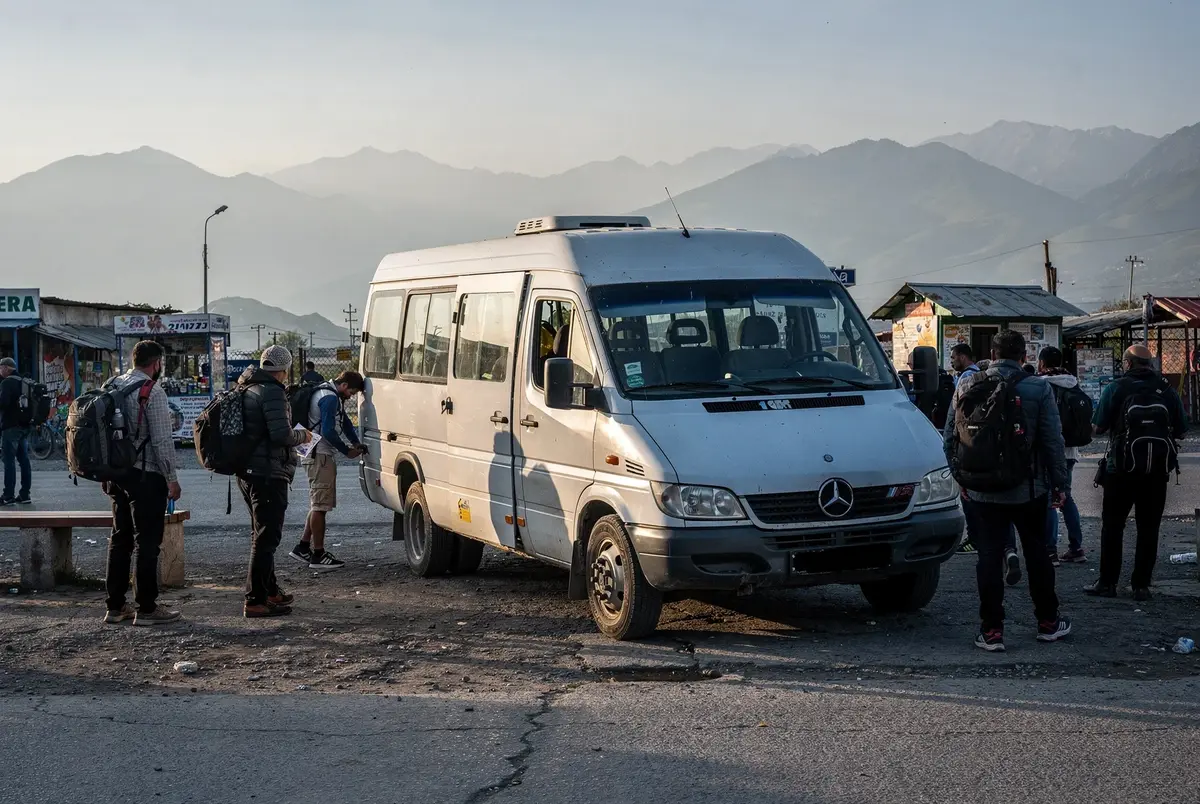
Marshrutka. The shared minibus, cheap and authentic and cramped. Tbilisi to Stepantsminda runs about 15 GEL and leaves from Didube station when full. Fine for two or three hours, punishing for eight.
Trains. Modern Stadler trains connect Tbilisi with Kutaisi, Zugdidi, and Batumi, and they’re comfortable and cheap. The morning departure to Zugdidi is the smart way to start a Svaneti trip: train to Zugdidi, then a marshrutka or transfer up the mountain.
Bolt. Uber does not operate in Georgia; Bolt is the standard ride-hailing app and it’s very cheap — a few dollars across Tbilisi. Download and verify your account before you leave home, since SMS verification codes sometimes fail on foreign numbers. Yandex Go and Maxim are backups. Ignore the men shouting “taxi” at the airport.
Vanilla Sky. Small propeller planes fly Tbilisi (from Natakhtari airfield, about 19 miles north of the city, with a free shuttle) to Mestia in roughly 40 minutes for around 90 GEL, and less often from Kutaisi. It is by far the fastest way into Svaneti and it is also the single least reliable link in Georgian travel. Weather cancellations are frequent and often same-day, the aircraft seat about 17 people so seats vanish weeks ahead, the booking site is glitchy, and travelers routinely report slow refunds and poor communication. Use it if you must, but never put a Vanilla Sky flight on the day you need to catch an international departure, and always have the road option priced out as a backup.
What it costs
Georgia is no longer dirt cheap, but the dollar still goes remarkably far. At roughly 2.6 lari to the dollar, here’s what a day actually looks like.
| Travel style | Daily budget per person | What that buys |
|---|---|---|
| Budget | $35 to $55 | Guesthouses and hostels, marshrutkas, bakery lunches, one restaurant meal |
| Mid-range | $60 to $125 | Boutique hotels and good guesthouses, a shared driver, restaurant meals, tastings |
| Comfort | $150 to $250 | Design hotels, private driver daily, fine dining, private tours |
Sample line items:
- Guesthouse double room in the mountains: $30 to $50
- Boutique Tbilisi hotel: $80 to $150
- Dinner for two with a bottle of wine: $25 to $40
- Full-day private driver via GoTrip: $60 to $80
- Bolt across Tbilisi: $2 to $4
- Museum or monastery entry: $2 to $6
- Private sulfur bath room, per hour: $27 to $77
- Winery tasting with several pours: $10 to $25
For calibration: a full day in Kakheti with a driver, three wineries, and a long lunch costs less than a single tasting flight in Napa. Ten days at a mid-range pace, excluding international flights, typically lands between $900 and $1,500 per person.
When to go
May and June. Green hillsides, wildflowers, comfortable temperatures, and thin crowds. The catch: high mountain passes generally don’t open until mid-June, so early-May trips are city, wine country, and Kazbegi only.
July and August. Peak season and the only reliable window for high-altitude trekking in Svaneti, Kazbegi, and Tusheti. The trade-off is heat — Tbilisi regularly hits 100°F and can push past 105°F — plus crowds and higher prices, especially on the coast.
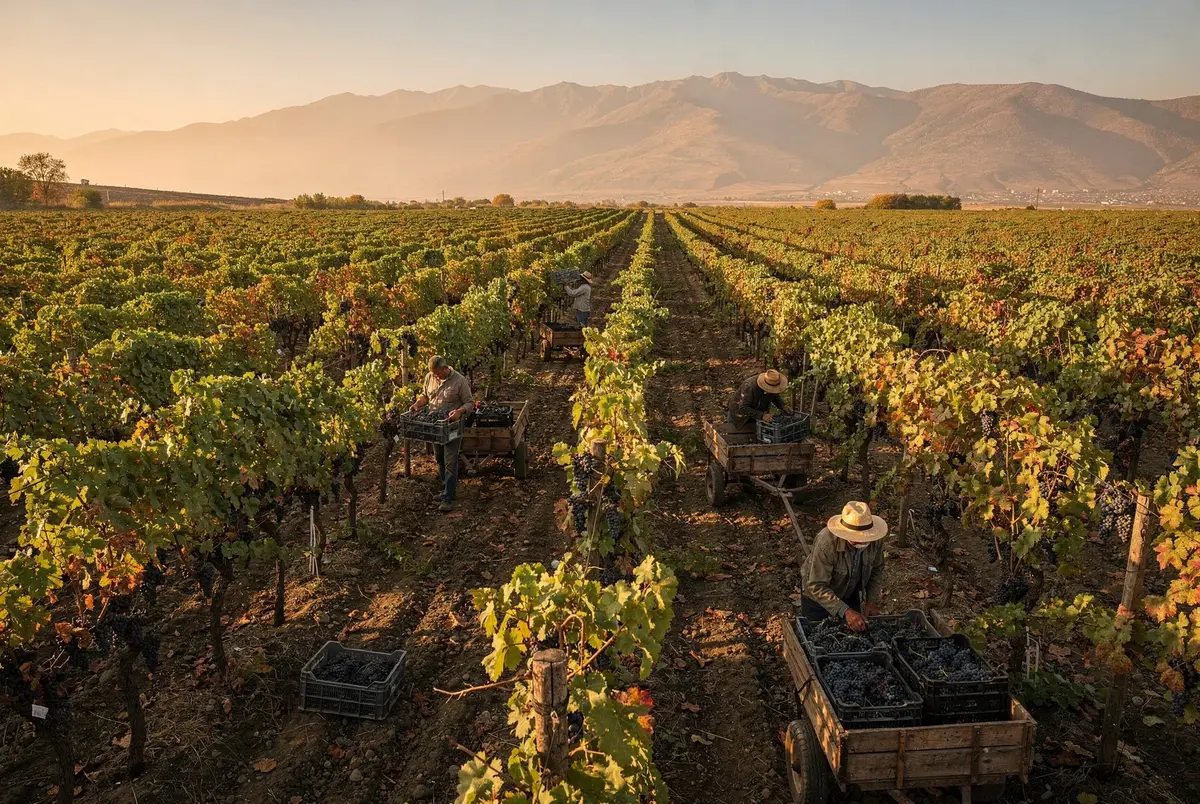
September and October. The best overall window, and it isn’t close. September brings rtveli, the grape harvest, when Kakheti smells like fermenting fruit and every family is pressing something. Temperatures moderate, light turns golden, and the crowds thin. High mountain roads start closing from mid-to-late October.
November through March. Cold, quiet, and cheap. Ski season at Gudauri, Bakuriani, and Hatsvali. The high country is largely inaccessible, but Tbilisi in winter — snow on the Old Town roofs, steam rising off the sulfur baths — is genuinely lovely.
Seasonal closures worth knowing: the Abano Pass to Tusheti is shut roughly mid-October to mid-June. The Zagari Pass and the Ushguli-to-Lentekhi road are seasonal, typically open from late May or mid-June to mid-October. Mestia itself is reachable year-round from Zugdidi.
What you’ll eat
Georgian food deserves more American attention than it gets, and it is the reason a lot of people come back.
Khachapuri is the national obsession: cheese bread, made differently in every region. Imeruli is the flat everyday version, Megruli has cheese on top too, and Adjaruli arrives as a bread boat filled with molten cheese, a raw egg yolk, and a slab of butter that you stir together at the table.
Khinkali are soup dumplings, twisted into a doughy top knot. Hold the knot, bite a small hole, drink the broth, then eat the rest and leave the knot on your plate. A pile of discarded knots is how a Georgian counts what you ate. Never, under any circumstances, use a fork.
Beyond that: pkhali, vegetable pâtés bound with walnut and pomegranate; badrijani nigvzit, eggplant rolled around walnut paste; lobio, a slow-cooked bean stew served in a clay pot with cornbread; mtsvadi, vine-branch-grilled pork; and churchkhela, the candle-shaped strings of walnuts dipped repeatedly in grape must that hang in every market.
Vegetarians and vegans do unusually well here, for a specific reason: the Georgian Orthodox fasting calendar. Observant Georgians abstain from animal products for a substantial portion of the year, so plant-based dishes are a serious, well-developed part of the cuisine rather than an afterthought. Ask for samarkhvo dishes and you’ll be understood immediately.

Practical details that save you grief
Money. The currency is the Georgian lari (GEL). ATMs are everywhere in cities and scarce in mountain villages — draw cash before you head to Svaneti or Kazbegi. Cards work fine in Tbilisi, Batumi, and Kutaisi and unpredictably elsewhere. Tipping isn’t obligatory; rounding up is normal, 10% at a restaurant is generous, and $5 to $15 per person is right for a day guide.
Connectivity. Buy a local SIM at the airport for 15 to 25 GEL (Magti and Silknet have the best mountain coverage) or set up an eSIM before you fly. Coverage in the high valleys is patchy regardless. Download offline maps for Svaneti and Kazbegi.
Language. Georgian has its own alphabet — a beautiful curling script that is not Cyrillic and not related to anything you can guess your way through. English is common among younger Georgians and in the tourism industry; Russian is widely understood by older people. Learn gamarjoba (hello) and madloba (thank you) and you’ll get warmth out of all proportion to the effort.
Dress code. Monasteries and active churches require covered shoulders, and women are expected to cover their heads and wear a skirt; wraps are usually available at the door but not always. This applies at Gergeti, Bodbe, Gelati, Jvari, Alaverdi, and Svetitskhoveli. Men shouldn’t wear shorts.
Electricity. Georgia uses 220V with Type C and F plugs. Your phone and laptop chargers will be fine with a simple adapter; a U.S. hair dryer or curling iron probably won’t be. Check the label for dual voltage before you pack it.
Water. Tap water in Tbilisi and most cities is safe and tastes good. Mountain spring water is a national point of pride.
Altitude. Stepantsminda sits around 5,700 feet and Gergeti at 7,100. That’s Denver-to-Breckenridge territory. If you’re coming from sea level and hiking on Day 2 in the mountains, take it slow and drink more than you think you need.
The mistakes that ruin 10-day trips
Underestimating the drive to Mestia. It is the number one regret in Georgia trip reports, full stop. If Svaneti is in your plan, build the plan around it.
Scheduling a Vanilla Sky flight tight. The plane doesn’t fly when the mountain says no. Leave a buffer day, always.
Trying to day-trip Kazbegi from Tbilisi. It’s technically possible and it’s a 12- to 14-hour day that puts you at Gergeti at exactly the worst hour for light and crowds. One overnight in Stepantsminda transforms it.
Going to Gergeti at noon in August. Sunrise or late afternoon. The difference is a few hundred people.
Assuming Tusheti works in spring. It doesn’t. The pass is closed.
Booking marshrutkas for long hauls to save money. Split three or four ways, a private driver often costs about the same and saves you four hours and a backache.
Skipping insurance because you have a card benefit. Check that it produces a certificate meeting the 30,000 GEL minimum, in English, with your dates. Do this before you’re standing at check-in.
Which route should you take?
If this is your first trip and you want the country’s greatest hits without a punishing schedule, take Route 1. It’s the most balanced 10 days available and it works in every season except deep winter.
If you’re a hiker and you’ve been dreaming about the Svan towers, take Route 2 — but only between mid-June and early October, and only if you accept that two of your ten days are travel days.
If you’d rather spend four hours over lunch than four hours in a car, take Route 3. It’s the route most people wish they’d taken on their second trip.
And if you can only remember one thing from this Georgia country itinerary for 10 days, make it this: cut something. Every traveler who comes back from Georgia says the same thing — the days they remember are the ones they didn’t rush. Sit at the supra until the toasts stop making sense. Take the second glass of amber wine. Let the driver pull over for the view.