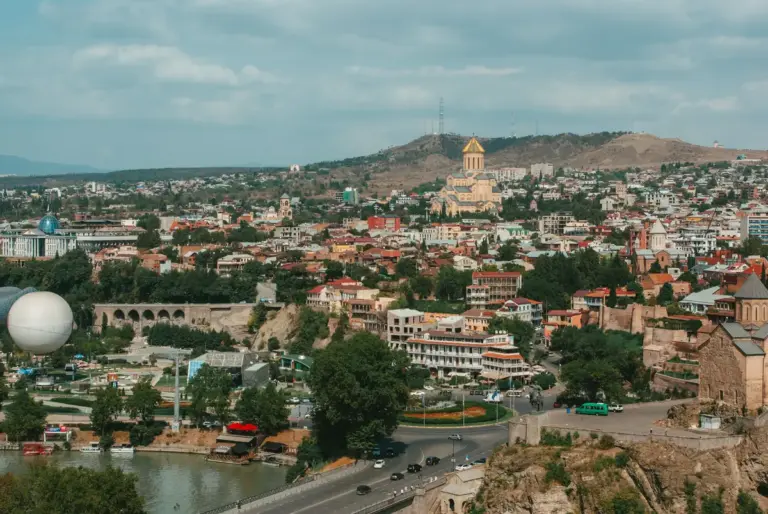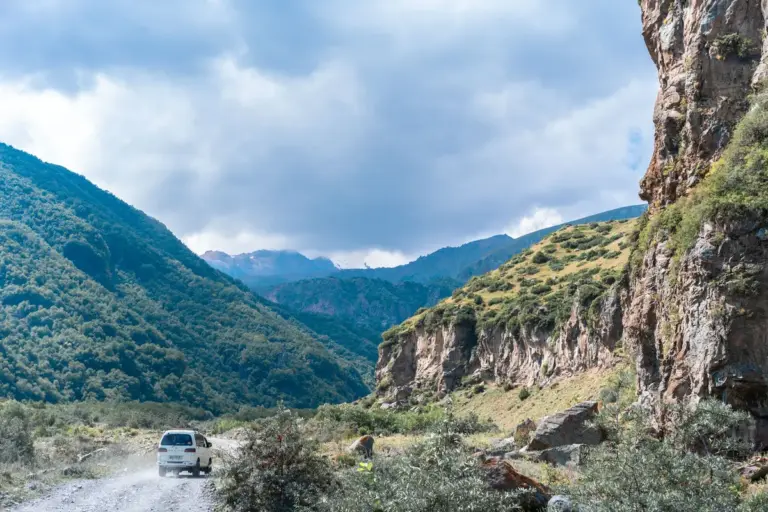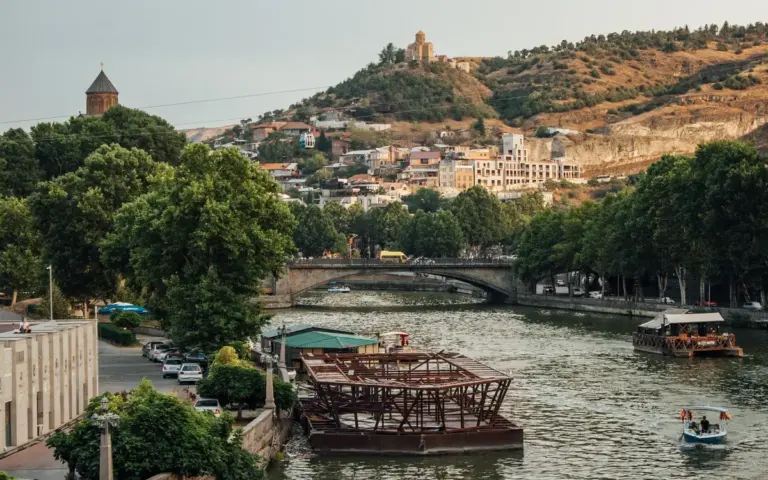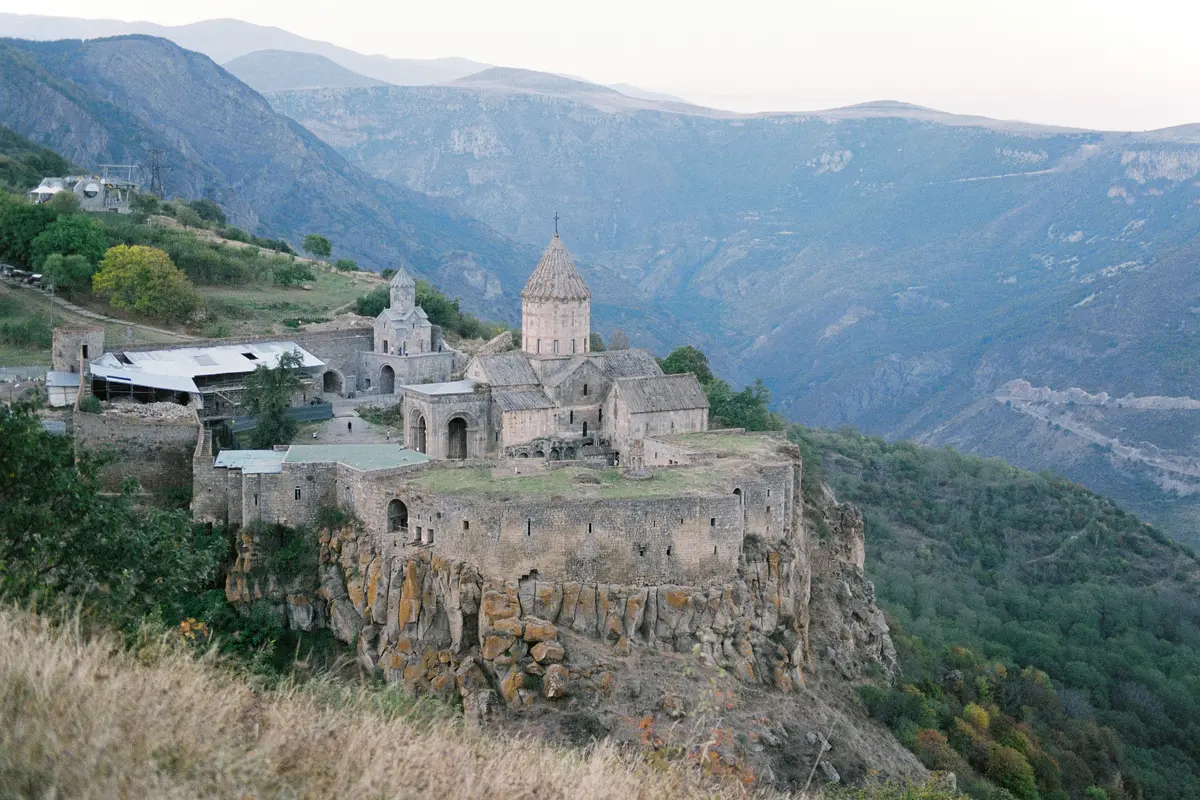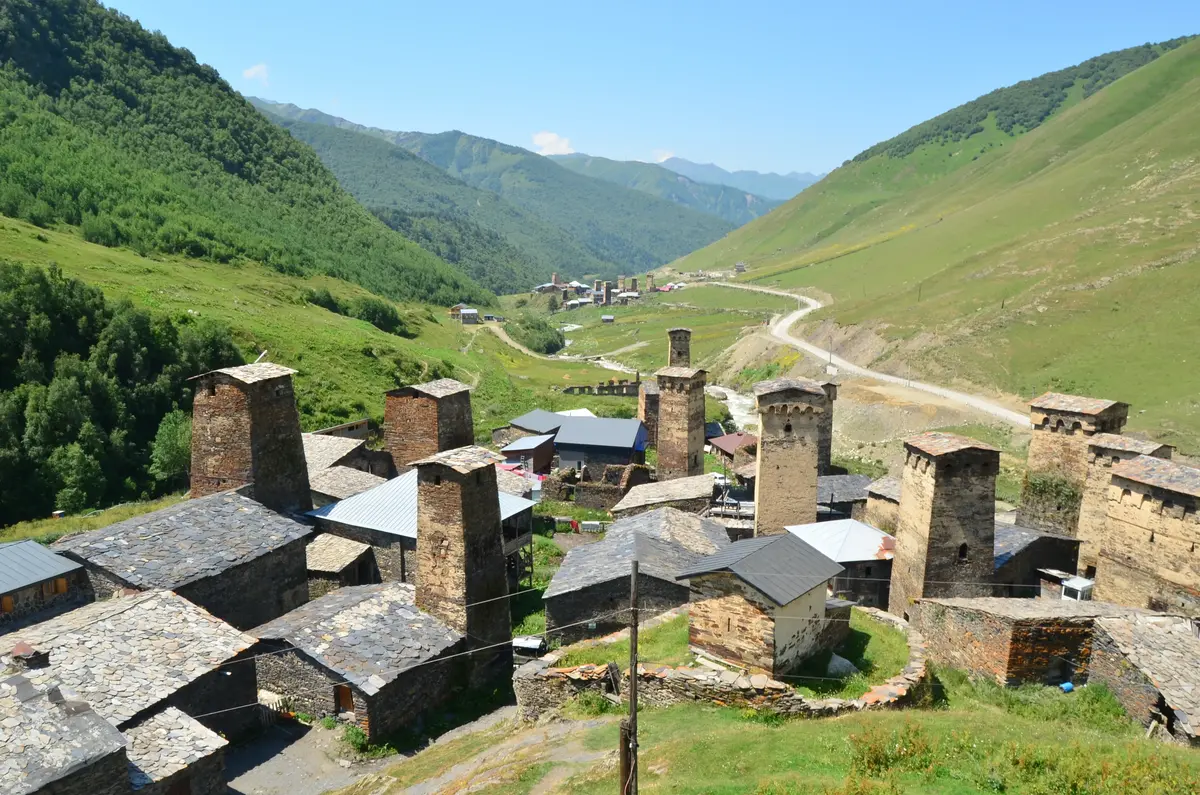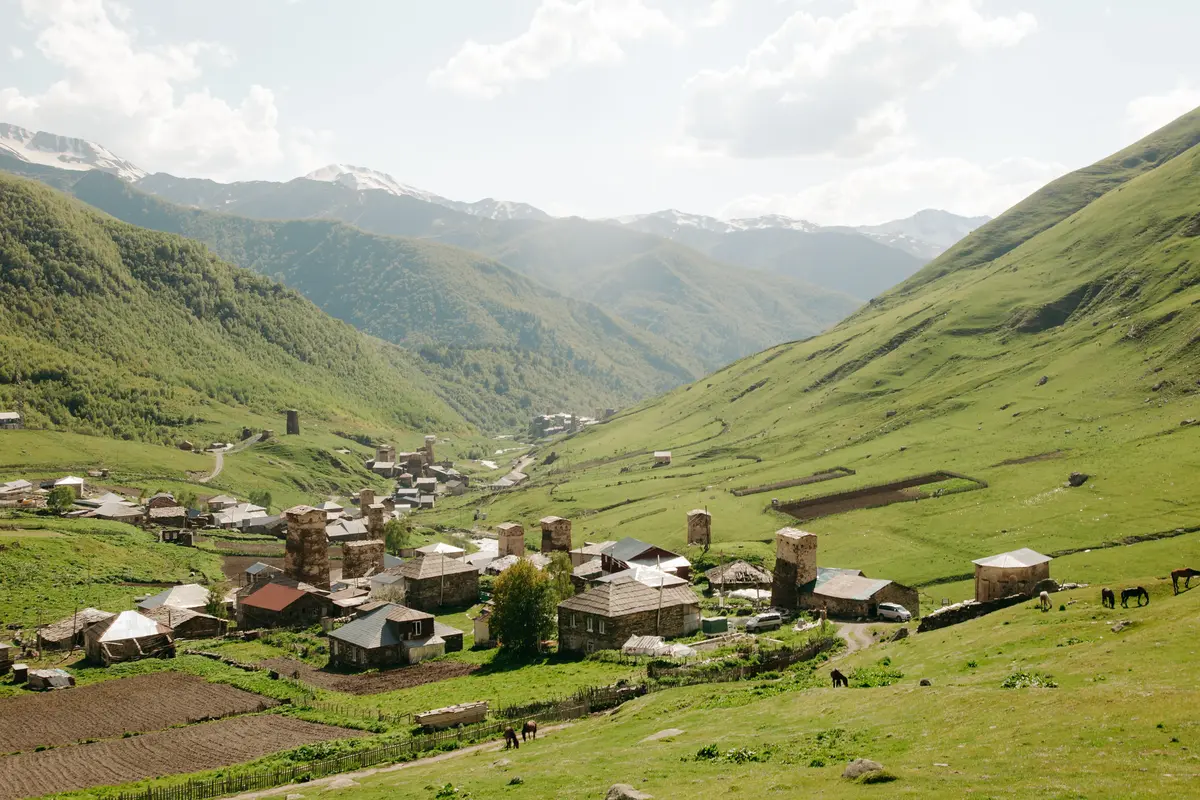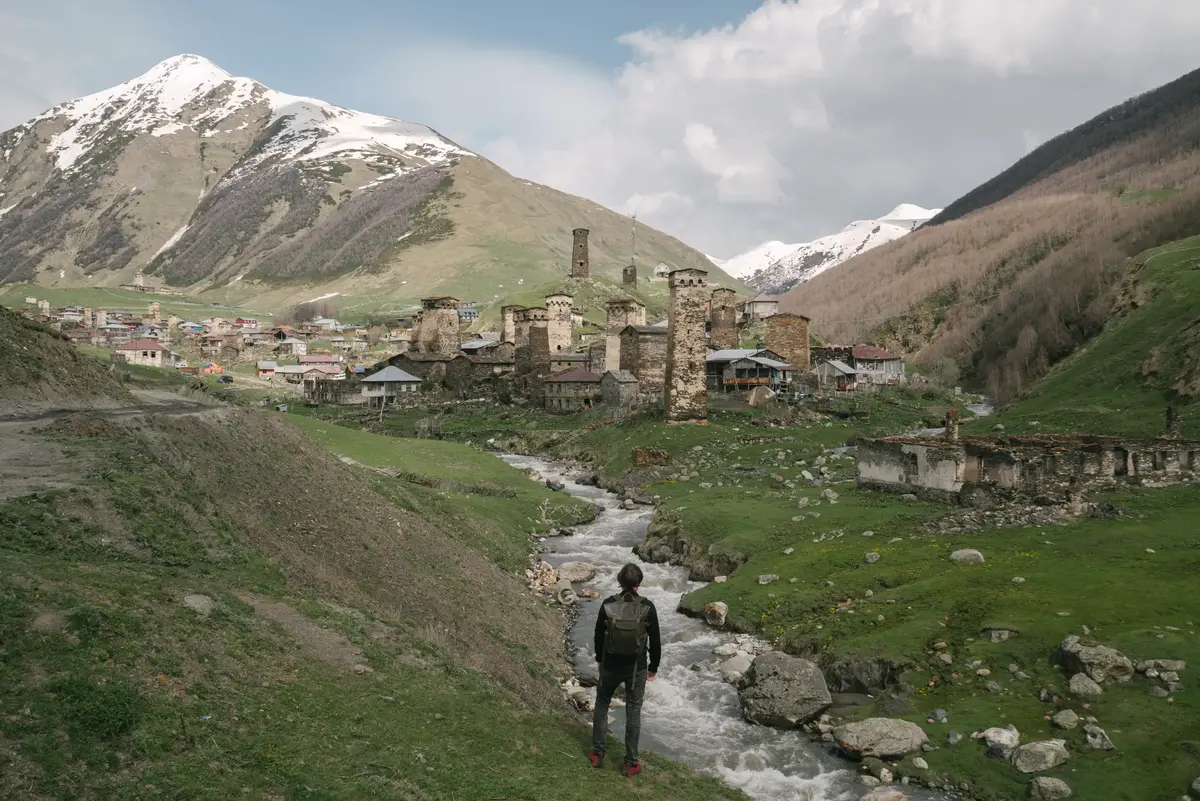
A Georgia packing list for the country in the Caucasus — not the US state — has to solve two problems no single-climate wardrobe can: you might sweat through 95°F (35°C) in Tbilisi and shiver in the mountains of Svaneti on the same trip, and every church expects covered shoulders, knees, and hair. Here’s what earns space in your bag.
The One Rule That Decides Your Whole Packing List
Pack a layering system plus a modest-dress kit, not a single-season wardrobe. In one trip you can hit 95°F (35°C) in Tbilisi, cool mountain evenings in Svaneti, rain on the Black Sea coast, and churches that require covered shoulders, knees, and hair. Layers, a rain shell, sturdy closed-toe shoes, and a scarf handle most of what Georgia throws at you.
The scarf is the item that does the most work for the least weight. It covers your head and shoulders at a monastery, doubles as a wrap on a cold marshrutka, and shades your neck on an exposed trail. If you bring one thing you didn’t plan to, make it a scarf you actually like wearing.
Pro Tip: Choose a scarf big enough to cover both hair and shoulders at once. The small ones some churches hand out at the door barely reach your collarbone, and not every site lends them.
Georgia’s Climate by Region, in Real Temperatures
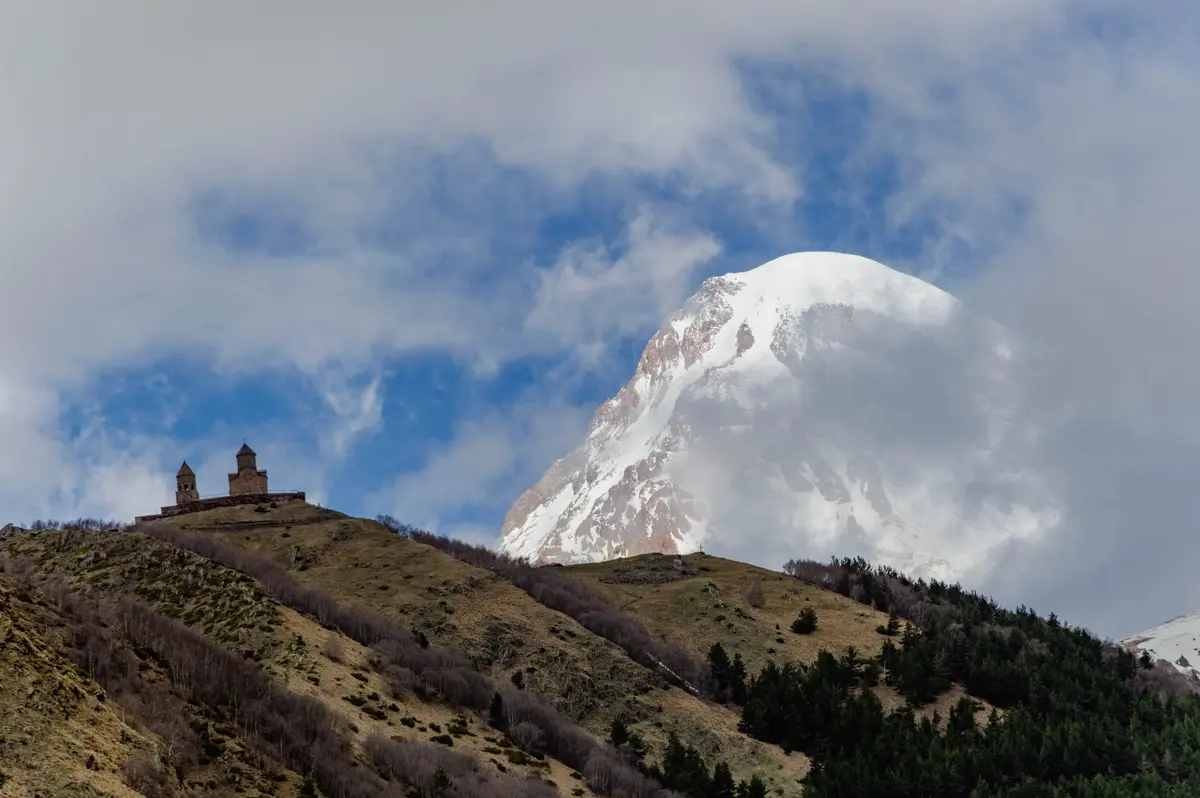
Georgia is not one climate — it’s at least four, and they’re all reachable inside a week. The lowlands run hot and fairly dry, the Black Sea coast is humid and genuinely wet, and the Greater Caucasus stays cold enough that mountain nights need a fleece even in August. Pack from the numbers, not from a vibe.
| Region (elevation) | Winter average | Summer average | Rain / note |
|---|---|---|---|
| Tbilisi lowlands (~1,450 ft / 450 m) | Jan ~38°F (3.4°C) | Aug ~79°F (26°C), highs to 95°F+ (35°C+) | ~20 in (500 mm) a year — relatively dry; record 105°F (40.6°C) |
| Batumi / Black Sea coast | Jan ~41–46°F (5–8°C) | Aug ~72–75°F (22–24°C) | ~96 in (2,435 mm) — wettest in the Caucasus; rain year-round |
| Kazbegi / Stepantsminda (~5,710 ft / 1,740 m) | Jan ~23°F (−5°C) | July ~58°F (14°C), daytime highs 78–82°F (25–28°C) | Evenings drop to ~56°F (13°C) even in summer |
| Mestia / Svaneti (high mountain) | Jan lows ~23°F (−5°C) | Aug highs ~75°F (24°C) | Valley trekking days 59–68°F (15–20°C); heavy winter snow |
The takeaway from the table: the coast and the mountains are the two that catch people out. Batumi rains in every month, so a shell belongs in your bag even for a July beach trip. And a warm August afternoon in a mountain valley can still turn into a 56°F (13°C) evening once the sun drops behind a ridge.
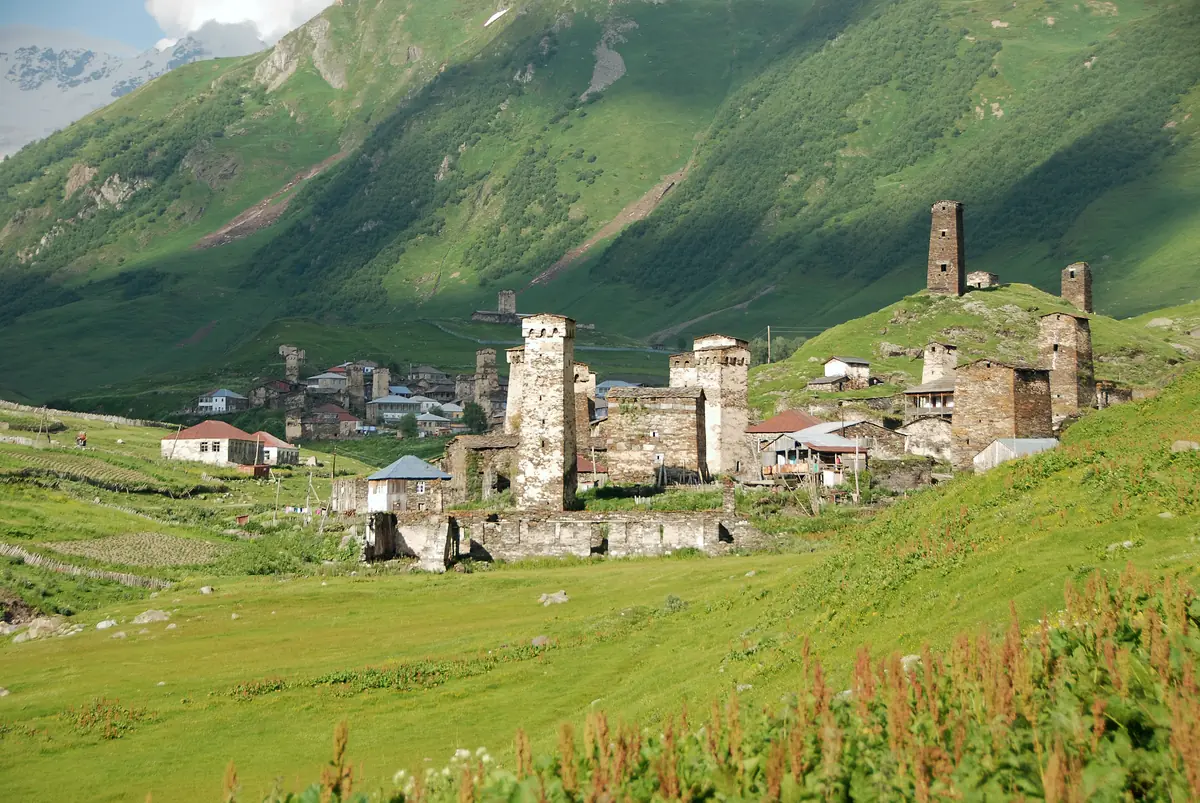
What Do You Wear in Georgia by Season?
It depends where you go, but the through-line is layering. Summer means breathable clothes plus a fleece and rain shell for the mountains; winter means thermal base layers, a waterproof coat, and insulated boots; spring and autumn swing more than 20°F (10°C+) between afternoon and night, so you pack for both in one day. A scarf and closed-toe shoes stay in the bag year-round.
Summer (June to August)
Cities and the coast run hot, but the mountains stay cool and can storm in the afternoon. Pack for both.
- Lightweight, breathable tops
- One pair of light long trousers (sun, mosquitoes, and church entry)
- Shorts or a skirt for cities and the beach
- Swimwear for the Black Sea and the sulfur baths
- A UPF sun hat, sunglasses, and high-SPF sunscreen
- A packable rain shell — thunderstorms build above ~8,200 ft (2,500 m) most summer afternoons
- A fleece for mountain evenings
Pro Tip: If you’re heading to Svaneti or Kazbegi, plan to be off high ground before mid-afternoon. Storms roll in fast up there, and a light shell packs down to nothing in your daypack.
Winter (December to February)
Lowland winters are chilly and damp; mountain and ski winters are seriously cold. Build a proper cold-weather layering system.
- Thermal base layers
- Wool sweaters or fleece mid-layers
- A heavy waterproof coat
- Insulated, waterproof boots with real traction
- Gloves, a beanie, and a scarf
- Full ski kit if you’re heading to Gudauri, Bakuriani, or Mestia
Shoulder Season (Spring and Autumn)
This is where layering earns its keep. Tbilisi spring days can sit near 59°F (15°C) and fall to around 41°F (5°C) after dark, so a single mid-weight outfit won’t cut it.
- A light jacket or windbreaker
- Packable rain gear
- A warm evening layer you can add and shed through the day
- Comfortable closed-toe shoes for wet, uneven pavement
Across every season, favor quick-dry fabrics. Guesthouse laundry in Georgia is almost always line-dried — tumble dryers are rare — so anything cotton-heavy can sit damp for a day. Quick-dry tops and underwear rinse in a sink and are ready by morning.
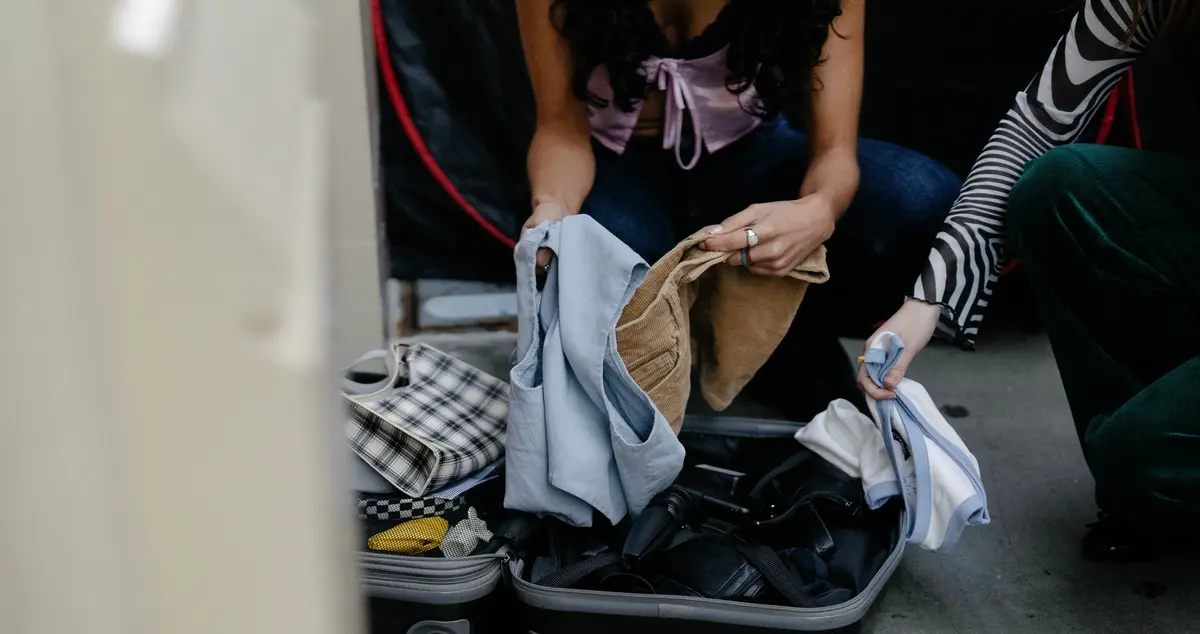
What Do You Wear to a Georgian Church?
Women cover shoulders, knees, and hair with a scarf or headscarf; men wear long trousers and a sleeved top — no shorts. Many monasteries lend wrap skirts and headscarves at the door, but plenty don’t, so carry your own lightweight scarf. A long jacket zipped up can cover you in a pinch when you’ve been caught out.
This is the single most-repeated packing rule for Georgia, and it’s a real constraint, not a footnote. The Georgian Orthodox Church is central to daily life, and dress codes are enforced — more strictly in rural areas than in central Tbilisi.
| Who | Do | Don’t |
|---|---|---|
| Women | Cover shoulders, knees, and hair; a wrap skirt over trousers or shorts works; a big scarf covers head and shoulders at once | Bare shoulders, shorts, above-knee skirts, or uncovered hair |
| Men | Long trousers and a top with sleeves | Shorts (turned away at several sites) or sleeveless tops |
A few site-specific notes worth packing around:
- Alaverdi, Bodbe Monastery near Sighnaghi, and Gergeti Trinity Church have refused entry to visitors in shorts — men included.
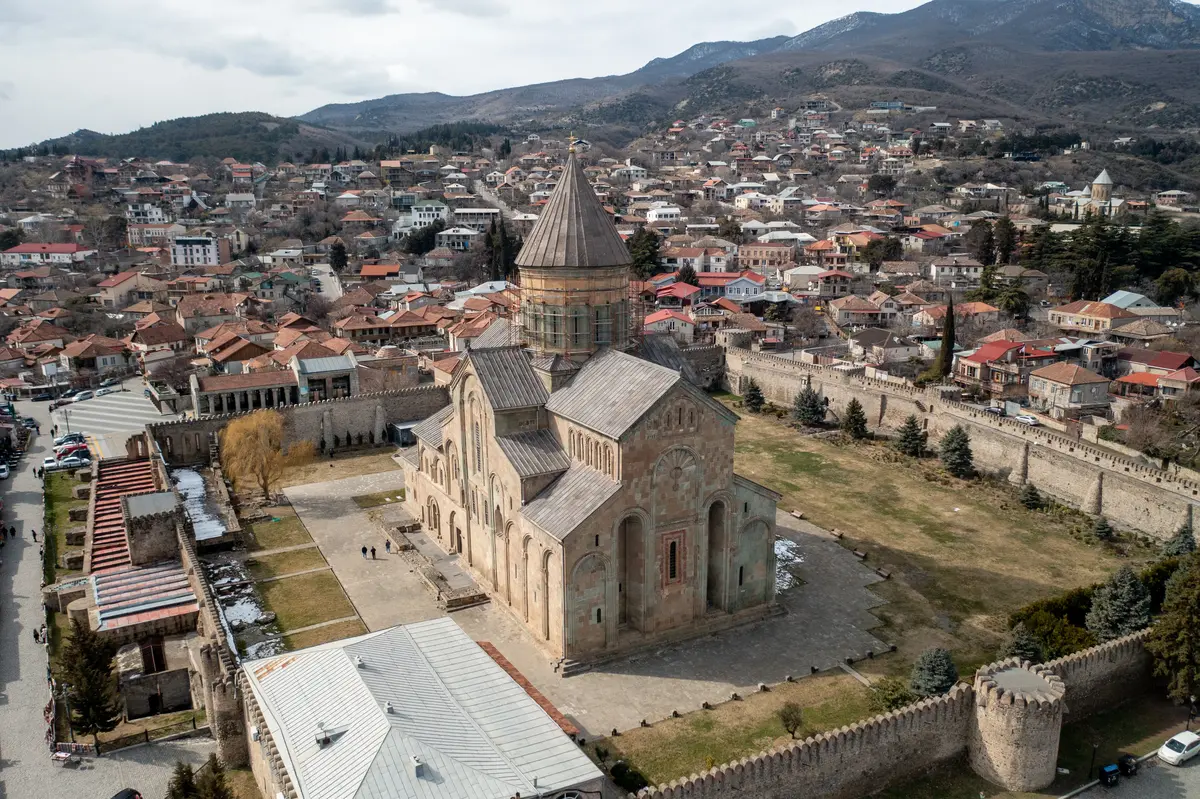
- Svetitskhoveli Cathedral in Mtskheta expects covered shoulders and legs, and women must cover their heads.
- Whether wraps and scarves are lent at the door varies site to site, so the safe assumption is that they won’t be.
One point of confusion worth clearing up: at Orthodox churches you keep your shoes on. It’s the Tbilisi mosque where you remove them. Different rule, different building.
Footwear for Cobblestones and Caucasus Trails
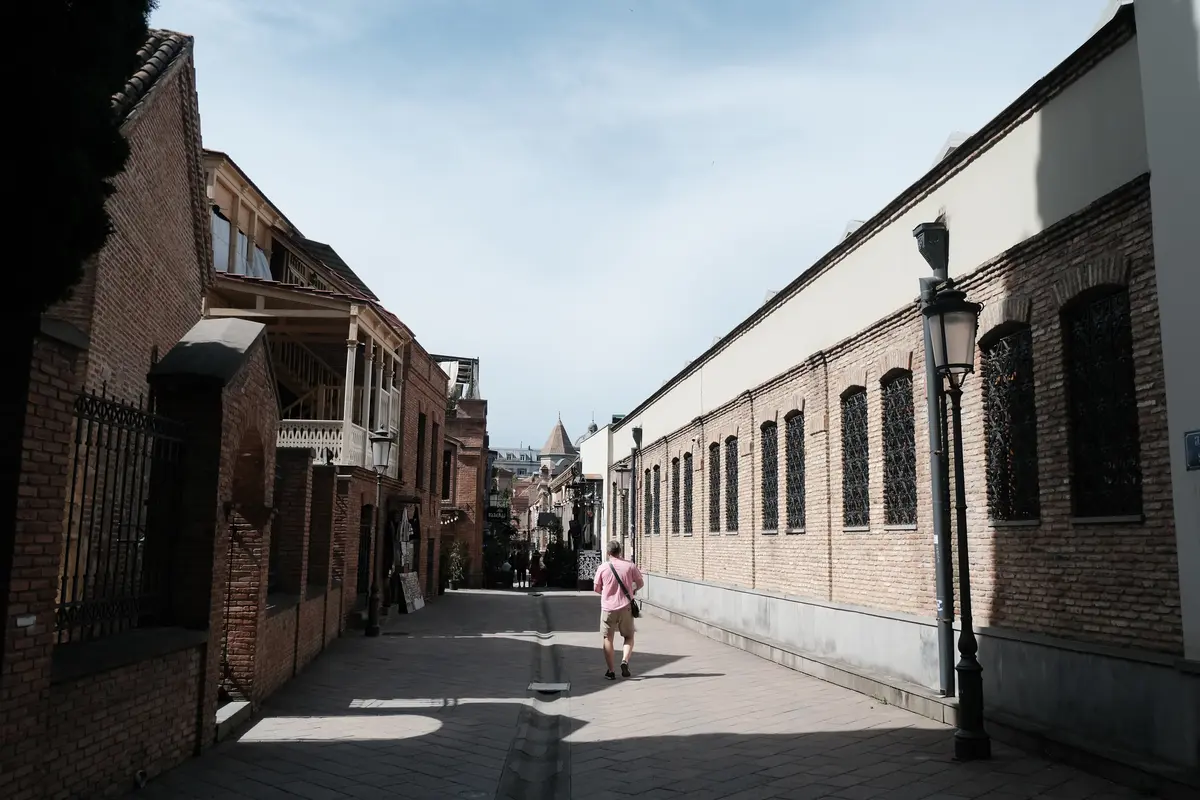
Georgia is hard on the wrong shoes, and it’s not only the trails. Tbilisi’s Old Town is hilly and cobbled, and sidewalks across the country are uneven, poorly lit at night, and often broken. Flat, closed-toe, sturdy walking shoes aren’t a suggestion here — they’re the difference between a good day and a turned ankle.
For serious treks like Mestia to Ushguli or the climb toward Gergeti Glacier, bring proper boots with ankle support and a waterproof cover for your pack. Rental gear exists in Tbilisi, but quality is inconsistent, so anyone doing multi-day hikes is better off bringing their own broken-in boots from home.
A short packing shortlist for feet:
- Sturdy, flat, closed-toe walking shoes for cities and light walking
- Hiking boots with ankle support for mountain trails
- Sandals or flip-flops for guesthouse showers and the sulfur baths
Pro Tip: Skip wheeled suitcases if you can. Old Town cobbles and stair-heavy guesthouses make roller bags miserable — a soft backpack or duffel earns its keep the moment you leave the airport.
What to Pack for Hiking the Georgian Mountains
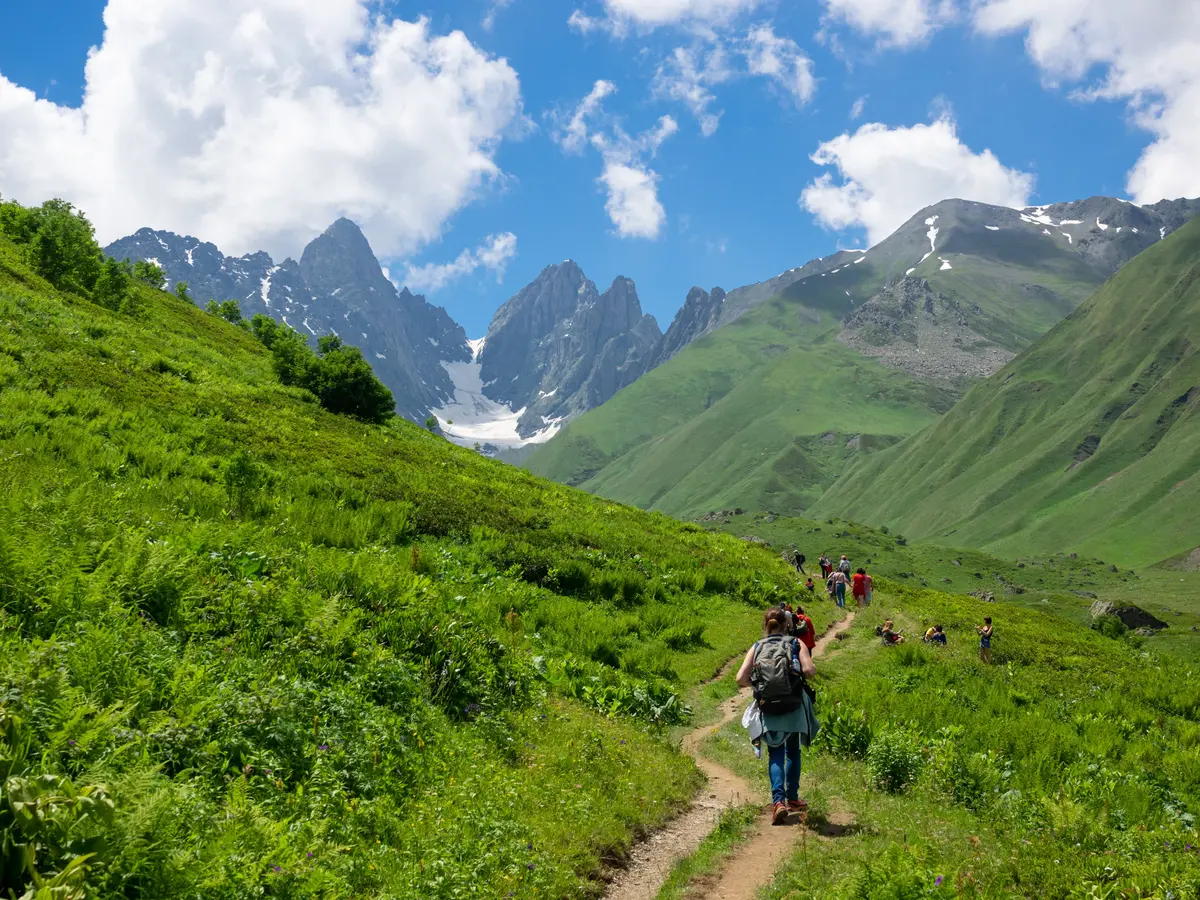
Mountain gear should be proportionate: bring enough to be safe and self-sufficient without turning a general trip into an expedition. For multi-day routes in Svaneti, Kazbegi, or Racha, a 50–60 liter pack covers you, with a compressible daypack for summit pushes and village wanders.
The core kit for Georgian trails:
- A waterproof, windproof shell — weather turns fast at altitude
- Fleece or merino mid-layers for cold valleys and evenings
- Strong sun protection; UV is intense higher up
- Trekking poles for steep, loose descents
- A refillable bottle plus purification (tablets or a filter) for river and spring water in remote valleys
- Offline maps — download Google Maps areas or use Maps.me, because signal drops in the valleys
Two field realities to plan around. First, afternoon thunderstorms build above roughly 8,200 ft (2,500 m), so aim to descend before mid-afternoon rather than pushing on. Second, cell coverage is patchy off the main roads, which makes those offline maps and a purification method non-negotiable rather than nice-to-have.
Plugs, Power, and Staying Connected
Georgia uses Type C and Type F plugs at 220V/50Hz — the standard European setup. A Type C/F adapter handles most US phone and laptop chargers, which are dual-voltage (look for “100–240V” printed on the brick). Single-voltage US appliances like some hair dryers need a voltage converter, not just an adapter, or they’ll fry.
Power quick reference:
- Plug types: C and F
- Voltage / frequency: 220V / 50Hz
- US chargers (phone, laptop): adapter only — most are dual-voltage
- Single-voltage US appliances: adapter plus voltage converter
- Power bank: 10,000–20,000 mAh for long marshrutka rides, mountain days, and patchy electricity in remote Svaneti and Tusheti
On connectivity, the network you choose matters more here than in most countries because coverage varies wildly by terrain. There are three carriers — Magti (MagtiCom), Silknet, and Cellfie — and Magti holds signal in mountain valleys where the others drop out. That’s the quotable insight for Georgia: the SIM you pick decides whether your offline maps have a live backup in the places you’ll most want one.
- Local SIM (airport packs): roughly 20–60 GEL (about $7.50–$22); airport counters run about 20–30% higher than city stores; passport required to register
- eSIM (e.g., Airalo): from around $4.50 for 1 GB over 7 days, but on a network that’s weaker in the mountains — fine for cities, less so for high trails
- Best rural coverage: a Magti SIM if you’re heading deep into the Caucasus
Do You Need a Visa or Insurance for Georgia?
US citizens enter visa-free and can stay up to 365 days — no tourist visa required. Georgia also requires every tourist to carry valid health-and-accident insurance covering the full stay, with a minimum of 30,000 GEL (about $11,000). Bring printed or digital proof in English or Georgian; border officers can ask for it at passport control.
That insurance rule is the most overlooked item on any Georgia packing list. It took effect January 1, 2026 under the Law of Georgia “On Tourism,” and it applies to everyone entering as a tourist regardless of nationality — including visa-free US, UK, and EU travelers. A few practical points:
- The policy must cover your entire stay, from arrival date to departure date, and be issued by a Georgian or foreign insurer.
- Local visitor policies designed for the rule start around 1.5 GEL a day (roughly $0.50); international options include Allianz, World Nomads, HeyMondo, and SafetyWing.
- Buying at the airport on arrival costs about 30–40% more than online, with fewer coverage options and a queue — arrange it before you fly.
- Missing proof can mean a fine of around 300 GEL (about $110) or, in principle, refused entry.
- Enforcement is uneven and varies by airport, officer, and day; some travelers aren’t asked at all. Carry proof anyway rather than gambling on not being checked.
On money itself: the currency is the Georgian lari (GEL), running around 2.7 GEL to the US dollar. Tbilisi and Batumi are largely card-friendly, but villages and rural areas run on cash, so pull lari from a Bank of Georgia or TBC ATM in town before heading out. Bring a Visa and a Mastercard from two different banks, a modest USD or EUR cash reserve for the countryside, a passport photocopy, and a printout of your first night’s booking — immigration occasionally asks.
Pro Tip: Save your insurance certificate as an offline PDF on your phone before you land. A one-page document a border officer can read in ten seconds beats a login screen and a code sent to a SIM you haven’t activated yet.
What to Pack for the Tbilisi Sulfur Baths
The sulfur baths in Abanotubani are a genuinely Georgian ritual, and they come with their own short packing list. The brick domes sit in the Old Town, the water runs hot at 100–104°F (38–40°C), and the whole thing costs a fraction of a Western spa.
What to bring, and what it runs:
- Swimsuit: needed in mixed and private rooms; public single-sex sections are typically nude
- Flip-flops: the floors are wet stone
- Your own towel: rentals run about 2–3 GEL if you’d rather travel light
- Basic toiletries: shampoo and soap aren’t always provided
- Leave metal jewelry behind: sulfur tarnishes it
Rough prices to plan around:
- Public sections: about 2–5 GEL (under $2)
- Private rooms: about 30–60 GEL an hour (roughly $11–22), with premium rooms up to 80–150 GEL an hour
- Kisi scrub (the exfoliating rubdown): about 15–30 GEL
The Region and Season Packing Matrix
No competing guide publishes this, so here’s the at-a-glance grid: find your region and your season, and pack the cells where they cross. It’s built straight from the climate table and dress-code rules above.
| Region | Summer | Shoulder | Winter |
|---|---|---|---|
| Tbilisi & lowlands | Breathable tops, sun hat, SPF, scarf for churches, closed-toe walking shoes | Light layers, light jacket, packable rain shell, scarf | Warm coat, sweater, waterproof boots, gloves, scarf |
| Batumi & Black Sea coast | Swimwear, rain shell (rains even in July), light layers, sandals + walking shoes | Rain jacket, warm mid-layer, waterproof shoes | Waterproof coat, warm layers, umbrella |
| Kazbegi & Svaneti mountains | Fleece, waterproof shell, hiking boots, sun protection, warm evening layer | Insulated jacket, shell, boots, hat + gloves | Thermal base layers, heavy insulated coat, insulated boots, beanie (ski kit if skiing) |
| Kakheti wine country | Breathable clothes, sun hat, closed-toe shoes, scarf (Bodbe & Alaverdi) | Light layers, light jacket, scarf, comfortable shoes | Warm coat, layers, waterproof shoes, scarf |
What Not to Pack (and What to Buy There)
Here’s the against-the-grain take, and the research backs it: you don’t need to pack much for Georgia — buy it there. Marshrutka minibuses have limited luggage space, Old Town cobbles defeat wheeled suitcases, and supermarkets like Carrefour and Nikora, pharmacies, and even a Decathlon in Tbilisi stock most essentials cheaply. Over-packing gets punished at every stage of a Georgian trip.
Things to leave at home:
- Heavy guidebooks — go digital
- Bulky towels — baths and most guesthouses provide or rent them
- Large toiletry bottles — supermarkets are cheap and everywhere; buy on arrival
- Excess cash — ATMs are reliable in towns, so a ~$200 backup is plenty
The exceptions worth carrying from home, because they’re expensive or hard to find locally:
- A quality rain jacket and any specialty hiking gear
- Feminine-hygiene products and any specific contraceptives — selection is limited, so solo female travelers should pack their own supply
The Bottom Line: Your Georgia Packing Checklist
TL;DR: Pack a layering system plus a modest-dress kit, not a single-climate wardrobe. A scarf, a rain shell, quick-dry layers, and sturdy closed-toe shoes cover most of Georgia’s swings from coastal downpour to alpine evening. Add a Type C/F adapter, cash in lari, and — the one thing most lists still miss — proof of the health-and-accident insurance required to enter.
A grouped final checklist:
- Clothing: quick-dry layers, fleece, waterproof shell, one warm evening layer, swimwear, a large scarf, long trousers
- Footwear: sturdy closed-toe walking shoes, hiking boots for trails, sandals for baths and showers
- Electronics: Type C/F adapter, power bank, Magti SIM or eSIM, offline maps downloaded
- Documents & money: passport, insurance proof (30,000 GEL minimum), Visa + Mastercard, lari cash, booking printout
- Activity-specific: swimsuit and flip-flops for the sulfur baths, trekking poles and water purification for the mountains
The item most people wish they’d packed? A scarf they didn’t hate wearing — it comes out at every church, every cold bus, and every exposed ridgeline. What’s the one thing you always overpack (or forget) for a multi-climate trip like this? Tell me in the comments.