Georgia’s currency is the lari, and it’s the only money you can actually spend here — your dollars and euros have to be converted first. The cities run on tap-to-pay; the mountains still run on cash. This guide covers exchanging, ATMs, cards, tipping, scams and what a day really costs, all priced in USD.
What Currency Does Georgia Use?
Georgia uses the Georgian lari (GEL), symbol ₾, split into 100 tetri and issued by the National Bank of Georgia. It is the country’s only legal tender, so shops, taxis and restaurants price and charge in lari. Dollars and euros are not accepted for purchases — you exchange them for lari or pay by card.
A quick note on names so nothing trips you up later. The lari is the main unit; tetri is the small change, the way cents work under a dollar. The ₾ symbol is drawn from a letter in the Georgian alphabet, and the three-letter code you’ll see on rate boards and bank apps is GEL. Georgia introduced the lari in the mid-1990s to replace an earlier stopgap currency, and it has held up as one of the more stable currencies in the region since.
Can You Pay in US Dollars in Georgia?
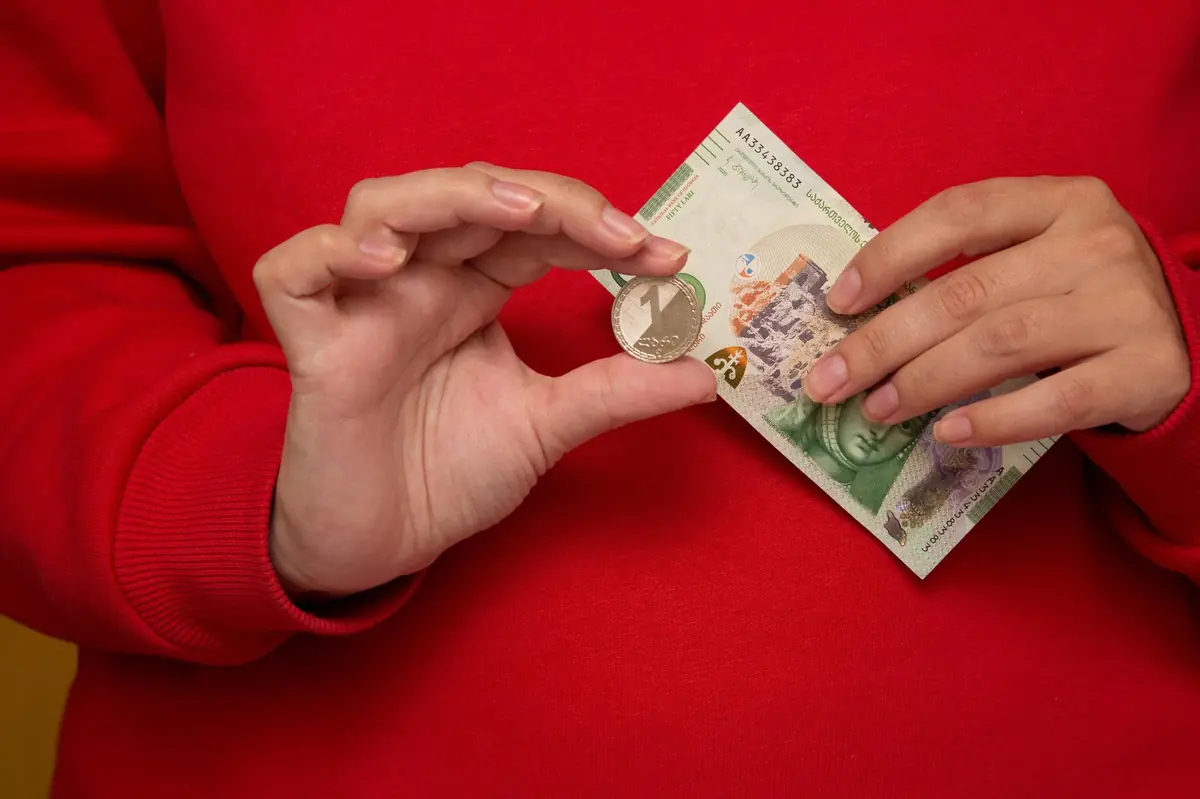
No — you cannot pay in US dollars or euros in Georgia. By law, all transactions settle in lari, even when a hotel or tour company quotes a price in dollars. You’ll pay the lari equivalent at that day’s rate. Carry some USD as an easy-to-exchange backup, but convert it to lari or use a card for everyday spending.
This catches people out most with accommodation and guided tours, where the sticker price is often written in dollars or euros for the international market. That figure is a reference, not a payment method. When the bill lands, it’s in lari. USD and euros are the two easiest currencies to change, which is the real reason to bring a little cash — not because you can spend it directly.
The Lari Up Close: Notes, Coins and Tetri
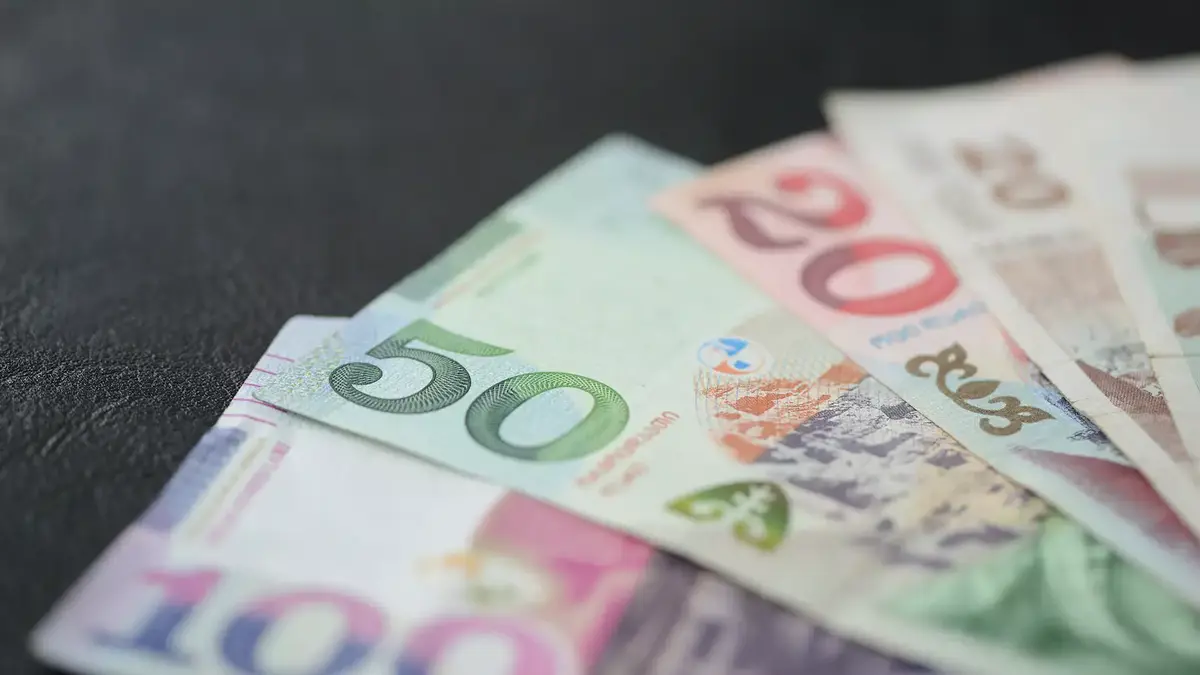
Here’s what you’ll actually pull out of an ATM or handle at a market stall. Banknotes come in 5, 10, 20, 50, 100 and 200 lari, though the 200 is rare enough that a small vendor may not be able to break it. Coins run 5, 10, 20 and 50 tetri, plus 1 and 2 lari.
What you’ll use daily:
- Common notes: 10, 20, 50 and 100 GEL
- Handy small note: 5 GEL
- Rarely seen: 200 GEL (avoid getting these from an ATM if you can)
- Coins: 1 and 2 lari, plus tetri coins for the smallest amounts
The National Bank retired the two tiniest coins (1 and 2 tetri), so cash totals now get rounded. A total ending in 1 or 2 tetri rounds down to zero; 3, 4, 6 or 7 tetri rounds to the nearest 5. Pay by card and you’re charged the exact amount to the tetri. It’s a minor thing, but it explains why change at a bakery sometimes doesn’t match the till to the cent.
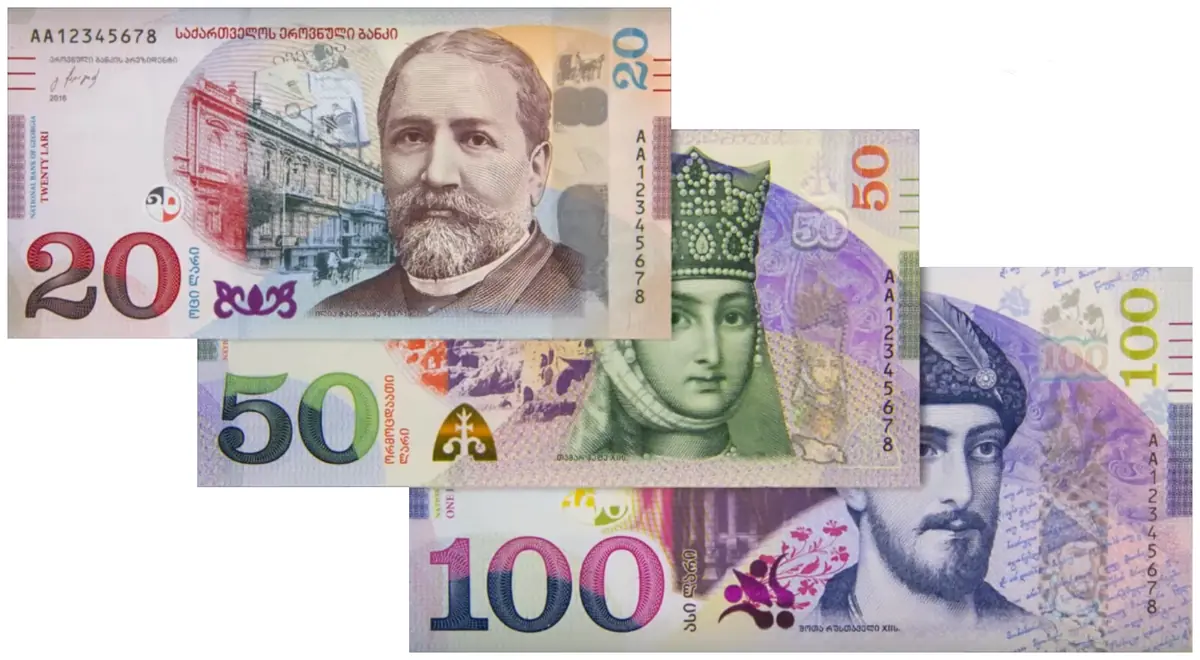
Each note carries a Georgian cultural figure — the poet Shota Rustaveli on the 100, the medieval queen Tamar on the 50, the writer Ilia Chavchavadze on the 20. If you like a bit of context with your cash, the banknotes are a compact history lesson.
How Much Is the Lari Worth Against the Dollar?
The lari trades at roughly 2.6 to 2.7 to the US dollar, so about 100 GEL works out near $38 — but rates move daily. Check a live source such as the National Bank of Georgia, Wise or Xe the week you travel, then compare that number against any exchange board so you can judge whether a rate is fair.
Treat the exchange rate as an input you verify, not a fact you memorize. A guide that prints a fixed number is out of date the moment it publishes. The move that actually saves money is knowing the mid-market rate on the day, then holding exchange booths and ATM screens up against it. If a booth’s rate is more than a couple of percent off the mid-market number, walk to the next one.
Pro Tip: The National Bank of Georgia posts an official daily USD/GEL rate on its site. Screenshot it before you exchange anything, so you have a fair-rate benchmark in your pocket at every booth.
Where to Exchange Money (and Where Not To)
Rank the options by what they cost you. City exchange booths usually give the best rates. Banks are transparent and safe but carry wider spreads and want your passport. The airport is the worst rate in the country — change only what you need for a taxi and your first meal, then do the rest in town.
Where to change money, best value first:
- City exchange booths: the go-to for a fair rate, no ID needed for small amounts
- Banks: transparent and secure, but wider spreads; bring your passport
- Airport: convenient but poor rates — swap taxi money only
- Street money-changers: skip entirely, not worth the risk
One local quirk: booths right on the main tourist strips, like the stretch around Rustaveli Avenue and Freedom Square, don’t automatically give the best rate. A booth a few streets back in a residential area often beats them. And watch the “no commission” sign — it can hide a weak rate. The number that matters isn’t the advertised rate or the commission, it’s the final lari you walk away with.
Pro Tip: Before handing over any dollars, ask the booth for the exact lari amount you’ll receive in hand. Compare that against your screenshotted mid-market rate. If the two are far apart, the “no commission” claim is meaningless.
ATMs and Cards: The Low-Fee Playbook
Georgia is one of the most card-friendly countries you’ll travel in, so most of this section is about not overpaying, not about finding somewhere that takes plastic. By one industry measure, Georgia leads the world in contactless payments — more than nine of every ten in-person purchases happen with a tap, a figure that has since climbed toward the high-nineties. Apple Pay and Google Pay work at most urban terminals; Georgia was the first country in the Caucasus to launch Apple Pay. Even the Tbilisi metro and city buses take a contactless tap for a 1-lari fare.
So the card question isn’t “will it work,” it’s “which withdrawal costs least.” Foreign-card ATM fees vary a lot by bank, and most machines cap you around 2,000 GEL per transaction. Because many charge a fixed fee per withdrawal, fewer and larger withdrawals beat lots of small ones.
| Bank | Typical foreign-card fee | Per-transaction cap | Notes |
|---|---|---|---|
| BasisBank | ~0-1 GEL | ~2,000 GEL | Often the cheapest for foreign cards |
| Liberty Bank | Low to none | ~2,000 GEL | Widespread, reaches smaller towns |
| TBC Bank | ~1-2 GEL | ~2,000 GEL | Reliable, big network, strong app |
| Bank of Georgia | ~1-3 GEL | ~2,000 GEL | Everywhere in the cities |
| Some standalone machines | up to ~20 GEL | varies | Read the on-screen fee before you confirm |
For US Cardholders Specifically
A few things aimed at travelers coming from the States. Magnetic-stripe cards still work in Georgian ATMs, though a chip-and-contactless card is smoother. Call your bank before you fly so a Tbilisi withdrawal doesn’t trigger a fraud freeze. And check your own card’s foreign-transaction fee — that 0-to-3 percent sits on top of anything the Georgian ATM charges, and it’s often the bigger cost.
Always Choose Lari: The DCC Trap
When an ATM or card machine offers to charge you in dollars instead of lari, always decline and pick lari. That “helpful” option is dynamic currency conversion (DCC) — the machine sets its own exchange rate and usually skims 3 to 5 percent on top. Let your own bank handle the conversion, which will almost always be closer to the real rate.
The prompt appears at ATMs and at restaurant and shop card terminals, and it’s worded to sound like a convenience: “Would you like to be charged in your home currency?” Say no every time. Here’s the cost, spelled out on a $200 purchase (roughly 530 GEL):
- Pay by card in lari: your bank converts near the mid-market rate, plus your card’s foreign-transaction fee of 0-3 percent
- Withdraw lari from a low-fee ATM: similar to the above, plus a fixed fee of about 1-2 GEL — cheaper per dollar the more you take out at once
- Accept “charge me in USD” (DCC): the machine’s own rate is baked in, typically 3-5 percent worse, so the same 530 GEL of goods quietly costs you around $208-210
Same purchase, same day, and the only difference is which button you pressed. Some ATMs will also offer to dispense dollars or euros directly — withdraw lari instead and skip the markup.
Cash or Card? How Much Cash to Carry
Go card-first in the cities and keep a modest cash float for the specific places that still run on paper. You won’t need much, but you will need it in small notes. Vendors and drivers often can’t break a 100, so a wallet full of 5s, 10s and 20s is far more useful than a couple of large bills.
Where cash is still king:
- Marshrutkas (the shared minibuses) between towns
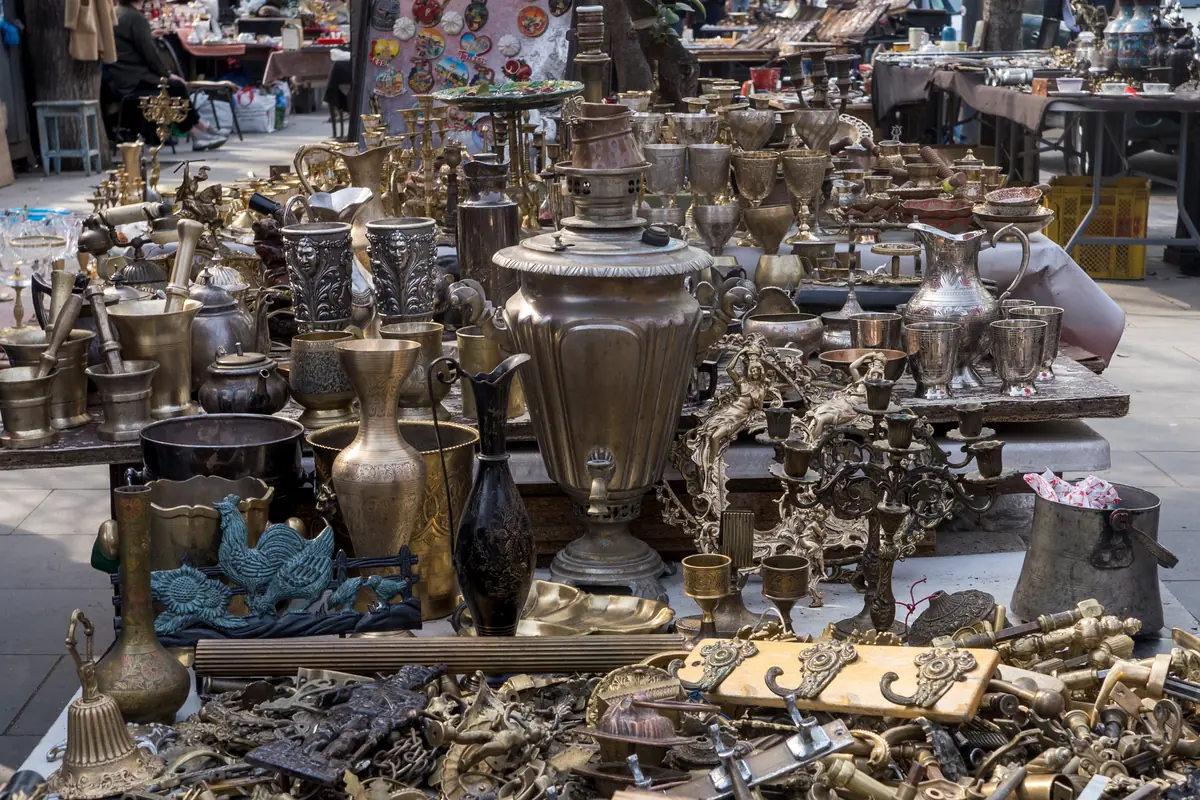
- Dry Bridge Market and neighborhood bazaars
- Rural guesthouses and family homestays
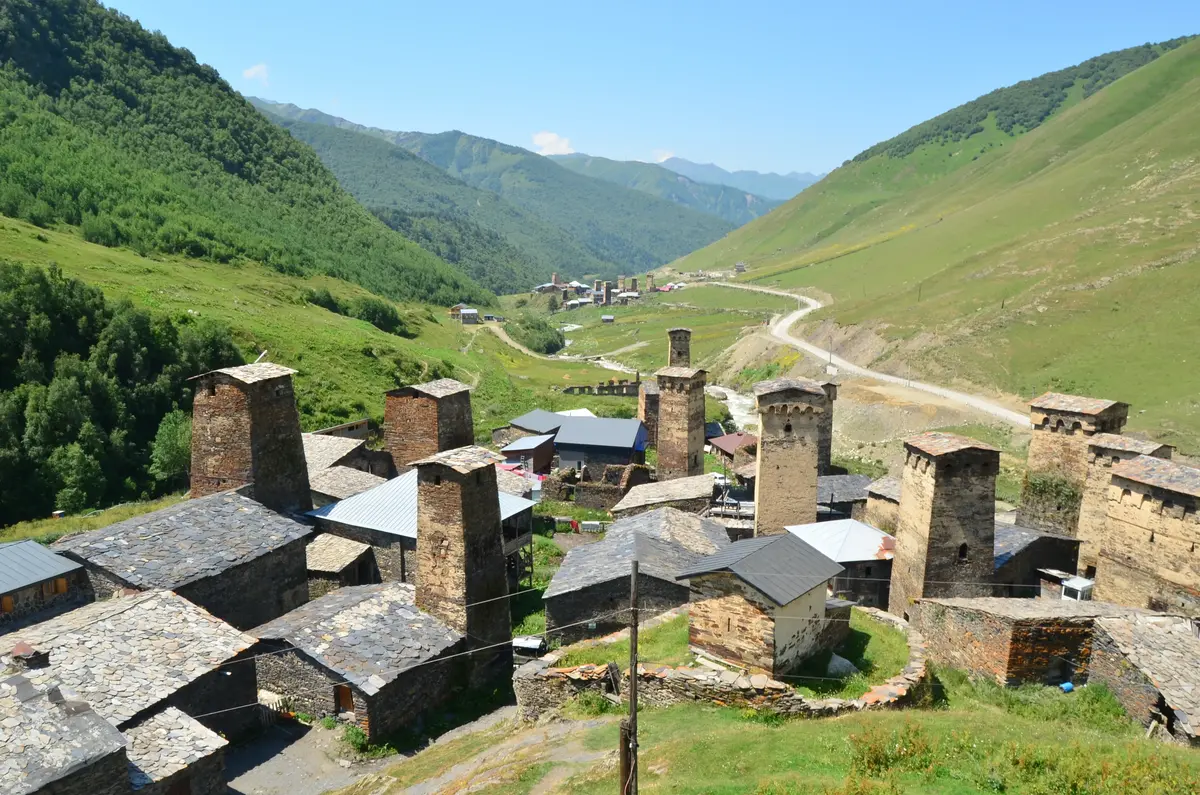
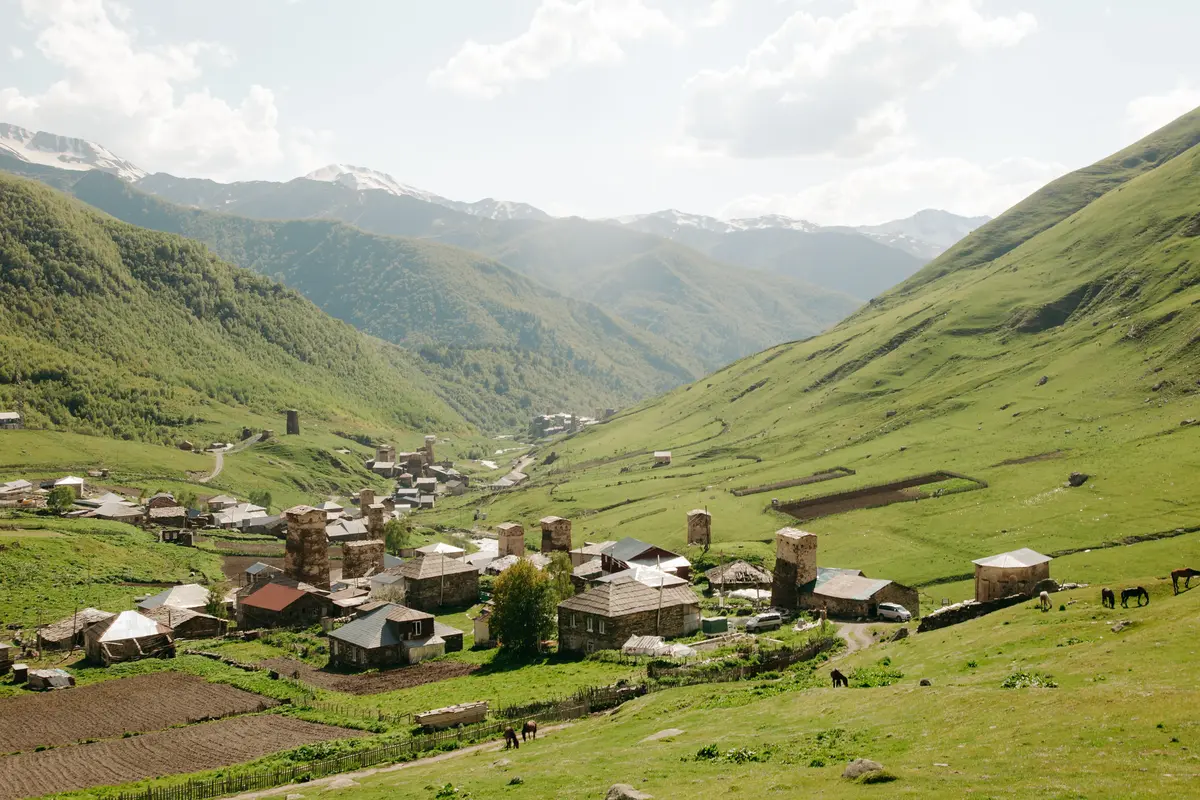
- Mountain regions like Svaneti, Tusheti and Kazbegi, where card coverage thins out
- Street food and small bakeries
- Paid public toilets, usually around 0.5 to 1 GEL
For taxis, use the Bolt or Yandex apps rather than flagging a car on the street. You pay by card in the app, the fare is fixed up front, and you sidestep the most common taxi money games (more on those below).
Is Georgia Expensive? Daily Budgets in USD
Georgia is one of Europe’s best-value destinations. By one widely-cited travel-cost dataset, budget travelers spend around $14 a day, mid-range travelers around $38, and higher-end travelers around $110 — with a typical visitor landing near the mid-range figure. Costs have crept up with tourism, but they still sit well below Western Europe.
| Traveler type | Per day (USD) | Roughly (GEL) |
|---|---|---|
| Budget / backpacker | ~$14 | ~37 |
| Mid-range | ~$38 | ~100 |
| Comfort / higher-end | ~$110 | ~290 |
Some anchor prices to make those numbers real:
- Hostel dorm bed: about $7-15
- Metro or city bus ride: 1 GEL (under $0.40)
- Museum entry: about 5-15 GEL
- Bolt ride across a city: about 4-10 GEL
- Intercity marshrutka: about 5-40 GEL depending on distance
- A plate of khinkali dumplings: a few dollars
Food has been the one line item pushing upward. Tbilisi’s Khachapuri Index — a local gauge that tracks the cost of making a single cheese khachapuri — has climbed to record levels around 7 GEL, a decent shorthand for how tourism has nudged food prices higher. It’s still cheap by any Western standard, just less astonishingly cheap than it was a few years back.

Do You Tip in Georgia?
Tipping isn’t mandatory in Georgia, but 10 percent is welcome and increasingly expected in tourist-facing spots. Many Tbilisi restaurants already add a 10 percent service charge to the bill, so check before you add more. Tip in lari, budget 20-50 GEL per person per day for a guide, and never try to tip a host at a supra, the traditional Georgian feast.
The part that confuses most visitors is the stack of charges on a restaurant bill. VAT of 18 percent is usually baked into menu prices, but a service charge — commonly 10 percent, up to around 15 percent at upscale places — may be added on top. Scan the bill for a “service” line before leaving anything extra; if it’s there, you’ve effectively already tipped. For Bolt rides you can add a tip in the app. And that supra rule is genuine cultural etiquette, not just modesty — you’re a guest, and the host would be offended by an offer of cash.
How Much Cash Can You Bring Into Georgia?
There’s no limit on how much currency you can bring into Georgia, but you must declare cash, checks or securities worth more than 30,000 GEL — roughly $11,000 — on both entry and exit. According to the US International Trade Administration, travelers carrying more than that threshold are required to make a customs declaration. Most visitors never come close.
A couple of details if you’re moving larger sums. The rule runs both directions, and money taken out above what you declared coming in may need proof it was obtained legally. Separately, antiques and artwork require an export license to leave the country, which trips up the occasional Dry Bridge Market shopper — worth knowing before you buy that old samovar.
Money Scams Worth Sidestepping
Georgia is a genuinely safe place to travel, and violent crime against tourists is rare. What exists is a short list of money-specific tricks, and 60 seconds of awareness neutralizes all of them. Most cluster around taxis and a few tourist bars.
The ones to know:
- The taxi note-swap: a driver claims the note you handed over is fake or too small, then swaps it. Fix: pay by app (Bolt or Yandex), or hand over exact change and watch the note.
- Menu and bill games: a handful of tourist bars, especially around Shardeni Street in the Old Town, run inflated or vague menus. Fix: confirm prices and currency before ordering.
- Rigged calculators and shortchanging at exchange booths: Fix: count your lari before you leave the counter, every time.
- “No commission” markups: covered above — always ask for the final lari amount in hand.
None of this should make you nervous. Use the ride apps, glance at prices before you commit, and count your change, and you’ve closed off the realistic ways a visitor loses money here.
Your Georgia Money Game Plan
TL;DR: Spend only lari in Georgia, tap your card for almost everything in the cities, and keep small-denomination cash for marshrutkas, markets and the mountains. Always choose lari (never dollars) at ATMs and terminals, skip the airport for anything beyond taxi money, and check the live rate before you exchange.
The five moves that cover 95 percent of situations:
- Spend only lari — dollars and euros aren’t legal tender here, so convert or tap.
- Card and contactless work almost everywhere in the cities, including the metro.
- Carry small-note cash for marshrutkas, rural guesthouses, markets and the mountains.
- Always pick lari at ATMs and card machines to dodge the 3-5 percent DCC markup.
- Skip airport exchange beyond taxi money, use city booths, and check the mid-market rate first.
Handle those and money in Georgia becomes a non-issue — leaving you free to spend it on wine, khinkali and a mountain guesthouse or two.
What’s your go-to move for handling money abroad: all-card, cash-first, or a careful mix?